


DragonPass has quietly become one of the most widespread lounge-access platforms in the world, powering everything from bank credit card perks in Singapore to Visa Airport Companion in Canada. Used well, it can turn long layovers into comfortable, productive time. Used badly, it can leave you paying unexpected fees at a crowded lounge you cannot enter. Understanding how DragonPass actually works, and how it differs across cards, regions and airports, is essential if you want to get real value from the service.
Get the latest updates straight to your inbox!
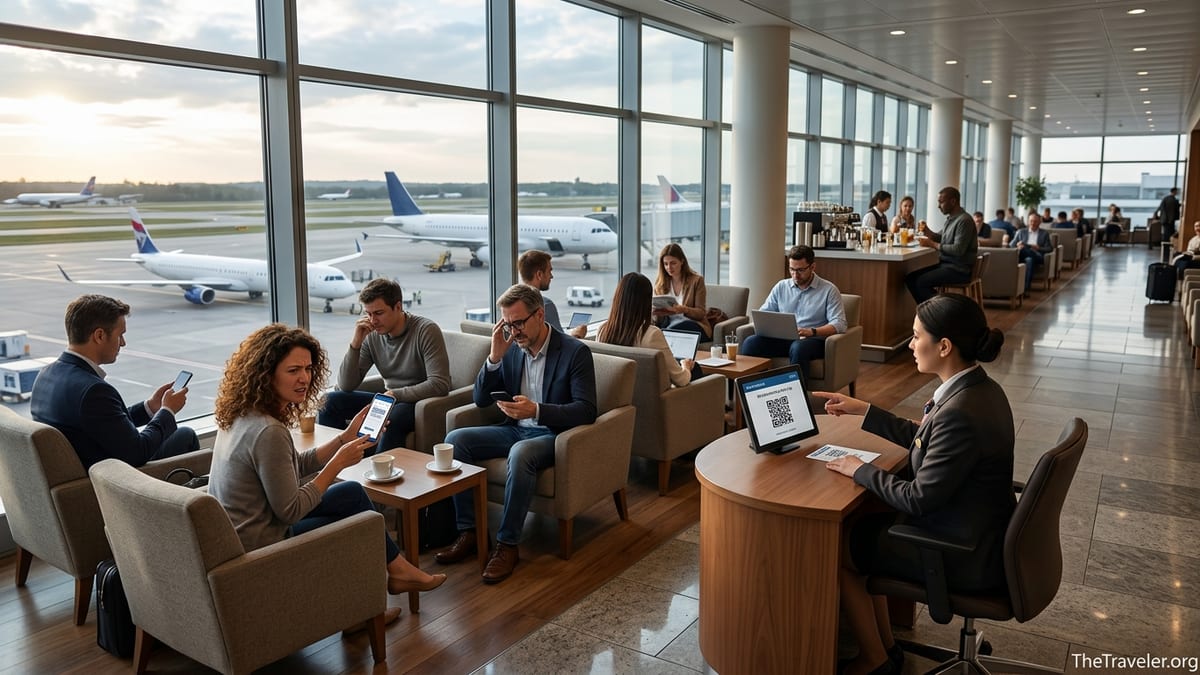
Assuming All DragonPass Memberships Are the Same
One of the biggest traps with DragonPass is assuming that a DragonPass logo automatically means full lounge access. In practice, there are multiple “flavors” of DragonPass, depending on who issued your membership. A traveler who buys a standalone membership through the DragonPass website or app is on a very different plan than someone whose access comes via a bank card like a Scotiabank Passport Visa Infinite in Canada or a UOB Visa Infinite in Singapore. Banks often negotiate tailored benefits, which might mean a smaller lounge list, fewer free visits or different guest rules than shown on the general DragonPass site.
This causes real confusion in airports. For example, some Canadian cardholders using Visa Airport Companion (powered by DragonPass) discover that a lounge listed on DragonPass’s public lounge search is not actually available under their specific Visa program, or is only accessible on a pay-per-use basis. In online forums, Revolut Ultra customers report similar surprises when their DragonPass-based access did not work at certain lounges in Doha or US airports, even though those lounges appear under DragonPass for other users. The lesson is simple: you must check the lounge list and rules inside your own issuer’s app or documentation, not just the generic DragonPass website.
Another frequent misunderstanding is treating DragonPass as interchangeable with other aggregators like Priority Pass or LoungeKey. Even when the same lounge appears under multiple programs, each provider may have a different contract. That can mean different opening hours, caps on capacity for certain programs, or blackout dates. If you turn up with the wrong expectations because you previously used the same lounge with a different card, you may be turned away or charged a fee you did not expect.
The safest approach is to think of DragonPass not as a single, universal product, but as a platform. Your actual benefits are defined by the specific membership type tied to your card or subscription. Before you fly, open your DragonPass or partner app, search your departure and transit airports, and confirm which lounges, restaurants or spas are genuinely included for you.
Misunderstanding Entitlements, Guests and Hidden Charges
The second major mistake is failing to understand how lounge visit entitlements work. DragonPass itself uses a simple concept: every time someone enters a lounge using your membership, an entitlement is deducted. That “someone” might be you or a guest. Many people assume that if they have, for instance, “four complimentary visits per year” through their bank card, that means four visits for themselves plus extra for guests. In reality, one visit for you and one visit for a guest will usually count as two separate visits.
Real-world confusion often surfaces when travelers bring family along. A common scenario involves a cardholder arriving at a lounge with a partner and two children, expecting that their “four free visits” will cover the whole group on a round trip. At check-in, the agent explains that each person counts as a visit per lounge, per direction. The outbound flight alone might burn all four visits. On the way home, the cardholder then faces a surprise charge, often around 25 to 40 US dollars per extra person per visit, depending on the issuer and currency. Some online reviewers have complained about being billed later because a visit they thought was “included” actually exceeded their annual entitlement cap.
Guest rules also vary by issuer and lounge. DragonPass’s own FAQ notes that memberships purchased directly allow guests as long as you have enough entitlements, but it explicitly warns that if your membership comes from an issuer, you must check the issuer’s terms. One Southeast Asian bank’s DragonPass FAQ, for instance, states that cardholders can bring chargeable guests, but free visits are strictly limited to the primary cardholder. In practice, that means companions can enter, yet every one of them will be billed at the standard visit rate.
To avoid this, check your remaining entitlements in the DragonPass or partner app before each trip, and treat each person, per lounge, as consuming one entitlement. If you know you’ll exceed your quota, compare the pay-per-use rate in the app with what the lounge would charge at the door. In some airports, the on-the-spot rate is similar to or even cheaper than the rate that will be auto-charged to your attached credit card. Where possible, plan which flights and which airports truly justify burning a visit, instead of tapping your pass every time you see a lounge door.
Not Checking Lounge Availability and Access Rules in Advance
Another frequent mistake is assuming that having a DragonPass membership guarantees lounge entry at a given airport. DragonPass itself is clear that “lounge access is subject to availability,” and that walk-in access cannot be guaranteed. Nonetheless, travelers regularly show up at peak times and are surprised to find a “lounge full, access suspended” sign at check-in, even though their membership is valid and the lounge appears in the app.
This problem is most visible at busy hubs in peak seasons or at smaller airports with only one participating lounge. For instance, some travelers flying through Montreal and other Canadian airports report that domestic terminals have very limited DragonPass lounge options, or none at all, despite international terminals hosting several. Similarly, discussions about US airports frequently mention that DragonPass coverage is patchy, with some major airports showing no lounges at all for certain issuer-linked plans, even though DragonPass advertises more than 1,400 lounges globally.
Operating hours can also trip people up. A few lounges associated with DragonPass only open for specific bank programs at certain times of the day or restrict access to three hours before departure. Others may temporarily withdraw access for third-party programs if the space is crowded with airline status passengers. An evening flight out of Tokyo or Singapore might line up perfectly with lounge hours, while a very early morning departure out of a secondary European airport could fall outside the window when the lounge admits DragonPass guests.
The fix is to treat lounge access as something you actively plan, not a last-minute hope. A day or two before your trip, search your airport in the DragonPass or partner app and read the detailed entry: opening hours, terminal location, maximum stay time and any notes about capacity controls or time-of-day restrictions. If your itinerary includes a tight connection, consider that some lounges are located before security or even in a different terminal that may require a second screening. In those cases, you might decide that a fast-track security add-on, which DragonPass offers in some airports, is a better use of money and time than a rushed lounge visit.
Ignoring Non-Lounge Benefits and Better-Value Alternatives
Many travelers think of DragonPass purely as a lounge key and overlook the broader range of services. The platform also provides access to airport dining, spa treatments and fast-track security at selected airports. In some locations, your “lounge visit” entitlement can actually be redeemed for a set meal at a partner restaurant or a short spa service instead of access to a traditional lounge. DragonPass itself highlights this in its FAQs, noting that dining and spa options appear in the same list as lounges and can serve as true alternatives.
Ignoring these alternatives can mean wasting value, especially where lounge coverage is weak. Consider a traveler connecting through a busy US hub such as Los Angeles or a domestic terminal in Canada. In several of these locations, DragonPass members report that they either cannot find a participating lounge or face long waits. Yet in the same airport, DragonPass may offer a dining credit that covers a main dish and drink at an airside restaurant. A one-hour sit-down meal with guaranteed seating can be more pleasant than standing in a queue hoping for lounge capacity to free up.
Fast-track security is another underused benefit. DragonPass documentation and blog posts point out that members can book priority security lanes in certain airports, either in advance or on the day, through the app. For a traveler on a short city-break flight with only one free lounge visit per year, it can make more sense to spend that entitlement or a small fee on skipping a 45‑minute security line than on 40 minutes in a crowded lounge at the gate’s far end. Yet many people default to “lounge or nothing,” then complain that DragonPass is poor value when the one lounge at their airport is unavailable.
To get real value, treat DragonPass like a menu of airport services. On each trip, look at all the options in the app for your departure or connection point. If the lounge looks oversubscribed or basic, compare it against a restaurant credit, spa access or fast-track lane. In some cases, mixing and matching across segments of a long-haul journey gives a much better experience than simply burning every entitlement on traditional lounges.
Failing to Set Up the App Properly Before Travel
DragonPass is designed as a digital-first service. The vast majority of memberships now rely on a QR code or digital card stored in the app rather than a physical plastic card. According to the company’s own FAQs, you need to present your digital membership card in the DragonPass app to access a lounge in most cases. Yet a surprising number of travelers wait until they arrive at the airport to download and activate the app, only to run into technical issues or missing credentials.
Recent user reports mention app crashes, difficulty registering payment cards, and delays receiving activation emails. One traveler in Toronto described the app repeatedly failing with a third-party payment error when they tried to add a card. Others have found that when their DragonPass access is provided by a bank or fintech card, they must first enroll through that issuer’s portal or app to receive an activation link, rather than registering directly through DragonPass. Turning up at the terminal with an unlinked app and no QR code means you may need to pay full price at the door, even if you technically have free visits waiting.
Another subtle issue is authentication and connectivity. Some lounges sit behind immigration or in basement levels where mobile reception is patchy. If you rely on SMS two-factor authentication or need to re‑log into the app after an update, you may find you cannot access your QR code at the lounge desk. Travelers have also reported frustration when a banking app that controls their DragonPass benefit times out just as they reach the counter, forcing them to step aside while they try to reconnect to Wi‑Fi.
The solution is unglamorous but effective. A week before your trip, complete the full enrollment process: follow your bank’s instructions if you got DragonPass as a card perk, log into the DragonPass or partner app, link your membership, and confirm your entitlements. Then open the app while on home Wi‑Fi, pull up your digital membership card and take a quick screenshot as a backup, where terms allow. You should also ensure your payment method is current for any pay‑per‑use visits. This upfront admin can be the difference between a smooth scan at the desk and a stressful scramble with a weak airport signal.
Overestimating Comfort and Value Compared With Other Options
Finally, many travelers set themselves up for disappointment by imagining that every DragonPass lounge will feel like a flagship airline business lounge with Champagne bars and a la carte dining. DragonPass itself describes typical lounge facilities as comfortable seating, light refreshments, Wi‑Fi and a quieter environment, but emphasizes that amenities vary by location. In practice, especially at smaller or older lounges, that might translate to basic buffet snacks, instant coffee and a couple of showers rather than luxury finishes.
As airport crowds have surged again in the mid‑2020s, online reviews increasingly mention overcrowded third-party lounges. Some travelers describe situations where the DragonPass-contracted lounge was so busy that finding a seat was difficult, food trays were slow to be refilled, or there were queues for restrooms. When that happens, the notional value of “saving” 30 or 40 dollars by using a lounge visit instead of paying for a proper restaurant meal can feel questionable. A few reviewers go so far as to say they would not pay separately for lounge access unless it is a free add-on to a card they wanted for other reasons.
There are also situations where DragonPass works brilliantly. Travelers in Asia often report very positive experiences in lounges at airports like Shanghai Pudong or Tokyo Narita, praising quiet spaces and solid buffets. The contrast between regions shows why it is risky to assume a consistent standard. A DragonPass membership is not a promise of luxury; it is a flexible way to access whatever participating facilities exist at a given airport. It is up to you to decide, airport by airport, whether that access delivers enough extra comfort to justify a paid visit or a premium card’s annual fee.
Before relying on DragonPass for an important long layover, look up recent user photos and descriptions of the specific lounge you plan to visit, and compare against what you could get from an airport hotel day room or a paid priority security lane plus a good meal. Sometimes the lounge is still the best deal. In other cases, the wiser move is to treat DragonPass as a backup option rather than the centerpiece of your airport strategy.
The Takeaway
DragonPass can be a powerful tool for improving your airport experience, but only if you approach it with clear expectations and a bit of planning. The biggest mistakes people make are assuming all memberships are identical, misunderstanding how entitlements and guest visits are counted, overestimating lounge availability, ignoring non‑lounge options, neglecting app setup and overvaluing what a typical contract lounge can realistically offer.
If you treat DragonPass as a flexible platform rather than a guaranteed VIP ticket, you will make better decisions. Before each trip, confirm what your specific membership includes, how many visits you truly have, and which lounges, restaurants or fast-track options are available on the day. Combine that information with a realistic view of each airport and you will be far more likely to walk into a calm lounge when it genuinely makes sense, and just as importantly, to skip it when other options offer better comfort or value.
FAQ
Q1. Does DragonPass guarantee lounge access every time I travel?
Not necessarily. Lounge entry is always subject to capacity, local rules and opening hours. Even if a lounge appears in your DragonPass app, it may temporarily suspend access during busy periods or may not be available for your specific membership type. Always check the app close to your travel date and have a backup plan such as dining or fast-track options.
Q2. Why was I charged for a lounge visit I thought was free?
This usually happens because you exceeded your annual free visit allowance or used visits for guests without realizing each person counts separately. Some banks also structure benefits so that cardholders must pay a discounted rate for most lounges. Review your issuer’s terms and check your remaining entitlements in the app before each trip so you know when a visit will trigger a charge.
Q3. Can my family use my DragonPass membership without me being present?
In most cases, no. DragonPass memberships are personal and the holder generally must be present for any guest to enter. Some bank programs allow supplementary cardholders to have their own linked DragonPass accounts, but those are separate memberships. Letting someone else use your QR code while you are not traveling with them can breach the terms and may result in denied entry or later charges.
Q4. Why is a lounge listed on the DragonPass website but not in my card’s app?
Because not all DragonPass-powered programs include the same lounges. The public DragonPass site shows the global network, while your bank or fintech may have negotiated a narrower list. If a lounge does not appear under your membership in the issuer’s or DragonPass app, assume you cannot use it with that particular card, even if it is technically part of the wider DragonPass network.
Q5. What should I do if the DragonPass app is not working at the airport?
First, try basic fixes like switching to airport Wi‑Fi, restarting the app and confirming you are using the correct login for your issuer-linked account. If you still cannot access your digital card, ask the lounge whether they can look you up manually using your membership number. If that fails, you may need to pay the lounge’s public walk‑in rate and sort out any reimbursement later with your bank or DragonPass support. Setting up and testing the app several days before travel greatly reduces the risk of these issues.
Q6. Are DragonPass lounges always better than waiting at the gate?
Not always. In some airports, contract lounges can be crowded with limited food and few spare seats, especially at peak hours. At other airports, they are quiet with hot meals, showers and workspaces. You should weigh the likely lounge quality and crowding at your specific airport against alternatives like a restaurant credit, fast-track security or even a short stay in an airport hotel.
Q7. How can I see how many DragonPass visits I have left?
Open the DragonPass or partner app and go to the membership section. Your remaining visit entitlements are usually displayed under your digital card. If your access comes from a bank, their app or card benefits page may also outline the total number of free visits per year. Check this before traveling so you know whether a visit will be free or chargeable.
Q8. Can I use DragonPass if I am flying economy on a low-cost airline?
Yes. One of DragonPass’s key advantages is that it is independent of airline and ticket class. As long as you have a valid membership and the lounge accepts DragonPass at that time, you can enter even if you are flying economy on a budget carrier. Some lounges may still have their own restrictions, so always review the details in the app for your chosen location.
Q9. Is DragonPass better than Priority Pass or LoungeKey?
It depends on your home airports, travel patterns and which program you can get most cheaply through your cards. Priority Pass generally has a wider global network, while DragonPass can be stronger in certain regions and for bundled services like fast-track security or dining. LoungeKey is closely tied to specific Mastercards. Rather than assuming one is universally best, compare coverage and actual lounge quality where you fly most.
Q10. What is the smartest way to get value from DragonPass?
Use your visits strategically. Save free visits for long layovers at airports where the lounge is well-reviewed and facilities matter, such as overnight connections or trips where you need to work. At airports with weak lounge options, consider using DragonPass for restaurant credits or fast-track security instead, or simply keep it as a backup in case of delays. Always confirm your entitlements, check current lounge status and weigh the real comfort you will get from each visit.