


Bangkok Suvarnabhumi Airport (BKK) is Thailand’s main international gateway and one of Southeast Asia’s busiest hubs. Its sweeping glass terminal, multiple concourses and new satellite building can feel overwhelming, especially after a long flight. With a bit of orientation, however, the airport is straightforward to navigate. This guide walks you through the layout, terminals, transfers and ground transport, with concrete examples so you know exactly what to expect from the moment you land to the moment you leave.
Get the latest updates straight to your inbox!
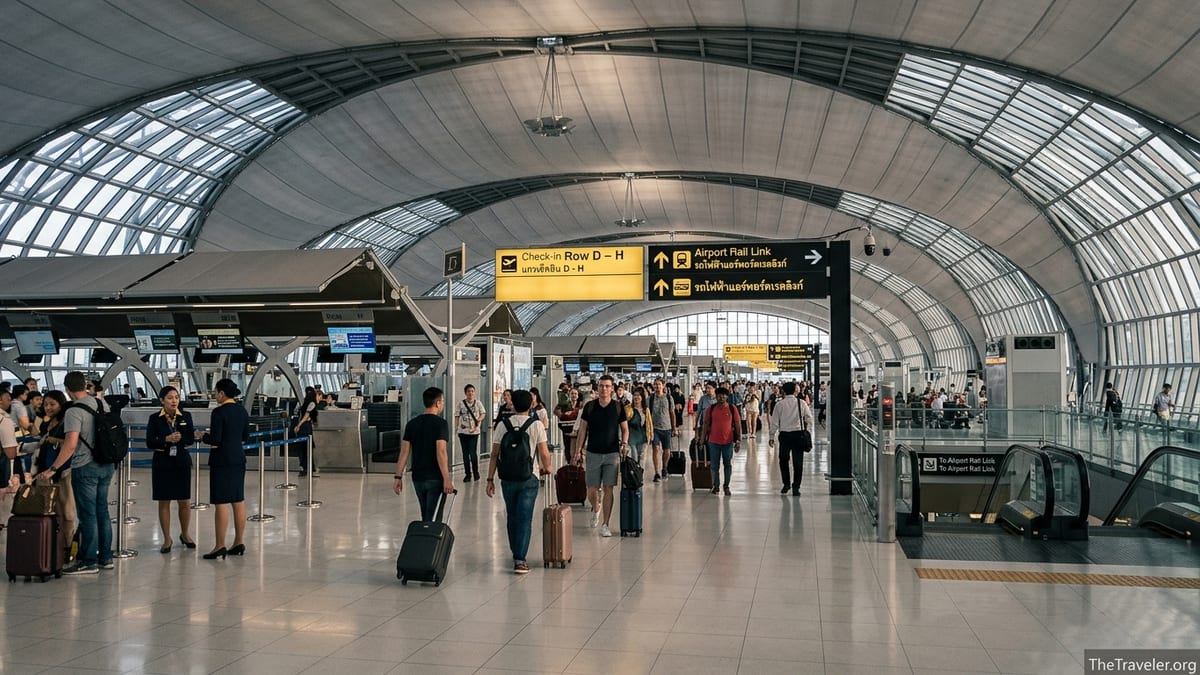
Understanding Suvarnabhumi’s Overall Layout
Suvarnabhumi is effectively one huge terminal rather than several separate terminals, plus a new satellite building known as SAT-1. The main terminal runs lengthwise and is connected to a series of concourses labeled A through G that branch off like fingers. Most passengers will only ever use this main terminal, but since late 2023 the SAT-1 building has taken over a large share of international departures and arrivals as traffic has grown.
The main terminal is organized by floors. Basement Level B is where you find the Airport Rail Link trains into the city. Level 1 is for public buses and some taxi queues, Level 2 is international and domestic arrivals, Level 3 is mostly services and dining, and Level 4 is departures and check in. If you land on an international flight from Europe, the Middle East or North Asia, you will almost always arrive on Level 2, then either connect airside or clear immigration and head up or down using the central escalators and elevators.
Concourse letters help you understand where your flight will park. In broad terms, concourse A is largely domestic, while B to G handle international operations, with different airlines clustered in different zones. For example, Thai Airways and Star Alliance partners often use concourses C, D and E, while many Middle Eastern and European carriers use F and G. The SAT-1 satellite adds extra concourses labeled again from A to D but only for international flights, so you might see a gate such as S-A12 listed on your boarding pass rather than a gate in the main building.
Because everything is technically part of one terminal complex, you do not need buses or trams between terminal buildings the way you would in airports with multiple separate terminals. Instead, you move horizontally along the long central hall and vertically between floors. The longest airside walks, for example from immigration to a far-flung G gate, can take 15 to 20 minutes at a normal walking pace, so build that into your timing if you like to arrive at the gate early.
Arrivals: From Gate to Baggage to the City
On arrival you will usually disembark via an airbridge directly into one of the concourses. Large signs immediately point you toward immigration and transfer desks. If you are connecting onto another international flight on a single ticket with your luggage checked through, you follow the “Transfer” or “International Connecting Flights” signs, which keep you airside. If Bangkok is your final destination, you follow “Immigration” and walk along moving walkways toward passport control on Level 2 of the main building.
Immigration times vary widely. During peak evening bank arrivals from Europe and the Middle East, it is common to wait 30 to 45 minutes in line, though at quieter times in the early afternoon you might be through in under 15 minutes. After clearing passport control you pass through a short corridor to the baggage claim hall. Screens above each carousel show flight numbers, and baggage trolleys are plentiful and free. For example, if you arrive on a Qatar Airways flight from Doha that landed at gate F6, your bags may be assigned to Carousel 14 or 15 in the central baggage area, just a three to five minute walk from immigration.
Once you collect your bags and pass customs, sliding doors lead you into the public arrivals area on Level 2. This is where you will find meeting points, hotel representatives, and several mobile phone counters selling Thai SIM cards. If you plan to take the Airport Rail Link into town, you go down two levels to Basement B using the central escalators or elevators. A typical journey on the Airport Rail Link from Suvarnabhumi to Phaya Thai station, where you can transfer to the BTS Skytrain, takes about 25 to 30 minutes and costs around 45 baht for the full distance.
For those heading directly to more distant destinations, such as Pattaya or Hua Hin, look for booths on Level 1 and Level 2 selling bus and minivan tickets. A shared coach from Suvarnabhumi to Pattaya, for example, often costs in the region of 150 to 200 baht and departs from the airport’s public transport center, which is reached by a short shuttle bus ride from Level 1. Taxi counters and ride-hailing pickup points are also well signposted; if you are jet lagged and carrying heavy luggage, a metered taxi into central Sukhumvit typically takes 45 to 60 minutes in light traffic and the fare is usually in the 300 to 400 baht range plus tolls.
Departures: Check in, Security and Finding Your Gate
All airline check in takes place on Level 4 of the main terminal. The check in hall is divided into rows labeled A through W, with sliding door numbers along the roadside from roughly Door 1 to Door 10. Your airline and flight are assigned to a particular row, which will be shown on monitors just inside the doors. For example, many Bangkok Airways flights check in at Row F, while Thai Airways economy check in for international flights is often located around Row D or E. Low-cost carriers operating out of Suvarnabhumi, such as some Thai Vietjet or Thai AirAsia domestic services when scheduled here rather than Don Mueang, may use rows closer to one end of the hall.
A good rule of thumb on timing is to arrive at the airport around three hours before an international flight and about two hours before a domestic one. This gives enough buffer for traffic, check in, security and a potential queue at passport control. As a real-world example, if you are flying on an Emirates evening departure to Dubai around 21:00, arriving at the Level 4 drop-off area at 18:00 gives you time to check in at Row J or K, clear security, then pass through immigration and still have 45 to 60 minutes at the gate before boarding.
After check in you proceed directly to the security screening area behind the check in rows. Once through security, passengers on international flights go to immigration, while domestic passengers are funneled into a separate domestic departures area without passport control. Past immigration, you enter the main airside concourse level with duty free shops, cafes and the walkways to each pier of gates. Overhead screens and frequent announcements make it clear whether your gate is in concourse C, D, E, F, G or in the SAT-1 satellite building.
Distances to gates can be longer than many travelers expect. Walking from central security to a far G gate may take up to 20 minutes if you stroll and stop for a coffee. If your boarding pass shows a gate beginning with “S” such as S-A8, this indicates it is in SAT-1. In that case you will follow the signs for SAT-1 and board an automated people mover or shuttle system that connects the main terminal to the satellite. These shuttles are located airside and you do not reclear security. Boarding for most flights begins 30 to 40 minutes before departure, so aim to be at your gate when boarding is scheduled, not at departure time.
The SAT-1 Satellite: What Has Changed for Travelers
Satellite Terminal 1, usually referred to as SAT-1, was added to boost capacity and is now heavily used by international airlines. Unlike a completely separate terminal, SAT-1 is linked to the main building underground, and only passengers who have already cleared security and immigration can access it. Inside, SAT-1 has four concourses labeled A through D and features modern boarding gates with glass walls and views across the airfield.
For passengers, the biggest change is that some flights now depart and arrive at SAT-1 instead of the traditional concourses. If you are flying on a busy evening departure to Europe or East Asia, your boarding pass might show a gate such as S-B15. In practical terms, you still check in on Level 4 of the main terminal, clear security and immigration as usual, then follow the SAT-1 signs to the underground shuttle. The journey on the shuttle typically takes just a few minutes, but you should allow extra time for walking and waiting, especially during peak periods when many flights are banked together.
Facilities in SAT-1 are similar to those in the main terminal, with cafes, seating areas, duty free shops and airline lounges. If, for example, you are flying in business class on a Star Alliance carrier, you may be invited to use a lounge located in SAT-1 rather than the older lounges in the main concourse. Power outlets, USB charging points and free Wi-Fi are available at most gates, which is useful during delays or long boarding windows. Because all passenger flows still funnel through the main security and immigration control points, the way you plan your time at Suvarnabhumi has not fundamentally changed, but you do need to check whether your flight is a SAT-1 departure so you do not linger too long in the main building’s shopping area.
On arrival into SAT-1, passengers follow clear signage to either international connections or the shuttle back to the main terminal for immigration and baggage claim. If you have a tight onward domestic connection on the same ticket, for example landing from Tokyo into SAT-1 and connecting to a Thai Airways flight to Chiang Mai, the airline’s minimum connection time takes the shuttle transfer into account, but it is still wise to move promptly from the gate rather than stopping for long breaks.
Domestic vs International: Navigating Between Concourses
Suvarnabhumi handles both domestic and international flights, but they are separated primarily by process rather than by completely different buildings. Domestic departures and arrivals share parts of the same main terminal structure, especially concourse A and a portion of concourse B, yet domestic passengers never pass through immigration. If you are flying from Bangkok to Chiang Mai, Phuket or Krabi, you still go to Level 4 for check in, then follow the signs for domestic departures after security.
Arriving on a domestic flight is usually quicker. You deplane, walk to the domestic baggage claim area and exit onto Level 2, without any passport control. For instance, on a morning Bangkok Airways flight from Phuket, many passengers report being curbside and in a taxi within 20 to 30 minutes of landing if they have only checked baggage and no queues at the belt. Because domestic arrivals share Level 2 with international arrivals, meeting a friend who has flown up from another Thai city is as simple as choosing a landmark in the central arrivals hall, such as a coffee shop or information counter.
International to domestic transfers within Suvarnabhumi can be seamless when booked on a single ticket. If you arrive from abroad on a Thai Airways or Star Alliance partner flight and continue to a Thai city, you often pass through a dedicated transfer security checkpoint and proceed directly to the domestic gate area without reclaiming your bags. In other situations, such as arriving on a low-cost international airline and transferring to a separate domestic ticket, you will need to clear immigration, collect your luggage, clear customs and then go up to Level 4 to check in again.
Because domestic gates are located closer to the main terminal spine, walking distances are often shorter than for some long-haul international gates. Nevertheless, during holiday peaks such as Songkran in April or the New Year period, domestic security lines and boarding areas can become crowded, so traveling with some extra time is wise if your flight coincides with these busy seasons.
Ground Transport: From the Terminal to Bangkok and Beyond
One of Suvarnabhumi’s strengths is its range of transport into Bangkok. The Airport Rail Link station is located on Basement Level B directly under the main terminal. Clear signs labeled “Airport Rail Link” guide you from arrivals down to the station. Trains typically run from early morning to around midnight and connect Suvarnabhumi with several key city stations including Makkasan and the terminus at Phaya Thai, where you can change to the BTS Skytrain. Fares on the city line are distance based; traveling the full route to Phaya Thai usually costs around 45 baht and takes 25 to 30 minutes, regardless of road traffic.
For many solo travelers or couples staying near the Skytrain or MRT, the Airport Rail Link is the fastest and cheapest option. As a concrete example, a visitor landing at 19:00 and staying near Victory Monument might take the train from Suvarnabhumi to Phaya Thai, walk a few minutes to the BTS station and ride one stop or two, reaching their hotel by about 20:00 even during rush hour. Compare this to a taxi in heavy traffic, which could take well over an hour for the same journey and cost several times more.
Taxis remain the most convenient choice if you have bulky luggage, are traveling in a group, or are heading to areas not well served by rail, such as riverside hotels far from Skytrain lines. Official metered taxis queue on Level 1, where you take a ticket from an automated machine that assigns you a bay number. A typical fare into central Sukhumvit or Silom might be in the 300 to 400 baht range, plus expressway tolls and a small airport surcharge. Ride-hailing services such as Grab operate in Bangkok and can be summoned to designated pickup points, often slightly away from the busiest curbside areas.
Public buses and shuttle vans operate from the airport’s public transport center, which is connected to the terminal by a free shuttle bus service from Level 1. This center offers routes to different parts of the city and to nearby provinces. For example, long-distance coaches to Pattaya or Rayong frequently depart from here, making it possible to land in Bangkok in the afternoon and be on the beach by evening without backtracking into the inner city. If you prefer private transfers, many hotels and travel agencies offer prebooked cars that meet you in the arrivals hall with a name sign, often costing more than a taxi but removing the need to negotiate fares or directions in a new city.
Practical Tips for Navigating the Airport Smoothly
Suvarnabhumi’s size can be intimidating on first visit, but small habits make it easier to handle. First, always check your boarding pass and the nearest flight information screens for your gate and whether it is in the main concourses or in SAT-1. Gates can change, especially during busy evening waves of long-haul departures, so glancing at the monitors regularly while you are shopping or eating can prevent an unexpected sprint down a long corridor.
Second, pay attention to levels and vertical movement. Many travelers waste time wandering lengthwise along the terminal when they actually need to go up or down a floor. For example, after clearing immigration on arrival, you remain on Level 2 until you have collected your bags and exited into the arrivals hall. Only then should you go down to Level 1 for taxis or buses, or down further to Basement B for the Airport Rail Link. Elevators are plentiful and useful if you have heavy luggage, but they can be slower during peaks, so escalators are often faster if you can manage your bags.
Third, consider preparing for queues by carrying a bottle of water and a small snack in your hand luggage. Security requires liquids to be screened on departure, but water and snacks are fine once you are airside. If you arrive late at night, many shops and food outlets do stay open, but selection may be more limited. Travelers with children often plan an easy meal at one of the chain restaurants on Level 3 or in the departures area before heading to the gate so that they are not reliant on in-flight catering alone.
Finally, remember that airport staff and information counters are used to helping international visitors. If a sign is unclear, particularly regarding the SAT-1 shuttle or the split between domestic and international flows, asking at a staffed desk can save time. Airport announcements are usually made in Thai and English, and most of the customer service desks in the main hall are staffed by people who can answer questions about directions, check in zones and typical walking times to specific gates.
The Takeaway
Bangkok Suvarnabhumi Airport is large but logically designed once you understand its basic structure. A single main terminal, a set of concourses and the SAT-1 satellite all connect through clear vertical levels and long but simple corridors. International and domestic operations share the same building, which makes transfers straightforward when flights are booked on one ticket. The Airport Rail Link provides a quick and inexpensive way into the city, while taxis, buses and private transfers offer flexibility for every budget and destination.
Whether you are transiting for a few hours or beginning a longer journey through Thailand, a mental map of Suvarnabhumi’s floors, concourses and transport options can greatly reduce stress. Check your gate early, allow for walking time to SAT-1 if needed, and choose the ground transport that best matches your luggage, budget and arrival time. With these details clear before you land, the airport becomes less of a maze and more of a smooth gateway to Bangkok’s energy and the rest of Southeast Asia.
FAQ
Q1. Is Suvarnabhumi Airport just one terminal or several?
Suvarnabhumi functions as one large main terminal building with multiple concourses plus the SAT-1 satellite, which is connected airside. All check in still happens in the same main hall on Level 4.
Q2. How do I know if my flight uses the SAT-1 satellite?
Your boarding pass and the departure screens will show a gate starting with “S” such as S-A10 or S-B15. If you see this, follow the SAT-1 signs after immigration and take the shuttle system to the satellite concourses.
Q3. How long does it take to get from check in to my gate?
For most flights you should allow at least 45 to 60 minutes from check in to the gate, including security and immigration. If your gate is far in concourse G or in SAT-1, add another 10 to 15 minutes of walking and shuttle time.
Q4. Where is the Airport Rail Link station inside Suvarnabhumi?
The Airport Rail Link station is on Basement Level B directly under the main terminal. From arrivals on Level 2, follow the “Airport Rail Link” signs down two levels by escalator or elevator to reach the ticket machines and platforms.
Q5. How much does the Airport Rail Link to central Bangkok cost?
Fares on the Airport Rail Link are distance based and typically range from about 15 to 45 baht. Traveling the full route from Suvarnabhumi to Phaya Thai station usually costs around 45 baht per person.
Q6. Is it better to take a taxi or the train into the city?
If you are one or two people with light luggage and are staying near a BTS or MRT station, the train is usually cheaper and avoids traffic. If you have heavy bags, young children, or are staying far from rail lines, a metered taxi from Level 1 is more convenient.
Q7. How much time do I need for an international to domestic transfer?
On a single ticket with through-checked bags, minimum connection times are often around 1.5 to 2 hours. If you booked separate tickets and must clear immigration, collect bags and recheck, plan on at least 3 hours to be safe.
Q8. Are there places to sleep or rest during a long layover?
Yes. Inside the terminal you will find quiet seating areas, lounges and some rest zones where people nap between flights. Several hotels operate near the airport, including properties connected by short shuttle rides for those with overnight layovers.
Q9. Do shops and restaurants stay open late at Suvarnabhumi?
Many shops and food outlets in the airside area operate late into the night to serve long-haul arrivals and departures, although the full range of options is greatest during daytime and evening hours.
Q10. What should I do if I feel lost inside the airport?
Look for the nearest information counter or uniformed airport staff and show them your boarding pass or flight details. They can point you to the correct floor, concourse and gate, and advise on the quickest route based on your remaining time.