


Roamless has quickly become a favorite among frequent travelers who want a single eSIM that works across more than 200 destinations without juggling local SIM cards. Its pay-as-you-go model and flexible data plans can be excellent value, but only if you understand how the service really works. Misunderstand a few key settings or assumptions, and the savings you hoped for can disappear in a tangle of roaming charges, dead connections, or unexpected top-ups. This guide unpacks the biggest mistakes people make when using Roamless and how to avoid them, using real-world scenarios from trips around the world.
Get the latest updates straight to your inbox!
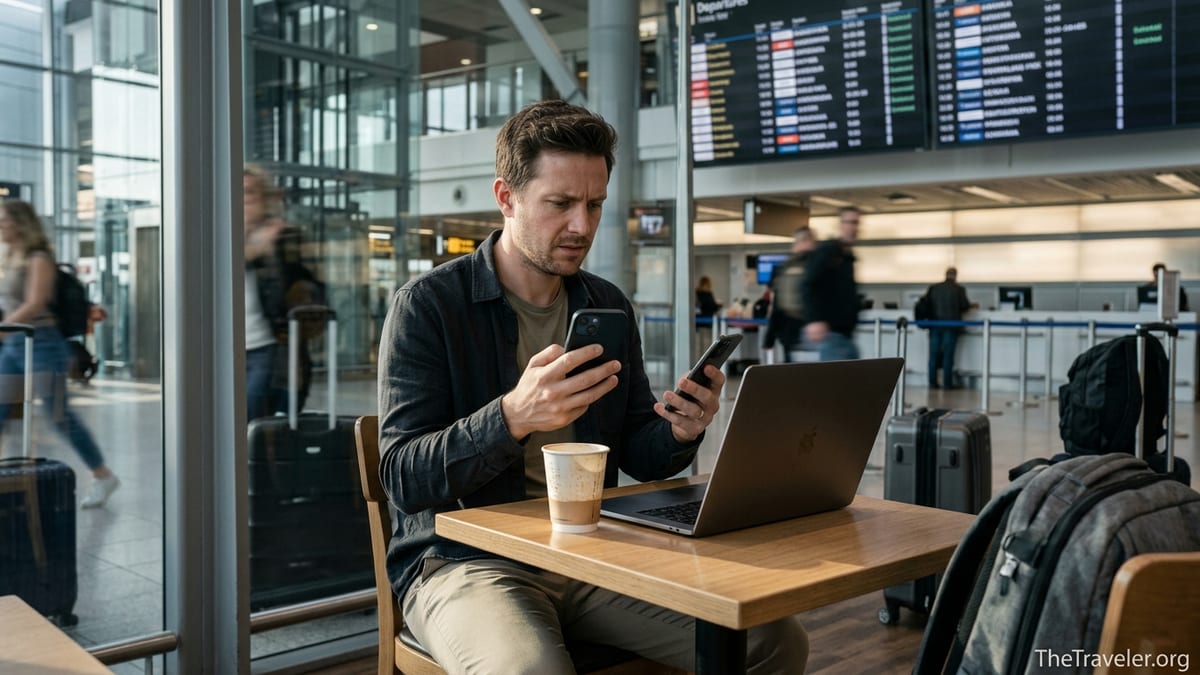
Misunderstanding How Roamless Pricing Actually Works
One of the most common mistakes is assuming Roamless works like a traditional roaming bundle or an “unlimited” eSIM. It does not. Roamless primarily runs on a pay-as-you-go model called Roamless Flex, where you buy credits that are consumed per megabyte of data, typically starting around 2 to 3 dollars per gigabyte in many popular destinations. In some countries that can be far cheaper than your home carrier’s roaming, but it is not always the cheapest option compared with local SIM cards or some regional eSIM packages.
Take a practical example. A traveler from New York heading to Japan might see a Roamless data plan listed around a handful of dollars for a couple of gigabytes over 30 days, which is good value for light users who mainly check maps, messages, and email. But a backpacker streaming Netflix on the Shinkansen and uploading daily 4K reels could easily burn through 10 to 20 GB in two weeks. In that case, a heavy local plan from a Japanese carrier or a competing regional eSIM might cost less overall. The mistake is not checking your realistic data consumption and comparing it with the Roamless per‑GB rate for the specific countries on your route.
Another confusion point is the difference between Flex credits and fixed data plans (often called Roamless Fix in reviews). Flex credits generally do not expire quickly and work across many countries, which is ideal if you are bouncing between Spain, Turkey, and Thailand over a few months. Fixed plans, on the other hand, are country or region specific and expire after a set number of days. Some travelers top up Flex credits, then buy a fixed plan on top, not realizing which balance the app is drawing from and mistakenly thinking one “overwrites” the other. In reality, you need to read the plan description in the app carefully and check the active balance screen before you travel.
Finally, many users forget that Roamless does not normally offer unlimited data. That means hotspot use is allowed but only within the limits of the data you have paid for. A couple sharing one phone’s hotspot for video-heavy work in a Lisbon cafe might blow through a month’s worth of light browsing in a single afternoon if they treat it like home broadband. Understanding that every megabyte is billed is crucial for avoiding bill shock.
Using an Incompatible or Locked Device
Roamless only works with carrier-unlocked devices that support eSIM. This seems obvious, yet it remains one of the biggest pain points for new users. Travelers often install the app on a phone from a US carrier like Verizon or AT&T without realizing the device is still locked, then discover at the airport in Paris that the Roamless eSIM will not activate. The app may show errors such as the eSIM not being supported on this device, even though the phone technically supports eSIM in general.
Another frequent scenario is someone traveling with an older or budget Android device that supports only physical SIM cards or has limited eSIM support. They download the Roamless app at home, buy credits, and only notice during installation that their phone model is not on the compatibility list. Even among eSIM-capable phones, some dual-SIM setups behave differently depending on region variants. A traveler who bought an imported device in Southeast Asia, for instance, might find that its firmware treats eSIMs in ways that differ from the mainstream US or EU versions.
The safest way to avoid this mistake is to check Roamless’s compatible device list and confirm your phone is carrier-unlocked weeks before departure. In practice, that might mean calling your carrier to request an unlock for an iPhone 13 before a three-month trip to South America, then testing another provider’s eSIM at home. You should also perform a full eSIM install test for Roamless while still on Wi‑Fi at home. Although you will not incur roaming data charges until you actually use data abroad, at least you can confirm the eSIM installs properly and shows up in your device’s mobile network settings.
Some travelers also forget to keep their physical SIM or primary eSIM active for calls and SMS from banks, two-factor authentication codes, or family at home. They set Roamless as the default for all services and later realize that important texts were sent to their original number, which is now inactive. Ideally you should configure Roamless for data only and keep your home SIM for calls and SMS, especially for short trips.
Incorrect Phone Settings That Trigger Expensive Roaming
Dual-SIM phones can be a blessing for travelers, but they also introduce complexity. One of the most expensive mistakes with Roamless is misconfiguring mobile data settings so that your home carrier quietly takes over when Roamless coverage momentarily dips. On many iPhones and Android devices, a setting like “Allow Cellular Data Switching” or similar can let your phone switch back to your primary line if the Roamless eSIM is weak. If that primary line is roaming, every minute of video or call can rack up charges in the background.
Imagine you are a Canadian traveler using Roamless as your data line while keeping your Rogers SIM active for calls. You enable Roamless for data in the settings but leave “allow data switching” on. While making an in-app Roamless call from a hotel in Rome, the Roamless network briefly drops. Your phone silently switches data to Rogers for a few minutes just as you are explaining a delayed flight to your family. Later that week, you discover five separate roaming data charges from your home carrier even though you thought those calls had been “on Roamless.”
Another common setup issue is leaving data roaming enabled on the home SIM. Many travelers assume that once they select Roamless as the preferred data line, their domestic SIM stops using data. In reality, if data roaming is on, some phones will still use that line for background tasks, updates, or messaging apps under certain network conditions. That can mean unexpected roaming fees from Verizon or T‑Mobile alongside your Roamless usage. The proper configuration is to set Roamless as the data line, turn off data roaming for the home SIM, and, if available, disable automatic data switching.
Finally, users sometimes forget to configure the APN and network selection properly when a connection is not working as expected. Roamless typically pushes an APN such as “roamless” automatically, but in some destinations, local nuances mean you may need to confirm or adjust APN details in your device settings, or switch between available partner networks manually. Travelers in places like Japan or Belgium have reported that simply editing the APN or toggling to a different local carrier resolved what looked like a complete outage. Assuming the service is “broken” without checking these basics can lead to unnecessary panic and support tickets.
Assuming Coverage and Performance Are Identical Everywhere
Roamless markets coverage in more than 200 destinations, but that does not mean the experience is identical in every city, rural region, or island. A frequent mistake is assuming that if Roamless worked brilliantly in Spain, it will be just as fast and reliable in rural Indonesia or on a Greek island. Like most travel eSIM providers, Roamless depends on local partner networks, and those networks may vary in quality or even change over time.
A real-world example is a traveler who used Roamless for a multi-country trip through Europe and Southeast Asia. They enjoyed strong 4G and even 5G speeds in cities such as Berlin and Bangkok, with video calls and cloud backups running smoothly. But later, on a remote island in the Philippines, coverage dropped to a patchy 3G connection that struggled with maps and ride-hailing apps. The service still technically “worked,” but the performance was nothing like what they had in capital cities. The mistake here is expecting uniform service in all locations rather than planning for weaker connectivity in remote areas.
Coverage nuances also exist within the same country. In the United States, for example, Roamless has historically partnered with major networks like AT&T, T‑Mobile, and Verizon, but which partner is preferred or available can change. Some recent users have reported shifts such as gaining support on one large network while losing data access on another, or seeing the underlying carrier name hidden so the phone simply shows “Roamless” instead of “AT&T” or “T‑Mobile.” That can affect whether you get a strong signal in rural parts of states like Montana or in crowded urban corridors where certain carriers have better infrastructure.
To minimize surprises, travelers should check Roamless’s up-to-date coverage lists in the app before finalizing itineraries, especially for less-visited countries. It is wise to search for recent user experiences for specific locations, such as “Roamless in Japan” or “Roamless in Mexico City,” to see how others have fared. For high-stakes trips, like attending matches at the 2026 World Cup across multiple host cities, consider Roamless as your primary data line in major cities but keep a backup option, such as a local SIM or another eSIM provider, for stadium days or rural side trips.
Ignoring Data Management, Hotspot Use, and Background Apps
Even when travelers understand Roamless’s pricing, they often underestimate how quickly modern apps consume data. Treating a metered Roamless connection like home broadband is one of the fastest ways to burn through Flex credits. Video-heavy social media, cloud photo backups, and automatic app updates can quietly consume gigabytes in the background while you think you are just checking directions.
Consider a digital nomad working remotely from cafes across Europe. They install Roamless once in Lisbon, then continue using the same eSIM in Paris, Berlin, and Prague. On the first day, they tether their laptop to their phone’s hotspot to join a two-hour video meeting, sync large work files, and run system updates. That afternoon, Google Photos and iCloud automatically back up hundreds of high-resolution images from a weekend trip. By evening, several gigabytes are gone, and a large chunk of their Flex balance has evaporated. The mistake was failing to treat Roamless as a metered connection and to restrict background-heavy tasks to hotel Wi‑Fi when possible.
Another oversight is not adjusting streaming quality. Popular apps such as Netflix, YouTube, and Spotify can use more than a gigabyte per hour at high resolution. If you are using Roamless data during a long bus ride between Florence and Rome, switching your streaming apps to low or medium quality can cut your data consumption dramatically without ruining the experience on a small phone screen. Similarly, disabling automatic downloads of podcasts, software updates, and large attachments while using mobile data can save a meaningful amount of credit over a multi-week trip.
Sharing hotspots with friends also requires discipline. It might seem generous to let three travel companions connect to your Roamless hotspot on a train through the Swiss Alps, but if everyone starts scrolling TikTok and Instagram Reels, your balance may vanish before you reach Zurich. The smart approach is to agree on light usage rules when sharing hotspots, such as messaging and maps only, and to schedule heavy downloads for hotel Wi‑Fi later in the day.
Confusing Roamless Calls With Traditional Voice Services
Roamless’s in-app calling feature is a distinctive perk among travel eSIM providers, but it is easy to misunderstand how it works. The app lets you place outbound calls to international numbers using your data connection, often at rates starting around one cent per minute, depending on destination. However, you are not assigned a personal local number that can reliably receive incoming calls from businesses or family. Many users wrongly assume Roamless will function just like a local SIM with full two-way voice services.
For instance, a traveler in Spain might give a hotel or rental car company the number shown within the Roamless app and expect to receive callback confirmations directly to their phone. When the call center later tries to reach them, the call may fail or go to a generic system because Roamless’s setup is optimized for outbound rather than inbound calls. In practice, this means you should still rely on apps like WhatsApp, FaceTime Audio, or Google Voice for two-way communication, or keep your home SIM active for critical calls and SMS where a stable, reachable number is essential.
Another subtle issue arises when people assume using the Roamless app for calls automatically guarantees that those calls are billed via Roamless data. If your phone’s data line silently switches back to your home carrier because of the settings mentioned earlier, you might end up making what feels like a Roamless call but is technically running over your domestic carrier’s roaming data. That can generate unwanted charges even though, on the surface, you are inside the Roamless interface.
The best practice is to think of Roamless calls as a convenient outbound add-on, not a full replacement for a standard phone number. Before any long call, double-check that Roamless is set as the active data line, that roaming is disabled on your home SIM, and that no automatic data switching is enabled. For important two-factor calls from banks or airlines, use a number you know can receive calls normally, whether that is your home SIM, a local prepaid SIM, or a virtual number service you already trust.
Not Planning Around Roamless’s Strengths and Weaknesses
Roamless can be either the perfect fit or a mediocre option depending on your trip style. A major mistake is using it in scenarios where its pricing or design is less competitive. For short city breaks, such as a four-day weekend in London or a one-week trip to Mexico City, a small fixed Roamless data plan can be convenient and cost-effective, sparing you the hassle of buying a local SIM. But for long stays in one country, or for heavy data users, local prepaid SIMs often beat Roamless significantly on price per gigabyte.
Imagine spending three months in Australia working remotely. Some travelers have noted that while Roamless delivered reliable service, comparable local plans from Australian operators or supermarket brands provided 20 GB or more for around the equivalent of thirty dollars, while consuming the same amount on Roamless cost roughly double. For a short, two-week holiday, paying a premium for global convenience might be worth it. Over a quarter of a year, that premium adds up quickly.
On the flip side, Roamless shines on complex itineraries that span many countries over several months. A digital nomad doing a loop from Lisbon to Istanbul, then onward to Thailand, Vietnam, and Japan, might appreciate that a single Roamless eSIM and pool of Flex credits can follow them everywhere. Instead of installing a new eSIM for each country or hunting for physical SIM kiosks late at night, they simply land, toggle data on, and get connected within minutes. In those scenarios, paying slightly more per gigabyte can be worth the time and hassle savings.
Planning also matters for events that move across borders, like a multi-city sports tournament or a cruise. Fans following matches in multiple host cities with tight travel schedules may find that Roamless’s flexibility outweighs the marginal savings of juggling separate local SIMs. By contrast, someone on a single-country beach holiday who mainly needs maps and messaging may do better buying a cheap local plan at the airport. The key is to map out your route, estimate data needs, and compare concrete costs before defaulting to Roamless everywhere.
The Takeaway
Used correctly, Roamless can be a powerful tool for staying connected across borders. Its global eSIM, pay-as-you-go credits, and flexible fixed plans offer a modern alternative to old-fashioned roaming, making it especially attractive for multi-country trips and digital nomads. Most horror stories stem not from the service itself but from misunderstandings: using locked or incompatible phones, misconfigured dual-SIM settings, unrealistic expectations about coverage, or failing to manage data carefully on a metered connection.
The smartest Roamless users treat it like a precision instrument rather than a blunt replacement for home internet. They install and test the eSIM well before departure, lock down phone settings so that their home carrier cannot quietly resume data roaming, and keep bandwidth-hungry tasks on Wi‑Fi where possible. They also recognize when Roamless is the right tool, such as multi-country itineraries, and when a simple local SIM or another provider might be more economical.
If you invest a little time in understanding how Roamless works and adjust your habits on the road, you can enjoy seamless connectivity in more than 200 destinations without nasty billing surprises. That leaves you free to focus on what matters on your trip: finding the right cafe in Seoul, sharing sunset photos from Santorini, or navigating a night train in Eastern Europe, all with reliable data in your pocket.
FAQ
Q1. Does Roamless replace my regular phone number when I travel?
Not exactly. Roamless mainly provides data and in-app outbound calling. Your regular phone number from your home carrier still handles incoming calls and SMS, so it is usually best to keep that SIM active for critical messages and use Roamless primarily for data and optional outbound calls.
Q2. Can I install the Roamless eSIM months before my trip?
Yes. Many travelers install the Roamless eSIM at home on Wi‑Fi weeks or months before departure to confirm compatibility and setup. Your credits are only consumed when you start using data or buying plans in specific countries, so early installation is generally safe.
Q3. How do I avoid my home carrier charging roaming fees while I use Roamless?
Set Roamless as the default data line, turn off data roaming on your home SIM, and disable any settings that allow automatic data switching between lines. This ensures that all mobile data traffic stays on Roamless instead of silently falling back to your domestic carrier.
Q4. Is Roamless cheaper than buying a local SIM in every country?
It depends on your trip. For short stays and complex multi-country itineraries, Roamless often offers a good balance of price and convenience. For long stays in a single country or very heavy data use, local prepaid SIMs are usually cheaper per gigabyte.
Q5. Will Roamless work on my locked phone from a US carrier?
Probably not. Roamless requires an eSIM-capable, carrier-unlocked device. If your phone is still locked to Verizon, AT&T, T‑Mobile, or another carrier, you should request an unlock and confirm success before relying on Roamless for your trip.
Q6. Can I use Roamless as a hotspot for my laptop or friends?
Yes, you can usually use hotspot and tethering with Roamless, but all data used counts against your paid balance. Heavy hotspot use, especially for video calls or streaming, can consume credits quickly, so it is wise to limit sharing and reserve large downloads for Wi‑Fi.
Q7. What should I do if Roamless shows signal bars but no data?
First, check that mobile data is enabled for the Roamless line and that the correct APN is set. Then try toggling airplane mode, restarting the device, or manually selecting a different local network in your phone’s carrier settings. If the problem persists, contact Roamless support from a Wi‑Fi connection.
Q8. Does Roamless offer truly unlimited data plans?
Roamless typically focuses on metered pay-as-you-go credits and fixed data bundles rather than unlimited plans. While some promotions may feel generous, you should always assume your data is capped and billed by volume, and manage your usage accordingly.
Q9. Can I receive verification codes or bank SMS through Roamless?
Roamless itself does not replace your SMS inbox. Verification codes and bank messages will still go to the phone number associated with your home or local SIM. Keep that SIM active for SMS, and use Roamless for data alongside it.
Q10. Is Roamless a good choice for cruises or remote regions?
Roamless can work well in ports and cities with good mobile networks, but shipboard connectivity and very remote regions are often limited regardless of provider. For cruises, consider Roamless as a port-day solution and rely on the ship’s Wi‑Fi or offline downloads while at sea.