


QEEQ has grown into a popular global car rental platform, connecting travelers to thousands of local and international suppliers at airports and city locations worldwide. Many users praise its low prices and handy tools like price tracking and membership discounts. Yet reviews and real-world experiences also reveal a pattern: travelers who click “Book” too quickly sometimes arrive at the counter to find unexpected fees, rejected payment cards, or even no car at all. This guide walks through the biggest mistakes people make when renting cars through QEEQ and how to avoid them, using recent, real-world examples from travelers on the road in 2024 and 2025.
Get the latest updates straight to your inbox!
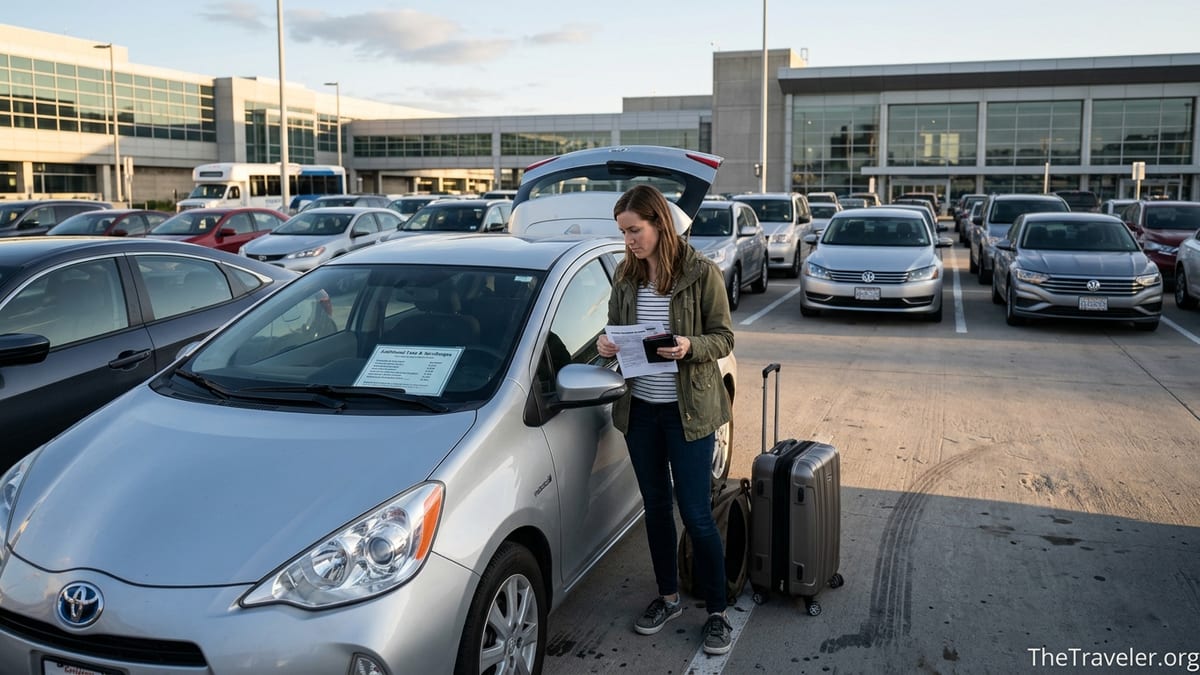
Forgetting That QEEQ Is a Broker, Not the Actual Rental Company
One of the most important details about QEEQ is that it is a broker: it compares prices and processes bookings, but the actual rental is fulfilled by partners such as Hertz, Avis, Dollar, Routes, local airport agencies, or small regional brands. Travelers who treat QEEQ as the rental company itself often run into frustration at the counter. For example, a traveler might see a compact car deal in Orlando labeled with a familiar global brand but fail to notice that pickup is actually operated by a small off-airport partner. When they land, they look for a QEEQ counter that does not exist and lose time figuring out which shuttle to take and where the real office is located.
Recent customer stories show how this confusion can escalate. On review platforms, several users report arriving at a partner location and being told that no cars are available, even though QEEQ confirms a booking number. In one case, a traveler who had reserved a car weeks in advance was informed at the desk that they would have to wait roughly three hours for a vehicle to be returned. They left, only to later be billed as a no-show and then had to fight for months to recover their money through QEEQ’s support channels. Situations like this are rare compared to the total volume of bookings, but they highlight how relying on QEEQ alone without confirming the on-the-ground operator can backfire.
The practical fix is simple but requires a bit of discipline. After receiving your QEEQ voucher, identify the actual supplier name and search for that company’s reviews at your exact pickup location, such as “Dollar Las Vegas Airport” or “Routes Car Rental Calgary Airport.” Many global brands are franchised or partnered and service levels can vary dramatically between cities. If the provider seems poorly rated or hard to contact, consider canceling within the allowed period and rebooking with a different supplier through QEEQ rather than assuming that QEEQ itself will smooth over any local problems.
It is also smart to save both QEEQ’s booking confirmation and the rental company’s local phone number before you travel. Some off-airport partners, particularly in places like Dubai or smaller European airports, require you to call or message for shuttle pickup instead of walking up to a counter. Travelers who arrive late at night without reading these instructions often assume the rental has vanished, when in fact they simply missed the broker-style pickup process.
Misunderstanding Deposits, Cards, and Payment Rules
Another frequent pain point involves deposits and card requirements. QEEQ’s terms explain that deposits and payment policies are set by the underlying car rental provider, and that these rules can differ widely between locations and brands. Yet many travelers assume that because they could pay the booking fee on QEEQ with a debit card or digital wallet, they will also be able to use that same method at the counter for the security deposit. This is not always the case, especially with major suppliers at airports in North America and Europe, where a traditional credit card in the driver’s name is still standard.
In late 2023, a traveler reported booking via QEEQ for pickup at an airport in the northeastern United States. QEEQ’s interface suggested debit cards might be accepted, so the customer felt safe traveling with only a debit card. At the desk, Avis refused to release the car, stating that that particular branch required a credit card for the deposit, regardless of what the broker’s site implied. The traveler then spent weeks asking QEEQ for a refund, eventually being asked to submit sensitive bank documents to prove the failed transaction. This kind of tangle is stressful and avoidable if you double check card rules directly with the provider.
Other travelers report more mundane but still painful issues, such as being turned away because the primary driver did not bring the credit card used to book, or because the card presented was in a spouse’s name. One recent QEEQ reviewer in Europe mentioned that they had most of their cards at home and tried to pay the deposit with their partner’s card, only to be refused. The car sat ready in the lot, but without a card matching the driver’s name, the rental could not proceed and the original prepayment through QEEQ was at risk.
To protect yourself, always verify three things several days before pickup. First, confirm that the main driver has a physical credit card embossed with their own name, with enough available limit to cover both the deposit and any anticipated holds. Second, check whether the rental supplier at your specific location accepts debit cards at all, and if so, under what conditions, such as returning flight proof or credit checks. Third, review QEEQ’s booking page and voucher carefully to see the stated deposit amount; in some cases, deposits at airports like Los Angeles or Dubai can easily be the equivalent of several hundred dollars or more, temporarily tying up your credit line if you are not prepared.
Relying on QEEQ “Full Coverage” Without Understanding Local Insurance
Insurance and damage coverage are where many travelers feel blindsided. QEEQ sells its own “full coverage” style products, often underwritten by third-party insurers. These plans typically reimburse you after the fact for eligible charges, rather than replacing the local supplier’s collision or theft coverage at the counter. That distinction is not always clear to rushed bookers. As a result, some travelers arrive at the desk assuming they can decline the rental company’s insurance entirely, only to be told that basic collision damage waiver or theft protection is still required to rent the car.
In Europe, for example, a traveler might book a compact manual car in Sicily through QEEQ with full coverage checked, planning to drive for a week along the coast. At the airport counter, the agent may insist on selling an additional “super cover” product that reduces the excess to zero, suggesting that the QEEQ policy is not recognized. If the traveler does not understand that QEEQ’s coverage is a separate reimbursement policy, they are left arguing in a crowded airport line, feeling pressured into expensive add-ons. Although this example comes from another broker’s experience in Italy, the underlying pattern is identical and shows up in conversations around QEEQ as well.
QEEQ’s own insurance terms, updated in 2024, spell out that many of its policies require you to first pay the rental company for any covered damage or administrative fee, then submit documents, photos, and invoices to claim reimbursement. That can be a money and paperwork headache if you are hit with a significant charge. At some locations, renters have reported being billed hefty amounts for minor scratches or roadside incidents, then spending months in back-and-forth email chains with both QEEQ’s insurer and the local rental brand to recover the money.
The safest approach is to separate two questions in your mind. First, what coverage does the rental company require in order to hand over the keys? Second, what optional protection do you personally want, whether from QEEQ, your credit card, or a standalone policy? Before you book, read the insurance section on QEEQ for your specific city and provider, then cross check with the rental company’s own website. If your premium travel credit card includes primary rental insurance in the United States or selected countries, confirm the terms and decide whether you can safely decline extra products offered by both QEEQ and the supplier. In high-risk markets or when driving expensive vehicles, paying a little more for local zero-excess coverage can be worth the peace of mind, even if it overlaps slightly with QEEQ’s offerings.
Ignoring Fuel, Mileage, and Location-Specific Fee Policies
QEEQ has recently published guides warning about hidden fees in places like the United States and Los Angeles in particular, where renters often encounter surprise charges for fuel, toll processing, vehicle license fees, or airport surcharges. These guides explain that prepaying fuel is usually poor value unless you are certain you will return the tank nearly empty, and that “like for like” fuel policies can still lead to unexpected fuel and service fees if you misjudge the gauge. Despite this, many travelers still rush through the fuel and mileage sections on their booking and assume everything is “unlimited” and straightforward.
In practice, rental companies partnered with QEEQ may impose mileage caps on cheaper local deals, especially in regions such as Australia, parts of Canada, or rural Europe. For example, a budget rental in Perth booked via QEEQ might include only 150 kilometers per day, with excess mileage charged at a per-kilometer rate. If you plan to drive long distances to national parks or along the coast, that can double your effective daily cost. Some recent rental industry commentary notes that per-mile fees in capped contracts can range from roughly 25 to 75 cents per mile, which quickly adds up on a road trip.
Fuel fees are another recurring theme in complaints. A traveler renting through QEEQ in the United States might return the car with the gauge showing three-quarters full, thinking that is close enough. Later, they discover a sizeable fuel top-up plus an “admin” or “refueling service” fee added by the provider, because the contract specified an exact fuel level at checkout and the company measured the shortfall precisely. Similar stories come out of major brands globally, and QEEQ’s own content encourages renters to take photos of the dash and fuel gauge at pickup and drop-off. Skipping that quick documentation step leaves you with little evidence if you want to dispute a charge later.
Location-specific surcharges can also be more aggressive than expected. In car-dependent cities like Los Angeles, state and local fees such as vehicle license recovery charges or tourism assessments show up on the invoice even when the base rate from QEEQ looks extremely low. In some Middle Eastern hubs such as Dubai, local firms partnered with brokers have been accused by travelers of withholding large deposits for weeks or citing vague damage claims to keep part of the money. While such cases represent the extreme end, they demonstrate why you should always study the “Price Breakdown” section on QEEQ and, where possible, simulate a booking directly with the same supplier to see if the final numbers match before committing.
Overlooking Pickup Logistics, Opening Hours, and Local Communication
Another category of mistakes involves simple logistics. Many QEEQ bookings, particularly those with smaller regional partners, rely on shuttles, meet-and-greet arrangements, or limited office hours rather than 24-hour airport counters. Travelers who do not read their voucher carefully can land late at night and discover that their rental office closed at 10 p.m., even though their flight was delayed past midnight. Review sites include stories of customers arriving to dark, locked offices or unstaffed port drop-off locations and having to improvise taxis or hotel changes as a result.
For example, a traveler picking up through QEEQ at Dublin Airport recently praised the shuttle and overall rental but remarked that coordinating via the app was essential, since there was no desk directly inside the terminal. Another customer renting a car to drop at a small Greek port found that instructions for returning the vehicle were unclear and the office was not open at the advertised time, leading to confusion about where to leave the keys. These are not failures of QEEQ as much as reminders that broker bookings often rely on remote or third-party facilities, and you are responsible for following the fine print.
Communication channels are equally important. Some QEEQ users, particularly those in countries where the platform is less established, report difficulty calling a live agent and being pushed to use in-app chat or email. That can be slow or frustrating when you are at a counter facing an immediate problem, such as a denied card or a demand for unquoted fees. One reviewer described trying to reach QEEQ by phone while the rental company claimed they had not shown up on time, only to be disconnected after a long hold. By the time support answered through the app, the car had already been given away.
The best defense is to treat your voucher as a mini operations plan. Before travel day, confirm the physical address of the pickup point on an offline map, check whether a shuttle is needed, and note the exact opening hours. If your flight schedule is tight, consider paying slightly more for a rental with an on-airport desk that is clearly staffed according to your arrival time. Also, keep QEEQ’s in-app chat open on your phone when you land, but do not rely on it as your only lifeline; have the local rental office phone number ready and, where local regulations allow, consider calling from the baggage claim if anything seems unclear.
Assuming All QEEQ Partners Are Equally Vetted and Safe
QEEQ promotes access to more than a thousand rental partners in over two hundred countries, which is a genuine strength when you want niche vehicles or coverage in secondary cities. However, not all local partners have the same track record or level of regulation, and QEEQ’s listing of a company is not a guarantee that the experience will match what you get from a major brand at a large international airport. Recent discussions among travelers show that some tiny firms appear on QEEQ with minimal independent online presence beyond the platform itself.
For instance, one Japan-bound traveler considering a low-cost rental company found through QEEQ noticed that the business had no proper website and only a mobile phone contact, with little evidence of a real storefront on mapping services. In other regions, particularly around Dubai, multiple travelers have reported local agencies demanding large deposits, then arguing over minor paint marks or unclear damage and dragging their feet on refunds. While these specific cases did not always involve QEEQ as the broker, the underlying pattern of small, lightly reviewed companies using aggregators to reach foreign tourists should make you cautious.
On the more positive side, many QEEQ users report smooth rentals with reputable partners such as Routes in Canada, Thrifty in the United States, or well-known Irish shuttle operators, leveraging QEEQ’s membership discounts and price tracking to save hundreds of dollars versus booking direct. One traveler in North America mentioned that an annual QEEQ membership paid for itself quickly through recurring discounts on mid-size SUVs and compact cars. This reinforces the idea that the platform can be excellent value when paired with strong local suppliers.
The key is to treat QEEQ’s star ratings and reviews as a starting point, not the final word. Before committing to a very cheap offer from an unfamiliar brand, search the company’s exact name plus “reviews” in your destination language and look for patterns such as repeated complaints about withheld deposits, invented damage, or non-existent offices. Check how many reviews each reviewer has posted, which helps filter out obviously fake praise. When in doubt, paying a modest premium through QEEQ for a rental with a globally known brand or a heavily reviewed local firm usually costs less than dealing with a weeks-long dispute over a lost deposit.
Expecting Instant, All-Powerful Customer Support
QEEQ advertises 24/7 multilingual support and, in many cases, that promise is fulfilled with helpful interventions and refunds when things go wrong. Some Trustpilot reviewers in 2025 praise named QEEQ staff members for stepping in after a partner overcharged them, eventually securing partial or full compensation. But other travelers describe extended battles over relatively simple issues, such as a rental company claiming no-show status when the customer insists they arrived on time, or QEEQ requiring extensive documentation before processing a refund or insurance claim.
The underlying reality is that QEEQ sits between you and the rental provider contractually. Its terms state that deposits, cancellation penalties, and certain charges are governed by the rental company’s conditions, not by QEEQ’s preferences. When a dispute arises, QEEQ often has to request documentation from the partner and wait for responses, which can stretch out for weeks. During this time, the customer may feel ignored, especially if their only updates are short in-app messages or repeated requests for more paperwork, such as scanned receipts or, in one case, even bank statements.
If you expect QEEQ to function like a premium concierge that can instantly overrule local branches or waive fees, you are likely to be disappointed. Instead, think of QEEQ as an intermediary that can escalate and mediate but not unilaterally rewrite the contract you signed at the counter. This means that your own documentation becomes crucial. Taking detailed photos of the car at pickup and return, keeping copies of every email and invoice, and asking the rental desk to write short notes about any changes or problems on company letterhead will dramatically strengthen your position if you need QEEQ’s help later.
When something does go wrong, submit a clear, concise complaint to QEEQ with a timeline, attached images, and the exact amounts in question. Avoid waiting months to follow up; raise the issue within days of your trip while details are fresh for everyone involved. Travelers who approach QEEQ with organized evidence and realistic expectations have a better chance of a favorable outcome than those who assume the broker can simply force a refund with a single angry message.
The Takeaway
Used thoughtfully, QEEQ can be a powerful tool for finding competitive rental deals around the world. Its membership discounts, price-drop tools, and broad partner network genuinely help many travelers pay less for the same compact cars, SUVs, and vans they might book directly. However, the platform’s broker nature means that you must take a more active role in understanding who you are actually renting from, what local rules apply to deposits and cards, and how insurance and fees truly work on the ground.
The biggest mistakes travelers make are rushing through the booking flow, assuming that QEEQ’s policies override local suppliers, and failing to document their rental thoroughly. By slowing down for fifteen extra minutes to read the voucher, cross check fuel and mileage terms, check opening hours, and research the local provider’s reputation, you can capture QEEQ’s savings without inheriting unnecessary risk. Combine that with a realistic view of what broker support can and cannot do, and you will be far better equipped to enjoy your road trip rather than argue at a rental counter.
FAQ
Q1. Is QEEQ a legitimate car rental service or a scam?
QEEQ is a legitimate booking platform that has operated since 2017 and works with many major brands and local partners worldwide. Most customers have smooth rentals and positive experiences, but as with any broker, problems can occur when local suppliers are poorly rated or when travelers misunderstand terms around deposits, cards, and insurance. Treat it as a comparison and reservation tool rather than the rental company itself.
Q2. Why was my car not available when I arrived, even though I booked through QEEQ?
This usually happens when the local rental company has overbooked or reallocated vehicles, or when they classify you as a late arrival or no-show according to their own rules. QEEQ provides the booking but does not control the partner’s fleet. To reduce the risk, aim to arrive within the stated pickup window, provide flight details if possible, and choose suppliers with strong reviews at your specific location.
Q3. Can I use a debit card for the deposit on a QEEQ booking?
Whether you can use a debit card depends entirely on the rental company and location, not on QEEQ itself. Many airport locations in North America and Europe require a credit card in the main driver’s name for the security deposit, even if QEEQ allowed payment of the booking fee by debit. Always check the “Payment and Deposit” section of your voucher and, if in doubt, confirm directly with the local provider before you travel.
Q4. What does QEEQ “full coverage” actually cover?
QEEQ’s full coverage products are typically reimbursement-style policies sold in addition to the rental company’s own insurance. If the car is damaged or certain fees are charged, you usually must pay the rental company first, then submit a claim with documents and photos to QEEQ’s insurer to be reimbursed. It does not always replace mandatory local collision or theft coverage, so you may still need to accept some insurance from the rental desk.
Q5. How can I avoid hidden fuel and mileage fees on a QEEQ rental?
Read the fuel and mileage sections of your offer closely before booking. Choose “return full” rather than prepaid fuel unless you are sure you will bring the tank back nearly empty, and check whether your deal includes unlimited or capped mileage. At pickup and drop-off, photograph the dashboard showing the fuel gauge and odometer so you have clear evidence if you need to dispute a charge later.
Q6. What should I do if the rental office is closed when I arrive?
First, double check your voucher for opening hours and any after-hours instructions, such as calling a mobile number or using a shuttle. If the office is unexpectedly closed within advertised hours, photograph the closed office and any signs, then contact both the local supplier and QEEQ support immediately through phone and the app. Document your attempts to reach them, as this record will help if you need to challenge a no-show fee.
Q7. How do I know if a small local rental partner on QEEQ is trustworthy?
Look beyond the price. Search the company’s full name online along with your destination city, read independent reviews, and see whether it has a proper website, clear contact information, and a physical address that appears genuine. Be cautious if you find only a few reviews, no web presence, or repeated complaints about withheld deposits or questionable damage claims. In that case, consider booking a slightly more expensive option with a better-known provider.
Q8. Can QEEQ force a rental company to refund me after a dispute?
QEEQ can mediate and advocate on your behalf, but it cannot unilaterally override the rental contract you signed at the counter. Refunds for no-shows, early returns, alleged damage, or fuel charges are usually governed by the rental company’s terms. Your chances improve significantly if you provide QEEQ with strong evidence, such as photos, time-stamped messages, and invoices, and if the supplier has clearly breached its own stated policies.
Q9. Is it better to book directly with a rental company instead of using QEEQ?
Booking direct can simplify some aspects of support, since you have only one company to deal with, but it is not always cheaper. QEEQ often negotiates lower rates and offers membership discounts or price-drop protections that can save substantial money, especially for longer rentals. The best strategy is to compare QEEQ’s final price and conditions with booking direct for the same car and supplier, then choose the option that balances savings with your comfort level.
Q10. What are the most important things to check on my QEEQ voucher before traveling?
Focus on the name and location of the actual rental supplier, pickup and drop-off times and opening hours, deposit amount and accepted payment cards, fuel policy, mileage limits, and any notes about after-hours procedures or shuttle services. Print or save the voucher offline, and keep it together with your driver’s license, passport, credit card in the driver’s name, and proof of any external insurance, such as a credit card certificate. These simple checks prevent the majority of unpleasant surprises at the counter.