


First‑time visitors usually experience Platis Gialos as a neat strip of sunbeds, hotels and restaurants, plus the handy pier where water taxis fan out to Mykonos’ southern beaches. It is one of the island’s most convenient and popular bases, just a short bus ride from Mykonos Town. Yet if you treat it only as a place to drop your towel or catch a boat, you miss the quieter walks, small local spots and easy micro‑adventures that can turn an ordinary beach day into one of your best memories on the island.
Get the latest updates straight to your inbox!
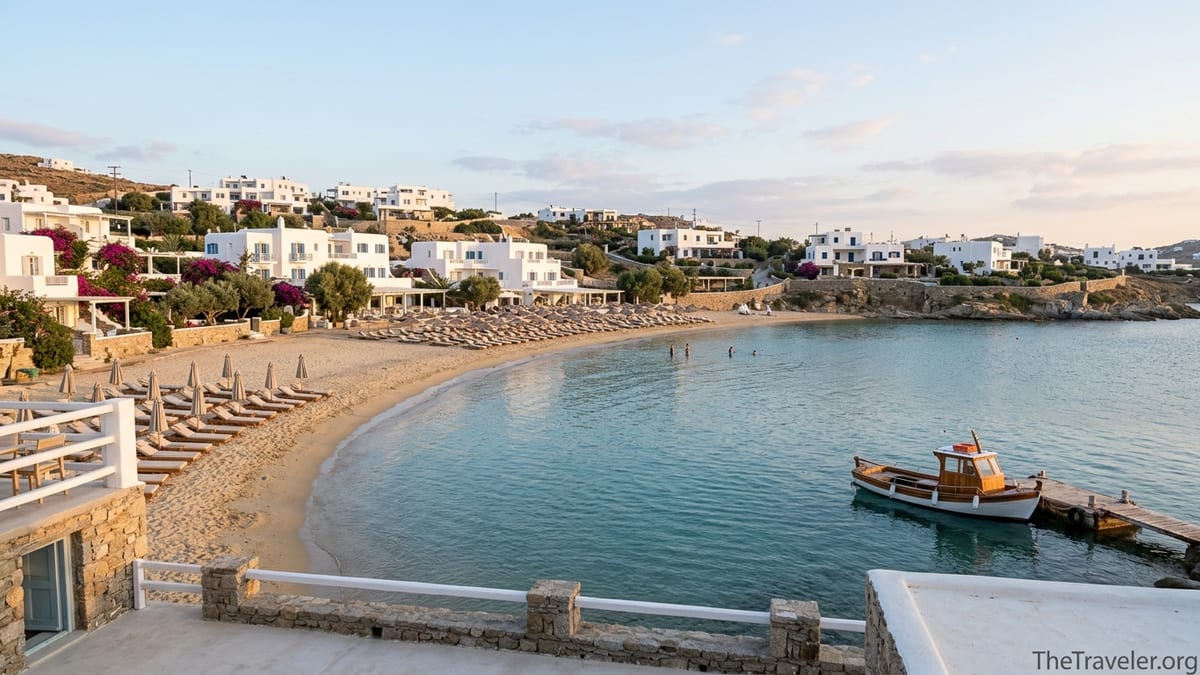
The Side of Platis Gialos Most People Never See
Most travelers arrive at Platis Gialos on a KTEL bus from the Fabrika terminal in Mykonos Town and walk straight down the main access lane to the densest part of the beach. Here, rows of organized sunbeds from hotels like Myconian Ambassador and beachfront restaurants such as Avli Tou Thodori or Yialo Yialo dominate the sand. It is easy to assume this central zone is all there is. In reality, Platis Gialos is a long, gently curving bay, and the experience shifts noticeably as you move away from the middle.
Walk east along the sand, toward the small pier where the water taxis to Paradise, Super Paradise and Elia line up, and you will notice gaps between the loungers and slightly lower prices than the front‑row sets. A pair of sunbeds with umbrella near the pier can be several euros cheaper than in front of an upscale hotel in high season, and last‑minute walk‑ups are often possible when the “prime” middle section sells out by late morning. For budget‑minded travelers who still want comfort, this edge of the bay often feels less frantic.
Head in the opposite direction, west toward Psarou, and the vibe softens further. Some seasons there are short stretches where you can simply drop a towel without paying for a lounger, especially early or late in the day. Here the sound of the sea replaces the steady background of beach bar playlists, and you notice locals swimming laps in the calm water before work. Many visitors never bother to explore this end of the beach, yet it offers the same clear, shallow water that makes Platis Gialos a family favorite, with more breathing room to enjoy it.
Even just staying put and shifting your schedule slightly can unlock a different Platis Gialos. Around 8:00 in the morning, when hotel breakfast rooms are still filling, the bay is glassy and nearly empty apart from joggers and a few year‑round residents. By coming down early to swim, then retreating to your balcony or a shaded café by midday, you can enjoy the infrastructure of a busy hub without feeling crushed by it.
Using Platis Gialos as a Secret Logistics Hub
Guidebooks often mention that Platis Gialos is “well connected,” but many visitors underestimate just how useful that can be. From the small pier at the eastern end of the beach, wooden water taxis known locally as kaiki shuttle hourly along the south coast to Paraga, Paradise, Super Paradise, Agrari and Elia. In practice, this means you can wake up, check the wind, and decide in real time which beach fits the day instead of committing to a rental car or pre‑booked taxi.
In a typical summer season, a one‑way ticket on the water taxi between Platis Gialos and Paradise or Super Paradise is usually in the ballpark of 10 to 15 euros per person, with slightly higher prices for the longer run to Elia. You pay directly on board in cash or card, and boats often start mid‑morning, returning until late afternoon. Many people treat these as simple transfers, but they are also a relaxed low‑budget “mini cruise” along the coast. From the deck, you see how close the beaches really are, spot hidden coves you might swim to later, and get a sense of wind and swell before committing to a full day somewhere.
Because Platis Gialos is both the water‑taxi terminus and among the most frequent bus stops from Town, it can work as a kind of control center for your whole stay. Some repeat visitors book an affordable room a short walk up the hill rather than paying Chora’s premium prices, then use the beach as a base to fan out across the island. One day might look like an early swim in the calm bay, a late‑morning boat to quieter Agrari, and an early‑evening bus into Town for dinner in Little Venice. You are using the same infrastructure most day‑trippers rely on, just in a more deliberate way.
Few people also realize how easy it is to organize small boat excursions directly from this beach. Local operators sometimes offer half‑day trips from Platis Gialos to the archaeological site of Delos or to swimming coves on nearby Rhenia, especially in peak months. Prices fluctuate with fuel and demand, but joining a shared group trip can be more affordable than many expect, particularly compared with the more heavily marketed options sold in the old port. Asking at your hotel reception or at one of the beachfront kiosks when you arrive can reveal departures that never make it into brochures.
Coastal Footpaths: Walking Between Beaches Instead of Riding
One of the most rewarding things to do around Platis Gialos does not involve a sunbed at all. Low coastal paths link the bay to neighboring beaches like Psarou and Paraga, and yet many visitors only ever see these places by boat or bus. The walks are short, scenic, and give a sense of Mykonos beyond its organized beach strips.
To walk from Platis Gialos west to Psarou, you follow a clearly trodden path around the headland or take the road above the hotels. It usually takes around 10 to 15 minutes for an average walker, with occasional stone steps and a few mildly steep sections. Along the way, you look back over the wide curve of Platis Gialos and forward to Psarou’s tighter, yacht‑filled bay. In late afternoon, the light slants across the water and highlights the classic Cycladic white cubes on the hillsides, a moment many people only glimpse from passing buses.
In the other direction, a path south‑west toward Paraga is even less used. Starting near the water‑taxi pier, you skirt low rocks and a couple of small inlets before the trail climbs gently above the sea. The entire walk to Paraga generally takes about 20 minutes if you stop for photos. This section of coastline feels surprisingly wild given how close you are to some of the most commercial sand on the island. On breezy days you will smell thyme and low scrub, hear only the surf and goats on the slopes above, and have almost nobody else in sight apart from a few hikers.
From Paraga, more experienced walkers sometimes continue on informal tracks toward Paradise or even further. This is best attempted in the cooler hours with solid footwear, a hat and water, as shade along the south coast is minimal. Treat these paths as light hikes, not flip‑flop strolls, and watch for loose stones. What you gain is a completely different relationship with Mykonos’ coastline. You will understand that the island is not just a series of disconnected “Instagram beaches” but a continuous landscape you can follow on foot.
Hidden Corners, Local Food and Slower Moments
Because Platis Gialos is lined with hotels and polished restaurants, many visitors give up looking for anything that feels local, assuming everything is aimed at international tourists. There is some truth to that, particularly in front‑row dining rooms where a simple seafood lunch can rival the cost of dinner in Athens. But if you step back a street or two from the sand, you start to notice small bakeries, minimarkets and grill houses where everyday life goes on at a more relaxed pace.
Look for family‑run spots slightly inland that serve Greek staples at more approachable prices: plates of keftedes, grilled chicken souvlaki with fries, or a horiatiki salad piled with tomatoes and capers. These places may not have a sea view, but you can often eat for noticeably less than at a waterfront table. Travelers staying in self‑catering studios often buy fresh bread, fruit and yogurt here in the morning, then splurge on one “big” beachfront meal during their stay instead of paying premium prices three times a day.
Even some of the beachfront venues that look purely glamorous have quieter sides. A restaurant may set its front row of loungers at a high day‑rate with minimum spend, yet offer a second or third row at a lower fee if you ask. In late afternoon, when day‑trippers start to leave for the water taxi or bus, staff sometimes relax their policies. Politely asking about last‑hour discounts can result in a couple of hours on a premium bed for a fraction of the price you would have paid at 11:00.
Another habit that changes your experience here is to seek out small, slow moments in between the busy ones. Early evening, after the last water taxis pull out and before dinner service gears up, the bay enters a short, peaceful interlude. Locals come down to swim, some hotel staff sit on the wall with takeaway coffees, and the light softens over the hills. Walking the full length of the beach at this time, barefoot on the wet sand, is a side of Platis Gialos that rarely appears in advertising but feels closer to how the place exists outside peak hours.
Beyond the Beach: Simple Day Trips Few People Take
Staying at Platis Gialos makes it easy to treat Mykonos as a one‑beach island, but even short breaks can accommodate a few low‑effort ventures beyond the bay. One option is to use the bus and water‑taxi network to sample contrasting beaches on the same coastline. For example, you might start with a morning swim in the shallow, family‑friendly water of Platis Gialos, then hop on a boat to more exposed, wind‑brushed Agrari, where the sand is wider and the atmosphere quieter.
Alternatively, take the water taxi or bus to Elia, often described as one of the longest beaches on the island. Here, stretches of organized loungers give way to more open sand, and the scenery feels more expansive than the tight, hotel‑backed strip you see back at base. Packing a simple picnic from the minimarket above Platis Gialos instead of relying entirely on beach bars can keep costs down and give you the flexibility to settle where it feels right on arrival.
For a complete change of scene, spend an evening reversing the pattern most visitors follow. Instead of starting in Mykonos Town and ending at a beach club, leave your towel at Platis Gialos in the late afternoon and ride the bus uphill to Chora for a sunset wander and dinner. After dark, when the temperature has dropped and streets are livelier, you can still catch one of the later return buses and walk back down to the calm of the bay, which by then feels almost like a different island compared with the mid‑day crowd.
If you have more time, you can combine Platis Gialos with a boat excursion to Delos and Rhenia, using the beach as a recovery zone after a day among ruins and open water. Many organized tours depart from the old port in Town, but a number of hotels around Platis Gialos offer transfers or can arrange small‑group charters that pick up nearby. The practical advantage is simple: you come back sun‑tired and salty, and instead of navigating busy alleys you have a short transfer back to a bay designed for easy swims and sunset drinks.
Practical Tips That Make Platis Gialos Work Better
Because Platis Gialos is so popular, small practical decisions can make the difference between a smooth, relaxed stay and a frustrating one. On peak summer days, buses from Mykonos Town to the beach can fill quickly in the late morning. If you are not based at Platis Gialos itself, aim for earlier departures or be prepared to wait for the next service. Typically the ride takes around 10 to 15 minutes, but queues and traffic around Fabrika can stretch the journey at busy times.
On the beach, sunbed prices vary not just between venues but also between front and back rows and by season. In August, some upscale sections may request a minimum spend per pair of loungers that includes drinks and food, while in May or late September the same beds might be available for a straightforward rental fee. If you are trying to manage costs, it is worth walking the full length of the bay before committing. You may find more reasonable options near the pier or at smaller hotels on the edges rather than at the best‑known central brands.
Another easily overlooked detail is how wind affects your experience. Platis Gialos faces south and is relatively sheltered from the strong northern Meltemi winds that can whip other parts of the island. On days when beaches on the north coast are choppy and uncomfortable, this bay can remain swimmable and pleasant, which is one reason local families gravitate here. Checking the wind forecast each morning on your phone and then deciding whether to stay put or ride the water taxi to a more exposed beach can help you make the most of each day.
Finally, give some thought to footwear and sun protection even if you plan to spend most of your time horizontally. The stone paths to neighboring beaches, metal stairways up to hotels, and blazing midday sun can be hard on bare feet and shoulders. A pair of light sandals, a hat and a thin cover‑up take almost no space in your bag but make longer, exploratory walks far more comfortable. Many visitors pack only for poolside lounging and end up skipping some of the best short walks because they do not feel properly equipped.
FAQ
Q1. Is Platis Gialos a good place to stay on Mykonos for first‑time visitors?
Yes, Platis Gialos works very well for first‑timers because it combines an organized beach, frequent buses to Mykonos Town and water taxis to several other south‑coast beaches, so you can explore without a car.
Q2. How busy does Platis Gialos get in summer?
In July and August the main stretch of sand can feel very full from late morning to mid‑afternoon, especially in front of larger hotels, but early mornings and evenings are noticeably calmer.
Q3. Do I have to pay for a sunbed or can I sit on the sand for free?
Most of the beachfront is covered by organized loungers, but there are usually small gaps at the edges or between concessions where you can lay a towel, particularly early or later in the day.
Q4. How expensive are sunbeds at Platis Gialos?
Prices change by venue, row and month, but expect that premium front rows at upscale spots can be comparatively costly, while second rows or areas near the pier are often more affordable.
Q5. How long does it take to walk from Platis Gialos to Psarou or Paraga?
The walk to Psarou usually takes about 10 to 15 minutes along the coastal path or road, while the walk to Paraga from the water‑taxi pier takes roughly 20 minutes at a relaxed pace.
Q6. Are there truly local or budget‑friendly food options around Platis Gialos?
Yes, if you step one or two streets back from the sand you will find simpler bakeries, grill houses and cafés where prices are generally lower than right on the beachfront.
Q7. Can I use Platis Gialos as a base to visit other Mykonos beaches?
Very easily. Regular water taxis from the pier connect Platis Gialos with Paraga, Paradise, Super Paradise, Agrari and Elia, allowing you to beach‑hop in a single day if you wish.
Q8. Is Platis Gialos suitable for children and less confident swimmers?
Yes, the bay is south‑facing and fairly sheltered, with shallow, clear water that slopes gently, which is why many families and nervous swimmers favor it.
Q9. Do I need to book sunbeds or restaurants in advance?
In high season, it is wise to reserve loungers at popular venues and dinner tables for sunset hours, while in May, June or late September you can often just walk in, especially away from peak times.
Q10. What is one thing most visitors miss at Platis Gialos?
Many people overlook the short coastal walks to Psarou and Paraga and the quieter moments at the edges of the day, when the bay feels more like a local neighborhood than a resort strip.