


Travel is often sold as a universal language of freedom, yet not everyone moves through the world under the same rules. Women who travel, whether with friends, partners or alone, quickly discover that airports, train stations, beaches and hotel lobbies can feel like stages where their choices are constantly evaluated. The double standard in travel is subtle at times and glaringly obvious at others, shaping how women plan, where they go, what they wear and even how they tell their stories once they come home.
Get the latest updates straight to your inbox!
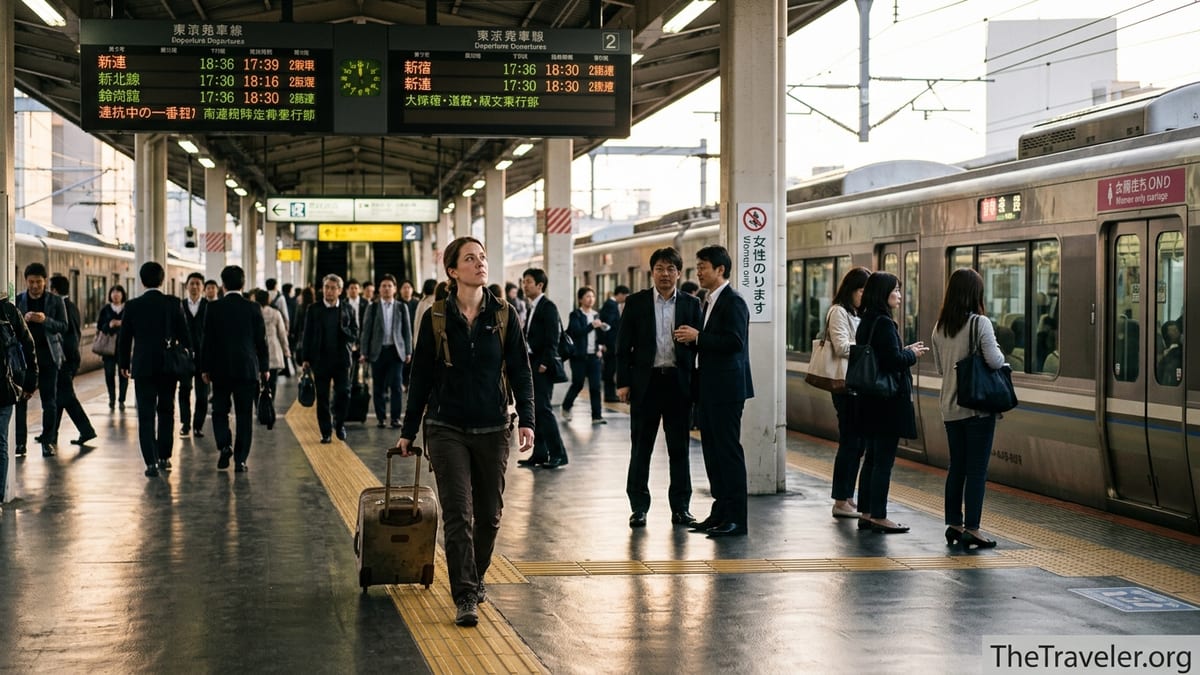
How Gender Shapes the Simple Act of Moving Through the World
Ask frequent travelers what they worry about on a trip and you will hear a familiar list: delayed flights, lost bags, scams, unexpected costs. Ask frequent female travelers and another layer appears: Will my hotel question me for checking in alone? Is public transport safe after dark? Will I be judged for what I am wearing or for ordering a drink by myself at the bar? The logistics of travel are similar for everyone, but the emotional and social calculations for women are very different.
On paper, a woman booking a budget flight from New York to Tokyo or a weekend city break in Rome follows the same process as a man. In practice, she might spend extra hours reading first-person accounts from other women, checking whether a metro line is considered safe at night, or choosing a hostel dorm that is women-only rather than mixed. For many women, the question is not whether they can go, but what they must do in order to feel that going is reasonably safe.
This double standard often appears in the reactions of others. A man announcing he is backpacking through Southeast Asia tends to be praised for his independence. A woman doing the same may be asked if her parents or partner are comfortable with the idea, whether she has thought about “the risks,” and why she would choose to travel alone in the first place. The destination has not changed, but the expectations attached to the traveler have.
These differences play out in small, everyday interactions. A female traveler might be followed more closely by staff in a market, questioned more thoroughly at border control or assumed to be part of a couple even when she is alone. None of these moments stop her trip outright, but over time they create a sense that she is moving through a system that was not really designed with her in mind.
Dress Codes, “Respectability” and the Weight of Local Morality
One of the most visible double standards in travel appears around clothing. In many destinations, foreign men are granted a wide margin for error, excused as clueless tourists if they ignore local norms. Women, by contrast, are often treated as responsible not only for their own safety but also for the reactions of others. If harassment occurs, the question of what she was wearing is still raised far more often than what he was doing.
In conservative parts of North Africa and the Middle East, for example, foreign women are frequently advised by both guidebooks and local women to dress modestly in loose trousers, long skirts or long-sleeved tops, even in intense summer heat. In Cairo, women who ride the mixed metro cars often describe feeling eyes on them, particularly if they are not veiled or are wearing fitted clothing, while male tourists in shorts and T-shirts attract far less scrutiny. The formal rules apply to everyone, yet the informal enforcement falls harder on women.
Even in places marketed as liberal, a kind of unofficial “moral policing” can shape what women feel comfortable wearing. In Indian beach destinations like Goa, discussions flare up frequently about what is or is not acceptable attire near religious sites or in small villages away from the main tourist strips. Local authorities, community elders and sometimes self-appointed vigilantes have confronted couples or women for kissing in public, wearing bikinis on quiet stretches of sand or taking photos judged to be too revealing. Similar scenes play out in old quarters of Mediterranean cities, where women entering churches or mosques are handed scarves to cover bare shoulders while men in sleeveless tops walk past with little comment.
The irony is that many of these same destinations rely heavily on images of carefree female tourists in their marketing campaigns. A billboard might show a woman in a flowing sundress walking alone along a beach at sunset, while in real life that same traveler is advised to “be careful,” “stay covered” and “not give the wrong impression.” The gap between the fantasy and the reality is where the double standard becomes clearest.
Segregated Spaces: Protection or a New Kind of Limitation?
Some of the clearest examples of gendered expectations in travel are the women-only spaces that have emerged in response to harassment. In Tokyo and other major Japanese cities, several railway companies designate women-only train cars during rush hours. Pink signage on platforms and inside carriages indicates that, during specific morning and evening windows, those cars are intended primarily for women and, in some cases, young children and disabled passengers. The policy grew out of long-standing concerns about groping in crowded trains and has become a well-known feature of the urban commute.
In Cairo, a similar logic underpins the women-only metro cars that run on certain lines. These carriages were introduced to give women the option of riding in a space where they might feel less vulnerable to unwanted touching or comments in crush-loaded conditions. For many Egyptian women and visiting travelers, these cars provide a rare pocket of calm on an otherwise hectic system. Yet news reports and first-hand accounts also describe harassment and even physical confrontations when male passengers attempt to enter these spaces or when women try to enforce the rules without official support.
Women-only solutions are not limited to trains. In several Middle Eastern cities, female-only taxis driven by women market themselves as a safer alternative for female passengers who feel uneasy getting into a car with a male driver late at night. Some large international hotel chains have experimented with women-only floors, where access is controlled by keycard and housekeeping staff are predominantly female. Gyms, beach clubs and even sections of public parks in parts of Asia and the Gulf states have adopted women-only hours or zones.
For travelers, these spaces can be both reassuring and frustrating. A solo woman arriving in Tokyo may appreciate the option of stepping into a women-only carriage after a long flight, especially if she is navigating rush hour with luggage. At the same time, relying on such spaces can feel like an admission that the rest of the system remains unsafe. Critics argue that segregated solutions risk entrenching the idea that women are the ones who must adjust, move, and limit themselves, while perpetrators face little structural consequence.
Hotels, Check-ins and the Scrutiny of Women Traveling Alone
The double standard in travel becomes particularly visible in hotel lobbies. Around the world, women checking in alone report being questioned more closely than male solo travelers. Reception staff may ask if their “husband” is joining later, whether they are expecting visitors, or if they are certain they want a room with just one bed. In some conservative regions, women have described being denied a booking altogether unless they can show proof of marriage to a male companion, even when no such requirement appears on the hotel website.
Budget and mid-range properties are not the only places where this happens. Female business travelers staying at upscale international chains in major cities from Istanbul to Dubai to Kuala Lumpur recount being asked to confirm their identity repeatedly and, in some cases, being warned that “outside male guests” would not be allowed in their room. The underlying concern may be framed as protecting women or preserving the hotel’s reputation, but the effect is the same: a woman alone in a hotel room is seen as unusual and potentially problematic, while a man alone is routine.
There are also quieter differences. Solo male travelers can linger at the hotel bar late into the night without attracting much attention. Solo female travelers, particularly in regions where unaccompanied women in nightlife spaces are rare, may find themselves fielding unwanted small talk from staff and other guests or being assumed to be available for company. Some respond by eating in their room, choosing hotels where they can cook for themselves, or paying extra for executive lounge access where the atmosphere is more subdued.
At the same time, the industry has begun to market directly to women with offers that mix genuine safety measures and heavy-handed stereotyping. Some hotels advertise “ladies’ floors” with better locks and discreet check-in, but also throw in pink décor, complimentary beauty products and shopping discount cards. For women who are primarily looking for well-lit corridors, clear guest policies and staff trained to handle harassment reports, these touches can feel like missing the point.
Solo Female Travel: Bravery, Blame and the Narratives We Tell
Perhaps nowhere is the double standard more emotionally charged than in reactions to solo female travel. When a woman posts online about planning a solo trip to Egypt, India or Brazil, the responses often split sharply. Some encourage her, sharing practical precautions and supportive stories. Others warn her not to go, describing harassment, catcalling or worse. If she decides to travel anyway and something unpleasant happens, the question “Why were you there alone?” is rarely far behind.
Men who encounter scams, theft or even assault while traveling are generally met with sympathy and anger directed at the perpetrator or the system that failed them. Women in similar situations can find themselves on the receiving end of lectures about risk, modesty or cultural sensitivity. A female traveler assaulted on public transport may be asked why she did not take a taxi, why she was out so late, or why she chose to wear a particular outfit. The fact that many local women endure the same or worse, often without the option to leave, is often lost in the rush to assign responsibility.
This scrutiny also shapes how women share their positive experiences. Many solo female travelers who have spent months in places with reputations for harassment explain that their trips were challenging but rewarding, and that daily life included ordinary moments of kindness and hospitality from strangers. Yet, when they write about these trips, they may temper their enthusiasm, worried that celebrating the good parts will be taken as dismissing the risks, or that describing the bad parts will invite blame or accusations of exaggeration.
Travel media plays a role in this narrative. Articles about solo female travel frequently highlight “safe” destinations like Japan, Scandinavia or parts of Western Europe while treating large sections of the globe as inherently too dangerous unless visited with a group tour or male companion. Risk clearly varies by place, time and circumstance, but the pattern reinforces an old message: women must think twice before going anywhere that is not already approved by others.
Money, Mobility and the Hidden Costs Women Absorb
The double standard in travel is not only social but economic. Many of the strategies women use to feel safer on the road come with an extra price tag. A woman who feels uneasy walking back to her guesthouse from a bus station after dark might choose a taxi instead, even when the distance is short. Over a multi-week trip, those small rides add up. In cities where ride-hailing is cheaper than metered taxis but drivers are mostly male, some women pay more for official city cabs or for services marketed specifically to female passengers.
Accommodation choices follow a similar pattern. Female travelers often opt for private rooms rather than cheaper dorm beds, particularly in mixed-gender hostels. If they do stay in dorms, they may pay slightly more for women-only rooms. Some choose guesthouses based less on price or location and more on how responsive the owners seemed in messages, or on reviews from other women confirming that staff intervened when incidents occurred. The result is that two travelers going to the same destination on the same dates may face very different budgets simply because of gendered safety concerns.
There are professional costs as well. Women working in travel-heavy industries such as consulting, development or journalism sometimes decline assignments in cities where they have reason to believe they will be unsafe moving alone between hotels and sites. Others accept but push for higher daily allowances to cover private drivers or more secure accommodation. While these decisions are understandable, they can also mean fewer opportunities, slower career progression or the perception that they are less “flexible” than male colleagues.
Even leisure travel planning reflects these hidden costs. Travel insurance companies may not formally differentiate by gender, but women reading policy details pay particular attention to sections on assault, harassment and emergency evacuation. In countries where access to reproductive healthcare or emergency contraception is limited, they may also budget for appointments with private clinics or bring supplies from home, thinking through scenarios that many male travelers never have to consider.
Changing the Script: What Needs to Shift in the Industry
Addressing the double standard in travel does not mean insisting that every destination feel the same, or ignoring the reality that women face specific risks in certain environments. It does mean shifting responsibility away from individual women and toward the systems, companies and authorities that profit from their presence. Transport operators, tourism boards and major hotel brands all have concrete levers they can pull that do not require women to shrink their worlds in order to stay safe.
Public transport agencies can invest in visible staffing, better lighting and reliable reporting channels so that women feel supported whether or not they choose women-only spaces. Clear information in multiple languages about how to seek help on trains, buses and metros can make a real difference to a solo traveler landing in an unfamiliar city. Ride-hailing platforms can improve driver vetting, make location tracking more transparent and take harassment reports seriously, not just for their female users but for all vulnerable passengers.
Hotels and guesthouses can train staff to treat women traveling alone as a normal and unremarkable part of their guest mix. That means dropping intrusive questions about marital status, applying visitor policies consistently to all guests and responding quickly when women report harassment from staff or other customers. Safety features that benefit everyone, such as good corridor lighting, clear room-number privacy on key cards, and staff presence in car parks, often matter most to women and should be standard rather than a paid upgrade.
Perhaps most importantly, travel media, influencers and tour operators can reframe how they talk about risk. Instead of portraying entire countries as either safe havens or danger zones for women, they can highlight local women’s voices, specific neighborhoods, transport lines and time-of-day nuances that help visitors make informed choices. A more honest conversation acknowledges both the joy and the difficulty of traveling as a woman without suggesting that the solution is simply to stay home.
The Takeaway
The double standard in travel is not a single rule written down anywhere, but a dense web of expectations, warnings and quiet assumptions that surround women as they move through the world. It appears in the way strangers react to a woman with a backpack in an arrivals hall, in the dress codes enforced more heavily on her than on her male counterparts, and in the unspoken belief that if anything goes wrong, she might share the blame.
Yet women continue to travel, not because they are reckless or ignoring the risks, but because the rewards of seeing the world are real. Many build careful routines around safety, choosing flights that land in daylight, messaging friends their hotel locations, and trading tips across online communities. They book trains with women-only cars when it feels right, but also push back against the idea that they should be confined to pink zones at the edge of public life.
For the travel industry, the challenge is to catch up with this reality. Safety measures that are framed as special favors for women should become standard protections for all. Staff training should focus less on questioning women’s choices and more on confronting harassment and abuse wherever it occurs. And travel storytelling should stop treating female mobility as a niche topic and start recognizing it as central to how tourism actually works.
When women can move through stations, streets and hotel corridors without feeling that their very presence is up for debate, everyone gains. The world becomes not just more accessible, but more honest about the work still needed to make freedom of movement a right that truly belongs to all travelers, not only to those who fit an old, narrow idea of who travel is for.
FAQ
Q1. Is solo travel more dangerous for women than for men?
Solo travel can involve different kinds of risk for women, particularly around harassment and unwanted attention, but danger depends heavily on destination, time of day, behavior of others and local conditions rather than gender alone.
Q2. Are women-only train cars and taxis actually safer?
Women-only options can reduce certain types of harassment in crowded spaces and may feel more comfortable for some travelers, but they are not a guarantee of safety and do not replace broader measures like better staffing, lighting and enforcement.
Q3. How should women dress when visiting conservative countries?
In more conservative regions, many local women and experienced travelers recommend loose-fitting clothing that covers shoulders, chest and knees, not as a promise of safety but as a way to draw less attention and show respect for local norms.
Q4. Why do hotels sometimes question women checking in alone?
Extra questions at check-in often reflect outdated assumptions that women should travel with family or a partner, or concerns about the hotel’s image, rather than any official rule, and many properties are slowly changing these practices.
Q5. Do women need to avoid certain countries altogether?
No destination is automatically off-limits, but some places may require more preparation, local support or guided travel; decisions should be based on up-to-date information, personal comfort levels and an honest assessment of local realities.
Q6. What practical steps can female travelers take to feel safer?
Many women share itineraries with trusted contacts, arrive in new cities during daylight, research transport options in advance, choose well-reviewed accommodation and stay alert in crowded spaces while still allowing themselves to enjoy the experience.
Q7. Are female-only hotel floors worth paying extra for?
Some travelers appreciate women-only floors for the sense of privacy and controlled access, but others find that general safety features, good staff training and clear policies throughout the property matter more than gender-segregated spaces.
Q8. How can male travelers support women on the road?
Men can respect boundaries, avoid commenting on women’s appearance, intervene safely if they witness harassment, and challenge friends or fellow travelers who make women feel uncomfortable or unsafe.
Q9. Why do stories about solo female travel online sound so different?
Experiences vary widely by person, place and timing; some women encounter serious problems while others have largely positive trips, and both types of stories can be true without canceling each other out.
Q10. What should I do if I experience harassment while traveling?
If you feel safe to do so, move to a busier area, seek help from staff or security, document what happened and, where possible, report it to local authorities or your accommodation so they can act and support you.