


Spreading the cost of a flight or hotel over several months can make an otherwise unaffordable trip feel suddenly within reach. PayPal markets its Pay Later options as a flexible way to “book now, pay later” for travel, with quick approval and predictable installments. But behind the smooth checkout buttons and reassuring language, the real cost of financing your vacation this way can be much higher than many travelers expect. From steep interest on Pay Monthly to payment timing glitches, bank fees, and limited consumer protections if something goes wrong with your trip, using PayPal Pay Later for travel bookings demands a far closer look.
Get the latest updates straight to your inbox!
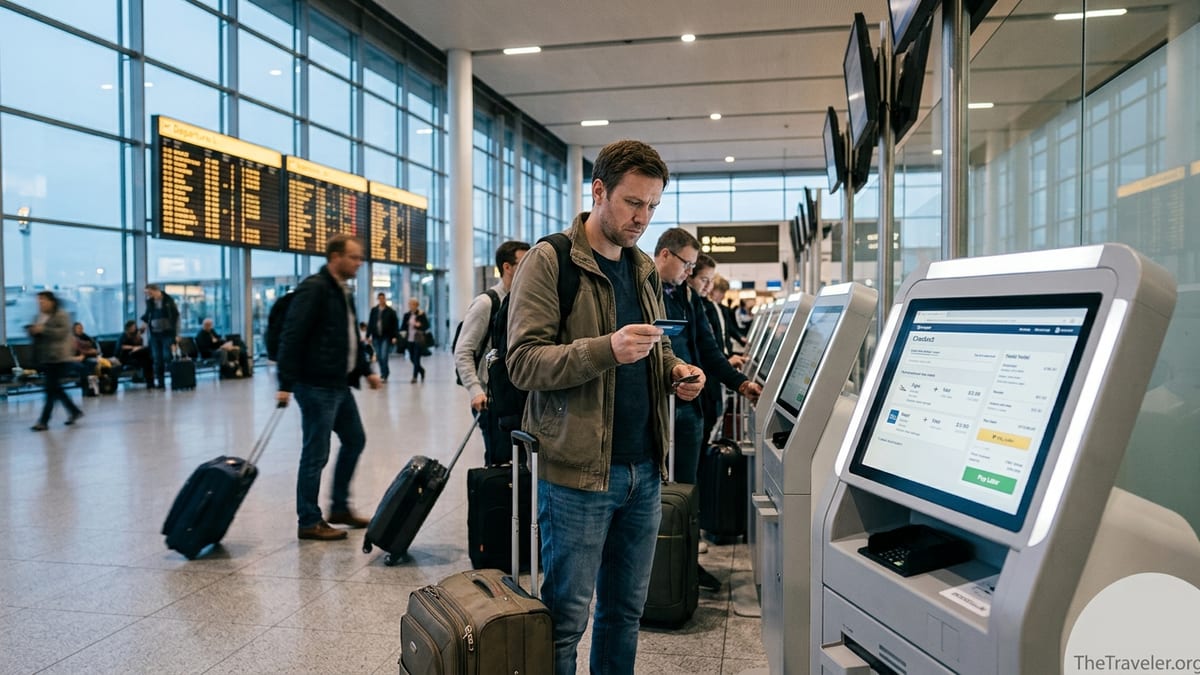
How PayPal Pay Later Really Works for Travel
PayPal Pay Later is not a single product but a group of financing tools that show up as options when you choose PayPal at checkout. For US travelers, the two main versions promoted for travel bookings are Pay in 4 and Pay Monthly. Both are available on many airline, hotel, and online travel agency sites that accept PayPal, and PayPal itself advertises them as a way to split the cost of flights, hotels, and vacation packages over time.
Pay in 4 is the simpler of the two: it splits qualifying purchases, typically from about 30 to 1,500 dollars, into four installments. You pay the first part at checkout and the remaining three every two weeks. There is no interest charge advertised on Pay in 4, which makes it especially appealing if you are locking in a 600 dollar off-season flight to Europe or a 400 dollar hotel bill for a long weekend. Approval is near instant, based on a quick check of your information and PayPal’s own risk assessment.
Pay Monthly, by contrast, is an installment loan for larger purchases, marketed for expenses such as international flights, tour packages, or luxury resorts. In the US, PayPal and its partner lender offer Pay Monthly for purchases from roughly 49 to 10,000 dollars, with repayment terms as long as 24 months. The hidden catch is the interest rate: PayPal discloses that Pay Monthly carries a fixed annual percentage rate that can run from around 9.99 percent to as high as nearly 36 percent, depending on your credit profile and the merchant’s offer. That transforms what looks like a convenient travel payment plan into a high-cost loan.
On PayPal’s own travel marketing pages, the company provides a sample scenario: a 1,500 dollar purchase financed through Pay Monthly at a 26 percent APR over 24 months works out to a monthly payment of about 80.77 dollars and a total of about 1,938 dollars over the life of the loan. That means roughly 438 dollars in interest alone for one vacation. For a traveler who thought they were simply spreading out payments on a summer trip to Hawaii or a family visit to Europe, that is a significant premium on top of already rising airfares and hotel rates.
The True Financial Cost: Interest, Bank Fees, and Overlaps
The most obvious hidden cost of using PayPal Pay Later for travel is interest on Pay Monthly. If you finance a 2,000 dollar multi-stop itinerary to Asia for two years at a rate in the mid twenties, you can easily add hundreds of dollars to the total cost of your trip. Even at a lower rate near 10 percent, the interest adds up. Many travelers compare Pay Monthly only to the pain of paying for an entire trip upfront, rather than comparing it to alternatives like a low-rate personal loan, an introductory 0 percent APR credit card, or simply delaying the trip until they have more savings.
With Pay in 4, the costs are less obvious but still real. PayPal emphasizes that Pay in 4 is interest-free and that it no longer charges late fees for missed payments. That sounds risk free, but the auto-pay structure creates a different kind of expense. Payments are scheduled automatically from your linked bank account or card, and travelers in online forums often report that the timing can be unpredictable, with the first debit sometimes hitting several days after purchase rather than immediately. If you are juggling a tight budget around payday, a payment that hits a day or two earlier than expected can trigger an overdraft fee at your bank or a returned payment fee on the card you used to fund PayPal.
Consider a traveler in the United States who books a 480 dollar hotel bill through an online travel agency using Pay in 4. They expect the first payment of 120 dollars to be taken on the day of booking and arrange their checking account balance accordingly. If the withdrawal instead happens several days later, and by then their account has dipped because of other bills, the automatic payment may bounce. PayPal may try the transaction again, while the bank charges a non-sufficient funds fee that can easily run 30 dollars or more. Even though PayPal itself does not add a late fee, the traveler has still paid a significant penalty simply because of the timing behavior of the automatic debits.
Another financial trap is overlapping interest charges. PayPal does not charge interest on Pay in 4, but if you fund those payments with a credit card that you do not pay off in full, your card issuer will. For instance, a traveler might put a 1,200 dollar flight to Tokyo on Pay in 4 and have each 300 dollar installment billed to a rewards credit card. If they revolve that balance at a 24 percent APR because they overestimated their ability to keep up, they are effectively paying high credit card interest on top of their Pay in 4 plan. The risk is greatest for travelers who already carry balances, since Pay in 4 can obscure how much new debt is being layered onto existing obligations.
When Travel Plans Change: Cancellations, Refunds, and Disputes
Travel bookings are inherently uncertain. Flights are rescheduled, airlines fail, hotels close, weather disrupts trips, and sometimes you simply need to cancel. With PayPal Pay Later in the middle, refunds and disputes can get complicated, and that complexity is one of the most important hidden costs for travelers.
Take a real-world style scenario based on common complaints in online communities. A traveler uses Pay in 4 to book a 900 dollar nonrefundable flight-and-hotel package through a third-party travel site. Two weeks later, the airline cancels the flight due to a schedule change, and the traveler decides not to accept the alternative itinerary. The travel agency agrees to issue a refund, but the transaction takes several business days to process. In the meantime, the second Pay in 4 installment is still scheduled. The traveler sees a new 225 dollar debit from PayPal for a trip that, from their perspective, no longer exists. Eventually the refund posts back through PayPal, but their cash flow has been strained during the delay.
More serious issues arise when merchants are unresponsive or when there are disputes over partial services. Imagine booking an independent guesthouse in a remote part of Mexico or Indonesia through a site that accepts PayPal. You arrive and discover the property is nothing like the photos, unsafe, or even closed. With a credit card, you may have strong dispute rights that allow you to seek a chargeback for services not as described. With PayPal Pay Later, your experience will pass through PayPal’s dispute system first, which operates under its own rules. While recent regulatory efforts in the United States are pushing buy now, pay later providers to extend more credit card-like protections, coverage is still evolving, and many travelers report confusion about which rules apply to which product.
Another practical problem is that installment payments can continue while a dispute is still in progress. If you finance a 1,500 dollar cruise deposit on Pay Monthly and later discover major issues with the operator, you may find yourself continuing to make monthly payments on a loan even as you are trying to recover the underlying charge. In some cases the merchant may issue a partial refund or future travel credit rather than cash, leaving you with an ongoing Pay Monthly balance on something you will never actually use. The friction and time involved in resolving such situations effectively increases the cost of that original decision to borrow for your vacation.
Credit Score, Affordability, and Long-Term Debt
PayPal’s Pay Later products are often marketed as a quick, low-friction alternative to traditional credit cards, with a pitch that sounds friendlier than “taking out a loan.” Yet the long-term impact on your finances can be very similar to other forms of credit. Pay Monthly is a formal installment loan, and missing payments or defaulting can damage your credit score. Depending on how the account is reported, your borrowing can also affect your overall credit utilization, which is one of the biggest factors in credit scoring models.
Even Pay in 4, which is shorter term and not always reported like traditional credit, can shape your borrowing habits. Because it feels small and temporary, travelers may stack multiple plans at once: a Pay in 4 for flights to Miami, another for a hotel at a music festival, another for a rental car at a ski resort. Each plan might be only a few hundred dollars, but together they can add up to four-figure obligations over the next two months. If your income is unstable, seasonal, or dependent on tips, those scheduled debits can collide with lean weeks and lead to financial stress.
One common pattern visible in online discussions involves a traveler who uses Pay in 4 frequently for everyday purchases, then adds a major travel booking on top of those existing plans. They might have three or four open Pay in 4 agreements at once, plus a new Pay Monthly loan for a significant trip. Because payments are scattered across different dates, the total monthly commitment is easy to underestimate. It is only when several debits hit a bank account in the same week that the reality becomes clear.
For younger travelers or those rebuilding credit, this can be especially risky. The marketing emphasis on “no interest” and “no late fees” for Pay in 4 can encourage the belief that there are no real consequences to overuse. In practice, falling behind can lead to your Pay Later access being restricted, your bank accounts incurring fees, and your options shrinking when you need to book essential travel such as last-minute family visits or job interviews.
Merchant Incentives and Pricing You Do Not See
Another hidden aspect of PayPal Pay Later is how it affects the prices you pay for travel in the first place. PayPal charges merchants a higher fee to offer Pay Later options than for some standard card transactions. For businesses, especially online travel agencies and independent hotels, that cost is justified by higher conversion rates and larger average order values. For travelers, however, those merchant fees can be baked into prices without any clear signal at checkout.
Suppose a small boutique hotel in Lisbon or a local tour company in Costa Rica enables PayPal Pay Later to attract more international guests. PayPal’s own merchant materials show that businesses pay a specific percentage plus a fixed fee on each Pay Later transaction, on top of standard PayPal fees. To protect their margins, those businesses may quietly raise room rates or package prices. As a traveler, you may not see a “Pay Later surcharge” line item, but the total cost of your two-night stay or guided tour can be a little higher than it would have been if everyone paid with a standard credit card or bank transfer.
This dynamic is even clearer on large platforms that aggressively promote Buy Now, Pay Later at checkout. An online agency selling flights from New York to Paris might negotiate package deals that look competitive, but the overall pricing structure across the site could be influenced by the extra revenue share when customers use PayPal Pay Later and similar services. In effect, even travelers who decline Pay Later and pay in full can end up subsidizing the economics of the financing option through slightly higher base prices.
At the same time, PayPal and merchants often run promotions that reward the use of Pay Later with cash back or bonus points. A US traveler might see an offer for a small percentage back in rewards for using Pay in 4 on a 700 dollar resort booking in Mexico. The headline savings can be tempting, but they can also nudge people toward borrowing for trips they might otherwise have chosen to scale back or delay. The psychological effect is subtle: the financing product is presented not just as a payment method, but as a way to “unlock” deals, even though the underlying borrowing risks remain.
Regulation, Protections, and What Travelers Can Realistically Expect
In the United States and other major markets, regulators have started to focus on buy now, pay later products, including those offered by PayPal. Consumer protection agencies have raised concerns that many customers do not fully understand how these plans work, that disclosures are inconsistent, and that traditional protections for credit card users might not always apply in the same way. In response, regulators have moved toward treating certain buy now, pay later providers more like traditional card issuers, which could bring stronger dispute rights and clearer statements for some users.
However, the landscape is still evolving and can be confusing for travelers. PayPal offers multiple credit-like products, each with slightly different rules, and the rights you have may depend on details such as whether your account is treated as a digital line of credit, an installment loan, or a short-term installment purchase. It can be difficult for a traveler booking a last-minute flight at midnight to parse that fine print. As a result, many people assume they will have the same protections as a familiar credit card, only to discover later that refund paths, billing dispute timelines, and communication channels work differently.
Outside the United States, the situation varies even more by country. In some places, buy now, pay later products are only lightly regulated, and travelers might have fewer avenues to resolve problems when a flight is canceled, a hotel refuses a refund, or a tour operator never delivers. This is especially relevant when booking smaller or foreign-based travel businesses that operate under different legal frameworks. A traveler in Europe using PayPal Pay Later to reserve a family-run inn in another EU country, for example, might enjoy stronger statutory protections than a US traveler booking a similar property elsewhere, but only if they know how to invoke them.
For now, the safest assumption for travelers is that PayPal Pay Later, particularly Pay Monthly, should be treated as a serious borrowing decision with imperfect safety nets rather than as a casual, low-risk way to spread out the cost of a vacation. If the trip goes smoothly and you manage payments perfectly, the experience may feel effortless. If anything goes wrong, the time, stress, and financial exposure involved in untangling payments, refunds, and loans can be considerable.
Safer Ways to Use PayPal Pay Later for Your Trips
Despite the risks, some travelers will still find PayPal Pay Later useful in specific situations. The key is to be deliberate and conservative. One relatively cautious use case is for small, fully refundable bookings. For example, using Pay in 4 to split a 200 dollar refundable domestic flight or a 160 dollar refundable hotel stay can ease short-term cash flow without locking you into a long-term loan, as long as you are certain you can cover all four payments from upcoming income. If plans change and you receive a prompt refund, your exposure is limited.
Another strategy is to treat Pay in 4 as if it were a strict payment plan rather than a credit line. Before agreeing to the plan, divide the total trip cost by four and mentally subtract that figure from your future paychecks on the scheduled dates. If those reduced paychecks would still cover rent, food, and other essentials comfortably, you may be on solid ground. If they would not, that is a red flag. For Pay Monthly, it is wise to compare the quoted total cost of your trip, including interest, to alternatives like saving for a few extra months, using a low-rate personal loan, or applying for a credit card with a temporary 0 percent APR period on purchases.
It is also crucial to control how Pay Later interacts with your other payment methods. Linking PayPal to a bank account with a comfortable buffer, rather than to a nearly maxed-out credit card, can reduce the risk of stacking high-interest debt on top of your installment plan. Setting your own calendar reminders a day or two before each scheduled Pay Later payment gives you a chance to confirm funds are available or shift money from savings if necessary. Some travelers even maintain a dedicated checking account only for automatic payments and travel expenses, to isolate potential overdraft risks.
Finally, before using PayPal Pay Later for major travel, think through your worst-case scenarios. What if the airline cancels and the online travel agency delays your refund? What if the hotel overbooks and moves you elsewhere, and you decide to dispute the charge? What if you lose income while still owing months of Pay Monthly installments on last year’s vacation? Imagining those situations in advance may sound pessimistic, but it can help you decide whether financing that dream trip now is worth the possible long tail of payments and complications.
The Takeaway
PayPal Pay Later products are designed to make travel bookings feel easier. With a few clicks, a 1,000 dollar flight or a 1,500 dollar resort stay becomes a series of manageable-looking payments. For some travelers with stable finances and disciplined budgeting, that can be a helpful convenience. Yet the simplicity of the checkout experience hides a complex web of interest charges, bank fees, overlapping debts, and still-evolving consumer protections.
The biggest hidden cost is often not the advertised terms, but the way PayPal Pay Later interacts with your broader financial life. A Pay Monthly loan at a high interest rate can quietly turn a single vacation into one of your more expensive long-term obligations. A cluster of Pay in 4 plans can collide with an unexpected expense or income dip and lead to overdrafts, payment failures, and stress. When travel plans change, as they frequently do, working through refunds and disputes with a financing layer in the middle can extend the disruption long after your original departure date.
Before you click that PayPal Pay Later button for flights or hotels, pause and calculate the total cost of your trip under the proposed plan, including interest and realistic bank fees. Consider whether you would still think the vacation is worth it at that all-in price, and whether committing a slice of your future income for months is compatible with the rest of your goals. If the answer is not a confident yes, the cheapest and safest way to travel may still be the oldest one: saving first, booking later, and keeping your vacation from following you home as debt.
FAQ
Q1. Is PayPal Pay in 4 really interest-free for travel bookings?
Yes, PayPal promotes Pay in 4 as interest-free for eligible purchases, including many flights and hotels. However, if you fund those installments with a credit card and do not pay the card in full, your card issuer can still charge interest. Bank overdraft fees can also apply if a scheduled Pay in 4 payment hits your account when your balance is low.
Q2. How expensive can PayPal Pay Monthly become for a vacation?
Pay Monthly is an installment loan with a fixed APR that can range from around 9.99 percent to well above 20 percent depending on your credit and the offer. On a 1,500 dollar trip financed over 24 months at a rate in the mid twenties, you might pay hundreds of dollars in interest, turning that vacation into a nearly 2,000 dollar obligation over two years.
Q3. What happens if I miss a Pay in 4 payment for a flight or hotel?
PayPal does not currently advertise late fees for Pay in 4, but a missed payment can lead to your Pay Later access being restricted until you catch up. At the same time, your bank or card issuer can charge fees if the automatic debit fails. Repeated problems can make it harder to rely on Pay Later for future travel bookings when you might need it most.
Q4. Can I still dispute a bad hotel or canceled flight if I used PayPal Pay Later?
You can raise disputes, but the process runs through PayPal’s system, and your rights may differ from a standard credit card chargeback. Outcomes depend on the specific product used, the merchant’s policies, and any applicable regulations. It is generally easier to resolve problems when you pay directly with a major credit card that offers clear and well-established dispute protections.
Q5. Does using PayPal Pay Later affect my credit score?
Pay Monthly is a formal loan and can affect your credit, especially if you miss payments. Pay in 4 may involve a soft check at approval and typically has a smaller impact, but falling behind can still contribute to financial strain that indirectly harms your credit, such as through overdrafts or difficulty meeting other obligations.
Q6. Is it safer to use PayPal Pay Later for small or large travel purchases?
Risks tend to grow with the size and duration of the borrowing. Using Pay in 4 for a small, refundable booking may be relatively low risk if you can comfortably afford the installments. Using Pay Monthly for a multi-thousand-dollar trip over many months exposes you to more interest, more time for something to go wrong with your plans, and more potential damage if your income changes.
Q7. What should I check before using PayPal Pay Later at checkout?
Before agreeing to Pay Later, confirm the total amount you will pay, including any interest. Check the schedule and source of automatic payments and make sure your funding account has enough cushion for each due date. It is also wise to review the refund and cancellation policies for your flight, hotel, or package so you understand what happens if plans change after you start an installment plan.
Q8. Are there better alternatives to PayPal Pay Later for financing travel?
Often, yes. Saving in advance is the safest option. For those who need flexibility, a low-interest personal loan, a credit card with a promotional 0 percent APR period on purchases, or a traditional travel credit card with strong protections can be more transparent. These options still require discipline, but their costs and protections are usually clearer than those of short-term installment products.
Q9. Could PayPal Pay Later make my trip more expensive even if I never miss a payment?
It can. Pay Monthly adds interest that increases the total cost of your trip, and Pay Later-related merchant fees may be baked into prices. Even with perfect payment behavior, you may be paying more than if you had saved first, used a low-interest product, or chosen a less expensive itinerary.
Q10. When does using PayPal Pay Later for travel make the most sense?
PayPal Pay Later is most defensible when the amount is modest, the booking is refundable, your income is stable, and you have a clear plan to pay off the installments without touching other high-interest credit or risking overdrafts. If those conditions are not met, it is usually wiser to adjust your travel plans or wait until you can pay with less costly and more predictable methods.