


More news on this day
The hottest conversation in travel for 2026 is not about a single destination but about a new kind of holiday experience that feels bigger than a standard trip, blending festivals, wellness retreats, live events and immersive design into one all-consuming escape.
Get the latest news straight to your inbox!
From Simple Getaways to “Bigger Than a Trip” Experiences
Travel trend reports released for 2026 point to a sharp shift away from traditional week-in-the-sun breaks toward holidays built around emotion, meaning and spectacle. Industry forecasts describe a move into a “one big trip” era, in which many people are taking fewer vacations but investing more heavily in each experience, prioritizing depth, storytelling and memorable moments over quantity of miles traveled.
Major travel platforms highlight the rise of event-led trips, where the central motive is not the beach or the city but the unrepeatable experience tied to it. Examples range from global sports competitions and music festivals to limited-run cultural installations and brand-hosted gatherings that transform entire hotels or neighborhoods for a few days at a time. These itineraries often sell out months in advance as travelers seek the feeling of being present at a moment that will not be recreated.
Reports from hotel groups and booking sites also show that travelers are increasingly starting their search with a desired “feeling” rather than a specific place. Terms such as “rest and recharge,” “nostalgic,” “festival energy” and “wellness reset” are shaping decisions, reinforcing the idea that the most talked-about holidays today are experiences designed around mood and meaning as much as logistics.
Immersive Design Turns Resorts into Temporary Worlds
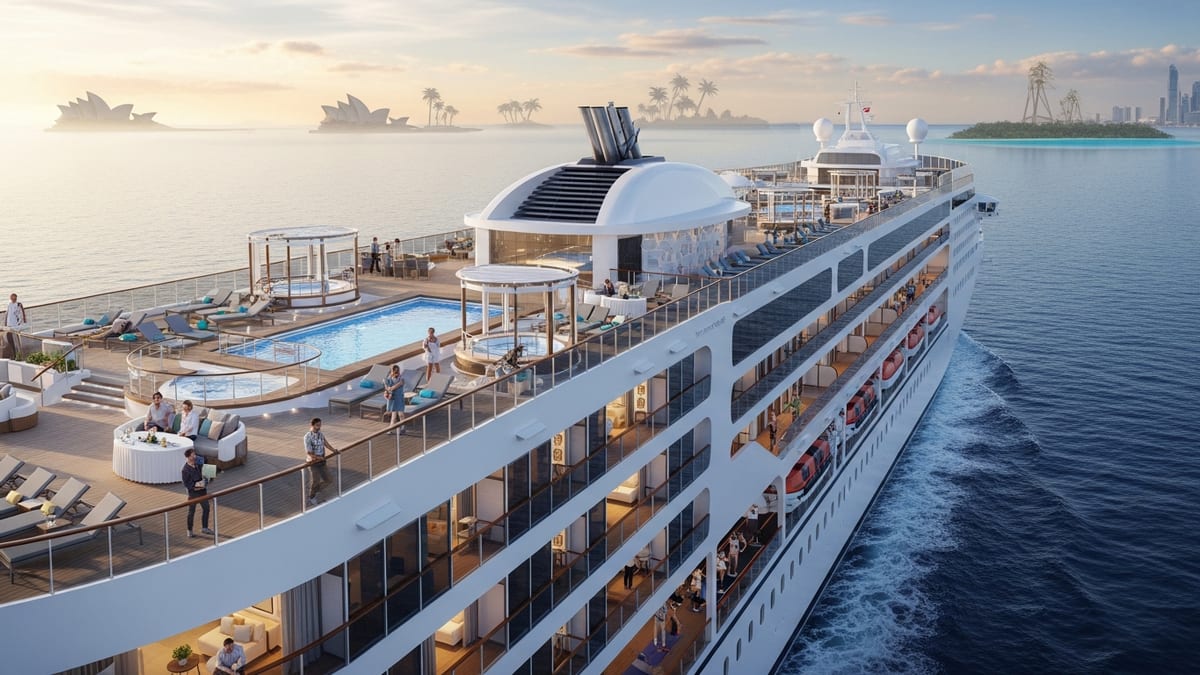
One of the defining features of this new holiday model is the extent to which resorts, ships and remote properties are being reimagined as fully immersive worlds. Travel trend coverage notes that hotels are layering in curated music programs, projection mapping, scent design, interactive art and theatrical dining to create spaces that feel more like limited-run events than static venues.
Industry analysis describes the emergence of destination hotels and festival-style takeovers, where a single brand or concept reshapes every touchpoint of the stay. Guests might check into a property that has been temporarily redesigned around a wellness theme, a culinary collaboration or a music series, complete with bespoke décor, uniforms, menus and programming that align to a single narrative arc.
These experiences are marketed as “bigger than you imagine” because they extend beyond traditional offerings such as pools and spas. Instead, itineraries are packed with workshops, late-night performances, sunrise meditations, pop-up markets and secret spaces revealed only to those on site. The result is a sense of immersion that encourages guests to stay within the “world” of the experience for the full duration of the trip.
Wellness Festivals and Retreats Grow into Mini-Holidays
Global wellness reports for 2026 highlight a rapid expansion of multi-day wellness festivals and retreat-style gatherings that blur the line between holiday, health break and community event. These experiences bring together yoga, breathwork, sound baths, cold immersion, nutrition workshops and creative sessions, often in striking natural settings far from major cities.
Unlike classic spa weekends, these new formats are built as self-contained journeys. Participants typically book accommodation, activities and meals as a single package, arriving for three to seven days of structured programming that encourages them to switch off, reset habits and form connections with other attendees. Organizers emphasize that the impact is designed to last long after travelers return home, positioning these trips as life recalibration moments rather than indulgent breaks.
Festival-style wellness experiences are also borrowing from the world of music and cultural events. Some programs feature headline practitioners, immersive lighting and soundscapes, and late-night gatherings without alcohol, reframing the idea of a “party holiday” around shared transformation instead of excess. This mix of production values and personal growth is a major reason these retreats are increasingly framed as the holiday format everyone is discussing.
Live Events and Fan Travel Redefine the Classic City Break
Travel companies report that a growing share of bookings in 2026 are driven by concerts, sports fixtures and one-off cultural moments, rather than by general sightseeing. This fan travel trend, frequently described as “experience-led,” sees travelers flying to another country for a single show, match or festival and expanding it into a three or four day micro-holiday.
Recent coverage of large-scale music events illustrates how brands and organizers are building full holiday ecosystems around a single headline performance. Host hotels may feature themed décor and playlists, branded welcome amenities, curated city tours and late-night after-parties, all encouraging guests to arrive early and stay longer. Package deals often bundle tickets, accommodation and local experiences, turning what might have been a quick trip into a multi-day immersion.
Tourism boards are leaning into this shift by promoting destination-wide programming that runs alongside the marquee event. Museum late openings, food markets, neighborhood performances and pop-up art installations extend the visitor experience across the city. As a result, the classic city break is evolving into a layered event journey, in which the main attraction is just one part of a wider narrative.
Designing Holidays Around Meaning, Memory and Community
Across the different segments of the industry, a common thread emerges: the most talked-about holidays in 2026 are experiences that promise emotional resonance and a sense of belonging. Travel research indicates that many people now prioritize rest, connection and memory-making as core motives, whether they are booking a multigenerational villa stay, a solo retreat or a high-energy festival trip.
Booking patterns suggest that travelers are willing to travel farther and spend more in order to access experiences that feel curated and personal. Multi-stay “hotel hop” itineraries, literature-inspired journeys, ancestry trips and grocery-centered food explorations all reflect a desire to step into stories rather than simply observe them. These trends show that holidaymakers increasingly expect trips to reflect their values, interests and identity.
For destinations and brands, this shift is driving investment in signature, story-rich experiences that can anchor an entire holiday. From nightly rituals in resort courtyards to limited-season cultural programs in museums and public spaces, the focus is on creating moments that travelers will talk about long after they return home. In this environment, the holiday experience everyone is talking about is less a fixed product and more a blueprint; it is the promise of a trip that feels expansive, emotionally charged and larger than the sum of its individual parts.