


For many Japan‑bound travelers and Japan residents, JAL Card looks like the obvious choice. You earn miles on Japan Airlines flights and daily spending, you get a bit of airport polish, and in some cases you can even inch toward elite status without living on airplanes. Yet once the novelty of a fresh piece of plastic wears off, a quieter story emerges. Hidden fees, underwhelming earn rates, opaque rules, and surprisingly weak consumer protections mean JAL Card may not be the straightforward travel upgrade its glossy brochures suggest. The problems are not always dramatic, but they are cumulative, and they matter most to the frequent travelers JAL wants to keep.
Get the latest updates straight to your inbox!
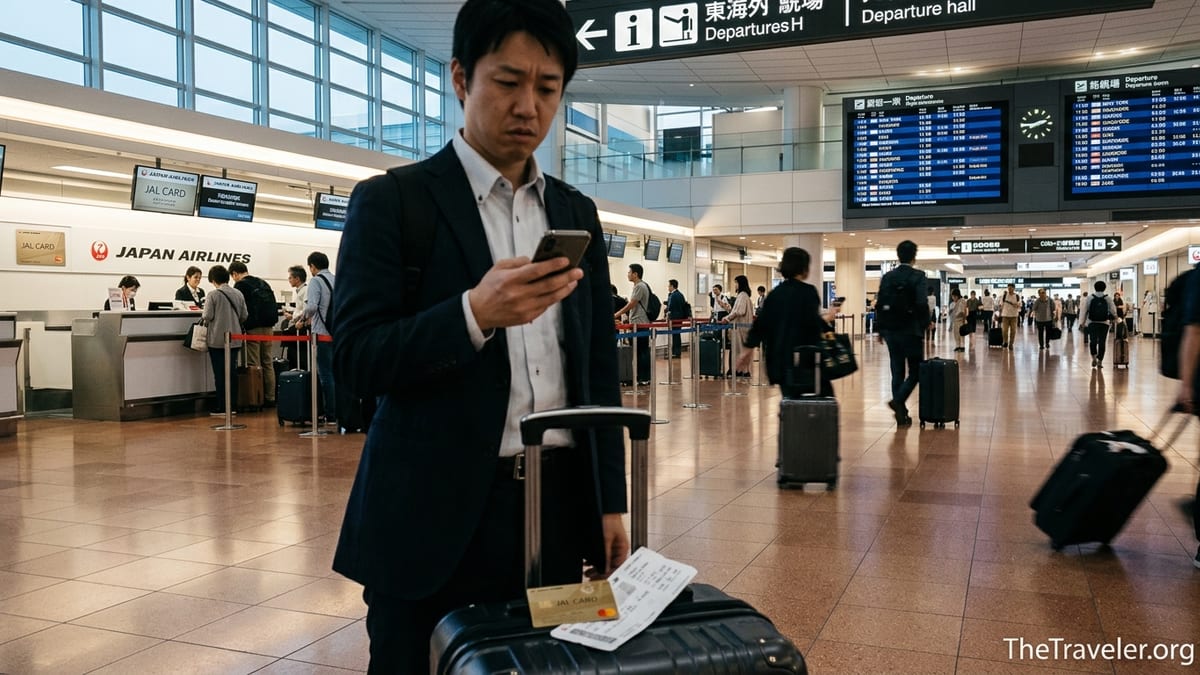
The Allure of JAL Card vs the Everyday Reality
On paper, JAL Card is compelling. You earn JAL Mileage Bank miles whenever you fly Japan Airlines or its oneworld partners, plus miles on everyday spending in yen and, for some versions, in other currencies. The brand association with Japan’s flagship carrier adds a sense of reliability and prestige. Marketing materials emphasize how “miles pile up quickly” when you use the card for groceries, convenience stores, Suica or PASMO top‑ups, and domestic travel inside Japan.
In reality, many travelers discover that the earn rate is less generous than it sounds, especially once you compare it with modern travel cards from the United States or Europe. A basic JAL Card often earns the equivalent of roughly 0.5 to 1 percent back in flight value on general purchases, depending on how you redeem the miles, and that is before considering program devaluations or surcharges on award tickets. Meanwhile, everyday cards like a no‑fee cash back Visa in the United States or a 1 percent back card in Europe can offer comparable or better returns without locking you into one airline.
Consider a Tokyo‑based traveler spending about 100,000 yen a month on their JAL Card. Over a year, they might collect enough miles for a one‑way domestic flight in economy during off‑peak periods, especially after paying for optional mile‑boosting features. A similar spender with a flexible bank‑points card might instead convert those points to whichever airline has the lowest‑surcharge award at the time, or simply take statement credits against any flight purchase. The gap between the “JAL lifestyle” promise and the mathematically modest reality is one of the core problems few cardholders recognize early on.
This disconnect is magnified for visitors and expatriates who are used to richer credit‑card ecosystems. A U.S. traveler applying for the JAL USA Card sees Japan Airlines branding and assumes it will rival American or Delta co‑branded cards. Yet reviews routinely describe it as “adequate” rather than outstanding, with a fairly basic mileage structure and none of the airport lounge or strong travel protection benefits that premium U.S. airline cards often provide.
Complex Earning Rules and the Mirage of “Double Miles”
Another under‑discussed problem with JAL Card is how opaque the mileage‑earning structure becomes once you add in optional extras and partner cards. In Japan, many cardholders are pushed toward a paid “shopping miles” option that promises to double the miles on everyday spending. On the surface that sounds like a smart way to speed toward a flight, but the annual fee for this upgrade eats into the real value unless you spend quite heavily on the card.
For example, imagine a JAL Card user in Osaka who signs up for the paid double‑miles add‑on. If they spend around 600,000 to 800,000 yen per year, they might net an extra few thousand miles versus the base earn rate. That could be worth a one‑way domestic upgrade or a small discount on a longer route, but only after paying the additional fee for the privilege. A disciplined traveler running the same spending through a simple 1 percent or 1.5 percent cash back card could be closer to a free round‑trip low‑cost‑carrier ticket within Asia, without managing any special settings in a mileage account.
Regional JAL‑branded cards can be just as confusing. In Taiwan, for instance, the JAL Shinkong Bank Card earns miles only after the monthly spend reaches a specific threshold, and certain types of transactions such as taxes or fees are excluded from mileage accrual. That means a traveler who uses the card to pay a large tax bill or other ineligible expenses may assume they are racking up miles, only to discover later that these payments did nothing for their balance. The headline promise of “earn miles on everyday spending” quietly breaks down when you read the fine print.
Even the relationship between JAL Card spending and elite‑status progress can be misleading. JAL’s system of FLY ON points and lifetime JAL Global Club status heavily favors flying on JAL metal. Credit‑card spending can help in some narrow ways, but online discussions from long‑time customers show that accumulating enough life points for meaningful lifetime status would require unrealistically high annual spending for most people. The impression that you can “spend your way into elite status” with a JAL Card is more marketing fantasy than achievable goal.
Fees, Foreign Currency Markups, and Surcharges That Eat Your Miles
Cardholders tend to focus on how many miles they can earn, but the less visible drag on value often comes from fees and currency markups. Many JAL Cards issued in Japan use the underlying network’s standard foreign transaction fee when you spend in currencies other than yen. For a traveler using their JAL Card to pay for hotels in Europe or Southeast Asia, that can mean roughly 2 to 3 percent extra cost on every transaction in return for a relatively modest trickle of JAL miles.
Take a practical example. A Tokyo resident takes a two‑week trip to Italy and spends the equivalent of 300,000 yen on their JAL Card. Between foreign transaction fees and less‑than‑ideal currency conversion, they might pay an extra 6,000 to 9,000 yen compared with a good no‑FX‑fee travel card. In return, they earn miles that might cover a domestic flight from Tokyo to Sapporo. If they had instead used a card like a modern no‑fee international Visa or Mastercard that waives FX fees, they would keep that 6,000 to 9,000 yen in their pocket and could still book the same or better flights using cash.
The pain continues when it is time to redeem those JAL miles. On long‑haul flights between Japan and North America or Europe, JAL often levies significant fuel surcharges and taxes on award tickets, payable in cash. A traveler redeeming miles for a business class seat from Tokyo to New York may still need to pay a few tens of thousands of yen in surcharges. From a pure value perspective, this reduces the effective return on the miles earned from JAL Card spending, especially for travelers who are sensitive to out‑of‑pocket costs.
In contrast, some non‑Japanese credit cards let you transfer bank points into multiple airline programs, including carriers that have more modest surcharges on similar routes. A U.S.‑based traveler might use a bank card that transfers to oneworld partners and then book flights on partners with lower fees, or mix cash and miles in more flexible ways. By tying yourself to JAL Card, you are essentially betting that JAL’s award pricing and surcharge structure will stay fair. Recent reports of devaluations and reduced premium‑cabin availability have made that bet look increasingly risky.
Customer Protection and Dispute Handling: A Quiet Weak Spot
A concern that surfaces in Japanese consumer‑finance circles, but rarely in glossy marketing, is the relatively weaker culture of credit‑card dispute resolution among some domestic issuers. Travelers familiar with the U.S. model, where card companies aggressively side with the customer in fraud or service disputes, may be surprised by a more conservative approach in parts of the Japanese market. Stories circulate of cardholders who struggled to secure chargebacks for clearly defective services or fraudulent charges, feeling the issuer pushed them back toward the merchant rather than fighting on their behalf.
One widely referenced anecdote involves a JAL Card holder who discovered an expensive electronics purchase on their statement that they did not authorize. The item had been shipped to a Japanese address, and despite the cardholder insisting it was fraud, the resolution process dragged on with little communication from the issuer. Frustrated, they eventually shifted their spending to an international issuer with a more proactive consumer‑protection record, accepting a higher annual fee in exchange for peace of mind. While this is only one example, it hints at a structural difference in how some Japanese cards view their role in disputes.
This matters for travelers because trips are full of transactions at unfamiliar merchants and online booking sites. Imagine a visitor in Fukuoka who pays a small local tour operator with their JAL Card for a day trip that never materializes: the guide fails to show, the company stops answering calls, and the traveler flies home the next day. A strong, consumer‑oriented issuer might swiftly credit back the charge pending investigation. A more cautious issuer could push for detailed documentation that is difficult for a short‑term visitor to provide, leaving the traveler out the money despite having done nothing wrong.
For frequent flyers using JAL Card as their primary payment tool, this risk creeps into everything from hotel prepayments to online rail passes and ski‑resort packages. When considering whether to commit more of your finances to JAL Card, it is worth asking not just “How many miles will I earn?” but “How will this issuer behave if something goes wrong on the road?” The answer is harder to quantify than an earn rate, yet arguably more important.
Digital Friction: Website Glitches, Card Rejections, and Japan Travel
Another practical problem with JAL Card that surfaces most clearly in traveler forums is digital friction. Booking flights on JAL’s website, especially from outside Japan, can be surprisingly finicky. Travelers report error codes at the payment stage, inexplicable declines on perfectly valid credit cards, and booking sessions that time out just as they are entering card details. While these issues are not exclusive to JAL Card, they affect how and when you can actually leverage your JAL miles and your co‑branded card.
Consider a U.S.‑based traveler in Los Angeles who has carefully planned a family trip to Tokyo during cherry blossom season. They have transferred bank points into JAL’s program and want to pay the taxes and surcharges with their JAL USA Card to keep everything in the ecosystem. On the final payment page, their card is repeatedly rejected with a generic error message. They call the U.S. issuer, which confirms no attempted charge is even reaching its system, suggesting the issue lies on JAL’s side. After several tries, the traveler gives up and books via a different airline website, losing the chance to use their JAL Card benefits at all.
Domestic residents face a different variant of the same issue. A Tokyo worker trying to buy a last‑minute ticket home to Sapporo on a busy holiday weekend finds the JAL site throwing a numeric error code every time they enter their local bank‑issued JAL Card details. With departures selling out, they switch to a generic domestic credit card that processes the payment instantly. The problem is not catastrophic, but it chips away at the supposed convenience of having one integrated card and mileage program.
These glitches might seem like temporary annoyances, yet they highlight an underlying reality: a loyalty credit card is only as useful as the infrastructure that supports it. If you cannot reliably use your JAL Card within JAL’s own booking channels, the card becomes just another piece of plastic in your wallet instead of a smooth bridge to better travel experiences.
Locked Into a Single Airline in a Volatile Reward World
The least discussed problem with JAL Card is also one of the most consequential: by committing your daily spending to a single‑airline card, you concentrate your reward value into one loyalty program in a world where airline currencies can devalue with little warning. Japan Airlines has already made changes to JAL Mileage Bank that affected how easy it is to book popular long‑haul business‑class awards to and from Japan. Regulars who once relied on specific “sweet spot” redemptions have watched them become harder to find, more expensive in miles, or both.
Imagine a Singapore‑based traveler who spends heavily each year on a JAL‑branded regional card, primarily to redeem business‑class seats between Tokyo and Europe. For several years, their strategy works well. Then award charts and availability shift, and JAL starts pricing those seats dynamically or restricting the best partner availability on popular dates. Overnight, the traveler’s existing pile of JAL miles becomes less powerful, and ongoing card spending produces a weaker return. Had they spread their earnings across a flexible bank‑points program with several airline partners, they would have more options and better resilience against any one airline’s changes.
This problem is especially acute for travelers outside Japan, where JAL’s network is narrower than that of global giants. A Canadian or European traveler might visit Japan every year or two, but most of their other long‑haul trips are on different carriers. If they have concentrated their spending into JAL Card, a large share of their rewards is trapped in a program aligned with routes they do not fly often. In contrast, a flexible card that transfers to multiple alliances would let them shift between oneworld, Star Alliance, and SkyTeam depending on price and availability.
The emotional appeal of “owning” a piece of Japan through a JAL‑branded card is understandable, particularly for Japan enthusiasts and expatriates. Yet emotionally satisfying loyalty is not the same as financially rational loyalty. In a volatile reward environment where airlines test new award pricing models, concentrating your card spending into a single national carrier is a risk most travelers underestimate.
The Takeaway
JAL Card is not a bad product, but it is also not the uncomplicated travel upgrade that many travelers assume when they first see the crane logo on a shiny piece of plastic. Beneath its marketing, the card’s true value depends on your spending patterns, your tolerance for fees and surcharges, your comfort with relatively conservative dispute handling, and your willingness to tie your rewards to a single airline in a changing loyalty landscape.
If you are a Japan‑based flyer who regularly travels on JAL domestically and internationally, and you understand the fees, thresholds, and optional mile‑boosting extras, a JAL Card can still make sense as part of a broader financial toolkit. Used strategically for specific spending categories and combined with at least one flexible, no‑FX‑fee card, it can help you extract solid value from JAL Mileage Bank without overexposing yourself to program changes.
For most other travelers, especially those visiting Japan only occasionally, the quiet problems with JAL Card outweigh the benefits. More flexible bank‑points cards, simple cash‑back cards, or co‑branded products from airlines with wider global reach often provide better long‑term value and stronger protections. Before signing up, run the numbers on your expected annual spend, factor in fees and surcharges, and imagine how you would feel if JAL made its miles less valuable next year. If that scenario makes you uneasy, keeping your options open may be the wiser move.
FAQ
Q1. Is a JAL Card worth it for travelers who visit Japan once a year?
For most once‑a‑year visitors, a flexible bank‑points or cash‑back card is more practical. You avoid annual fees on a niche card and can still book JAL or other airlines when it makes sense.
Q2. Do JAL Cards charge foreign transaction fees on overseas purchases?
Many JAL Cards issued in Japan apply the underlying network’s foreign transaction fee to non‑yen purchases, which can reduce the real value of the miles you earn abroad.
Q3. How good is the mileage earn rate on everyday spending with JAL Card?
The earn rate is usually modest, roughly in the range of a basic rewards card, and only becomes competitive if you spend heavily and make smart, high‑value redemptions.
Q4. Can I use JAL Card spending to get elite status quickly?
JAL’s elite system is heavily flight‑based. Card spending plays only a limited role, so you generally cannot “spend your way” to meaningful elite status in a short time.
Q5. Are JAL Cards good for booking award flights in business class?
They can help, but recent changes to award pricing and availability mean business‑class redemptions are less predictable, and surcharges on long‑haul awards can still be high.
Q6. How does customer protection on JAL Card compare with major U.S. cards?
Consumer‑protection norms in Japan tend to be more conservative, and dispute processes may feel slower or less aggressive than with leading U.S. travel‑rewards issuers.
Q7. Is the JAL USA Card competitive with other U.S. airline credit cards?
It is generally viewed as a niche option. It earns JAL miles but lacks many of the richer perks and flexible redemption paths offered by top‑tier U.S. airline and bank cards.
Q8. Are there hidden rules about which purchases earn JAL miles?
Yes. Some regional JAL‑branded cards exclude categories like taxes, certain fees, or low‑value transactions from earning miles, so it is important to check the detailed terms.
Q9. What is the biggest risk of relying on JAL Card for most of my spending?
The main risk is concentration. If JAL devalues its mileage program or restricts premium‑cabin awards, the value of your accumulated miles can drop with little warning.
Q10. How should frequent Japan travelers hedge against JAL Card’s downsides?
Use JAL Card selectively and pair it with a no‑FX‑fee, flexible‑points card. That way you can enjoy JAL‑specific perks while keeping most of your rewards portable and resilient.