


More news on this day
Thick fog settling over Sydney has prompted warnings of flight delays at Sydney Airport, as low visibility disrupts early-morning operations and forces adjustments to arrival and departure schedules.
Get the latest news straight to your inbox!
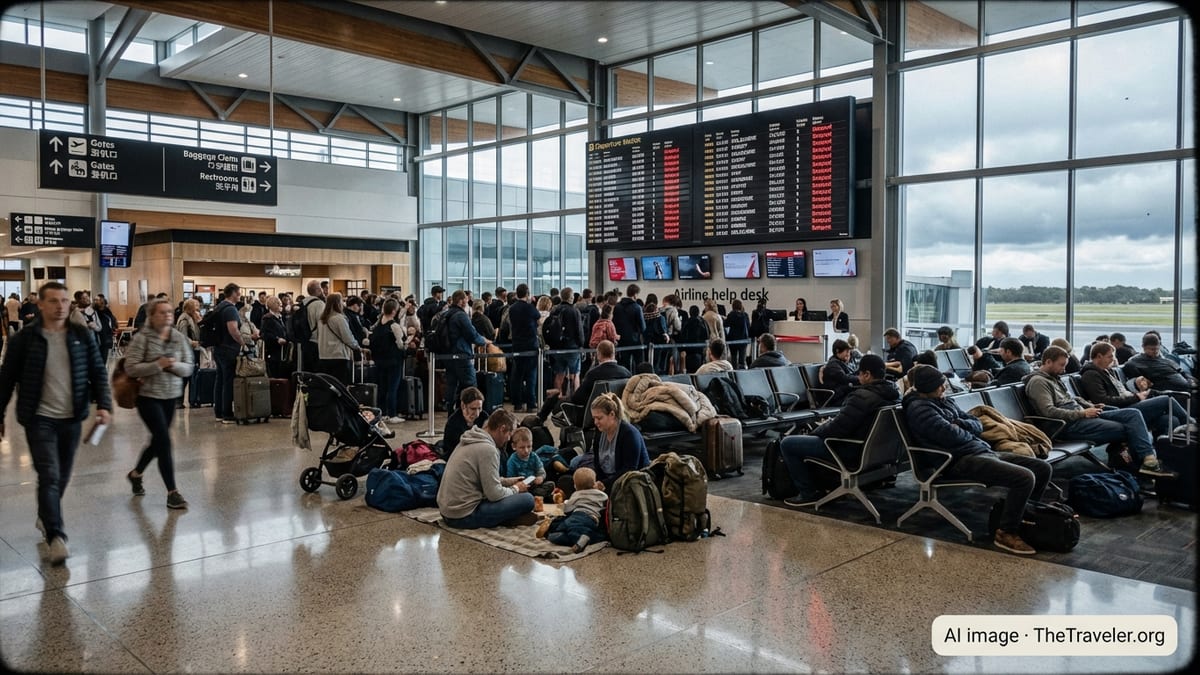
Low Visibility Slows Morning Operations
Early-morning reports indicate that a blanket of dense fog moved across the Sydney basin, significantly reducing visibility around Sydney Airport and surrounding suburbs. Flight-tracking data shows a pattern of delayed departures and adjusted arrival times as airlines work within tightened safety margins and revised runway configurations.
Real-time aviation dashboards tracking services at Sydney Airport show a number of domestic and regional services departing behind schedule, with some early flights to Melbourne, Brisbane and New Zealand destinations pushed back while conditions stabilise. The pattern is consistent with typical fog-related disruptions, where aircraft movements are slowed rather than halted outright, but the cumulative impact across the peak can be substantial.
Weather observations for the airport precinct point to rapidly changing conditions, with visibility fluctuating as the fog thickens and thins across different parts of the airfield. Such variability can force short-notice revisions to the rate at which aircraft are permitted to land and depart, creating knock-on delays even after the worst of the fog begins to lift.
While no widespread ground stop has been indicated in publicly available aviation planning documents, operational capacity is understood to be reduced, leaving less margin to absorb routine delays or minor technical issues on individual flights.
Domestic and International Flights Feeling the Impact
The disruption is being felt across both domestic and international operations, according to publicly available flight-status boards and third-party tracking platforms. Morning services to major east coast destinations, as well as trans-Tasman flights, show departure times pushed back, in some cases by more than half an hour compared with scheduled slots.
Long-haul international flights are also affected where inbound aircraft require extended spacing on approach or are held in arrival patterns while controllers manage reduced-visibility procedures. Any delay to these larger aircraft can cascade into later rotations, particularly for services that operate on tight turnaround windows before commencing onward journeys.
For passengers, the practical effect is a busier-than-usual terminal environment in the early part of the day, with more people on the ground at any one time as flights that would normally have departed remain at the gate. Check-in areas and security screening points can become congested when departures are bunched together after an initial period of weather-related restriction.
Some airlines appear to be building in extra buffer time to schedules during the worst of the fog, based on patterns visible in online trackers that show revised departure estimates being posted even before aircraft push back. This approach aims to reduce the volume of last-minute changes at the gate but can contribute to a perception of pervasive delays across the network.
Weather Conditions Expected to Improve Later in the Day
Fog events of this kind are typically most disruptive around dawn, when temperature and humidity conditions are most conducive to low cloud and reduced visibility. Meteorological data for the Sydney Airport station indicates that once the sun rises higher and surface temperatures increase, visibility usually improves, allowing air traffic flows to return closer to normal rates.
In many previous fog incidents at Sydney, the most significant delays have been concentrated in the first several hours of the morning peak. As conditions clear, air traffic managers often increase arrival and departure rates to work through the backlog, though complete recovery can take much of the day if early constraints were severe.
The current event appears consistent with that pattern, with forecasts and observational trends suggesting a gradual lifting of fog through the morning. However, even temporary visibility reductions can have disproportionate effects during busy periods, particularly at a major hub airport operating near capacity in normal conditions.
Airlines generally aim to keep later services operating as close to schedule as possible, but the complex interplay of aircraft rotations, crew duty limits and connecting passengers means that some knock-on disruption can persist into the afternoon, especially on routes heavily dependent on Sydney-based aircraft and crews.
Advice for Travellers Departing or Arriving Today
Travellers booked to fly into or out of Sydney during the fog-affected period are being urged by publicly available guidance to monitor their flight status closely on airline websites and apps. With departure and arrival times shifting in response to changing conditions, real-time updates remain the most reliable way to determine when to head to the airport.
General travel advice suggests allowing extra time for airport formalities, particularly in the morning when check-in, bag drop and security queues may be longer than usual due to disrupted schedules. Passengers making domestic connections through Sydney may also need to factor in a reduced buffer between flights, with some itineraries requiring rebooking if inbound delays are significant.
Those arriving into Sydney should be prepared for extended time on board if aircraft are held in arrival patterns, or for delays in baggage delivery if ground operations are temporarily constrained by low visibility. Public transport and road links around the airport can also be affected by the fog itself, with slower traffic and reduced ferry or bus frequencies in some areas.
Travel insurance policies vary in their treatment of weather-related disruption, but some may provide limited compensation for additional accommodation or meal costs if delays or missed connections become substantial. Passengers are often encouraged to retain receipts and check policy wording if their plans are heavily impacted.
Fog Disruption Highlights Ongoing Vulnerability of Busy Hubs
The latest bout of fog-related disruption underscores the vulnerability of major hub airports like Sydney to sudden weather changes, particularly during peak travel periods. While modern navigation and landing systems enable operations in far lower visibility than in the past, capacity constraints and safety margins still require traffic to be slowed when conditions deteriorate.
Industry analyses of previous fog events at Sydney and comparable airports show recurring patterns of morning delays, cascading disruption through interconnected flight networks, and heightened pressure on both airline and airport staff. These episodes highlight the importance of resilient scheduling, flexible crew management and robust passenger communication systems.
As air travel demand continues to recover and grow, aviation planners have been placing increased emphasis on how best to manage short-lived but disruptive weather phenomena such as fog, thunderstorms and low cloud ceilings. The current situation at Sydney provides another live test of those strategies, from the coordination of air traffic management plans to the way information is shared with travellers.
For passengers flying today, the primary message remains to stay informed, remain flexible where possible, and expect that some degree of delay is likely while thick fog continues to move across the city and its main gateway airport.