


Ask most travelers what they expect from an open air museum and you will hear some version of the same picture: a few old farmhouses, a blacksmith’s forge, maybe someone in costume churning butter. The reality in 2026 is far more surprising. Around the world, places like Skansen in Stockholm, Den Gamle By in Aarhus, and St Fagans near Cardiff are experimenting with living history, nightlife, wildlife conservation, and even community politics in ways that first-time visitors rarely anticipate. Understanding those unexpected elements not only makes a visit more rewarding, it can also prevent a few very avoidable frustrations.
Get the latest updates straight to your inbox!
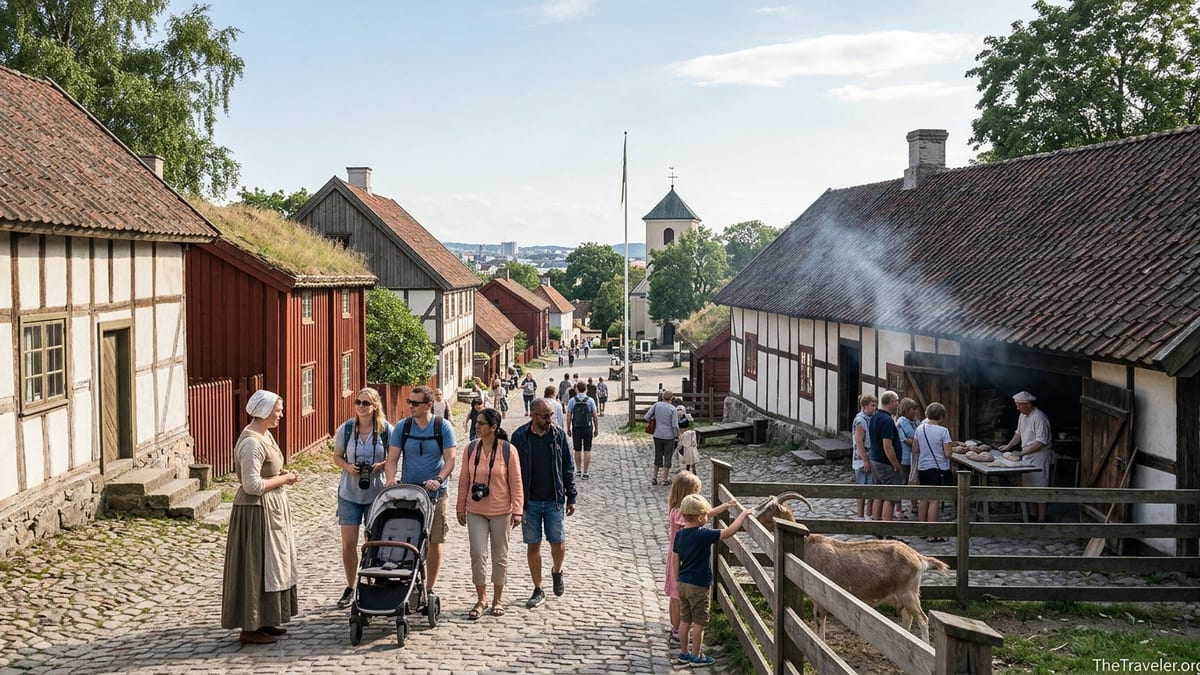
It Feels More Like a Small Town Than a Museum
The biggest surprise for many travelers is that a leading open air museum does not feel like a museum at all. Walk through Den Gamle By in Aarhus and you are not following a prescribed gallery route, you are entering a full-scale town complete with cobbled streets, town squares, shopfronts and back alleys that loop in on themselves. Many first-time visitors are taken aback to realize that there is no single “correct” way to move through the site. You might step from a 1920s department store into an 1860s merchant’s house simply because you turned left instead of right.
This town-like layout can be disorienting. At Skansen in Stockholm, for example, the historic buildings from across Sweden are arranged along winding lanes up and down Djurgården’s hillside. New visitors often do not expect how much uphill walking is involved or how long it actually takes to cross from the old glassworks district to the Sami camp and then down again to the Baltic Sea Aquarium. Many underestimate the time needed, arriving mid-afternoon and discovering that they have barely scratched the surface by closing time.
The sense of being in a real settlement also changes how you interact with staff. In Den Gamle By, a shopkeeper in a 1974 bakery may refuse to break character to give you modern directions or discuss contactless payment, speaking instead as a grocer who has just read about the energy crisis in the morning paper. At St Fagans near Cardiff, you might ask a costumed interpreter in a 16th-century farmhouse about a modern café and get a playful, period-appropriate response that leaves you briefly confused. The blurring of performance and practical information is part of the charm, but it surprises many people who expect traditional museum-style service desks at every corner.
For travelers, the lesson is to think of an open air museum visit more like exploring a small town than touring a single building. Pick up the map, commit to one or two “neighborhoods” rather than everything, and build in time to simply wander, get lost, and circle back. It is not a linear box-ticking experience, and that is exactly where its power lies.
The Past Is Not Always Pretty or Comfortable
Another thing many visitors do not anticipate is just how uncomfortable the past can feel when you are standing in the middle of it. Open air museums are increasingly honest about difficult histories: poverty, child labor, colonialism, religious conflict and environmental exploitation. At the Dutch Open Air Museum near Arnhem, for instance, you can step into cramped workers’ housing where families once shared a single room with no plumbing. In Den Gamle By’s 1970s apartments, the re-created living rooms include ashtrays, clutter and period-specific social tensions rather than a glossy nostalgia of “simpler times.”
Some travelers arrive expecting Instagram-ready cottages and leave unsettled by the realities on display. At St Fagans, the reconstructed cottages from industrial south Wales show soot-stained interiors and sparse furnishings that make it clear how hard life was for miners’ families. In some buildings, interpretive panels address issues like class, language suppression and women’s unpaid labor. Parents who imagined a purely light-hearted outing occasionally find themselves in unexpectedly deep conversations with their children about fairness, hardship and why people left rural life behind.
The discomfort is not only emotional. Historical authenticity means cold stone floors in winter, low doorways that demand constant ducking, and smoky interiors that smell faintly of peat or coal. In Skansen’s historic farmhouses, fires may be burning in open hearths to demonstrate traditional cooking, which can be intense for anyone with respiratory sensitivities. Visitors sometimes complain that buildings feel “dark” or “cramped,” forgetting that electric lighting and central heating are very modern comforts.
To get the most from these experiences, arrive prepared: wear layers, expect uneven ground, and be open to narratives that challenge romantic visions of the past. If you are visiting with kids, consider talking beforehand about why museums today choose to show the hard parts of history. Rather than dismissing those moments as “too heavy,” treat them as a rare chance to feel how ordinary people actually lived, not just how we wish they had.
Live Animals, Working Farms and Real Risks
Many visitors are surprised to discover that an open air museum can double as a working farm or even a small zoo. Skansen is the most famous example, combining more than a hundred historic buildings with enclosures for Nordic wildlife like moose, brown bears, lynx and wolverines. Families arriving in Stockholm expecting only “old houses” are often astonished to find themselves watching a keeper feed seals or listening to wolves howl at dusk. The Children’s Zoo area, where kids can meet goats and rabbits, becomes an unexpected highlight of many trips.
Elsewhere, the animal life is less dramatic but no less real. St Fagans keeps rare-breed Welsh livestock grazing among its re-erected farm buildings, and staff carry out everyday tasks such as milking, mucking out and shearing in full view of visitors. At smaller sites like the PreHistorisch Dorp in Eindhoven or Den Fynske Landsby on Funen, Denmark, chickens scratch under picnic tables and pigs root in enclosures that smell exactly as you would expect a pigsty to smell. Travelers who imagine an open air museum as a quiet, scent-free space are often unprepared for the noise and smells of genuine rural life.
With real animals come real practicalities. Mud is common, especially after rain. Manure attracts flies. Fences must be respected, even when a perfect photo opportunity lies just beyond them. Not every traveler anticipates the need for sturdy shoes, hand sanitizer and a willingness to keep food well away from enclosures. Children may reach for animals that can nip, kick or head-butt. Many museums include safety signage, but in the open air environment it can be easy to overlook those warnings amid the excitement.
There are benefits to this immediacy. Watching a sheepdog demonstration at a Scottish open air museum, or seeing a team of horses pull a wagon at the Dutch Open Air Museum, connects visitors to the physical labor that shaped landscapes long before tractors and trucks. If you prepare for dirt, noise and occasional chaos, you will likely leave with a much richer understanding of how farming and animal husbandry once governed the rhythm of everyday life.
Events, Nightlife and Crowds You Did Not Plan For
One of the most surprising aspects of open air museums today is how many function as major event venues. Skansen is a prime example: throughout the year it hosts big public celebrations of Swedish traditions such as Midsummer, Walpurgis Night and Christmas markets. On those days, the museum can feel more like a city festival than a quiet heritage site, with crowds of locals singing, dancing around maypoles and queuing for seasonal treats. Travelers who accidentally pick a holiday date without realizing it are often shocked by ticket lines, packed trams out to Djurgården and fully booked on-site restaurants.
St Fagans, too, now runs evening events ranging from folk dance festivals like Gŵyl Ifan around midsummer to Christmas parties and corporate functions in its historic barns. A casual visitor arriving late on such a day may find sections of the grounds closed for private receptions or soundchecks, with amplified music spilling across otherwise tranquil lanes. Even smaller museums experiment with themed weekends: at the PreHistorisch Dorp, for instance, reenactment groups stage live “living history” scenarios with warriors, craftspeople and traders that permanently alter the atmosphere compared with a regular weekday.
Open air museums also increasingly host temporary exhibitions or collaborations that target local audiences, such as contemporary art installations tucked among thatched roofs or short-run performances inside old churches. During these events, visitor numbers can spike unexpectedly. Parking overflows, toilets develop queues, and cosy cafés fill up by mid-morning. Many international travelers only realize after arrival that they have stumbled into a major local happening that was widely advertised in the local language but barely mentioned in international travel guides.
To avoid unpleasant shocks, it is worth checking the museum’s events calendar before you go and being flexible with timing. If you want a quiet, reflective experience, aim for weekday mornings outside school holidays. If you would rather dive into local culture at full volume, consider aligning your visit with a major festival or night opening. Either way, understanding that an open air museum can shift from contemplative to carnival-like in a few hours will help you set expectations correctly.
Your Ticket Often Buys More Time and Freedom Than You Expect
Another common surprise is how flexible open air museums can be about time. Many operate on a day ticket model that allows re-entry, or they quietly permit visitors to remain in outdoor areas after official closing time. In Aarhus, for example, locals note that Den Gamle By’s gates may stay open into the evening even when indoor exhibits have closed, so residents stroll the streets like a public park. First-time visitors often assume that the experience ends sharply when the last building shuts, not realizing that twilight walks among lantern-lit windows can be the most atmospheric part of the day.
Ticket prices can also behave in unexpected ways. A family ticket to Skansen purchased online may bundle in access to seasonal performances or the children’s area that would cost extra if bought separately at the gate. Some open air museums, like St Fagans, do not charge general admission at all but rely on parking fees, donations and paid experiences such as workshops or special exhibitions. Travelers who arrive expecting an expensive, tightly controlled attraction sometimes find instead a surprisingly accessible public space with the option to spend more only if they choose to add activities like guided tours, craft sessions or evening concerts.
Food and shopping often extend the experience beyond what is printed on the map. Restaurants and bakeries inside Den Gamle By’s historic streets serve period-inspired dishes alongside modern favorites, and it is not unusual for visitors to linger over coffee and cake long after they have finished “seeing the sights.” Gift shops at Skansen and the Dutch Open Air Museum stock local handicrafts and design items that quietly turn a museum visit into a shopping trip. Many travelers are caught off guard by how much time disappears into these pleasant side activities, especially when traveling with family members who linger in toy corners or sample stands.
When planning, treat an open air museum as at least a half-day commitment, and for larger sites realistically a full day. Buy tickets in advance when possible, but also scan for details about re-entry and closing procedures. If the gates stay open after the buildings shut, consider returning after dinner for a second, quieter look at streets and farmyards now empty of tour groups.
Participation Is Expected, Not Optional
Traditional museums rarely ask you to do more than look and read. Open air museums increasingly expect you to participate. That participation can be as simple as learning a few dance steps during a folk performance at Skansen, or it can mean rolling up your sleeves for a bread-baking workshop at St Fagans or a blacksmithing demonstration in a Dutch or German open air village. Visitors often arrive in “spectator mode” and are genuinely surprised when staff invite, and sometimes gently insist, that they join in.
These hands-on experiences can be intense in ways people do not anticipate. Trying on woollen historical clothing in summer heat, kneading dough in a smoky kitchen or spending twenty minutes at a loom will quickly erase any romantic illusions about pre-industrial life. Many travelers report that their most memorable moments came not from photographing picturesque buildings but from fumbling through tasks like splitting logs or carving wooden spoons alongside craftspeople who do this work every day. That emotional investment is something a label on a glass case can never quite replicate.
Of course, not everyone enjoys being pulled into the action. Some visitors feel self-conscious, particularly when asked to sing, dance or handle tools in front of others. Language barriers can add to the awkwardness, as interpreters deliver instructions in the local language with only occasional English summaries. Yet because many workshops are designed with school groups and families in mind, staff are usually adept at accommodating different comfort levels. Observing from the sidelines is almost always acceptable, provided you keep a respectful distance and follow any safety rules.
If you are open to participating, check ahead whether workshops require advance bookings or extra fees. If you prefer to watch quietly, choose visiting hours when there are fewer group activities, such as outside weekends and holidays. Either way, expect that an open air museum will, at some point, invite you to cross from observer to temporary resident of another era.
Modern Debates Play Out in Historical Settings
Perhaps the subtlest surprise is how contemporary open air museums have become. Behind the timber frames and thatched roofs, these institutions are wrestling with present-day questions about identity, climate, tourism and representation. At Skansen, for example, exhibits about Sami culture now sit within broader Swedish conversations about Indigenous rights and historical injustices. At St Fagans, new galleries explain how everyday Welsh life has changed with deindustrialization, migration and political devolution. Visitors sometimes find unexpectedly modern stories embedded in what they assumed would be purely historical narratives.
This contemporary focus can show up in very practical ways. Some open air museums are investing heavily in sustainability, installing discreet solar panels on outbuildings, composting food waste from cafés and experimenting with heritage crops that can cope with warmer, drier summers. Others run community programs that invite recent immigrants to share their own traditions through pop-up kitchens, storytelling events or temporary displays inside historic houses. Travelers expecting a one-directional lesson about “how things used to be” may instead find themselves asked what their own food memories are, or how climate change is altering their home landscapes.
There can also be tension. Long-time local visitors sometimes resist changes that bring in contemporary art, political themes or experimental performances. International tourists, on the other hand, may be confused when interpretive panels reference debates they have not followed in local media, such as housing shortages or language laws. When a 1970s city street in Den Gamle By hosts a temporary exhibition about youth culture and protest, for instance, the lines between nostalgia, criticism and celebration can blur in ways that feel complex rather than comforting.
For thoughtful travelers, these modern layers are part of the attraction. An open air museum that acknowledges ongoing change and conflict is more honest than one that freezes its country in a “golden age” forever. When you wander through reconstructed streets, pay attention to whose stories are being told, whose are missing, and how staff talk about the future as well as the past. You may come away with insights into contemporary society that you did not expect to find among barns and cobblestones.
The Takeaway
Open air museums sit at a crossroads between past and present, performance and research, public park and curated institution. Travelers who turn up thinking they will spend an hour strolling past some thatched cottages are frequently startled by just how immersive, demanding and thought-provoking these places can be. From real mud and real animals to complex stories about class, identity and the environment, the experience resists easy packaging.
If you approach an open air museum with the openness you would bring to a new city rather than a single building, you are unlikely to be disappointed. Wear good shoes, give yourself more time than you think you need, check the events calendar, and be ready to talk, taste, listen and try things. The most rewarding surprises often appear not on the map but in unscripted moments: a conversation with a weaver, a child quietly absorbing how cramped an old cottage feels, a local family welcoming you into a folk dance circle.
In an era when so much travel is mediated through screens and spectacle, open air museums offer a slower, more tactile kind of discovery. They will not always be comfortable, but that is precisely why they linger in memory long after your ticket has been recycled.
FAQ
Q1. How much time should I plan for a visit to an open air museum?
Most larger open air museums, such as Skansen or Den Gamle By, easily fill a full day, especially if you attend performances or workshops. Smaller sites can be seen in three to four hours, but you should always add extra time for food, events and simple wandering.
Q2. Are open air museums suitable for very young children?
Yes, but with some caveats. Children often love the space to run, the animals and the hands-on activities. However, uneven ground, open water, fires and farm equipment mean close supervision is essential, and strollers can be difficult on cobbles or steep paths.
Q3. What should I wear and bring for a comfortable visit?
Comfortable walking shoes, layered clothing and a waterproof jacket are key, since you will be outside much of the time. Sunscreen, a hat, water and a small snack are helpful, as well as hand sanitizer if you plan to visit animal areas or take part in workshops.
Q4. Do I need to book tickets and activities in advance?
For regular admission on weekdays, you can often buy tickets on arrival, but advance booking is wise during holidays and major events. Many special activities, such as craft workshops or evening tours, require separate reservations that can sell out well ahead of time.
Q5. Are open air museums accessible for visitors with limited mobility?
Accessibility varies. Main paths are often paved or well maintained, but historic buildings can have steps, narrow doorways and uneven floors. Many museums provide detailed accessibility information in advance and may offer alternative routes, shuttle vehicles or virtual tours of hard-to-reach spaces.
Q6. Can I bring my own food, or must I use on-site cafés?
Most open air museums allow picnics in designated areas and have plenty of benches or lawns. On-site cafés and restaurants are convenient and often serve regional dishes, but bringing your own food can save money and time, especially with children.
Q7. Are pets allowed inside open air museums?
Policies differ. Some sites welcome dogs on leashes in outdoor areas but not inside historic buildings or animal enclosures. Others restrict pets entirely because of livestock and wildlife. Always check the specific museum’s rules before you travel.
Q8. How do open air museums operate in bad weather?
Most remain open in rain, wind or even snow, and some of the most atmospheric visits happen in less-than-perfect weather. However, outdoor performances or demonstrations may be modified or moved indoors, and some paths can become muddy or slippery.
Q9. Is photography allowed in open air museums?
Photography is generally allowed outdoors and in many buildings for personal use, but flash, tripods and commercial shoots often require permission. Some exhibitions or craft workshops may restrict photos to protect sensitive materials or avoid disrupting the experience.
Q10. How can I make my visit more meaningful and not just a photo stop?
Slow down, talk to interpreters, read at least some of the signage and, if possible, join one guided tour or workshop. Ask questions about how the site connects to present-day issues, and take a few moments in each building to imagine daily routines rather than just snapping a quick picture.