


More news on this day
Air travelers across the United States faced another day of widespread disruption as more than 3,600 flights were delayed and at least 80 were cancelled, with severe weather and operational bottlenecks snarling schedules at airports in Illinois, Texas, Ohio, Kentucky and other states and affecting major carriers including Delta Air Lines, United Airlines and regional operator SkyWest.
Get the latest news straight to your inbox!
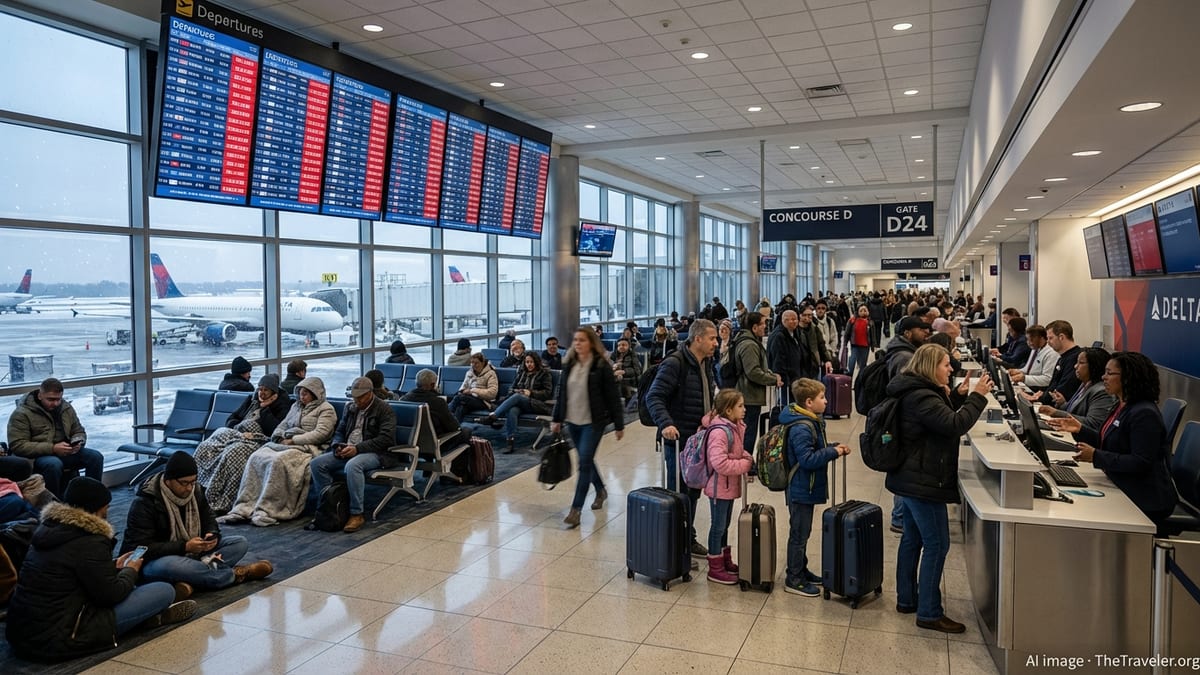
Storms, Congestion And Crew Limits Combine
Publicly available tracking data for Tuesday show 3,636 flights delayed nationwide and 83 cancelled, reflecting the cumulative impact of thunderstorms, congestion in key corridors and crew duty limits rippling through airline networks. The latest disruptions follow a pattern of weather driven slowdowns that have repeatedly hit central and southern states this summer, putting particular pressure on large connecting hubs.
Reports indicate that storms moving across the Midwest and Ohio Valley triggered ground stops and flow control programs at several airports, forcing aircraft to wait for departure slots and stretching turn times on arrival. When traffic builds faster than flights can be landed or departed, delays at a few saturated airports can quickly spread across the national network.
Airlines also continue to operate near peak summer capacity, which reduces their flexibility to recover when storms stall operations for several hours. With limited spare aircraft and crews available, a single lengthy delay can cause a series of rolling disruptions as aircraft miss subsequent connections and pilots and flight attendants reach their scheduled duty limits.
Federal aviation data and recent government analyses have highlighted how periods of intense weather can expose underlying strain in the system, including tight scheduling and ongoing air traffic control staffing challenges. When storms settle over regions with multiple major hubs, such as the corridor stretching from Texas through the Midwest, both airlines and controllers have fewer options to reroute aircraft around affected airspace.
Key States See Cascading Airport Disruptions
In Illinois, home to Chicago O Hare and Chicago Midway, travelers reported long lines and rolling departure changes as storms pushed through the region and delayed arriving aircraft. Chicago is among the nation s busiest aviation markets in summer, and any slowdown there tends to generate a wave of missed connections and rolling gate changes across the country.
Texas also experienced significant knock on effects, with high traffic at major hubs combined with unsettled weather in parts of the state. Industry monitoring shows that when delays build at busy Texas airports, downstream flights to the Midwest, Southeast and Mountain West often arrive late, compressing already tight turn times for afternoon and evening departures.
Ohio and Kentucky, while serving smaller volumes than Chicago or major Texas hubs, play an important role in regional connectivity and as links in big carrier networks. When arrivals and departures are held or re sequenced at airports in these states, regional feeders can struggle to keep their schedules aligned with mainline departures, leading to missed connections and aircraft out of position for subsequent flights.
Travel forums and social media posts from Tuesday described aircraft waiting on the ground for weather to clear, multiple gate changes and extended waits as airlines attempted to re assemble schedules around storm cells. Passengers connecting through central states reported arriving to find their onward flights delayed or cancelled, even when weather at their final destination appeared calm.
Delta, United And SkyWest Grapple With Knock On Effects
The wave of delays and cancellations affected a cross section of US airlines, with large network carriers Delta Air Lines and United Airlines, as well as regional operator SkyWest, among those experiencing schedule disruptions. These carriers rely heavily on hub and spoke networks centered on cities that were in the path of Tuesday s storms, leaving them particularly exposed when weather upends tightly timed operations.
Delta continues to operate under heightened scrutiny after earlier operational failures in recent years led to prolonged disruptions for passengers. Its current contract of carriage and advisory materials detail policies for rebooking, refunds and accommodations during significant irregular operations, and travelers experiencing Tuesday s delays were encouraged by consumer advocates to monitor these commitments and seek assistance through official channels when flights were significantly disrupted.
United, which has expanded peak day schedules at major hubs, has also faced intermittent congestion related delays at large airports in Illinois and Texas this year. Aviation consumer data published by federal agencies shows that while United and Delta historically maintain relatively low cancellation rates compared with some competitors, the sheer scale of their operations means even a small percentage of cancellations or long delays can affect tens of thousands of travelers on busy days.
SkyWest, which operates regional flights for several big brands including Delta and United, remains a crucial link in domestic connectivity. When storms or airspace constraints affect the smaller and mid sized airports served by SkyWest, regional aircraft and crews can end up out of position, limiting the ability of mainline carriers to feed passengers into their hub banks and making it harder to restore normal operations once weather improves.
Passenger Rights, Rebooking Options And Practical Steps
The latest disruptions again focus attention on what passengers can reasonably expect when flights are delayed or cancelled. Federal transportation dashboards and consumer reports outline the commitments major airlines make in events they categorize as within their control, including meal vouchers, hotel accommodations and free rebooking on the next available flight when cancellations or long delays occur for reasons other than severe weather or air traffic control mandates.
In practice, classifying the cause of a particular delay can be complex, especially on days when storms, staffing constraints and mechanical issues may interact. Travel industry analysts advise passengers to document what they are told about the cause of a delay or cancellation and to keep records of expenses incurred while waiting, in case they later seek reimbursement or file a complaint through official government channels.
Consumer advocates also recommend that travelers avoid waiting until they arrive at the airport to check their flight status on high risk days. Airline apps and third party tracking tools can provide early indicators of mounting delays, giving passengers a chance to request alternative routings or earlier departures before remaining seats are taken by others affected by the same weather system.
For those already in transit, rebooking at a connection hub rather than at the final destination can sometimes provide more options, particularly when multiple carriers serve the same city pairs. However, changing itineraries may carry additional cost unless a carrier issues a formal waiver for the affected travel dates and routes, so passengers are urged to review airline advisories carefully before making same day changes.
What Travelers Should Expect In Coming Days
Meteorological outlooks suggest that unsettled summer weather may continue across portions of the Midwest and South in the coming days, raising the possibility of additional localized disruptions, especially during peak afternoon and evening travel periods when thunderstorms are most likely. When storms form near heavily trafficked corridors, airlines often implement ground delay programs and speed restrictions that can quickly back up departures and arrivals.
Operational data from recent summers shows that while many weather related delays resolve within a single day, some systems can have lingering effects as aircraft and crews slowly return to their intended positions. Travelers booked on early morning departures following a day of heavy disruption are sometimes affected by aircraft that did not reach their overnight destination as planned.
Analysts note that US carriers overall have improved their average cancellation rates compared with the most disrupted periods of recent years, but the combination of fuller planes, leaner staffing and growing exposure to intense summer storms continues to challenge reliability. Central hub states such as Illinois, Texas, Ohio and Kentucky remain particularly sensitive, as disruptions there tend to affect onward flights nationwide.
For now, travelers planning trips in the coming days are being urged by travel providers and consumer advocates to build extra buffer time into itineraries involving connections through weather prone hubs, to monitor forecasts along their routes, and to keep airline apps and notifications enabled so they can respond quickly if delays begin to mount again.