


More news on this day
United Airlines Flight 2772, operating from New York Newark Liberty International Airport to Sarasota Bradenton International Airport on July 15, diverted back to Newark shortly after departure, drawing renewed public attention to operational reliability on the busy Newark–Sarasota corridor and to the Boeing 737 MAX 9 aircraft type.
Get the latest news straight to your inbox!
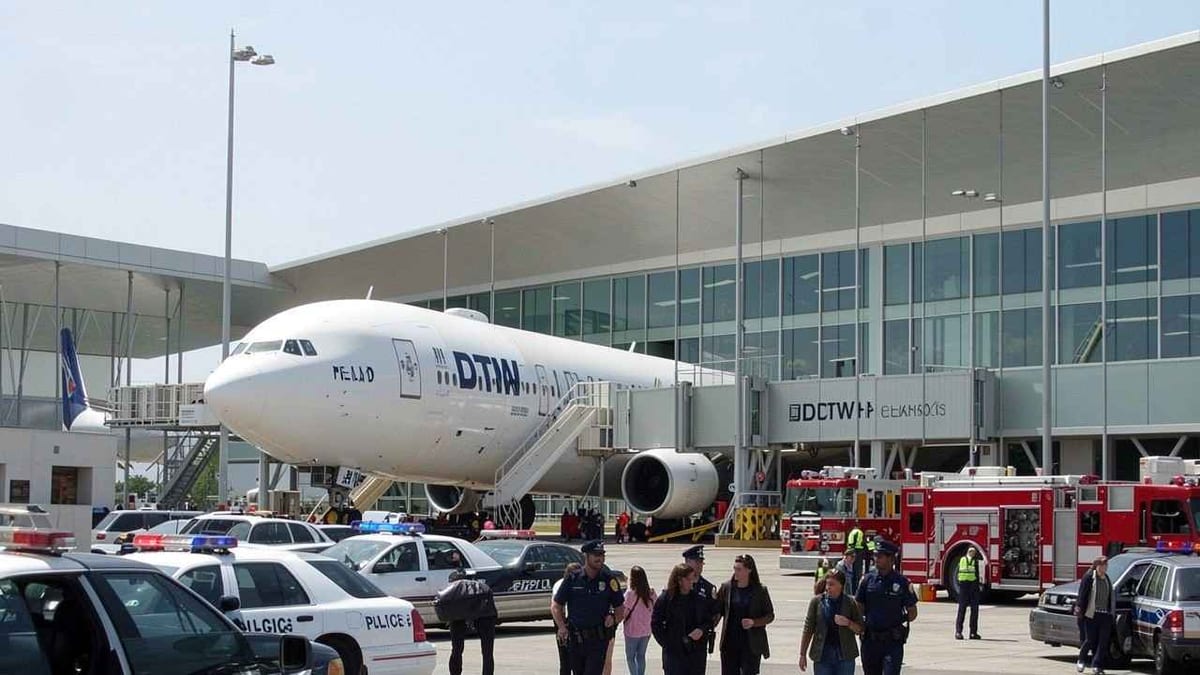
Routine Newark–Sarasota Service Interrupted
Publicly available schedule data show that United Airlines operates multiple daily flights between Newark Liberty International Airport and Sarasota Bradenton International Airport, with Flight 2772 listed as a regularly scheduled service on this route in July 2026. Flight-planning and airport timetables typically indicate a mid-morning departure from Newark with an arrival in Sarasota in the late morning, placing the flight within peak busy hours for both airports.
On July 15, that routine was interrupted when Flight 2772, identified as a Boeing 737 MAX 9, turned back toward Newark instead of continuing south to Florida. Online flight-tracking records and timetable information indicate that the aircraft did not complete its planned segment to Sarasota, instead returning to its origin airport after departure.
The diversion occurred against a backdrop of generally stable operations on the Newark–Sarasota route, with multiple carriers and daily frequencies connecting the New York metropolitan area to Florida’s Gulf Coast. As of mid-2026, United remains the primary operator of nonstop services on this pairing, with Flight 2772 appearing as one of its core daytime departures.
Although diversions are not uncommon in commercial aviation and can result from a wide range of operational considerations, this particular event attracted additional public interest because it involved a Boeing 737 MAX family aircraft, a type that continues to face heightened scrutiny from travelers.
Limited Early Details on Reason for Diversion
As of publication time, publicly accessible aviation data platforms and official airport status feeds do not provide a detailed narrative explanation for why Flight 2772 returned to Newark instead of continuing to Sarasota. Diversions can stem from a variety of factors, including technical issues indicated by cockpit systems, weather and airspace constraints, operational or crew considerations, or medical situations involving passengers or crew members.
Real-time status feeds for Newark Liberty International Airport on July 15 highlight occasional traffic management measures and delays, but the available summaries do not single out Flight 2772 by cause. Diversion forums and historical advisories for Newark show that arrival and departure programs can be adjusted due to congestion, runway configuration, or weather in the New York area, any of which can add complexity to flight planning on a given day.
In the absence of a formal incident report, the decision to return is generally interpreted within the industry as a precautionary measure aligned with standard operating procedures. Flight crews are trained to favor conservative choices when facing potential issues, and returning to a large hub such as Newark offers advantages including maintenance support, crew resources, and a wider set of rebooking options for affected travelers.
Early online commentary from aviation enthusiasts and passengers monitoring traffic into Newark on July 15 focused less on disruption and more on the broader operational context at the airport, where multiple United departures and arrivals were moving through an already busy midday schedule.
Boeing 737 MAX 9 Under Continued Public Scrutiny
The aircraft assigned to Flight 2772 is listed in fleet databases as a Boeing 737 MAX 9, part of the newest generation of the 737 family. The MAX series has been subject to extended regulatory oversight and public discussion since high-profile accidents earlier in the decade and subsequent global groundings, followed by phased returns to service and technical updates.
By mid-2026, United operates one of the larger 737 MAX fleets in North America, including both MAX 8 and MAX 9 variants on domestic and medium-haul international routes. The type appears regularly in Newark-based schedules, serving destinations ranging from Florida leisure markets to transcontinental sectors, according to airline fleet summaries and booking engine data.
Recent regulatory documents and safety bulletins continue to address the Boeing 737 family, including inspection requirements and component-specific directives that apply across multiple variants. These actions form part of a wider global framework that seeks to manage risk through preventive maintenance, design updates, and recurrent review of in-service data.
For travelers, the association of Flight 2772’s diversion with the MAX 9 designation may amplify existing concerns, even though publicly available information at this stage does not attribute the return to any specific technical fault related to the aircraft’s design. Aviation specialists frequently note that single-flight events, taken in isolation, do not provide a statistical basis for judging overall fleet safety, which is assessed over thousands of flight hours and rigorous regulatory oversight.
Impact on Passengers and Operations
For passengers onboard Flight 2772, the diversion would likely have resulted in missed connections and significant schedule changes, particularly for those planning ground transportation or same-day onward travel from Sarasota. Standard industry practice in such situations involves rebooking customers on later services to their final destination, either on the same carrier, partner airlines, or alternative routings through different hubs.
Schedule data from Sarasota Bradenton International Airport for July 2026 show a consistent set of daily departures and arrivals for United Airlines, including multiple Newark flights throughout the day. This structure provides some redundancy for managing disruption, but midsummer loads to Florida often run high, which can limit same-day rebooking options and push some travelers onto next-day departures or alternate airports.
Operationally, a diversion back to the departure airport affects not only one flight but also the network that aircraft supports later in the day. A Boeing 737 MAX 9 based in Newark may be scheduled to operate several turns, and a single disruption can cascade into delays or equipment swaps across subsequent segments. Airline operations centers typically respond by reshuffling aircraft assignments, calling in reserve aircraft when available, or adjusting departure times to preserve overall network integrity.
For airports, unscheduled returns add to gate-management complexity, especially in constrained facilities such as Newark. Ground handling teams must quickly reposition equipment, coordinate refueling and maintenance checks if required, and manage passenger flows within terminals that may already be operating near capacity.
Broader Context of Diversions on United’s Network
The diversion of Flight 2772 fits within a broader pattern of occasional irregular operations that affect airlines worldwide. Data aggregated from public flight-tracking platforms illustrate that diversions, while relatively rare compared with total movements, occur regularly across United’s domestic and international network, often for reasons that are resolved without long-term implications for the aircraft involved.
Recent months have seen higher-profile United diversions receive attention on aviation forums and social media, including events involving technical concerns, medical issues, and airspace or weather disruptions. These discussions frequently highlight the complexity of modern airline operations and the number of variables that pilots and operations teams must weigh in real time.
Regulatory agencies and investigative bodies typically focus formal inquiries on events that meet specific thresholds, such as declared emergencies, significant system failures, or injuries. Many day-to-day diversions, particularly precautionary returns that end without incident, are documented in routine operational records and databases without leading to publicly released reports.
For travelers considering future trips on the Newark–Sarasota route or on Boeing 737 MAX aircraft more broadly, the diversion of Flight 2772 serves as a reminder that modern aviation prioritizes conservative decision-making when uncertainty arises. While the practical effect may be disruption and inconvenience on the day of travel, the underlying framework emphasizes returning to airports with the most resources available whenever a flight does not proceed exactly as planned.