


More news on this day
Thousands of passengers were stranded at New York’s LaGuardia Airport after a fresh wave of operational disruptions led to 179 flight cancellations and more than 300 delays, snarling major routes across the United States and Canada and affecting carriers including Endeavor Air, Republic Airways, Jazz, American Airlines and Air Canada.
Get the latest news straight to your inbox!
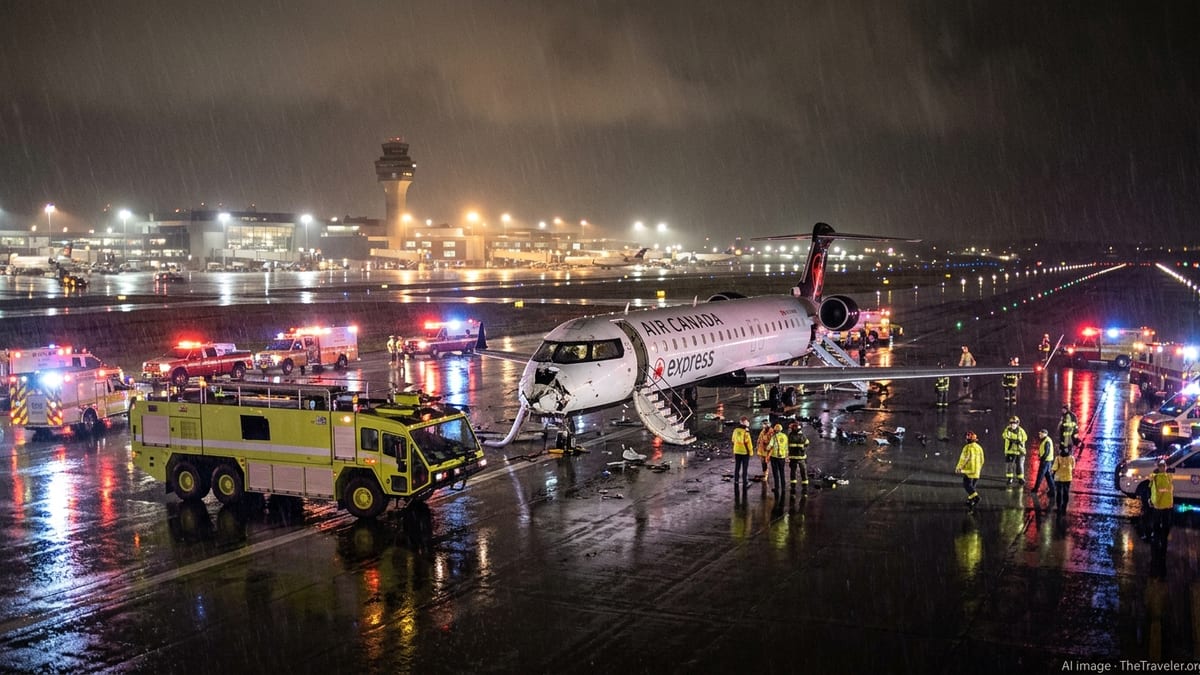
Wide Ripple Effects Across North American Routes
The latest disruption at LaGuardia concentrated on regional and mainline services linking New York with major hubs such as Chicago, Toronto, Montreal, Boston and Washington, according to flight-tracking data and published coverage. Passengers reported hours-long waits in terminal queues as departures were repeatedly pushed back or removed from schedules.
Regional affiliates Endeavor Air and Republic Airways, which operate flights on behalf of large network airlines, accounted for a significant share of the cancellations and late departures, particularly on short-haul business routes in the busy Northeast corridor and toward Midwestern gateways. Services operated by Jazz for Air Canada also saw notable interruptions on cross-border routes between LaGuardia and Canadian cities, contributing to mounting congestion in both directions.
American Airlines and Air Canada, which rely on a mix of their own metal and regional partners at LaGuardia, experienced cascading schedule changes as aircraft and crews fell out of position. Publicly available data indicates that once early departures are disrupted at a slot-constrained airport like LaGuardia, recovery can take many hours, leaving later flights vulnerable to rolling delays.
The concentration of cancellations and delays at a single, high-demand airport created a knock-on effect across the network. Flights inbound from cities such as Chicago, Toronto and other hubs arrived late or were canceled outright, limiting options for rebooking and forcing some travelers to seek alternative airports in the New York region.
LaGuardia’s Ongoing Reliability Challenges
LaGuardia has long ranked among the most delay-prone airports in federal performance statistics, with on-time arrivals frequently lagging behind other major U.S. hubs. Transportation Department data and independent analysis show that a combination of tight runway capacity, dense schedules and challenging Northeast weather keeps the airport especially vulnerable to disruption.
Recent reporting on national aviation trends indicates that LaGuardia continues to feature prominently among airports with high levels of cancellations and delays, particularly during peak travel periods and in the wake of severe operational incidents. Even when runways are fully open, airlines must contend with air traffic control constraints and limited room to recover when the system comes under pressure.
Regional carriers such as Endeavor Air and Republic Airways are especially exposed at airports like LaGuardia, where they operate frequent shuttle-style services using smaller jets that are closely timed throughout the day. If one roundtrip is delayed or canceled, aircraft and crews can quickly fall behind schedule, affecting multiple flights.
Consumer advocates note that the pattern is part of a broader national picture in which flight delays and tarmac waits have reached some of their worst levels in years. Recent watchdog reports highlight that major airports including LaGuardia are experiencing elevated levels of disruption, raising concerns about how well the system can absorb further strain as peak summer travel ramps up.
Operational and Safety Pressures on Regional Fleets
The latest wave of cancellations coincides with heightened scrutiny on regional aircraft operations in North America. Recent incidents and targeted fleet inspections have, at times, resulted in multiple jets being temporarily removed from service, prompting concentrated clusters of cancellations among carriers that depend heavily on regional partners.
Endeavor Air and Republic Airways each operate thousands of flights monthly on behalf of larger airline brands, linking major hubs to smaller and mid-sized markets. Publicly available federal performance data for regional airlines shows relatively strong on-time records overall but also underscores that even modest cancellation rates can translate into major disruption when schedules are densely packed and aircraft utilization is high.
Jazz, which flies many Air Canada Express routes, plays a similar role north of the border and at cross-border gateways such as LaGuardia. When regional partners face capacity constraints from inspections, maintenance needs or staffing shortages, mainline carriers often have limited flexibility to substitute larger aircraft or shift schedules on short notice.
Industry analysis suggests that these pressures are compounded by persistent pilot staffing challenges on regional jets and the complex choreography required to align flight crews, maintenance resources and airport slots. LaGuardia’s tightly controlled operating environment leaves carriers little margin to absorb irregular operations without significant repercussions for passengers.
Travelers Navigate Cancellations, Rebookings and Rights
As cancellations and rolling delays accumulated, travelers faced crowded customer service lines, limited same-day rebooking options and uncertainty over hotel and meal support. With many LaGuardia-bound flights already operating near capacity, seats on later services and at neighboring New York airports were quickly snapped up, leaving some passengers stranded or forced to delay their trips by a day or more.
Consumer advocates and government resources emphasize that passengers whose flights are canceled or significantly changed for reasons within an airline’s control may be eligible for refunds instead of vouchers, as well as other forms of assistance depending on carrier policies. Public dashboards from federal regulators and individual airlines outline when travelers can request cash back, hotel accommodations, ground transportation or meal credits.
For those affected at LaGuardia, the most immediate guidance from published travel advisories is to monitor airline apps and text alerts closely, as schedules can change multiple times in a single day. Passengers are also encouraged to check the status of connecting flights, since a missed leg in Chicago, Toronto or other hubs can complicate onward travel even if the initial departure appears to be operating.
Experts in air travel planning advise that travelers build additional buffer time into itineraries involving congested airports such as LaGuardia, especially when making important connections or time-sensitive trips. Given the recent pattern of disruptions, flexible tickets, early departures and familiarity with refund and rebooking rules can help mitigate the impact when large-scale cancellations and delays strike.