


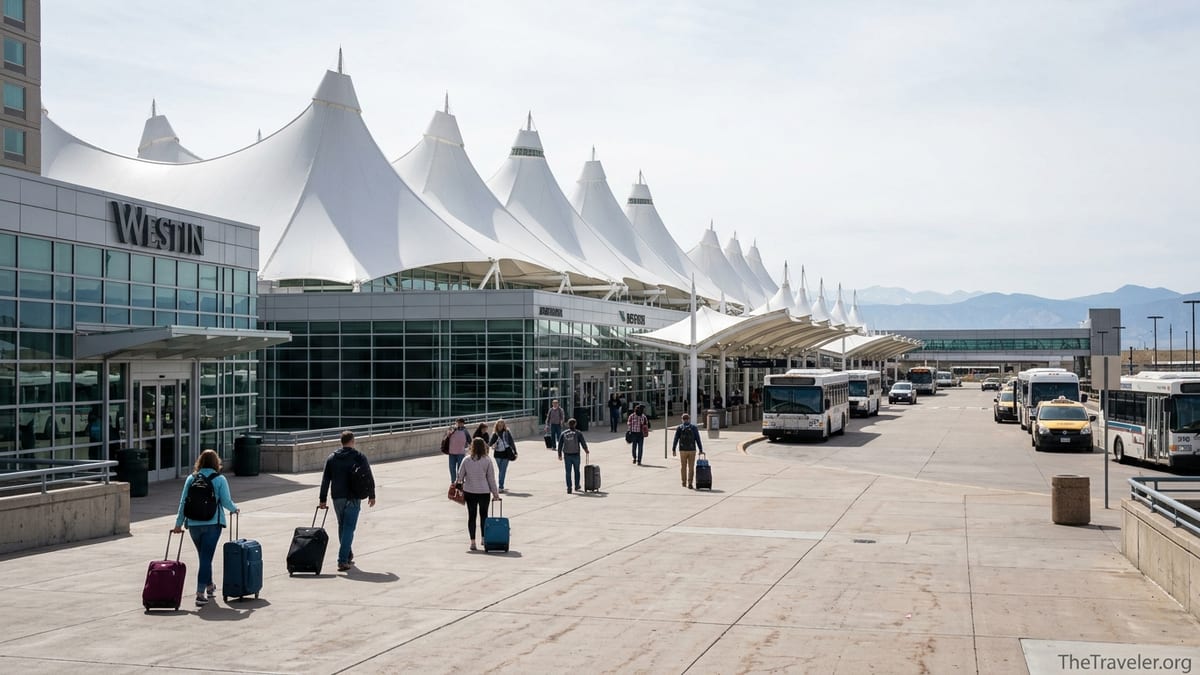
Denver International Airport can feel enormous and confusing the first time you land on the Colorado plains and see its white-tented roofline. The good news: once you understand the basic layout and how the trains, parking, rental cars, and hotel connect to the main terminal, DEN becomes one of the easier big U.S. hubs to use. This guide walks you through the airport from curb to gate, with clear explanations and real-world examples tailored for first-time travelers.
Get the latest updates straight to your inbox!
Understanding the Layout: Jeppesen Terminal and the Three Concourses
Denver International Airport is organized around a single main building called Jeppesen Terminal and three concourses labeled A, B, and C. Jeppesen Terminal is where you find airline check-in counters, the main security checkpoints, baggage claim, and all ground transportation. Once you clear security, you ride an underground train to your concourse and gate. Think of it as a hub-and-spoke layout: everything on the “landside” happens in Jeppesen; everything at the gates happens in the concourses.
Most airlines use a dedicated concourse. United primarily operates from Concourse B, while Southwest is heavily concentrated in Concourse C. Many other U.S. and international airlines use Concourse A. When you look at your boarding pass, the gate number will start with A, B, or C, which tells you which concourse your flight uses. For example, a gate like B32 indicates Concourse B, gate 32, which you will reach by train from the main terminal.
Jeppesen Terminal itself is stacked vertically. Ticketing and check-in desks sit on the upper level, while baggage claim and ground transport are one level below. The main security checkpoints are on the upper level near the center, labeled East and West, and both bring you to the same train system underneath. You can walk to Concourse A via a pedestrian bridge from the terminal, but most passengers simply ride the underground train for all three concourses because it is quick and frequent.
Because DEN covers so much land, walking distances inside each concourse can be long. If you are connecting from a regional United flight arriving at one far end of Concourse B to a mainline departure at the opposite end, walking can easily take 10 to 15 minutes at a normal pace. Plan your connections with this in mind, especially if you are not a fast walker or are traveling with young children or heavy carry-ons.
Getting To and From DEN: Trains, Shuttles, and Rideshares
Denver International sits about 25 miles from downtown Denver along Peña Boulevard. For many visitors, the easiest option is the commuter rail line that runs between the airport and Denver Union Station. Trains generally depart about every 15 minutes during the day and less frequently at night, and the trip to downtown typically takes around 35 minutes. It is a simple, one-seat ride: you board at the airport station beneath the terminal and ride straight into downtown’s main rail hub.
The airport rail station is directly under the open-air plaza at the west side of Jeppesen Terminal. When you arrive on a flight and collect your luggage on Level 5, you follow signs for the Westin hotel and “Transit Center.” An escalator or elevator takes you down to the train platforms. You can purchase tickets from vending machines near the platform using a credit card or contactless payment; the fare is usually competitive with or cheaper than a solo rideshare into the city, especially during peak times.
Rideshare services and taxis pick up on Level 5, the same level as baggage claim. After you collect your bags, walk outside to the designated rideshare or taxi islands and follow the overhead signs to your specific pickup zone. For example, a Lyft or Uber pickup might show a zone letter on the app and you match that to a sign on the curb. During busy arrival banks, especially Sunday evenings in ski season, expect a moderate wait as drivers cycle through the pickup lanes.
Hotel shuttles, shared-ride vans, and private ski resort shuttles also depart from Level 5. A typical winter scenario: a traveler landing from Chicago at 8:30 p.m. walks out of baggage claim, finds the clearly marked Breckenridge or Vail shuttle stand on the island, checks in with the driver, and then rides two to three hours into the mountains. If you are heading straight to a downtown Denver hotel such as those clustered around Union Station or the 16th Street Mall, the rail line plus a short walk or local rideshare is usually the most predictable combination.
Arrivals: From Gate to Ground Transportation
On arrival, your first stop is the train platform beneath your concourse. As soon as you step off the plane, follow signs for “Train to Terminal.” In Concourse B and C, this is the only way back to Jeppesen Terminal; in Concourse A you can either take the train or walk across the pedestrian bridge, which some travelers prefer for the mountain and airfield views. Trains arrive frequently and the ride from the farthest concourse back to the terminal is usually under 10 minutes including stops.
Once you reach Jeppesen Terminal, you emerge into the lower level where baggage claim carousels and ground transportation are located. Digital screens list flights and corresponding carousel numbers. A real-world example: if you arrive on United flight 1234 from Houston, the screens might show “Carousel 17,” and you would walk a short distance to watch that belt. Overhead signs clearly separate the East and West sides of baggage claim, which correspond to where your airline’s check-in counters are located on the level above.
After collecting luggage, you move directly outside to ground transportation. The curbside is divided into islands and lanes for taxis, rideshares, hotel shuttles, charter buses, and private pickups. If a relative is picking you up in a personal car, it is smart to coordinate a specific door number, such as “Door 608 on the East side,” so you can find one another quickly among the multiple doors and lanes. During snow events, traffic can slow to a crawl near the terminal, so building in an extra 15 to 20 minutes for pickups is wise.
International arrivals go through passport control and customs at a secure facility connected to the terminal. Airlines will guide you from your gate to immigration using a dedicated corridor. After clearing passport control and customs, you rejoin the main baggage claim and ground transportation level, where you access the same shuttles, trains, and rideshares as domestic passengers.
Departures and Security: Navigating Check-In and the Trains
For departures, you start at the upper level of Jeppesen Terminal, which houses the airline ticket counters and the two main security checkpoints labeled East and West. You can be dropped off curbside on this upper level or come upstairs using escalators and elevators from parking or the train station. Airline names are displayed above the curb and above the check-in islands, so you know roughly where to be dropped. For example, United check-in is generally on the west side of the terminal while some other carriers group on the east, though specifics can shift as the airport reconfigures counters.
The East and West security checkpoints both lead to the same post-security area and train system. Wait times can vary, and the airport’s website and in-terminal monitors often display approximate times for each checkpoint. A good first-time strategy is to choose the less crowded checkpoint even if it is on the opposite side from your airline’s counters. Once you are through security, you take an escalator down to the train platform and ride to your concourse. The concourse name is announced on board so you know when to exit.
If your flight departs from Concourse A and you are not in a rush, the pedestrian bridge is an appealing alternative to the train. Accessed from the upper level near the north end of Jeppesen Terminal, the glass bridge spans the aircraft taxi lanes and offers clear views of the runways and the Rocky Mountains on clear days. Many families and aviation enthusiasts use this route simply for the experience. Once across, you descend into Concourse A’s main hall and walk to your gate.
The size of DEN means you should arrive earlier than you might for a small regional airport. For a domestic flight at a typical busy time, many travelers aim to reach the terminal 2 to 2.5 hours before departure, especially in ski season or summer holiday periods when security lines can expand quickly. If you are checking ski bags, oversized luggage, or traveling with a large group, give yourself even more time to navigate check-in, the security queues, and the train rides to your concourse.
Parking, Rental Cars, and Nearby Hotels
Denver International offers a mix of on-site garages, economy surface lots, and dedicated areas for off-airport shuttles. The large parking garages sit directly adjacent to Jeppesen Terminal. Drivers pull off Peña Boulevard and follow overhead signs for East or West garage, then park and walk into the terminal via skybridges and walkways. These garages cost more per day than the economy lots but offer the shortest walk to the terminal. Many Denver-area travelers who take frequent short business trips pay the higher rate for the convenience of being just a few minutes from the check-in counters.
Economy lots sit farther from the terminal and are connected by airport-run shuttle buses that circulate 24 hours a day. A common pattern for a local family trip: they park in an economy lot for a week-long vacation, keep the parking ticket handy, and take the shuttle directly from their car’s row to the terminal. When they return, they hop the same shuttle back to the marked row. In winter, consider that these lots are outdoors and can accumulate snow and ice; building in extra time to dig out your car is smart after a big storm.
Rental car companies operate from dedicated lots located a short ride away from the terminal. After you collect your luggage on Level 5, follow signs for “Rental Car Shuttles.” Courtesy buses for brands such as Avis, Budget, Enterprise, Hertz, National, Alamo, and others pick up from clearly marked islands outside the terminal. For example, a traveler who prebooked an SUV with an all-wheel-drive package for a ski trip might exit baggage claim, walk to the Hertz or Enterprise shuttle zone, ride 5 to 10 minutes to the rental center, and then proceed to the counter or preferred customer aisle.
The only on-site hotel connected directly to the terminal is the Westin Denver International Airport. The Westin sits just beyond the west side of Jeppesen Terminal, overlooking the rail station and the open-air plaza. You can walk from baggage claim to the hotel lobby in a few minutes using escalators or elevators, without going outside, which is a big advantage during snowstorms or late-night arrivals. Many travelers choose this hotel when they have a very early morning departure, a tight overnight layover, or want to ride the train downtown for dinner and return to sleep steps from their check-in counter.
Connecting Flights: Making the Most of Your Time at DEN
Denver is a major connecting hub, especially for United and Southwest, so many first-time visitors simply pass through on their way to other destinations. If you are connecting, follow signs from your arrival gate to the main concourse corridor, then check the overhead monitors for your next flight’s gate. If your next flight departs from the same concourse, you stay airside and walk along the concourse. If it departs from a different concourse, follow signs to the train station in the center of your current concourse and ride to the one listed on the monitors.
Connection times vary by airline and route, but many domestic itineraries through Denver offer 50 to 90 minutes between flights. In calm weather with on-time flights, this is usually enough to walk between gates and grab a quick bite. For example, a traveler coming from Omaha on a regional jet into Concourse A might have 75 minutes to reach a mainline United flight to San Francisco from Concourse B. They would exit the jet bridge, walk to the train station at A, ride one stop to B, check a monitor, and then walk down the concourse to find a casual restaurant for a sandwich before boarding.
Because Denver is susceptible to snow and summer thunderstorms, connections can be squeezed or extended by delays. If your inbound arrival is late and you have a tight connection, airport staff and gate agents often help by giving quick directions or calling ahead. While DEN is large, the train system between concourses and the terminal is efficient, and the longest airside transfer between any two gates typically involves one ride on the train plus a 10- to 15-minute walk. Wearing comfortable shoes and keeping carry-on items consolidated helps you move quickly when every minute counts.
For longer layovers of two to four hours, DEN’s concourses offer plenty of restaurants, coffee shops, and bars, along with airport artwork, children’s play spaces in some areas, and power outlets built into many seating clusters. Some travelers with half-day layovers choose to ride the train into downtown Denver for a quick meal around Union Station, then return to the airport; if you try this, allow generous buffer time for security lines and the 35-minute rail ride each way.
First-Time Traveler Tips for a Smooth DEN Experience
Plan your timing around Denver’s peaks and weather. Early morning departures between roughly 6 and 9 a.m. and late afternoon to early evening waves often see the longest lines at security and the most crowded trains to the concourses. If you have a choice of flights and prefer a calmer experience, midmorning and midday departures can be more relaxed. During ski season from roughly December through March, and summer holidays like Memorial Day and Labor Day, build in extra time for both driving Peña Boulevard and clearing security.
Pack with the altitude and climate in mind. Denver’s elevation of about one mile above sea level means drier air and stronger sun compared with many U.S. cities. If you are flying in from sea level and connecting onward to a mountain town like Breckenridge or Steamboat Springs, keep a refillable water bottle in your carry-on and fill it at one of the airport water fountains after security. Many travelers report feeling more dehydrated on arrival and appreciate having lip balm and a light moisturizer handy on the plane.
Be strategic about where you meet companions. If your group is arriving on separate flights and you want to reconnect at the airport, choose a simple landmark such as a specific baggage carousel, the giant Colorado-themed artwork in the main terminal, or the entrance to the train platform on a certain concourse. For example, two friends arriving on different airlines might text to meet at the top of the escalators leading down to the train in Concourse B, then ride together to Concourse C for their shared outbound flight.
Finally, keep an eye on signage and announcements. Because DEN is expanding and renovating in stages, some check-in counters or security queues may shift temporarily. Overhead signs, floor decals, and airport staff typically guide you around any construction zones. If something is unclear, ask a uniformed employee or one of the volunteer ambassadors you will often see near security and central junctions; they answer questions like “Where is the bridge to A?” or “Which way to the rail station?” dozens of times a day and can usually give you the quickest route.
FAQ
Q1. How early should I arrive at Denver International Airport for a domestic flight?
For most domestic flights, aim to reach Jeppesen Terminal 2 to 2.5 hours before departure, especially at peak times like early mornings, Sunday evenings, ski season, and major holidays. If you are checking bags, traveling with special items like skis, or returning a rental car, add extra time to account for shuttles, lines, and the train ride to your concourse.
Q2. Do I have to take the train to every concourse at DEN?
You must use the underground train to reach Concourses B and C. Concourse A can be reached either by train or by a glass pedestrian bridge from the terminal. Many travelers use the bridge for the views or to avoid waiting for the train, but if you prefer the shortest walking distance, the train is usually faster and easier with luggage.
Q3. Where do rideshares pick up at Denver International Airport?
Rideshare services pick up on Level 5, the same level as baggage claim. After collecting your luggage, follow signs for rideshares and exit to the designated pickup island. Your app will show a specific zone or door number, which you match with overhead signs along the curb so your driver can find you quickly.
Q4. How do I get from DEN to downtown Denver without a car?
The easiest option is the commuter rail line between the airport station and Denver Union Station downtown. Trains typically run about every 15 minutes during the day, and the journey takes around 35 minutes. You board at the Transit Center beneath the west side of Jeppesen Terminal and exit at Union Station, where you can walk or take local transit or rideshares to nearby hotels and attractions.
Q5. What is the best parking option at DEN for a week-long trip?
If you value convenience, the terminal garages are closest to Jeppesen but carry higher daily rates. For a week-long vacation, many Denver-area travelers choose the more affordable economy lots, which connect to the terminal via frequent airport shuttles. Factor in shuttle times and outdoor conditions, especially in winter, when deciding which option fits your budget and comfort level.
Q6. How do rental cars work at Denver International Airport?
Major rental car companies operate from facilities a short shuttle ride from the terminal. After you pick up your bags on Level 5, follow signs for “Rental Car Shuttles” and board the bus for your chosen company. The ride usually takes 5 to 10 minutes. When returning the car, you drive back to the rental center, complete the return, and take the shuttle back to the terminal in time for check-in and security.
Q7. Is the Westin Denver International Airport hotel inside the terminal?
The Westin is directly connected to the west side of Jeppesen Terminal and overlooks the airport rail station and plaza. You can walk from baggage claim to the hotel without going outdoors, using escalators or elevators. This makes it particularly convenient for late-night arrivals, early-morning departures, or anyone who wants an easy overnight stay before or after a flight.
Q8. How long does it take to get between concourses at DEN?
Travel between concourses usually involves a short train ride plus some walking time. The train ride from one concourse to another is only a few minutes, but walking from one end of a long concourse to the other can take 10 to 15 minutes. For most connections between different concourses, planning on 20 to 30 minutes of total transfer time is a safe rule of thumb.
Q9. What should I know about flying into Denver in winter?
Winter in Denver can bring snow, ice, and strong winds, which sometimes affect flight schedules and road conditions. Allow extra time to reach the airport, expect occasional deicing delays at the gate, and pack warm layers in your carry-on. If you are headed to mountain resorts, consider renting an all-wheel-drive vehicle and building in a generous buffer in case of slow traffic on mountain highways.
Q10. Is Denver International Airport easy for first-time travelers to navigate?
Despite its size, DEN is relatively straightforward once you understand its basic structure: a single main terminal feeding three concourses by train. Clear signage, frequent trains, and distinct zones for parking, rental cars, and ground transportation help first-time travelers find their way. With a bit of advance planning and extra time for security and walking distances, most visitors find the airport manageable and often easier to navigate on subsequent trips.