


More news on this day
Severe thunderstorms sweeping across Georgia and heavy terminal congestion are causing fresh delays and cancellations at Hartsfield-Jackson Atlanta International Airport, complicating travel plans at one of the world’s busiest hubs.
Get the latest news straight to your inbox!
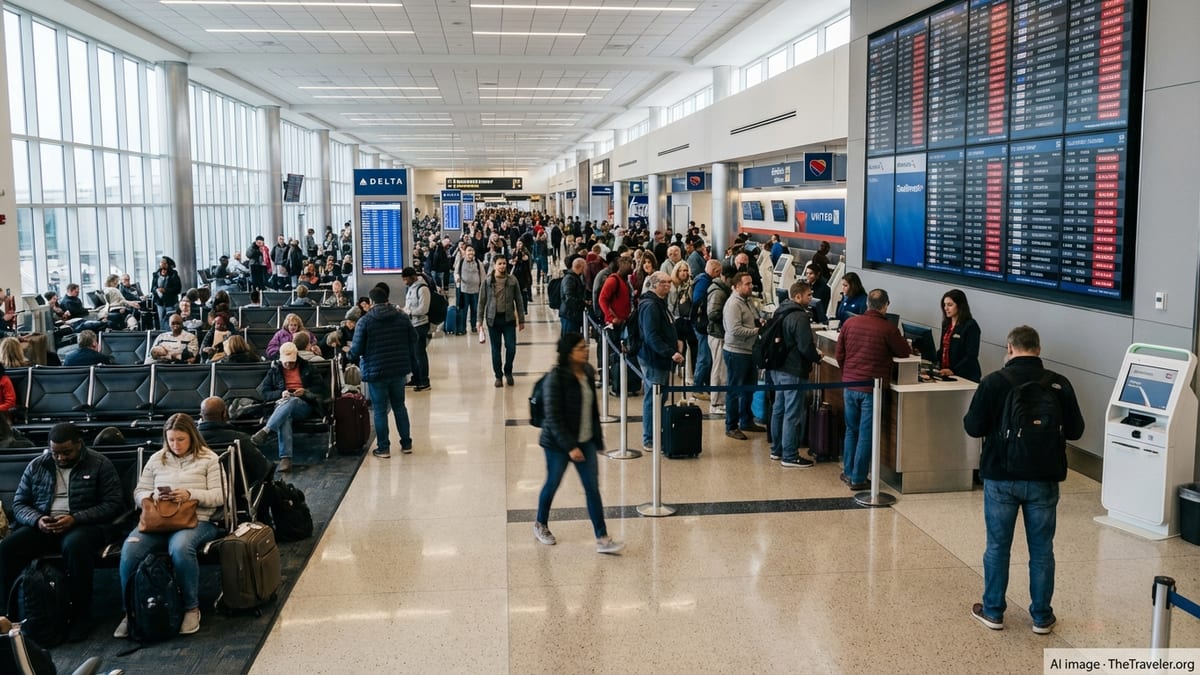
Thunderstorms Prompt Ground Stops and Daylong Disruptions
Recent rounds of intense thunderstorms in the Atlanta area have triggered ground stops and traffic management programs that slowed operations at Hartsfield-Jackson, according to publicly available data from federal aviation resources and flight-tracking services. A ground stop temporarily halts flights bound for a particular airport, allowing air traffic control to manage storms and runway capacity more safely.
Coverage from multiple outlets indicates that late-May and early-June storms repeatedly passed over metro Atlanta during peak travel periods. In some cases, departures to Atlanta were held at origin airports while arrivals already in the air were placed into holding patterns or diverted, contributing to elevated delay totals for the day.
Flight-status dashboards show that even after formal ground stops were lifted, the knock-on effects lasted for hours. Aircraft and crews ended up out of position, and turnaround times at crowded gates grew longer as airlines worked through backlogged departures and arrivals. For connecting passengers who rely on Atlanta as a transfer point, a delay early in the day often cascaded into missed connections later in the itinerary.
Reports indicate that the storms particularly affected Delta Air Lines, which operates a large hub at Atlanta and accounts for a significant share of the airport’s daily schedule. When a weather system sweeps through during busy bank periods, the impact is magnified because dozens of flights are set to arrive and depart within the same narrow window.
Ripple Effects Across Delta’s Network and Passenger Experience
Publicly available operational updates from Delta show that the carrier has been recovering from several episodes of disruptive weather affecting Atlanta and other hubs during the spring and early summer period. Industry reporting notes that a mix of thunderstorms, air traffic constraints, and crew scheduling challenges has periodically strained the airline’s network, with Atlanta often at the center of the disruption.
Recent analyses by travel and aviation sites point to clusters of cancellations and lengthy delays on key days, particularly around June 1, when flight-tracking data showed elevated disruption levels at Atlanta and other major cities. Although most flights still ultimately operated, a significant share departed behind schedule, tightening connection windows and lengthening time onboard for travelers stuck on aircraft waiting for a takeoff slot.
For passengers, the experience has ranged from modest schedule adjustments to extensive rebookings and overnight stays. Consumer-facing guidance from airlines and travel advisers consistently recommends that travelers flying through Atlanta monitor mobile apps for real-time gate and departure changes, consider earlier flights when possible, and allow extra time for tight connections, especially during stormy weather.
Despite the challenges, performance metrics over the broader March-to-May period suggest that airlines at Atlanta have continued to deliver a majority of flights on time. However, the recent storm cycles illustrate how quickly conditions can deteriorate when severe weather intersects with already busy schedules at a major hub.
Construction, Parking Changes, and Landside Congestion
Operational pressures in the air have been compounded by construction and traffic shifts on the ground. Hartsfield-Jackson is in the midst of its long-running ATLNext capital improvement program, which includes airfield, terminal, and landside upgrades designed to expand capacity and modernize facilities over several years.
Recent phases of that work have focused heavily on parking and roadway access. According to local news coverage and airport announcements, a new multi-level South parking deck with thousands of spaces opened at the start of June, following earlier periods of lane shifts, temporary closures, and shuttle-route changes. While the new deck is expected to ease long-term parking shortages, the transition has temporarily generated confusion for some drivers and added to congestion during peak times.
Construction-related activity can indirectly contribute to delays by slowing passenger drop-off and pickup, lengthening the time required to move between parking, rental cars, and terminals, and placing additional pressure on curbside areas. Travelers arriving late to check-in or security because of unexpected traffic or parking adjustments have a smaller margin for coping with downstream flight delays or gate changes.
Airfield work, such as runway and taxiway maintenance identified in federal construction outlook documents, may also affect how flexibly air traffic controllers and airlines can route aircraft during bad weather. Even partial closures or reduced configuration options can limit the number of arrivals and departures the airport can safely handle in a given period, amplifying the impact of thunderstorms or low visibility.
Strategies for Travelers Navigating Atlanta Delays
Travel advisories from airlines, airport communications, and independent travel experts converge on several strategies for passengers facing the recent wave of delays at Atlanta. The most frequently cited step is to build more buffer time into itineraries, particularly for connections that route through the airport during late afternoon and evening hours when storms are common in the Southeast.
Many carriers encourage customers to rely on official mobile apps or text alerts as the primary source of real-time information on gates, boarding times, and same-day rebooking options. These tools often update faster than airport display boards and can provide digital boarding passes and standby status without requiring passengers to wait in line at a service desk.
Analysts also note that choosing earlier departures in the day can reduce exposure to cascading delays, since the first flights of the morning are less likely to be affected by aircraft and crew arriving late from previous segments. For travelers with flexibility, avoiding tight layovers and opting for slightly longer connection times in Atlanta may improve the chances of making onward flights during volatile weather periods.
As the summer travel season ramps up, public data and industry commentary suggest that periods of smooth operation will continue to be punctuated by days of significant disruption when storms and congestion converge. For now, travelers using Atlanta are being urged by published guidance to keep a close eye on forecasts, arrive early, and prepare for the possibility that a routine trip could take longer than planned.