


More news on this day
Severe weather across the U.S. Southeast and knock-on schedule disruptions have combined to trigger a wave of regional flight cancellations at Jackson–Medgar Wiley Evers International Airport in Mississippi, with Delta and its regional partners PSA and Piedmont among the hardest hit, according to airline advisories and operational data.
Get the latest news straight to your inbox!
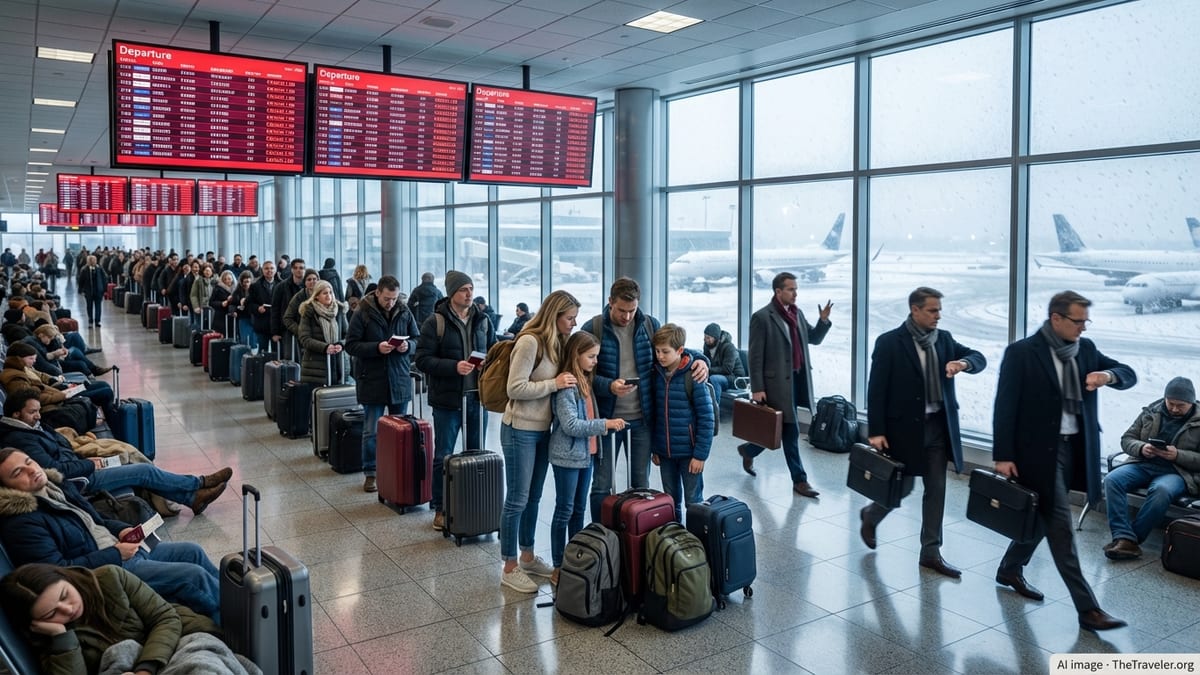
Storm Systems Ripple Through the Southeast
Air travel across the South has been under pressure in recent days as strong storm systems swept through key hubs, including Atlanta, prompting airlines to pare back schedules and issue broad travel waivers. Delta Air Lines published multiple exception policies in mid June citing severe weather in the Southeast, naming Jackson, Mississippi among affected airports and allowing customers to rebook or cancel without standard penalties when flights were disrupted.
These weather advisories coincided with ground delay programs and ground stops at major airports, forcing carriers to slow traffic flows across their networks. When large hubs such as Atlanta and other Southeastern fields reduce arrivals and departures, regional spokes like Jackson–Medgar Wiley Evers often feel an outsize impact as commuter flights are delayed or cut entirely to preserve capacity for long haul operations.
Operational data and airline communications show that the most recent round of severe storms did not directly close Jackson’s runways, but the airport’s reliance on connections to weather challenged hubs meant passengers still faced significant disruption. Travelers bound for destinations that require a connection through Atlanta or other constrained airports encountered rolling cancellations, misaligned crews, and aircraft left out of position.
Reports from flight status trackers and airport monitoring services suggest that while some Jackson departures to major hubs operated close to schedule, others were repeatedly delayed or scrubbed with little advance notice as thunderstorms built and dissipated along major air corridors. This mixed picture left many travelers uncertain whether to remain at the gate, attempt same day rebooking, or abandon their trips entirely.
Delta, PSA, and Piedmont at the Center of the Disruptions
Delta and its Delta Connection partners play an outsized role in Jackson’s air service, giving the latest weather related disruptions particular weight for local travelers. Publicly available traffic data for the twelve months through early 2026 indicates that Delta is the single largest carrier at Jackson–Medgar Wiley Evers, with PSA and Piedmont also handling a significant share of regional passengers on contract flying.
In the current disruption, Delta has been operating under a reduced schedule framework tied to its Southeast severe weather policy, which allows the airline to proactively cancel flights on affected dates and consolidate passengers onto remaining services. Regional affiliates such as PSA and Piedmont, which operate branded flights under major carrier codes, have been closely intertwined in these cuts, since their short haul routes are often the first to be trimmed when severe weather limits available slots at constrained hubs.
Industry data and prior weather events suggest that regional jets and turboprops are more likely to be cancelled ahead of larger mainline aircraft when airlines must rapidly compress schedules. Smaller aircraft typically carry fewer passengers per rotation, so taking them out of service can quickly free up buffers in congested airspace and ground operations, while still allowing airlines to prioritize routes with higher overall demand.
For Jackson travelers booked on PSA or Piedmont services marketed by larger carriers, that has translated into last minute cancellations on legs feeding into Atlanta and other hubs. Passengers have reported long rebooking queues, with some being rerouted through alternate cities or shifted onto later flights that themselves remain vulnerable to additional weather related delays.
Stranded Passengers and Limited Alternatives
The latest wave of disruptions has again highlighted how exposed smaller and midsize cities can be when severe weather hits the national airspace system. Jackson–Medgar Wiley Evers functions primarily as a spoke airport, with a relatively small roster of nonstop destinations and heavy reliance on connections through larger hubs. When those hubs experience long ground holds or arrival caps, options for stranded passengers quickly narrow.
Travelers caught by this week’s cancellations have faced familiar challenges: long waits at customer service counters, difficulty reaching call centers, and limited same day alternatives as later flights filled up. Some passengers have opted to drive to larger nearby airports such as New Orleans or Memphis in search of open seats, a workaround that can add several hours of road time to already disrupted itineraries.
Similar patterns were seen during major winter storms earlier this year, when ice and snow across the South forced airlines to cut hundreds of flights and strand passengers at Jackson and other regional airports. Historical coverage from that episode described terminals filled with travelers camping out overnight while they waited for rebooked flights that themselves were not guaranteed to operate, underscoring how quickly adverse conditions in distant hubs can cascade into full scale disruption at smaller fields.
For some Jackson area residents, the repeated cycles of weather related cancellations have reinforced a perception that regional air travel is increasingly fragile. Even when the skies overhead are clear, any significant disturbance in the broader network can leave local travelers with few immediate options other than accepting multiday delays or cancelling trips outright.
What Airline Waivers and Policies Mean for Affected Travelers
In response to the latest storms, Delta has issued formal travel exception policies that specifically include Jackson among the covered airports for certain June travel dates. These documents allow eligible customers to change itineraries without standard change fees, and in some cases to cancel basic economy tickets without the usual penalties, provided they rebook within specified windows. Similar internal guidance gives travel agents instructions on how to process refunds when flights are cancelled and no reasonable alternative is available.
For passengers, these waivers are an important tool but can be confusing in practice. Each bulletin typically applies only to tickets issued by a certain date and for travel on specific days and routes. Travelers must also pay attention to rebooking deadlines, since the ability to change flights without extra charges usually expires several days after the disruption period, even if lingering operational issues continue.
Regional partners such as PSA and Piedmont operate under the umbrella of mainline carriers, so affected customers are usually subject to the policies of the marketing airline printed on the ticket rather than the company that owns the aircraft. That means a passenger on a regional jet operated by PSA but sold as a major carrier flight will follow the mainline waiver terms when requesting a change or refund.
Consumer advocates generally encourage travelers to document all communications with airlines during disruption periods and to monitor their reservation status through airline apps or websites. Although U.S. regulations provide some baseline protections, many of the most practical remedies during weather events, such as free changes and expanded refund eligibility, are governed by the discretionary policies airlines publish in these time limited waivers.
Longer Term Questions for Jackson’s Air Connectivity
The current turbulence comes as Jackson–Medgar Wiley Evers continues to navigate broader questions about its governance, investment priorities, and role within the regional aviation network. Ongoing legal proceedings over control of the airport’s governing authority have kept long term planning in the spotlight, while passenger traffic patterns show that a handful of major carriers and their regional partners account for the vast majority of local air service.
Publicly available federal transportation statistics indicate that Jackson’s busiest route continues to be the corridor to Atlanta, dominated by Delta and its affiliates. American and United, working with their own regional partners including PSA and Piedmont, link Jackson to additional hubs, but on a smaller scale. This structure means that disruptions at just a few large airports can quickly reverberate through Jackson’s schedule.
Aviation analysts note that climate variability and increasingly frequent severe weather events are likely to keep pressure on this hub and spoke model, especially for communities that depend heavily on regional jets. Each new round of storms can magnify longstanding concerns over reliability, potentially influencing both leisure travelers and business decisions about where to invest and expand.
For now, the latest episode of cancellations tied to PSA, Piedmont, and Delta at Jackson–Medgar Wiley Evers illustrates the delicate balance regional airports must strike. With limited nonstop options and heavy dependence on a small group of airline partners, any major weather system or operational disruption at distant hubs can quickly turn into a day of travel chaos for local passengers, highlighting the importance of clear communication, flexible policies, and sustained investment in resilient air service.