


Landing at Tocumen International Airport and heading straight to a hotel in Casco Viejo is one of the most common routes for visitors to Panama City. The historic district is compact, atmospheric and full of boutique hotels, which makes it an ideal base, but its narrow streets and mixed surrounding neighborhoods mean the journey deserves a bit of planning. This guide walks you through the best real-world options from Tocumen to Casco Viejo, with practical advice on Uber, airport taxis, private transfers, metro combinations, traffic, luggage handling, hotel drop-off and late-night safety.
Get the latest updates straight to your inbox!
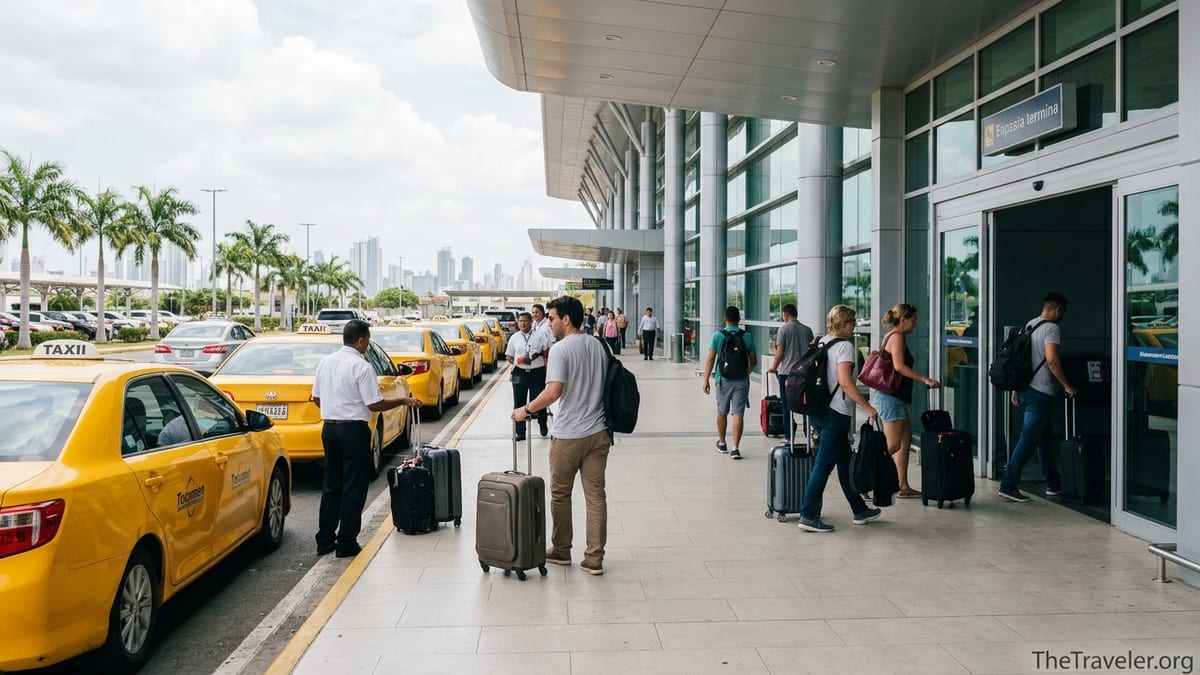
Orientation: From Tocumen Runways to Casco’s Rooftops
Tocumen International Airport (PTY) sits roughly 20 kilometers east of central Panama City along the Corredor Sur toll expressway. Casco Viejo, also known as Casco Antiguo or San Felipe, occupies a small peninsula on the western side of the city, ringed by the Cinta Costera seafront highway. In light traffic, the drive between them can take about 25 to 35 minutes, but at rush hour it can stretch to 45 minutes or more as the expressway and downtown approaches fill up.
Many first-time visitors imagine a simple airport-to-old-town hop. In reality, your choice of transport will depend on factors like arrival time, whether you have mobile data for apps, how much luggage you are carrying, and whether your hotel is on a pedestrian street. A guest staying at a small hotel on Calle 10 Este with two rolling suitcases will have very different needs from a backpacker heading to a hostel near Plaza Herrera with just a daypack.
The good news is that Tocumen is relatively well organized for arrivals. You can choose between official airport taxis with fixed reference fares, app-based services such as Uber that pick up in the parking areas, prebooked private transfers with a driver waiting at the exit, or a new metro connection combined with a short taxi ride for budget-conscious and light-packing travelers. Each option has its own sweet spot, which this guide breaks down in detail.
Think of the decision as a trade-off between cost, convenience and control. If you arrive at 23:30 after a long-haul flight, an official taxi or prebooked private transfer may be worth a little extra money. If you land in the afternoon with plenty of energy and only a carry-on bag, taking the metro most of the way and finishing with a cheap taxi from the 5 de Mayo station can save you a significant amount.
Official Airport Taxis: Fixed Fares, Simple Process
For many travelers, the easiest option on arrival is the official airport taxi. Tocumen operates a licensed taxi system with a fare table; Casco Viejo and the central city typically fall into a fixed-price zone that is around 30 US dollars for a standard sedan under normal conditions, according to the airport’s own taxi tariff information and visitor reports. You will see the taxi desks just after customs in the arrivals hall, with signs listing approximate prices to different areas of the city.
The process is straightforward: you tell the clerk your destination, such as a specific hotel or simply “hotel in Casco Antiguo,” confirm the quoted fare, pay at the desk if required or directly to the driver depending on the system in place that day, and receive a slip or be escorted to a waiting car. This spares you from negotiating with freelance drivers outside and is especially useful if you do not yet have a local SIM card or roaming data to use a ride-hailing app.
Official airport taxis are generally sedans, but there are also larger vehicles for families or groups, which cost more. If you are four adults with luggage staying at a hotel like the American Trade or Central Hotel Panama Casco Viejo and you want door-to-door service, it can be more economical to request a larger taxi at a slightly higher fixed rate rather than splitting into two sedans. Drivers are used to finding hotels in Casco and navigating its one-way system, though you may still need to show a confirmation email with the exact street address.
The main downside is price. In light traffic periods, the taxi fare will often be higher than a standard Uber ride, sometimes by 5 to 10 dollars. On the other hand, during bad traffic or surge pricing on apps, those gaps may narrow or disappear. For late-night arrivals or travelers anxious about language barriers, having a clearly identified licensed taxi with a printed fare can feel worth the premium.
Uber and Ride-Hailing: Flexible and Often Cheaper
Ride-hailing platforms like Uber operate widely in Panama City and are a popular choice to and from Tocumen. Under typical conditions, a ride from the airport to a hotel in Casco Viejo might show in-app estimates around 18 to 28 US dollars for an UberX, depending on time of day, traffic and demand. Users frequently report that when traffic is light and prices are not surging, Uber undercuts the official airport taxi by several dollars while still offering a comfortable, air-conditioned ride.
At Tocumen, ride-hail pickups are usually organized in the public parking areas just outside the terminals rather than at the taxi desk exits. After exiting customs, you follow signs for parking, open the app once you are landside, and set your pickup point at the designated rideshare or general passenger pickup zone. In busy periods, the app may indicate a short wait while drivers circulate from holding areas. Plan on 5 to 15 minutes from requesting the ride to actually getting into the car.
Uber and similar apps are most convenient if you already have working data on your phone. Travelers using eSIMs that activate on landing, or those with roaming packages, generally find this seamless. If you arrive without data, you can connect to the airport’s public Wi-Fi long enough to request a ride, but this can be patchy at peak times. A common workaround is to buy a local SIM from one of the telecom kiosks in arrivals, activate it on the spot, and then order your ride.
In Casco Viejo itself, Uber drivers may not always be able to stop directly in front of your hotel, especially on narrow or pedestrianized streets like those around Plaza de la Independencia or Plaza Bolívar. In practice, most drivers will get as close as possible, dropping you on a nearby corner, and you will wheel your bags the last 50 to 150 meters. For example, a guest staying at La Concordia Boutique Hotel might be dropped near Plaza Herrera during busy evenings and walk one short block with luggage, which is usually manageable for most visitors.
Private Transfers: Prebooked Peace of Mind
For travelers who value certainty above all, prebooked private transfers offer a tailored alternative. Many Casco Viejo hotels and guesthouses, from upscale properties like the Sofitel Legend in the old quarter to smaller boutique hotels, can arrange a car and driver to meet you in the arrivals area holding a sign with your name. Third-party services in Panama City also specialize in airport transfers and often allow you to prepay online with credit card.
Typical prices for private transfers from Tocumen to Casco Viejo fall in a similar range to airport taxis or slightly higher, often somewhere between 30 and 45 US dollars depending on the type of vehicle and whether it is arranged through a hotel or external company. For that price, you usually receive meet-and-greet service, assistance with luggage, and a confirmed vehicle that will wait if your flight is delayed by a reasonable amount of time.
This option is particularly attractive for late-night arrivals after midnight, families with small children, older travelers, and visitors with heavy or bulky luggage. Imagine arriving at 01:00 with two large checked bags and a stroller: being able to walk out, see your name on a sign, and head straight to a van without dealing with apps or taxi desks can significantly reduce stress. Many services also offer baby seats on request, something that regular taxis or ride-hails may not always provide.
When booking a private transfer, ensure you specify your hotel’s exact name and address, including that it is in Casco Viejo rather than the modern downtown. Some properties share similar names in different neighborhoods, and a mix-up could add unnecessary time to your journey. It is also wise to confirm whether the price is per vehicle or per person, and whether tolls on the Corredor Sur expressway are included or added separately.
Metro plus Taxi: Budget-Friendly if You Pack Light
Since 2023, Tocumen has been linked to the Panama Metro through the Aeropuerto station on a short branch of Line 2. This has opened a very inexpensive route into the city for travelers comfortable with a bit of walking and a short taxi connection at the end. The metro is modern, air-conditioned and widely used by locals, and it can be an excellent choice outside rush hours if you have light luggage and some Spanish.
The most practical route for Casco Viejo uses a combination of Line 2 and Line 1. From the airport, you walk to the Aeropuerto metro station, board Line 2 towards the city, and ride to San Miguelito. There you transfer to Line 1 in the direction of Albrook. You then hop off at 5 de Mayo, which is the closest metro station to Casco Viejo. From 5 de Mayo, a short taxi ride of around 5 to 10 minutes, depending on traffic, brings you to your hotel in the old quarter.
Metro fares are low. Current guidance suggests that a trip from the airport into the city costs well under 1 US dollar in total, with Line 2 and Line 1 rides priced separately but still under a dollar combined. You either load credit onto a transit card or, according to recent updates, tap in with certain contactless Visa or Mastercard cards directly at metro stations, which removes the need to buy a dedicated card for occasional visitors. A taxi from 5 de Mayo station to a central Casco hotel might add roughly 3 to 6 US dollars depending on time and negotiation.
However, this route is not ideal for everyone. During weekday rush hours, metro trains can become very crowded, and standing with backpacks or suitcases is uncomfortable. The walk from the airport terminal to the metro station is manageable for most travelers, but in Panama’s tropical heat and humidity it can feel longer than on the map, particularly in the middle of the day with heavy bags. For these reasons, the metro-plus-taxi strategy is usually best for solo travelers or couples arriving in the morning or afternoon with a single small suitcase or backpack each, who are more concerned with keeping costs down than with absolute door-to-door convenience.
Traffic Patterns, Timing and Realistic Door-to-Door Durations
Traffic between Tocumen and Casco Viejo is highly time-dependent. In very early morning hours, such as 04:00 to 06:00, the drive via the Corredor Sur can take as little as 20 to 25 minutes in a taxi or Uber. By late morning and midday, 25 to 35 minutes is more typical. In the late afternoon and early evening, especially between roughly 16:30 and 19:00 on weekdays, heavy volumes of commuters heading in and out of the city can push the journey to 40 or even 50 minutes.
When you factor in waiting times for vehicles, realistic door-to-door timings look a bit different. With an official taxi, you can often be in a car within 10 to 15 minutes of exiting customs, unless there is an unusually long queue. With Uber, you may wait 5 to 15 minutes for the car to arrive, then spend 25 to 40 minutes driving, which means around 40 to 55 minutes total from arrivals hall to hotel door in normal conditions.
Metro plus taxi involves more moving parts. You need to walk to the Aeropuerto station, wait for a train, travel to San Miguelito, transfer to Line 1, ride to 5 de Mayo, and then find a taxi for the last short stage to Casco. On paper, the metro portion can be around 45 to 60 minutes with reasonable connections, plus 10 or so minutes by taxi at the end. In practice, most visitors should allow at least 60 to 75 minutes from airport terminal to hotel door if taking this route, and more during busy commuting hours.
It is also important to consider time buffers on your return journey to the airport. If you are leaving a Casco hotel at 08:00 on a weekday for a 10:30 international flight, using an Uber or taxi with at least a one-hour cushion is sensible. For the metro, you would want to leave even earlier to allow for potential delays, crowded trains and the walking connection at the airport end. Many travelers split the difference: metro into the city when time is flexible, taxi or Uber back to Tocumen when a flight departure is at stake.
Luggage, Hotel Drop-off and Navigating Casco’s Streets
Casco Viejo’s charm comes from its colonial-era layout and restored architecture, but this also means narrow streets, one-way systems and various pedestrian-priority zones. Many of the most popular boutique hotels and restored mansions sit on or near plazas and small streets that can be temporarily closed for events or crowded on busy evenings. Knowing what to expect at drop-off helps avoid surprises when you arrive tired from the airport.
Standard taxis, Ubers and private transfer vehicles can usually drive directly to the front door of most hotels during the day. For example, vehicles can normally circulate around Plaza Herrera or Plaza de la Independencia to service hotels and guesthouses there. Late at night, some drivers may prefer to drop guests at the closest accessible corner rather than navigating tight turns around groups of pedestrians, particularly on weekends when nightlife is in full swing. In most cases, this means a short walk of one or two blocks, which is manageable if your luggage has wheels and sidewalks are clear.
If you are traveling with heavy luggage or mobility considerations, it is worth informing your hotel in advance so they can advise on the most convenient arrival point. Many front desks are happy to explain to taxi drivers in Spanish where exactly to stop, or to send a staff member to meet you at a nearby corner if vehicles cannot pull right up to the entrance. This is especially relevant for properties on smaller streets leading off the main plazas, or along the waterfront roads where parking and stopping rules change during events.
With Uber, you can help the driver by confirming in the app and over the phone that your destination is “Casco Antiguo, near [specific plaza or street]” and by watching the live map to guide them the final few meters if necessary. Keeping your luggage compact, such as one medium suitcase and a backpack per person, makes it easier to navigate any short walks from drop-off to front desk, especially on uneven or cobbled sections.
Safety and Late-Night Arrivals: What Tourists Should Know
Panama City, including Casco Viejo, is generally considered one of the safer big-city environments in the region for visitors, but it still requires normal urban precautions. At night, especially after around 22:00, it is wise to move by taxi or Uber rather than on foot for longer distances, and to avoid poorly lit side streets on the edges of the historic quarter. Many visitors safely enjoy late dinners and rooftop bars in Casco and then ride back to their hotels by app-based car without incident.
Late-night arrivals at Tocumen call for extra attention to logistics. If your flight lands near or after midnight, prebooking a private transfer or planning to use the official airport taxi service is usually the most straightforward option. Ride-hailing apps can still be available at those hours, but driver supply may be thinner and it is less pleasant to troubleshoot data or app issues when you are tired. Using an authorized service from the airport also simplifies matters if there are language barriers, as staff at the taxi desks are accustomed to working with tourists.
Once in Casco Viejo, hotel front desks can provide up-to-date guidance on which streets are comfortable to walk at night and which areas are better avoided. The central squares, main restaurant streets and rooftop bar zones are typically busy and well lit into the late evening, while fringe areas bordering less touristy neighborhoods can feel deserted. If you are staying on the edge of Casco and returning very late after drinks, asking your hotel to call a taxi or using Uber directly from the bar or restaurant door is common practice.
As in any urban setting, keep valuables out of sight in vehicles, use common sense with phones and cameras on the street, and avoid displaying large amounts of cash. Most visitors to Casco Viejo experience no safety problems, but thinking in terms of point-to-point transport at night, especially on arrival day when you are tired and unfamiliar with the layout, is a practical way to minimize risk and stress.
Choosing the Right Option for Your Travel Style
For a couple arriving midday with one checked suitcase each and a hotel reservation at a central Casco property, Uber often provides the best balance of cost and convenience. You can order a car from the airport parking lot, watch your driver approach on the app, and be dropped within a short walk of your hotel for less than the official taxi fare, provided there is no surge pricing. Having your destination preloaded in the app also helps avoid misunderstandings over addresses or pronunciation.
Families and groups, especially those traveling with young children or older relatives, may prefer airport taxis or prebooked private transfers. These offer larger vehicles, fewer steps to organize after landing, and the reassurance of knowing that someone is already waiting. The cost spread over three or four travelers is often reasonable compared with buying multiple metro tickets and then paying for a taxi at the end of the journey.
Budget-conscious solo travelers and backpackers who are comfortable with public transport and light luggage can save significantly by using the metro and finishing with a short taxi ride from 5 de Mayo station to Casco Viejo. This works particularly well in daylight hours and outside peak commuting times. For instance, a traveler landing at 11:00 with only a carry-on bag might spend under 10 US dollars in total for the metro plus short taxi, compared with 20 to 30 US dollars for a direct car.
Finally, if you are arriving on a tight schedule for a dinner reservation or event in Casco, factor in potential traffic. Booking a car that uses the Corredor Sur and leaving some wiggle room in your timing is wise. Tell the driver you are heading to “Casco Antiguo via Corredor Sur” so they understand that you prefer the express toll route where appropriate, and keep an eye on navigation apps if you want to follow along with the route in real time.
The Takeaway
Getting from Tocumen International Airport to a hotel in Casco Viejo is usually straightforward once you match the route to your priorities. Uber and other ride-hailing services are often the most economical and flexible for travelers with data and moderate luggage, while official airport taxis and private transfers excel for late-night arrivals, families and anyone who values a simple, predictable experience over saving a few dollars.
The expanding Panama Metro network adds a low-cost option for those willing to combine a train journey with a short taxi ride at the end, provided they are not carrying heavy bags or arriving in the middle of the evening rush. Across all options, understanding traffic patterns, being realistic about walking distances in the heat and humidity, and planning for how you and your luggage will get from street corner to hotel lobby are key to a calm arrival.
Casco Viejo rewards that bit of advance planning with cobbled streets, restored plazas and rooftop views over the bay. By choosing the route that best fits your budget, comfort level and arrival time, you can step out of the airport and into the old city’s atmosphere with confidence, ready to focus on Panama City’s food, culture and history rather than on the journey that brought you there.
FAQ
Q1. How much does a taxi from Tocumen Airport to Casco Viejo usually cost?
The official airport taxi fare to central areas including Casco Viejo is typically around 30 US dollars for a standard sedan, with larger vehicles costing more.
Q2. Is Uber cheaper than a taxi from the airport to Casco Viejo?
Often yes, especially outside rush hours. Many travelers report UberX fares in the range of about 18 to 28 US dollars, though dynamic pricing can sometimes erase the difference.
Q3. Can I use the metro from Tocumen Airport to reach Casco Viejo?
Yes, you can take the metro from the Aeropuerto station on Line 2, transfer to Line 1 at San Miguelito and ride to 5 de Mayo, then use a short taxi ride to reach Casco Viejo.
Q4. How long does the trip from Tocumen to Casco Viejo take by car?
In light traffic, the drive can be around 25 to 35 minutes via the Corredor Sur expressway, but at peak rush hours it can stretch to 40 or 50 minutes.
Q5. Is it safe to arrive in Casco Viejo late at night?
Generally yes if you use official taxis, prebooked transfers or Uber, and go directly to your hotel. As in any city, avoid walking alone on dark side streets with luggage.
Q6. Should I prebook a transfer or just take a taxi on arrival?
If you arrive late at night, are traveling with children or have mobility issues, prebooking can reduce stress. For daytime arrivals, many visitors simply use Uber or the airport taxi desk.
Q7. Do I need cash to pay for transport from the airport?
Cash in US dollars is useful for taxis and tips, though Uber and many private transfers can be paid by card. The metro system often accepts transit cards and some contactless bank cards.
Q8. How much luggage is practical if I want to use the metro from the airport?
The metro is easiest with one small suitcase or backpack per person. Large or multiple bags can be awkward on crowded trains and during the walk between stations and your hotel.
Q9. Will my driver be able to find my hotel inside Casco Viejo?
Most taxi and Uber drivers regularly serve Casco Viejo and can find major hotels, but it helps to have the exact address and hotel name ready, and to show a confirmation email if needed.
Q10. Is it better to use the same transport option back to the airport?
Many travelers do, but some mix options, using the metro when time is flexible and choosing a taxi or Uber for the return to Tocumen to avoid any risk of missing their flight.