


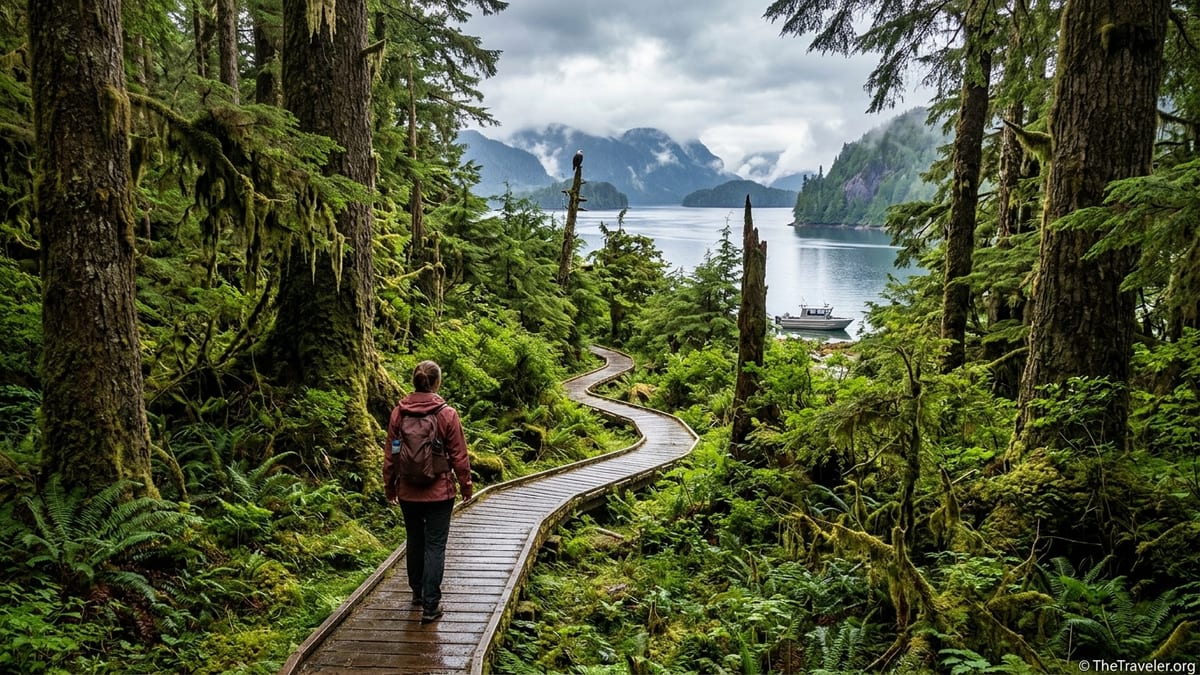
Spread across 16‑plus million acres of islands, fjords and mountains in Southeast Alaska, the Tongass National Forest is the largest national forest in the United States. It forms a wild green backdrop to coastal towns such as Juneau, Ketchikan, Sitka, Wrangell and Petersburg, as well as the communities scattered across Prince of Wales Island. For travelers, the Tongass is not one single park gate but a vast temperate rainforest threaded through everyday life in these communities, offering everything from easy cruise‑day walks to remote cabin stays reachable only by floatplane or boat.
Get the latest updates straight to your inbox!
Who the Tongass Is For (And Who It Challenges)
The Tongass suits travelers who are more interested in experiences than in ticking off sights. Cruise passengers can step off the ship and, within minutes, walk among giant spruce and hemlock or join a guided rainforest hike that fits neatly into a half‑day port call. In Ketchikan, for example, local outfitters run 2 to 3 hour guided rainforest walks that include round‑trip transport from the pier and a few miles of forest trail, often priced in the ballpark of 120 to 160 US dollars per person in the 2024 season. Independent travelers using the Alaska Marine Highway ferries or regional flights can go deeper, combining day hikes, kayaking and cabin overnights in several communities.
The forest is a natural match for hikers, anglers, wildlife enthusiasts and photographers. Bears feed on salmon in small streams, bald eagles perch in shoreline trees, and coastal brown bears are a major draw at viewing sites around Admiralty, Baranof and Chichagof islands. Photographers can work with local charter skippers in Wrangell or Petersburg to access tidewater glaciers and whale habitat, or join flightseeing and helicopter tours out of Juneau to see the icefields that edge the forest. In 2024, helicopter and glacier‑landing tours from Juneau commonly start in the mid‑hundreds of dollars per person and rise from there, which gives a sense of the budget needed for premium aerial experiences.
At the same time, the Tongass can be demanding. This is one of the wettest regions in North America, and places like Ketchikan often see rain or mist on a majority of summer days. Trails can be slick, boardwalks can be slippery, and low clouds may cancel flightseeing or floatplane connections with little warning. The road network is limited: Juneau’s main road is roughly 40 miles end to end and does not connect to the rest of Alaska, and many communities on Prince of Wales Island are linked by gravel roads rather than highways. Travelers who want spontaneous long road trips, guaranteed blue skies or resort‑style infrastructure may find the region frustrating.
Accessibility is another factor. Many short visitor‑center trails near Juneau and Ketchikan are built with gentle grades and some hard surfaces, making them suitable for people with moderate mobility limitations, but longer hikes can be rooty, steep and muddy. Those who dislike small planes or boats may find reaching remote cabins or outlying communities stressful. If you are planning for family members or older travelers, focus on towns with established tour operators, good sidewalks and short shuttle transfers, and be candid about the likelihood of rain and the need for layered clothing.
Main Gateways and How They Differ
Juneau, the state capital, is one of the easiest introductions to the Tongass. The Mendenhall Glacier Visitor Center sits within the national forest and is reached by road from downtown. From there, short, mostly paved trails lead to glacier viewpoints and waterfalls, while longer paths, such as the East Glacier Loop, climb into mossy forest. Day tours combine shuttle transport, walking and sometimes rafting or kayaking. In 2024, shuttle services from the cruise docks to Mendenhall have been widely reported around several tens of dollars per person round trip, with combination whale watch and glacier tours priced in the low to mid hundreds. Juneau also offers road‑accessible coastal hikes, like those out the North Douglas Highway, and flightseeing across the Juneau Icefield when weather allows.
Ketchikan markets itself as the “Gateway to the Inside Passage,” and for Tongass access that means quick transitions from dock to forest. The Southeast Alaska Discovery Center downtown interprets the forest’s ecology and cultures, while nearby road‑end areas provide easy trailheads. Guided rainforest walks and totem‑focused cultural tours commonly last 2 to 3 hours, making them ideal for cruise visits. Some tour operators base hikes in private rainforest preserves that border the national forest and package transport, guiding and sometimes a local seafood lunch for roughly 150 US dollars and up, based on 2024 brochures.
Sitka, Wrangell and Petersburg are quieter and can feel more lived‑in than cruise‑focused. Sitka combines coastal rainforest with strong Russian and Native Alaskan history. Trails near town lead into the forest and up to alpine vistas, and nearby marine waters support sea kayaking and wildlife tours. Wrangell offers access to bear viewing and to the lower Stikine River, while Petersburg positions you close to Frederick Sound, a hub for humpback whale feeding in summer, and to a network of cabins and trailheads on nearby islands. These communities receive fewer large cruise ships than Juneau or Ketchikan, so logistics may involve scheduled ferries or small aircraft rather than simply walking off a pier.
Prince of Wales Island, reached by ferry from Ketchikan and small aircraft from other towns, is the place to go off grid within the Tongass without attempting a full expedition. A patchwork of paved and gravel roads connects communities like Craig, Klawock and Thorne Bay. Visitors with rental cars or local guides can explore lightly trafficked trailheads, remote beaches and fly‑in or boat‑in cabins. Many anglers base themselves here for self‑guided or chartered fishing, booking basic lodges or self‑catered cabins rather than hotels. For a first trip, it works best if you are comfortable driving in remote conditions, carrying bear spray and planning for limited cell service.
Core Experiences: Hiking, Water and Wildlife
Hiking is the simplest way to touch the Tongass in a limited timeframe. Near Juneau, short paths around the Mendenhall Glacier Visitor Center and the Nugget Falls trail provide forest, waterfall and glacier views within a couple of hours. More committed hikers tackle Perseverance Trail, which begins near downtown and climbs through a dramatic valley, often used by locals for half‑day outings. In Ketchikan, forest walks range from short, mostly boardwalk trails near the road system to longer routes into old‑growth stands where exposed roots and mud require sturdy boots. Guided hikes tailored to cruise schedules typically cap group size and cover a couple of miles, allowing time for interpretive talks about mosses, salmon streams and traditional plant uses.
On the water, sea kayaking and small‑boat tours offer intimate views of the rainforest shoreline. Outfitters in Sitka, Ketchikan and Juneau lead half‑day paddles among kelp forests, small islands and rocky inlets, often pricing tours in the 120 to 200 US dollar range per person as of 2024, including gear and instruction. These trips give you the classic juxtaposition of dripping forest, mist and calm water, and guides frequently pause to watch eagles, seals and the occasional humpback spout in the distance. For those who prefer to stay dry, narrated wildlife cruises out of Juneau, Sitka or Petersburg use covered vessels with indoor seating and are better options in heavy rain.
Wildlife viewing is a major draw and requires both planning and realistic expectations. Black bears are often seen near salmon streams from late July into September, but sightings are not guaranteed on any given day. Wrangell is known as a jumping‑off point for Anan Wildlife Observatory, where a Forest Service‑managed platform overlooks a bear‑feeding site; access is strictly limited and requires advance permits or booking with a licensed operator, especially in July and early August. Whales are typically encountered on boat tours around Juneau, Sitka and Petersburg in summer, and many operators advertise a high probability of humpback sightings at the peak of the season. Photographers can also pursue more controlled subjects such as totem parks in Ketchikan and Sitka, where carved poles stand against a forest backdrop even on low‑wildlife days.
Flightseeing and helicopter tours provide a bird’s‑eye introduction to the Tongass for those comfortable with the cost and conditions. From Juneau, fixed‑wing flights trace the glacier‑covered spine above the forest, while helicopters may land on snowfields for short walks. In 2024, published prices for helicopter glacier landings in Southeast Alaska often range from roughly 350 to more than 500 US dollars per person, reflecting both fuel and aircraft costs. Weather cancellations are not uncommon; travelers should build flexibility into their schedule and clarify refund policies at booking. Smaller floatplane operators based in towns like Ketchikan and Sitka also run scenic flights and drop‑offs at Forest Service cabins or remote lakes.
Public Cabins, Lodging and How to Budget
One of the defining experiences in the Tongass is an overnight stay in a Forest Service public use cabin. Across Southeast Alaska, the Tongass offers well over a hundred such cabins, many on lakeshores or sheltered coves. In 2024, nightly rental rates for existing cabins commonly appear in the approximate 45 to 75 US dollar range on federal reservation platforms, usually for basic structures with bunks, a table, wood or oil stove, and an outhouse but no bedding, water or electricity. Some recently built or proposed cabins may carry higher fees, and the Forest Service has been reviewing cabin pricing, so visitors should always confirm current rates and availability directly through official reservation systems and note the verification month and year when planning.
Cities and larger towns layer standard lodging on top of these rustic options. In Juneau and Ketchikan during the main cruise season, hotel rooms in centrally located properties often price in the low to mid hundreds of dollars per night for standard double occupancy, with waterfront views or boutique properties higher. Simple motels, small inns or vacation rentals a bit away from the docks may undercut that, but availability tightens on days with multiple large ships in port. In Petersburg, Wrangell and Sitka, accommodation stock is smaller and leans toward small hotels, B&Bs and apartments aimed at fishing guests and independent travelers, with broad pricing overlap with the larger ports during peak months.
Tours and transport form the second major budget pillar. Short guided rainforest walks or city‑and‑nature combinations aimed at cruise passengers often run around 100 to 170 US dollars per adult, including transport and guiding, according to 2024 tour catalogs. Half‑day kayak tours, whale‑watch excursions and small‑group wildlife trips frequently sit in the 150 to 250 US dollar per person band. More complex experiences like bear‑viewing flights or helicopter glacier landings climb sharply from there, sometimes surpassing 500 US dollars per person by 2024. Travelers using the Alaska Marine Highway should price out individual legs between ports, as fares vary by route, cabin choice and whether you bring a vehicle; schedules and prices need to be checked directly with the ferry system’s official site for the specific month and year of travel.
For food, even basic meals tend to cost more than in many parts of the contiguous United States because almost everything arrives by barge or plane. Casual restaurants in Juneau or Ketchikan might charge a bit over 20 US dollars for a fish‑and‑chips plate and more for fresh halibut or crab in 2024. Self‑catering is a common money‑saver, particularly for cabin users and those staying several nights in one community. Grocery stores in larger towns carry suitable supplies, though prices are higher than national averages. When budgeting, factor in occasional splurges, such as a salmon bake or a crab feast, since these can be highlights of a rainforest trip.
Seasons, Weather and Daylight
The main visitor season in the Tongass runs roughly from May through September, with important differences between early season, midsummer and the shoulders. May often brings relatively lower rainfall, cooler temperatures and long daylight, especially by late in the month. Many cruise ships begin calling by early May, and most guided tours and visitor centers in Juneau and Ketchikan are operating daily by late May. Snow can still linger at higher elevations, so some alpine hikes remain limited, but lower forest trails are usually accessible, if sometimes muddy.
June, July and early August are the peak of both visitor numbers and biological activity. Long days allow for extended outings, and salmon runs begin filling streams. Bear viewing platforms that depend on salmon feeding are commonly active during this window. The tradeoff is crowding on popular trails and higher prices or limited availability for lodging and tours. Rain remains frequent, but temperatures are milder, and thick vegetation gives the classic deep‑green rainforest appearance. By late July and August, biting insects can be noticeable around wetlands and calm coves, so travelers sensitive to bugs should pack head nets and repellent.
The shoulder months of late April, early May and late September into early October can be rewarding for independent travelers who prioritize lower crowd levels over guaranteed tour options. Some cruise lines scale back port calls, and a number of smaller tour operators reduce schedules or suspend certain trips by late September. Daylight decreases quickly in the fall, and storms become more likely on marine routes and mountain flights. On the positive side, fall colors in muskeg areas and on hillside shrubs add orange and red tones to the forest, and some wildlife remains active. Before planning a shoulder‑season trip that relies on specific tours or ferries, visitors should verify operating dates and minimum passenger requirements directly with each provider for that particular month and year.
Winter brings very limited daylight and stormy weather, along with quieter streets and a more resident‑focused rhythm. Some communities, such as Sitka and Juneau, maintain year‑round cultural attractions and a few tour offerings, but many visitor services wind down. A winter Tongass visit is best suited to travelers who already understand remote northern travel and are comfortable with the idea that flights, ferries and small‑boat journeys may be disrupted for days at a time.
Planning Logistics and Managing Remoteness
Because the Tongass is scattered along a coastal archipelago, trip planning revolves around transport and weather margins. Most first‑time visitors arrive by cruise ship or commercial flight from Seattle or Anchorage into Juneau, Ketchikan or Sitka, then add local tours. Independent travelers linking multiple towns typically rely on the Alaska Marine Highway ferry system or regional airlines. Ferry sailings between communities may run only a few times per week, particularly outside midsummer, so it is important to build in at least one buffer day between tight connections and any onward flights home. For 2026 or later travel, always download the current ferry schedule and confirm any service changes before committing to nonrefundable tickets.
Within towns, movement is usually straightforward but time consuming once you leave compact downtowns. In Juneau, the stretch from the cruise docks to the Mendenhall Glacier area is roughly a 25 to 30 minute drive each way depending on traffic, and shuttles can carry long lines at peak times. On Prince of Wales Island, some attractions may lie more than an hour’s drive over mixed pavement and gravel from the main communities. Travelers should avoid stacking back‑to‑back tours with tight margins, especially when one involves small planes or boats that can be delayed by fog and low clouds. A practical approach is to place the most weather‑sensitive or expensive experience early in your stay in a given town, leaving later days open as backup if a reschedule is needed.
Gear and clothing deserve attention as part of logistics. Even in July, you should expect to wear a rain shell and carry a warm mid‑layer on most outings, and waterproof footwear significantly increases comfort on rainforest trails and muddy roadsides. Many tour operators provide rubber boots, rain gear or dry bags for their activities, but independent hikers and cabin users must bring their own. Buying gear in port towns is possible but limited to a handful of outfitters and general stores, often at higher prices than in larger cities. Packing well before arrival is more reliable than assuming you can equip yourself on the day of a hike.
Safety considerations include wildlife awareness, communication and navigation. In bear country, making noise on trails, carrying bear spray where legal and understanding proper food storage are basic habits. Many Forest Service cabins come with bear caches or instructions for hanging food, which visitors are expected to follow. Cell coverage diminishes quickly outside towns, so hikers and paddlers often carry satellite messengers, especially when exploring Prince of Wales Island roads, remote inlets near Wrangell or backcountry routes around Sitka. Detailed topographic maps and tide tables remain useful tools, particularly for sea kayakers and boaters navigating narrow channels and landing on remote beaches.
Example Itineraries for Different Trip Styles
For a cruise passenger with a single day in Ketchikan, a realistic Tongass sampler might center on a guided rainforest walk timed to your ship’s schedule. After disembarking in the morning, join a 2.5 hour small‑group forest hike that includes round‑trip pier transport, interpretive guiding and time along a salmon stream if in season. Upon returning to town around midday, have lunch at a seafood cafe featuring local salmon or halibut, then spend the afternoon visiting the Southeast Alaska Discovery Center to learn how the Tongass functions as an ecosystem and as a homeland for Indigenous communities. If time allows before all‑aboard, a short walk through a totem park on the edge of town keeps you in the forest without straying far from the ship.
A three‑day independent stay in Juneau allows for a deeper rainforest experience without complex logistics. On day one, arrive by air, settle into lodging downtown and take an afternoon hike on Perseverance Trail or ride the aerial tram from the cruise dock area for short walks through subalpine forest, watching weather patterns over Gastineau Channel. Day two can focus on Mendenhall Glacier. Take a prebooked shuttle or rental car to the visitor center in the morning, walk the Nugget Falls trail and shorter interpretive paths, then join an afternoon rafting or kayaking tour that approaches the glacier from the lake or a nearby river, conditions permitting. On day three, schedule a morning whale watch and coastal wildlife cruise or, if budget allows, a helicopter or fixed‑wing flightseeing tour over the Juneau Icefield, keeping the final evening free in case earlier departures are weathered out.
A week using ferries or regional flights to sample several Tongass communities requires deliberate pacing. One workable route begins with three nights in Ketchikan, reached by air from Seattle. Spend your first full day on a guided rainforest walk and cultural tour combining totem heritage with forest time. On the second day, take a half‑day kayak or small‑boat wildlife tour, leaving the evening for practical tasks such as grocery shopping if you plan to self‑cater later. Travel on day three or four by Alaska Marine Highway ferry to Wrangell or Petersburg, a journey that can take most of a day depending on the sailing. Base yourself there for another three nights, using one full day for a guided bear viewing or Stikine River or Frederick Sound wildlife excursion, and another for a shorter local hike or optional cabin overnight if you have secured a reservation and transport. Fly out at the end of the week from your second town to Juneau or Seattle, allowing at least several hours, and preferably an overnight, between any small‑plane leg and an onward long‑haul flight in case of weather delays.
Across all these scenarios, the keys are to accept the Tongass on its own terms and to anchor plans in concrete logistics. Rain, changing light and quiet moments in the forest are not obstacles but part of what you have come to experience. By matching your ambitions to your comfort with remoteness, confirming current prices and operating dates with official and operator sources, and building in time for weather, you can shape a first visit that feels both grounded and adventurous in North America’s largest temperate rainforest.