


Scan almost any Inside Passage cruise brochure and you are likely to see "Tracy Arm Fjord & Glacier Explorer," "Endicott Arm scenic cruising" or a similar promise of glacier views near Juneau. For many first time Alaska cruisers, those few words raise a long list of questions: Will the ship actually go into Tracy Arm? What does scenic cruising mean in practice? Is the pricey small boat excursion really worth it, especially now that some lines are substituting Endicott Arm after recent safety concerns in Tracy Arm? This guide walks through how these days typically unfold and how to decide between staying on the ship and booking the extra tour.
Get the latest updates straight to your inbox!
Scenic Cruising vs Small Boat Excursions: Terminology Explained
When your itinerary lists "Tracy Arm" or "Endicott Arm" without a separate tour attached, it usually refers to scenic cruising. In cruise line language, scenic cruising means the main ship sails into a fjord for several hours so guests can watch the scenery from open decks, balconies, and lounges. The ship does not dock inside the fjord. Instead, it glides in at low speed, turns where the captain and local pilot judge it safe, then retraces its path back out.
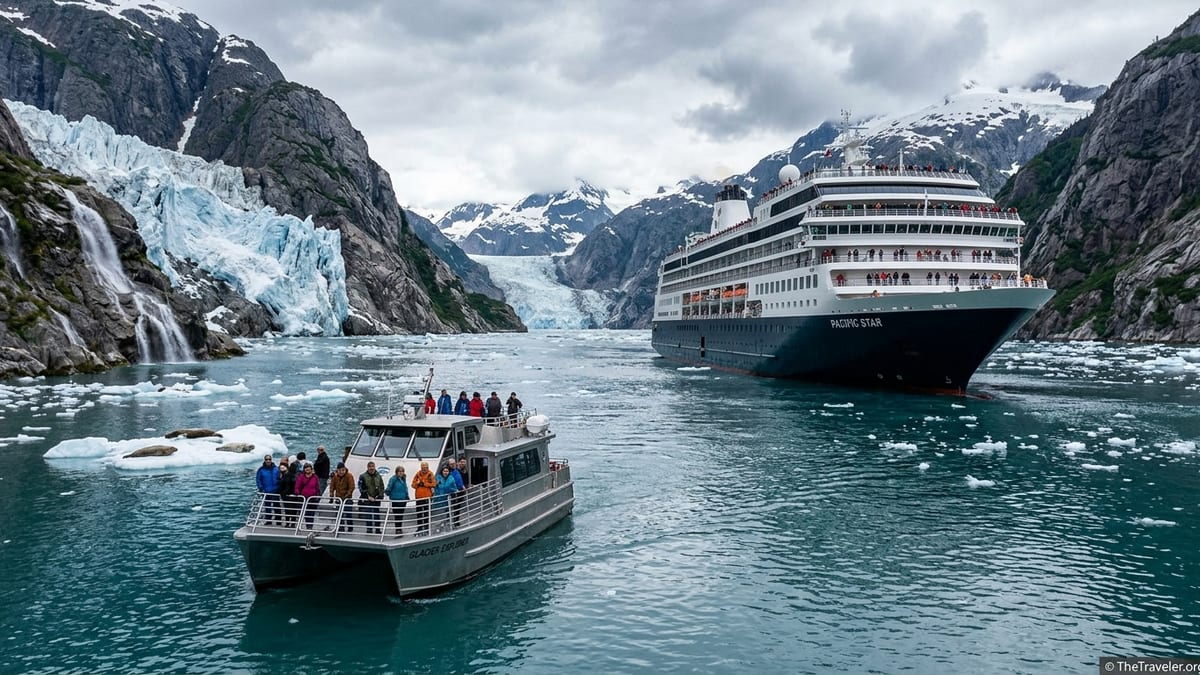
By contrast, excursions labeled with phrases like "Tracy Arm Fjord & Glacier Explorer" or "Endicott Arm Fjord & Glacier Explorer" are usually separate small boat tours. On these trips, passengers transfer from their large cruise ship directly onto a high speed catamaran or similar vessel. That smaller boat can navigate closer to the glacier face, waterfalls, and wildlife, then continues independently to meet the cruise ship later that day in or near Juneau.
This difference is crucial for planning. Scenic cruising is generally included in your cruise fare, requires no ticket, and is open to everyone on board, subject to weather and safety conditions. The small boat excursions are optional, paid experiences with limited capacity, fixed departure times, and tighter weather minimums.
It is also worth noting that many cruise lines now run similar catamaran style glacier explorer tours in both Tracy Arm and Endicott Arm. The name may change depending on route, but the basic format remains the same: small group, closer approach, longer hours in a more exposed environment, and a rendezvous with the main ship later.
What a Typical Tracy Arm or Endicott Arm Day Looks Like
On a classic Inside Passage itinerary that still includes Tracy Arm, the day usually begins early. When conditions allow, the ship turns into Holkham Bay around dawn and proceeds toward Tracy Arm. You may wake to steep granite walls rising thousands of feet above green water, striped with waterfalls and streaks of old slide paths. Local pilots, who specialize in Southeast Alaska waters, work with the ship’s captain to decide how far they can safely proceed based on ice, currents, and any hazard advisories.
In a best case scenario, the ship continues deep into the fjord. In past seasons some vessels have reached viewpoints where the Sawyer Glaciers are visible in the distance, though large ships almost never nose right up to the ice face. On days with heavier ice or stronger currents, the turnaround point can be much earlier. Passengers see the same scenery twice: once sailing inward, then again outward as the ship backs away and resumes its route toward Juneau or the next port.
For guests booked on a dedicated glacier explorer tour, the pattern is different. On many Princess and Holland America itineraries in recent years, for example, the small boat joins the ship near the fjord entrance or along the approach. Passengers holding tour tickets are called to a meeting point, escorted down to a lower deck, and step across to the waiting catamaran while the cruise ship is either stopped or barely moving.
From that point, the small boat spends roughly 5 to 6 hours exploring deeper into the fjord and then running independently toward Juneau. Cruise line brochures for 2026 continue to describe these as half day plus experiences, often broken into segments of about two hours cruising in the fjord itself and another two hours or so transiting between the fjord and Juneau. Because exact timings can vary by ship, sailing date, routing, and tides, anyone quoting precise numbers should verify them against a current season brochure or the cruise line’s app close to departure and note when they were last confirmed.
Tracy Arm vs Endicott Arm After the 2025 Tsunami
Until recently, Tracy Arm was the marquee name in this part of Southeast Alaska. That changed on August 10, 2025, when a large landslide above the toe of South Sawyer Glacier triggered a powerful tsunami in the upper reaches of Tracy Arm. Reporting by the Associated Press and other outlets described water surging hundreds of meters up the opposite valley wall and out through the fjord. While no cruise ships were directly hit, the event prompted detailed hazard studies and new guidance on landslide risk in steep glacial fjords.
By early 2026, several major cruise brands including Holland America, Carnival, Royal Caribbean, MSC, Princess, and others had publicly announced adjustments to their Alaska itineraries. Statements reported by travel industry publications and Alaska news outlets explained that, in response to scientific recommendations and out of caution, many 2026 sailings originally listing Tracy Arm would instead operate "Endicott Arm and Dawes Glacier" scenic cruising.
For passengers, this means itinerary and excursion names sometimes carry built in flexibility. Brochures and online listings increasingly use phrases like "Tracy Arm or Endicott Arm scenic cruising" or "Tracy Arm Fjord or Endicott Arm Fjord & Glacier Explorer." In practice, both arms offer classic fjord scenery with sheer rock walls, floating ice, and tidewater glaciers at their heads, but the final routing is determined much closer to sailing.
It is important to understand that the captain, working with local pilots and informed by the latest safety advisories, has the final say. If recent reports suggest heightened risk in Tracy Arm, or ice and weather are unfavorable, the ship may divert to Endicott Arm or adjust its depth of penetration into either fjord. These decisions can come shortly before or even during the cruise, and passengers should treat any printed route as a plan rather than a guarantee.
Reading Itinerary Language and Excursion Names
Cruise brochures often compress complicated operational choices into a few words. A listing such as "Inside Passage with Tracy Arm Fjord & Juneau" might simply mean that, on one day, the ship plans scenic cruising in a fjord before or instead of a traditional port call. Descriptions that specify "scenic cruising in Tracy Arm or Endicott Arm" signal that planners expect to choose between fjords based on conditions and official guidance in the year of sailing.
Excursion titles give additional clues. Offers labeled "Tracy Arm Fjord & Glacier Explorer" or "Endicott Arm Fjord & Glacier Explorer" usually indicate a cruise line operated catamaran tour that begins or ends alongside the ship. Wording that includes "from ship to Juneau" or references to rejoining the vessel later in the day suggests a one way small boat journey that replaces a portion of the ship’s own sailing route.
Some independent Juneau based operators sell full day tours with names like "Tracy Arm Fjord day cruise" or "Fords Terror Wilderness and glacier explorer." These typically depart from a dock in or near Juneau, not from alongside a moving cruise ship. Review sites and local guides note that such independent tours can last around seven hours or more, which can consume most of a port day. Guests on big ship itineraries need to check that timing against their all aboard time before booking.
Because 2026 remains a transitional year for Tracy Arm after the 2025 tsunami, some lines are editing marketing copy on the fly. Before committing to an excursion, it is wise to read the detailed description on your cruise line’s official site or app rather than relying on short catalog blurbs. Pay close attention to phrases indicating that the route may switch between Tracy and Endicott, as well as any statements about scenic cruising being subject to safety advisories.
Is the Small Boat Excursion Worth It?
The core decision most passengers face is whether to stay on the main ship for included scenic cruising or pay extra for a dedicated small boat excursion. The boat tours usually cost a few hundred dollars per person, depending on line and season, and tend to sell out well before departure. According to a range of recent passenger reviews on cruise forums and review sites, those who loved the outing frequently call it the highlight of their entire Alaska trip. They point to being close enough to feel the cold breeze off the glacier face, watch harbor seals resting on ice floes at eye level, and photograph waterfalls from a perspective impossible on a large ship.
From a viewing standpoint, the small boats almost always win on proximity and angles. Catamarans can maneuver among smaller bergs, pivot in place for extended glacier viewing, and linger at photogenic spots without concern for deep draft clearance. They also tend to have large windows, multiple viewing decks, and naturalists providing commentary on geology and wildlife. Travelers focused on photography, glacier geology, or simply maximizing their time in wild settings often feel the extra cost is justified.
On the other hand, reviews also highlight trade offs. These tours are long. Six hours in a small vessel, often in cold, damp, and breezy conditions, can be tiring, especially for young children, older travelers with mobility limitations, or anyone prone to motion discomfort. Seats can feel tight once passengers don multiple layers, and outdoor decks may become crowded at peak viewing moments. Some guests report that, by the return leg toward Juneau, they were cold and ready to be back on the main ship, even amid spectacular scenery.
Staying on the cruise ship offers a more relaxed experience. There is far more space to move between indoor lounges and open decks, rest in your cabin, warm up with hot drinks, or step out only when something especially dramatic appears. While you will usually be farther from the glacier face than on a small boat, modern cruise ships still offer sweeping views of the fjord walls, distant ice, and waterfalls. For many first time visitors, particularly those balancing energy for other excursions in Juneau, this gentler, lower stress version of scenic cruising can be more enjoyable overall.
How Scenic Cruising Affects Your Juneau Day
Another key factor is how fjord time interacts with your port call in Juneau. On some itineraries, especially those using small boat glacier explorer tours as morning departures, the main ship continues sailing so that it can arrive in Juneau later in the afternoon or evening. Passengers on the catamaran spend the first half of the day in the fjord and on transit, then rejoin the ship near Juneau with less remaining time ashore.
Recent accounts from passengers on large cruise brands describe versions of this pattern where the glacier explorer departs several hours before the ship reaches Juneau and lasts around six hours. Those guests still have some time after reboarding for a walk around downtown, a shorter whale watching outing, or a quick visit to Mendenhall Glacier, but not a full day.
By contrast, people who stay on the cruise ship often enjoy a longer uninterrupted Juneau stop, particularly on itineraries where the ship finishes scenic cruising early and then docks for the rest of the day. They may sacrifice the close up glacier view but gain the chance to combine Juneau highlights like the Mount Roberts Tram, Mendenhall, and whale watching in a single port call.
Because schedules differ widely, the only reliable way to know how a Tracy Arm or Endicott Arm excursion will affect your Juneau time is to compare the excursion’s start and end times with your ship’s all aboard time in the cruise planner. Ask whether the tour counts as a "from ship" excursion that returns directly to the vessel, or whether you will return to a pier in Juneau with free time on your own afterward.
Booking Strategies, Availability, and Independent Options
Cruise line operated glacier explorer tours normally have limited capacity. The small boats themselves seat a fixed number of passengers and may be shared between multiple ships or itineraries in a region. Forum posts and Q and A threads from recent seasons repeatedly mention these Tracy Arm and Endicott Arm excursions selling out months in advance, especially on peak summer sailings. If the tour is a priority for you, booking as soon as excursions open in your cruise planner is the safest approach.
Cancellation and waitlist rules vary by line. Many big ship operators allow cancellation without penalty up to a cutoff a few days before the excursion, with refunds credited back to your onboard account or original form of payment. Others may impose stricter deadlines on high demand tours. Waitlists are common; if a sailing is fully booked, you can often join a queue in case of cancellations. It is worth checking the fine print for your line and noting any different policies for tours that start directly from the ship rather than from a dock.
Independent operators based in Juneau and nearby communities offer their own Tracy Arm and Endicott Arm day trips. These can be excellent experiences, but they operate under different constraints. Small local companies generally cannot pick passengers directly off a moving cruise ship inside a fjord because of safety regulations, insurance limits, and port agreements. Instead, they depart from fixed docks, such as Auke Bay or central Juneau, which means you must physically reach those docks and return to your ship before all aboard.
As a practical rule, if a tour description says it begins alongside your cruise ship while the vessel is still underway, it almost certainly must be booked through the cruise line or a partner operator contracted to do ship side transfers. True third party tours that are not arranged through your cruise line will normally start and end in Juneau itself, and you are responsible for returning on time. That may still work well on itineraries with long Juneau calls, but you should measure tour length against your schedule with caution.
Packing, Comfort, and Safety on Glacier Explorer Tours
Conditions in Tracy and Endicott Arm can feel markedly colder than in downtown Juneau, even in midsummer. You are closer to tidewater glaciers, surrounded by ice filled water, and exposed to wind that often funnels down the fjords. Cruise lines and local guides consistently recommend dressing in layers, including a moisture wicking base, a warm insulating mid layer, and a waterproof or highly water resistant outer shell.
Water resistant footwear is especially helpful because decks may be wet and small boats sometimes collect spray. A warm hat that will not blow off, thin gloves you can still operate a camera with, and a neck gaiter or scarf all add comfort. Many passengers who review these tours mention spending long stretches on outer decks for the best views, so planning as if you will be outdoors for several hours is sensible even if the vessel has heated indoor seating.
For photography and electronics, consider simple rain covers or dry bags. The combination of drizzle, spray, and sudden downpours can be hard on cameras and phones. Binoculars are useful but not essential, as many boats provide communal binoculars or are able to approach wildlife reasonably closely where regulations permit.
Safety wise, captains have broad authority to shorten, reroute, or cancel both scenic cruising and small boat tours if ice or weather make the trip unsafe. After the 2025 landslide and tsunami in Tracy Arm, operators are especially cautious about lingering near unstable slopes or heavy ice fields. Cruise lines apply their own compensation policies when tours are canceled for safety reasons, often providing automatic refunds for the excursion cost; these policies are outlined in their excursion terms and conditions. Guests should understand that while disappointment is real, last minute changes are a feature of responsible operations in a dynamic, glaciated environment.
Checklist: Questions to Ask and Who Should Book the Extra Tour
Before you decide whether to purchase a Tracy Arm or Endicott Arm glacier explorer excursion, it helps to clarify a few points with your cruise line or travel advisor. Ask whether the tour may switch between Tracy Arm and Endicott Arm and how that will be communicated. Confirm whether lunch or substantial snacks are included on the small boat, or whether you should eat beforehand and bring extra food. Verify whether taking the excursion significantly reduces your free time in Juneau and whether any afternoon plans, such as whale watching or a visit to Mendenhall Glacier, remain realistic afterward.
It is also worth confirming whether the trip starts directly from the ship or from a dock in Juneau, what happens if the ship’s route changes close to sailing, and how refunds are handled if the tour is canceled due to ice or weather. If you are sensitive to motion, ask about vessel size, indoor seating, and whether seas are typically choppy on your planned departure month.
The travelers most likely to get maximum value from the paid glacier explorer tours are those who prioritize close up glacier time over everything else. Serious photographers, repeat Alaska cruisers who have already experienced standard scenic cruising, and nature enthusiasts keen on seals, birds, and the raw scale of the ice often come back glowing from these trips. Fit, outdoors oriented families with older children also tend to enjoy the adventure, provided everyone is dressed properly and prepared for a long, chilly day.
On the other hand, travelers who prefer a slower pace, have mobility or balance issues, or feel anxious about small boats may be happier staying aboard the main ship. They still enjoy dramatic fjord scenery with the comfort of ready access to restaurants, lounges, and their cabin, and they often gain more time in Juneau for a mix of experiences. Whatever you choose, going in with a clear understanding of what scenic cruising involves, how small boat excursions work, and how flexible Tracy and Endicott Arm itineraries must be in 2026 will help you shape an Alaska cruise day that feels unforgettable for the right reasons.