


More news on this day
A freight train derailment near Bucyrus, Ohio, involving a tipped tanker car suspected of leaking hydrochloric acid has prompted an evacuation order for nearby residents and the opening of an emergency shelter as crews work to secure the scene.
Get the latest news straight to your inbox!
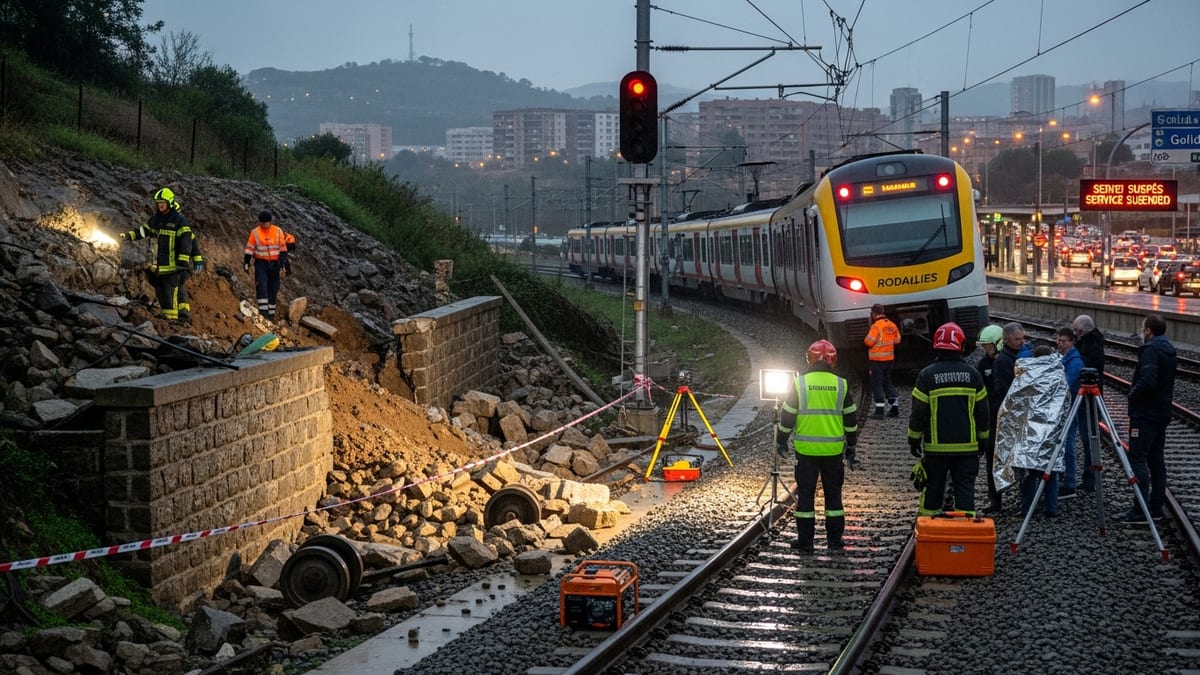
Derailment near Whetstone Street and Auto Avenue
Reports indicate the derailment occurred in Bucyrus in the area of Whetstone Street and Auto Avenue, a mixed residential and light industrial corridor west of the city center. Initial images from local media coverage show several rail cars off the tracks, including at least one tank car resting at an angle beside the line.
Local outlets describe the incident as involving a freight consist traveling through the community when multiple cars left the rails. The presence of a tipped tanker immediately raised concern about a potential hazardous materials release, prompting responders to establish a safety perimeter around the site.
Publicly available information shows that emergency crews from the region converged on the scene shortly after the derailment was reported. Rail traffic through the immediate area has been halted while responders assess track damage and the stability of the derailed cars.
Hydrochloric acid fears and evacuation zone
According to published coverage, the principal concern centers on a tanker believed to be carrying hydrochloric acid, a corrosive chemical used in a variety of industrial processes. Reports indicate there is a possibility the car may be leaking, raising the risk of toxic vapors and chemical burns for anyone in close proximity.
Initial alerts referenced an evacuation request for residents within roughly one mile of the derailment site, while subsequent updates from broadcast outlets have cited a zone of about one third of a mile for the most immediate threat area. The differing radii reflect the evolving understanding of wind conditions, topography and the exact condition of the tanker as responders gather more data.
Evacuation orders of this kind are consistent with guidance used in other hazardous materials derailments where corrosive or toxic cargo is involved. Even without visible fire, planners typically assume a worst-case scenario until monitoring equipment and closer inspection confirm whether the car is intact or actively leaking.
Emergency shelter operations at Bucyrus High School
Local reporting notes that Bucyrus High School has been opened as a shelter for evacuees who cannot safely remain in their homes while the site is secured. The campus offers parking, indoor rest space and basic services, making it a logical collection point for families displaced from the neighborhoods closest to the derailment.
Community organizations and municipal departments have begun coordinating support at the shelter, including registration, basic medical checks and information briefings based on updates shared by incident managers. For many residents, the high school provides not only a place to sleep but also a central location to obtain reliable information about when it may be safe to return.
Travelers passing through Bucyrus may encounter detours or delays near the school and adjacent road network as traffic patterns are adjusted to account for evacuee arrivals and emergency vehicles moving between the shelter and the derailment site.
Impact on local travel and regional rail traffic
The derailment is affecting both local road access and regional rail operations. Roads around Whetstone Street and Auto Avenue are closed or restricted while heavy equipment, hazmat teams and inspection crews operate near the tracks. Drivers are being directed to alternate routes around the western side of Bucyrus, and visitors to the area are advised to check local advisories before planning cross-town trips.
On the rail network, freight movements through this part of north-central Ohio are expected to be disrupted until track repairs and hazmat clearance are complete. Previous derailments in the region have sometimes required extended closures while damaged track is rebuilt and derailed cars are removed, although the timeline for the Bucyrus incident will depend on the complexity of the clean-up and any structural repairs needed.
For rail passengers and motorists, the most immediate effect is likely to be slower journeys and detours, rather than long-term closures. However, travelers relying on time-sensitive freight shipments into or through Ohio may experience delays as trains are rerouted or held outside the affected corridor.
Safety context amid heightened concern over hazmat trains
The Bucyrus derailment comes at a time of heightened public sensitivity to rail incidents involving hazardous materials, particularly in Ohio. Recent years have seen several high-profile accidents where chemical cargoes have prompted evacuations and environmental monitoring, which has sharpened scrutiny of rail safety and hazmat routing through residential communities.
Safety analysts frequently point to the importance of track inspection regimes, train handling practices and the placement of hazardous materials cars within long freight consists when considering derailment risk. While the specific cause of the Bucyrus incident has not yet been detailed in publicly available information, investigators typically review factors such as track condition, equipment performance and train speed as they build a timeline of events.
For residents and travelers, the latest incident underscores how closely many Midwestern towns are intertwined with major freight corridors. Even a localized derailment can temporarily transform familiar streets and schools into evacuation zones and shelters, highlighting the importance of clear communication, accessible evacuation routes and robust planning for rare but high-consequence events.