


More news on this day
Early July has brought a string of train derailments in the United States, disrupting both commuter and long-distance travel at the height of the holiday period and highlighting ongoing vulnerabilities in an already strained rail network.
Get the latest news straight to your inbox!
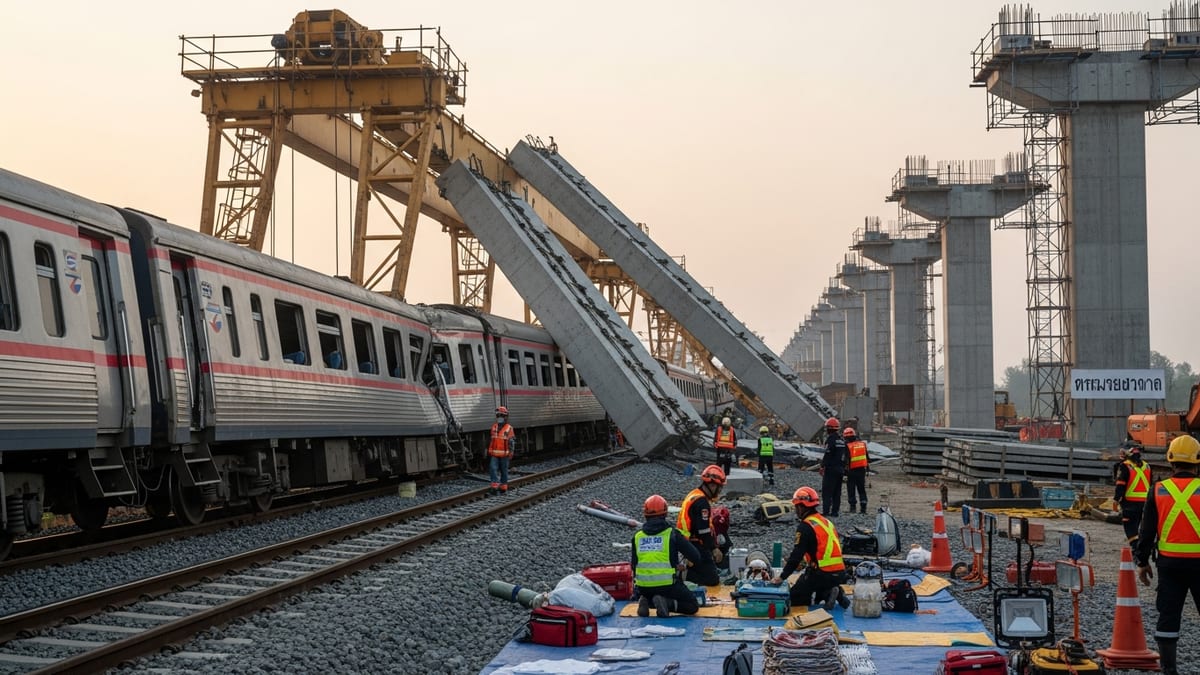
Metro Train Leaves Tracks Outside Washington, D.C.
In the Washington region, a Metro train derailed outside College Park station on July 4, prompting an emergency response and service suspensions on parts of the Green and Yellow lines at a time when many residents and visitors were relying on rail to reach holiday events. Published coverage indicates that several cars left the tracks late in the morning, leading to evacuations and a shutdown of train movements through the immediate area while inspections and recovery work began.
Initial information shared by regional outlets points to a potential heat-related track issue, with investigators examining whether extreme temperatures contributed to a kink or misalignment in the rails. In response, the transit agency reduced maximum operating speeds across portions of the system as a precaution, a step that is likely to result in continued delays for several days even where trains are running normally.
For travelers, the immediate impact has been longer journeys and more crowded platforms on the remaining sections of the Green and Yellow lines, along with bus substitutions around the College Park corridor. Metro has directed riders to specific bus routes to bridge the gap between closed stations, but journey planners show extended travel times and some missed connections as the network absorbs the disruption.
Although no serious injuries have been reported in connection with the incident, the derailment underscores the challenge large metro systems face as heat waves become more frequent. Publicly available information on recent safety initiatives notes that many agencies are revisiting inspection regimes and speed limits in hot weather to reduce the risk of track movement and equipment failures.
Freight Train Derails Into Canal in Downtown Richmond
In Richmond, Virginia, a lengthy freight train derailed along the city’s canal district on the afternoon of July 3, sending several cars into the water and closing a heavily visited section of the riverfront just as the long weekend began. Local reports describe three cars from a roughly 200-car train leaving the elevated tracks near Dock and 20th streets, landing partly in the canal and on its banks.
According to public updates from city agencies and regional news outlets, heavy cranes have since been brought in to stabilize two railcars that remain precariously positioned on the viaduct. Dock Street between 18th Street and Pear Street is closed to vehicles, and a key portion of the Virginia Capital Trail that passes beneath the tracks remains off limits, forcing cyclists and pedestrians onto detours along East Cary Street.
The derailment has not directly involved passenger services, but its location in the core of a recreational corridor has had tangible effects on visitors. Access to waterfront walking routes, bike paths and nearby attractions has been restricted, and several travel advisories recommend avoiding the area while debris removal and structural inspections continue. Social media posts from travelers show congestion on alternate streets and confusion over the exact boundaries of the closure.
Farther afield, the incident is rippling into long-distance travel. Passengers on certain North Carolina and Virginia Amtrak services report cancellations and reroutings attributed to the Richmond freight derailment, with some being offered bus substitutions or rebooking onto later trains. For those traveling over the weekend and into early this week, publicly available information suggests that itineraries passing through central Virginia may face last-minute changes.
Derailment Shuts Down Key Commuter Link Near Chicago
In the Chicago region, a separate freight train derailment in East Chicago, Indiana, has disrupted the South Shore Line, a vital commuter rail connection between downtown Chicago and communities stretching as far as South Bend. Coverage from regional broadcasters indicates that the derailment occurred last week along the Indiana Toll Road, triggering a power outage that forced an immediate halt to electric commuter operations.
While no passenger trains were reported to be involved in the freight incident, the damage to electrical infrastructure and overhead systems has had a prolonged impact on commuters. The South Shore Line resumed operations on a limited weekend and holiday schedule, with ongoing bus substitutions between Miller and Hegewisch stations where power remains constrained. Updated timetables show fewer trains than usual and uneven headways during peak periods.
For travelers who rely on the South Shore Line for work or leisure trips to Chicago’s downtown, the changes have translated into earlier departures, longer waits and crowded replacement buses. Some riders have shifted to Metra Electric services or to driving via the expressways, adding to congestion on parallel road corridors. Tourist visitors, particularly those planning day trips between Chicago and Indiana’s lakefront communities, are being advised by local travel guides to check schedules carefully and allow extra time.
The disruption offers another example of how incidents on the freight network can quickly cascade into passenger service impacts. Even when commuter lines do not share the exact segment of track where a derailment occurs, shared electrical systems, junctions and signaling equipment can leave operators with little choice but to reduce or suspend service while repairs are completed.
Holiday Rail Travel Faces Wider Knock-On Effects
Although the recent derailments near Washington, Richmond and Chicago are distinct events, together they are reshaping early July travel conditions along several busy rail corridors. In online forums and trip reports, passengers describe a patchwork of cancellations, delays and equipment substitutions across the Mid-Atlantic and Midwest, with some long-distance services operating at “extreme standing capacity” after earlier trains were canceled and riders rebooked en masse.
Reports from passenger advocacy groups and traveler communities also highlight how summer heat, severe storms and infrastructure constraints are combining with isolated derailments to create broader unreliability. While most journeys are still being completed without major incident, the margin for error is slim. A single freight problem near a junction or on a key bridge can force detours extending hundreds of miles, complicating connections for both domestic and international travelers.
For those planning trips in the coming days, publicly available guidance from rail operators and transport agencies emphasizes the importance of checking real-time updates on the morning of departure, signing up for alert systems where available and building additional buffer time into itineraries. Travelers with tight onward connections to flights, cruises or tours are being encouraged to consider earlier departures or flexible tickets where possible.
More broadly, the latest derailments are likely to intensify discussion about investment in maintenance, climate resilience and dedicated passenger infrastructure. Policy documents released in recent months by federal transportation bodies point to derailment prevention and faster incident recovery as priorities for the next decade, reflecting both safety concerns and the growing reliance of travelers on rail as an alternative to short-haul flying.
What Travelers Should Expect Next
In the short term, rail users in affected regions should anticipate a gradual return to normal operations rather than an immediate reset. Metro’s reduced speed limits in the Washington area are likely to remain in place until detailed track inspections are complete, meaning longer headways and slower journeys even after service patterns are restored near College Park.
In Richmond, cranes and engineering teams continue working around the derailed freight cars, and local government updates state that road and trail closures along Dock Street and the Virginia Capital Trail will stay in effect until the remaining equipment is stabilized and structural checks of the elevated tracks are finished. Visitors to the canal district may encounter fencing, detours and noise from heavy machinery through at least the early part of the week.
Commuters and leisure travelers using the South Shore Line should monitor announcements on adjusted timetables and substitute buses while repairs proceed on damaged power infrastructure in East Chicago. Observers note that holiday periods can slow some aspects of the recovery process, as specialized contractors and equipment are scheduled around other projects.
Despite the disruptions, national rail statistics continue to show that serious derailments affecting passenger trains remain relatively rare compared with the overall volume of daily movements. For now, the most immediate consequence for many travelers will be inconvenience rather than danger: longer trips, busier alternative routes and the need to keep plans flexible as operators work to clear bottlenecks created by a handful of high-profile incidents.