


More news on this day
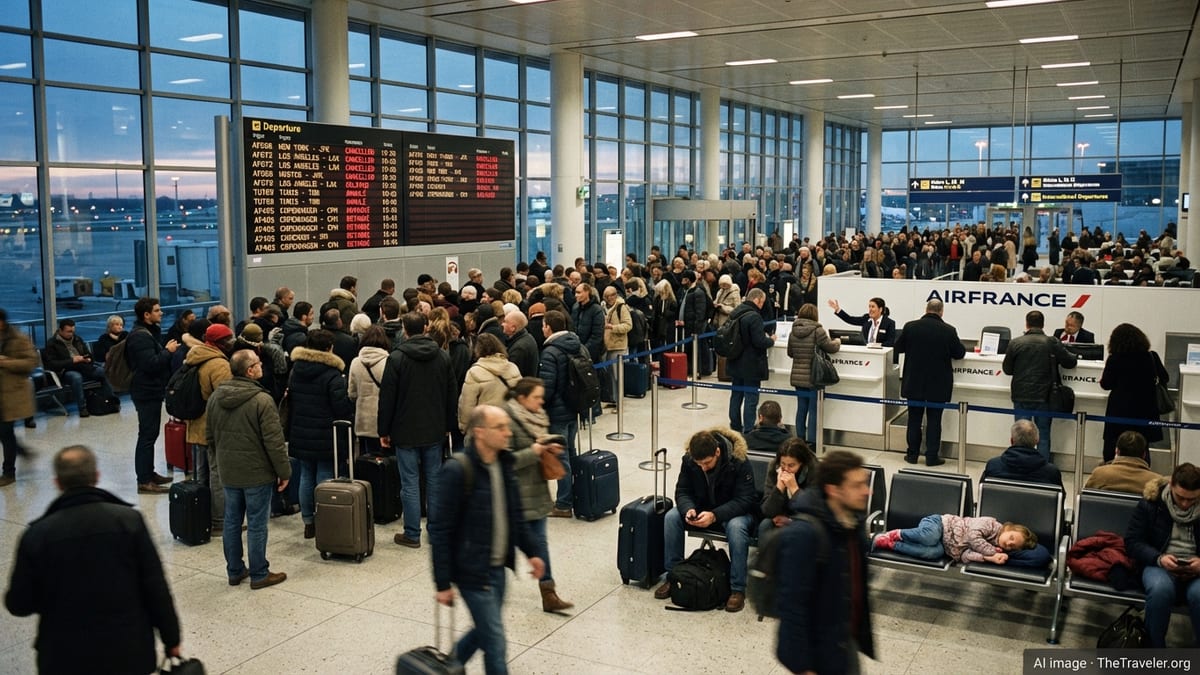
Travel across Europe and the North Atlantic faced fresh disruption on May 14, 2026, as operational problems at Paris Charles de Gaulle Airport triggered more than 250 delays and multiple cancellations affecting flights to London, New York and other major hubs.
Get the latest news straight to your inbox!
Operational Issues at One of Europe’s Busiest Hubs
Publicly available tracking and passenger rights data show that Paris Charles de Gaulle recorded around 257 delayed flights and at least seven cancellations over the course of Thursday, turning routine schedules into a day of rolling disruption. The figures place the airport among the most affected major hubs in Europe for the day, underlining how quickly problems at a single node can reverberate across airline networks.
The disruption appears to stem from a mix of operational constraints rather than a single headline event. Recent weeks have seen French aviation grappling with capacity restrictions, lingering weather impacts and air traffic control pressures, and analysts note that even modest constraints can push a tightly timed hub like Charles de Gaulle into widespread delay when traffic is heavy.
Travel data platforms monitoring on time performance indicate that the vast majority of affected flights eventually departed, but often after significant waits at the gate or on the tarmac. For passengers, that meant missed connections, late evening arrivals and the familiar scramble to rebook onward segments during one of the busier spring travel periods.
While the total of seven cancellations is small compared with the overall daily schedule at Charles de Gaulle, each scrapped departure can involve hundreds of travelers and complex rebooking efforts. On a day when spare seats are limited, some passengers reported being moved to flights departing from nearby airports or reprotected via alternate hubs such as Amsterdam or Frankfurt.
Major Carriers Feel the Strain
The knock on effects were particularly visible among large network airlines that rely on Paris as a connecting gateway. Air France, the airport’s primary carrier, saw delays spread across both short haul European services and long haul flights to destinations including New York, Atlanta and multiple points in North and West Africa, according to live schedule boards and third party status trackers.
Joint venture and alliance partners were also pulled into the disruption. Flights marketed by Delta Air Lines and other SkyTeam members that funnel passengers through Paris for transatlantic and onward European connections showed pushed back departure times and revised arrival estimates. In several cases, passengers arriving from the United States faced tight or missed connections onto intra European links as a result of late inbound aircraft.
On the European side, Lufthansa and easyJet were among the carriers grappling with ripple effects on routes connecting Paris to Germany, Italy and the United Kingdom. Reporting from route monitoring services shows late running Paris–Frankfurt and Paris–Milan services, as well as delays on popular leisure and business corridors where aircraft utilization is already high.
Transatlantic operations were not spared. Flights between Paris and New York, a key intercontinental city pair, experienced knock on delays that fed into evening departure banks on both sides of the Atlantic. Although the number of outright cancellations remained limited, the combination of late arrivals and constrained seat availability raised the risk of overnight stays for travelers unable to secure same day alternatives.
London, New York and Other Hubs See Ripple Effects
The impact of the Charles de Gaulle disruption was most immediately felt in cities with dense air links to Paris. London, which is closely tied to the French capital through high frequency flights and rail services, saw schedule pressures intensify as late inbound aircraft and crew rotations created gaps in already busy timetables.
Rail services between Paris and London have also been operating under strain. Eurostar has reduced some cross Channel frequencies through mid May and has warned of additional delays linked to the introduction of the European Union’s new Entry/Exit System for non EU travelers. On a day when air connections are already faltering, that combination further narrows options for travelers shuttling between the two capitals.
Across the Atlantic, New York’s major airports reported modest but noticeable departure and arrival delays, with data from aviation monitoring services highlighting weather and traffic constraints in the region. When combined with late running transatlantic flights from Paris, that created extended travel times for passengers undertaking multi leg journeys that touched both hubs on the same day.
Other European cities with strong Paris ties, including Amsterdam, Rome and Milan, reported isolated delays on services linked to the French hub. Industry observers note that these ripple effects are a structural feature of modern aviation, where a delay at the start of an aircraft’s day can cascade through several rotations and multiple countries before operations normalize.
Passengers Face Missed Connections and Uncertain Compensation
For passengers, the immediate challenge was navigating missed or at risk connections. At a hub as complex as Charles de Gaulle, a delay of even 45 minutes can be enough to jeopardize onward flights, particularly where minimum connection times are already tight. Travel disruption services reported increased interest from passengers seeking guidance on rebooking rights and compensation options.
European air passenger rules provide for potential compensation when delays and cancellations fall within an airline’s control, but publicly available commentary from legal and consumer groups emphasizes that eligibility depends heavily on the specific cause of disruption. When delays stem from air traffic control restrictions, severe weather or airport infrastructure constraints, compensation may not apply, even if the impact on itineraries is significant.
Consumer advocates continue to encourage travelers to document delay times carefully, retain boarding passes and request written explanations of the cause of disruption from their carrier. This documentation can prove critical when travelers later seek reimbursement for expenses such as meals, accommodation or alternative transport that might be covered under carrier policies or local regulations.
In the meantime, many passengers found themselves relying on real time flight tracking tools and airline apps to stay ahead of changing departure times and gate assignments. With disruption spread across several of Europe’s busiest corridors, the ability to react quickly to schedule changes was crucial for minimizing extended layovers and unexpected overnight stays.
Strains Highlight Fragility of Peak Season Schedules
The latest wave of disruption at Charles de Gaulle comes as European aviation prepares for the summer peak, a period when airports and airlines operate close to maximum capacity. Analysts note that the events of May 14 highlight how even a limited number of delays and cancellations can create visible chaos when there is little slack left in the system.
In recent months, the region has also seen industrial action affecting air traffic services, reduced infrastructure capacity during maintenance works and weather related schedule cuts, all of which add layers of complexity to network planning. Reports examining operations in early 2026 suggest that airlines are still working to rebuild resilience following the rapid traffic rebound of the past two years.
Travel industry commentary points to a growing emphasis on passenger self help and contingency planning. Recommendations typically include building longer connection buffers, avoiding the last flight of the day on critical legs, and having a clear plan for reaching airline customer service through multiple channels if things go wrong.
For now, operations at Charles de Gaulle are expected to gradually stabilize as airlines work through backlogs and reposition aircraft and crews. Yet with summer approaching and broader infrastructure changes such as new border systems on the horizon, travelers using Paris, London, New York and other major hubs may need to brace for further pockets of disruption in the months ahead.