


More news on this day
A short fifth-freedom hop on Ethiopian Airlines between Oslo and Stockholm offers travelers the rare chance to sample a Boeing 787-8 widebody and intercontinental-style cabin on a route usually served by narrowbody jets or regional aircraft.
Get the latest news straight to your inbox!
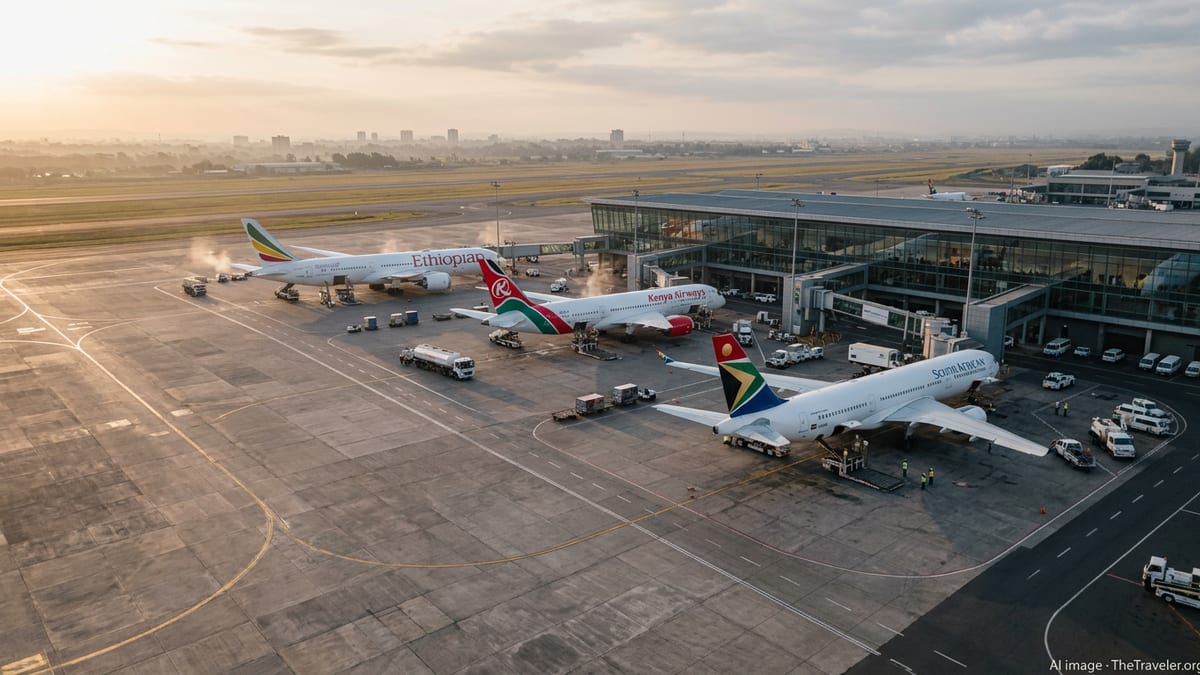
A Fifth-Freedom Widebody on a Nordic Shuttle
The Oslo to Stockholm sector is part of Ethiopian Airlines’ Addis Ababa to Stockholm Arlanda to Oslo rotation, a fifth-freedom tag that allows the carrier to sell tickets solely between Norway and Sweden on an otherwise long-haul service. Publicly available schedules for 2025 and 2026 indicate the route is typically flown with a Boeing 787-8 Dreamliner, resulting in a flight time of about 1 hour 20 minutes gate to gate.
Compared with the more common narrowbody services operated by Scandinavian and low-cost carriers, the Ethiopian flight stands out for its long-haul configuration and relatively low fares on many dates. Flight comparison tools show the 787-8 often prices competitively with local rivals, while delivering amenities such as seatback entertainment and widebody cabin space that are unusual on such a short leg.
Aviation forums and trip reports describe the Oslo–Stockholm segment as lightly loaded on many days, with some travelers citing rows of empty seats in economy. That light load, combined with the 787’s quieter cabin and larger windows, contributes to a distinctly long-haul feel despite the brief cruising time over central Scandinavia.
The service has also become something of a curiosity among aviation enthusiasts. Several recent online reports frame the route as a “bucket list” intra-European hop, attractive to those wanting to log a 787 ride or experience an African carrier on a short segment without committing to an intercontinental journey.
Check-in, Security and Non-Schengen Formalities
Although Oslo and Stockholm are both in the Schengen Area, the Ethiopian service operates as part of an international itinerary that continues to and from Addis Ababa. As a result, passengers check in at Oslo Gardermoen as for any other non-Schengen departure and proceed through passport control to reach the gate.
Travelers recount that check-in for the Oslo–Stockholm leg is generally quick, given the relatively modest number of point-to-point passengers. Self-service kiosks and staffed counters allocate seats and tag bags either to Stockholm or onward to Ethiopia, with through-checked luggage handled under the Addis Ababa flight number.
Once through security, passengers clear exit passport control despite the intra-Schengen destination. At boarding, ground staff conduct an additional passport check at the gate, reflecting the flight’s non-Schengen status and onward long-haul segment. Online discussions note that passengers with certain nationalities may require specific Schengen visa types, as the routing technically involves entering and exiting the area via an external carrier.
On arrival into Stockholm Arlanda, passengers again emerge into the non-Schengen zone. Those terminating in Sweden follow transfer corridors and signage toward baggage reclaim and customs, while through passengers remain airside for the onward Addis Ababa sector. Reports indicate that the extra formalities add some complexity compared with a typical Nordic shuttle, but processing times remain manageable under normal conditions.
Cabin, Seating and Onboard Atmosphere
Ethiopian’s Boeing 787-8 on the Oslo–Stockholm route is configured in a standard long-haul layout, with business class up front and economy in a nine-abreast 3-3-3 arrangement. Seat pitch in economy is comparable to many intercontinental carriers, which feels generous on a flight barely longer than some European domestic sectors.
Passengers describe the cabin as modern but showing typical signs of long-haul use, with mood lighting used during boarding and climb before transitioning to standard white lighting for cruise and descent. The 787’s relatively low cabin noise level is frequently mentioned in reports, particularly when compared with older narrowbody jets that typically serve Scandinavian routes.
Each economy seat is fitted with a personal entertainment screen and a wired controller in the armrest. Travelers on this short hop often use the moving map or browse menus and film listings without having time to watch a full feature. The airline’s inflight magazine and safety video emphasize the wider Ethiopian network, underlining that most passengers on board are connecting to or from long-haul services.
The overall onboard atmosphere is described as calm and unhurried. With loads often lower than on competing services, boarding tends to be swift and overhead bin space plentiful. Aviation enthusiasts frequently comment on the novelty of settling into a long-haul seat for what, in flying terms, is a relatively quick crossing between two Nordic capitals.
Service, Catering and Connectivity
On the Oslo–Stockholm sector, Ethiopian’s service is tailored to the flight’s short duration. Reports indicate that economy passengers receive a basic drinks round, with a tray of soft drinks and juices offered shortly after reaching cruising altitude. The onboard experience on this leg does not typically include a full meal service for economy passengers booked solely between the two Scandinavian cities.
Crew interactions are generally characterized in traveler accounts as efficient and polite, with staff accustomed to managing both short-haul passengers and those bound for long-haul connections. Safety demonstrations and announcements are delivered in English and Amharic, with additional language support depending on crew composition.
Connectivity options are available on selected 787-8 aircraft. Online trip reports from recent months mention inflight Wi-Fi offered for a fee, though many passengers forego logging on due to the limited time between top of climb and descent. For those connecting onward to Addis Ababa, the onboard portal may display menus and connection information, reinforcing the integrated nature of the overall operation.
Despite the modest catering, the combination of attentive cabin crew and a well-equipped widebody cabin results in a product that many travelers judge to be superior to regional competitors for such a short hop. The value proposition is particularly noted by budget-conscious passengers willing to trade a slightly longer routing or unusual terminal experience for greater comfort on board.
Positioning in the Nordic Market
Ethiopian’s fifth-freedom operation between Oslo and Stockholm sits within a broader strategy of using intermediate European points to feed its Addis Ababa hub. Corporate material and schedules show the airline pairing Scandinavian cities on a single aircraft rotation to maintain efficient utilization of its 787 fleet while tapping demand in multiple markets.
In the Nordic region, the Oslo–Stockholm segment coexists with direct services by Scandinavian and low-cost operators, which offer higher frequencies but more conventional short-haul cabins. Industry commentary notes that Ethiopian’s 787-8 is competing less on schedule convenience and more on comfort, novelty and, at times, pricing.
Passenger traffic data for Oslo Airport lists Stockholm Arlanda among the most heavily traveled international city pairs, driven primarily by local carriers. Against that backdrop, Ethiopian’s presence is small in absolute numbers but highly visible, given the distinct livery and widebody aircraft regularly appearing on a route usually served by single-aisle jets.
As airlines continue to review their networks in response to demand patterns, Ethiopian’s performance on the Oslo–Stockholm leg will determine how long this unusual fifth-freedom option remains available. For now, reports from recent travelers suggest that those seeking a different kind of Nordic hop have a compelling alternative in the form of a 787-8 Dreamliner operating a short but distinctive link between the Norwegian and Swedish capitals.