


More news on this day
President Donald Trump returned to the White House a day earlier than planned from a weekend stay at Camp David on Saturday, September 19, 2026, as the U.S. government issued renewed security messaging for Americans in the Middle East amid rising regional tensions and reports of fresh cross-border attacks.
Get the latest news straight to your inbox!
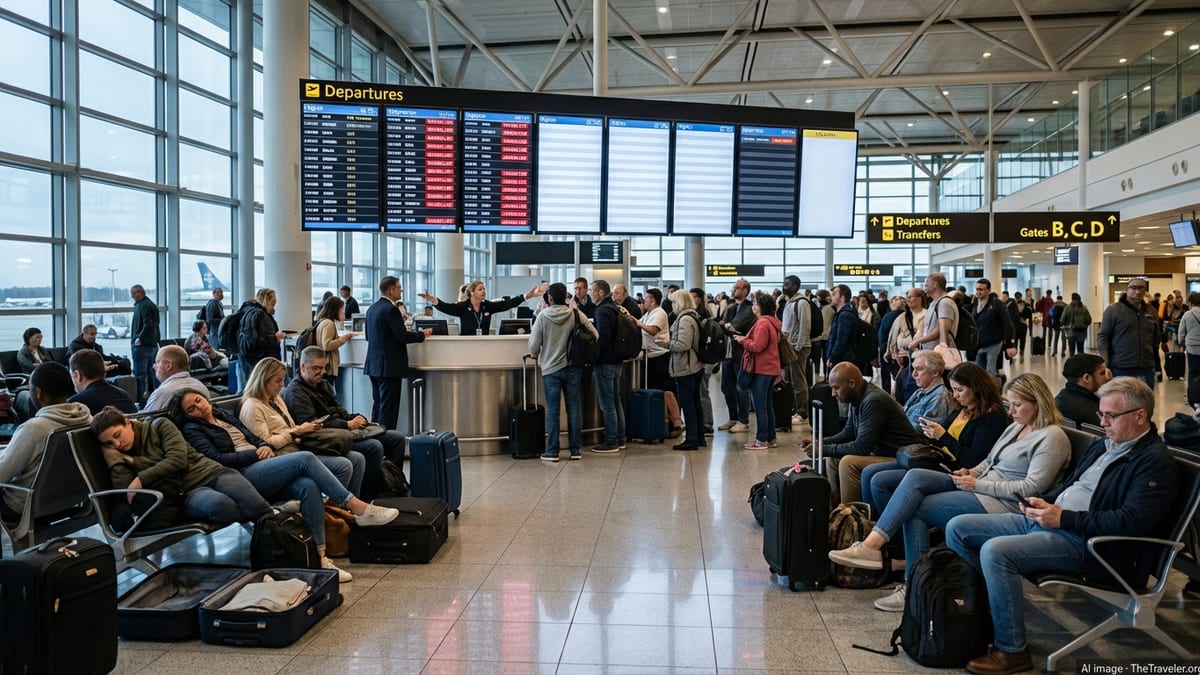
Early return from Camp David amid heightened regional risk signals
Published coverage described Trump departing the Maryland retreat late Saturday and arriving back in Washington as new U.S. travel-security messaging circulated for the Middle East. Reporting on the president’s movements framed the timeline as an early return by roughly one day from what had been a weekend schedule.
While the White House has not publicly tied the travel change to a single event, the timing overlapped with a burst of developments involving attacks linked to Yemen’s Houthi movement and broader concerns about potential escalation tied to the Iran conflict. For travelers, the practical takeaway is less about the president’s schedule and more about what the U.S. government has been signaling: conditions can change quickly, and transportation disruptions are a core risk across multiple countries.
Recent State Department “global events” advisories have emphasized the possibility of sudden airspace closures, flight cancellations, and other travel interruptions in and around the region. That theme has been repeated in destination-specific advisories and embassy security alerts.
What the U.S. travel alerts are emphasizing right now
The U.S. Department of State’s public Travel Advisory system continues to place several Middle East destinations at elevated levels. As of the latest postings, Iraq and Lebanon are listed at Level 4 (Do Not Travel), while Israel, Jordan, Saudi Arabia, and the United Arab Emirates are listed at Level 3 (Reconsider Travel), reflecting concerns that include terrorism, unrest, and the potential for wider conflict.
In addition to country-level advisories, broader “worldwide caution” messaging has underscored specific trip-planning hazards for Americans transiting the region: last-minute flight cancellations, periodic airspace closures, and the need to monitor local embassy alerts for changes that can affect airport access, overflight routes, and ground transportation.
For travelers, the most actionable guidance in these advisories is operational rather than abstract: keep itineraries flexible, confirm airline change and refund rules before departure, and plan for contingencies if a primary route becomes unavailable. The State Department’s Smart Traveler Enrollment Program is also repeatedly promoted in U.S. public guidance as a way to receive location-specific updates.
Attacks and aviation disruption risks shaping travel conditions
In the days leading into the weekend, published coverage described a spike in Houthi-linked attacks and Saudi air-defense activity, including reporting that Saudi Arabia confirmed an attempted ballistic missile strike toward Riyadh on Saturday, September 19. Coverage characterized it as a notable escalation in the pattern of strikes and a development likely to sharpen regional security posture.
Those security dynamics can translate quickly into traveler-facing impacts. Airlines may reroute to avoid certain air corridors, and airport operations can be affected by changes to threat conditions even when an airport is not directly targeted. Travelers with connections through major hubs in the Gulf, the Levant, or nearby transit points may face cascading delays if routings shift.
Separate State Department advisories for specific countries have also highlighted disruptions to commercial flights and the ongoing threat of drone and missile attacks in the region. Even when flights continue operating, “soft targets” referenced in advisories can include transportation hubs and tourist-frequented public spaces, which is why official messaging often stresses situational awareness in airports, transit stations, and crowded venues.
How to adjust travel plans for the Middle East in late September 2026
For Americans with near-term travel to Level 3 or Level 4 destinations, the first step is to review the latest State Department advisory and any embassy security alerts for the specific country and city, since restrictions and threat details can vary sharply by region. Several advisories include location-based “do not travel” areas inside countries that have otherwise broader guidance.
Travelers who decide to proceed should consider practical risk-reduction steps reflected in official advisories: choose fully refundable lodging when possible, avoid unnecessary cross-border road travel, and build in time buffers for airport access in case checkpoints or road closures slow movement. Keeping digital and printed copies of key documents, plus maintaining redundant payment options, can reduce friction if disruptions occur.
For trips involving Saudi Arabia, publicly available U.S. advisory language emphasizes elevated caution and notes that specific border areas can carry heightened risk. Travelers should also be prepared for itinerary changes related to airspace management or airline operational decisions as regional conditions evolve.
Finally, travelers planning to transit through the broader region, even without staying in higher-risk destinations, may want to assess connecting itineraries and overflight routings. Recent U.S. caution messaging has repeatedly flagged the possibility that disruptions can affect travelers “in or traveling to” the Middle East, making flexible tickets and backup routings particularly valuable during periods of escalation.