


More news on this day
President Donald Trump returned to the White House over the weekend as a renewed U.S. security alert underscored heightened risk and potential travel disruption across the Middle East, a backdrop that is reshaping airline schedules and prompting travelers to recheck advisories before flying.
Get the latest news straight to your inbox!
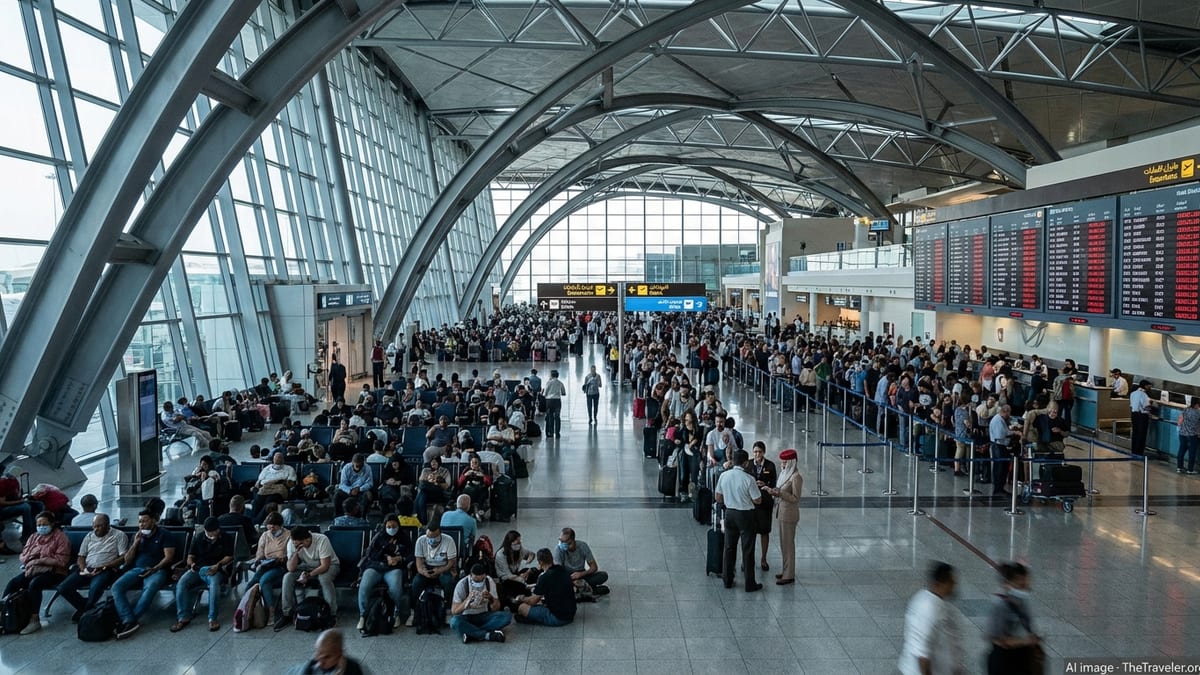
What the latest U.S. alert means for travelers right now
Published coverage over recent weeks has pointed to a broad U.S. government message for Americans in the region: remain vigilant, monitor local security updates, and anticipate last-minute changes to movement, including flight cancellations and periodic airspace constraints. The State Department’s Middle East hub page continues to emphasize staying connected to local embassy or consulate guidance and receiving security updates through official channels such as STEP.
At the country level, the advisory map remains uneven, with some destinations retaining “Do Not Travel” designations while others sit at “Reconsider Travel.” Publicly available State Department advisories show, for example, Iraq listed at Level 4 with risk categories that include terrorism, kidnapping or hostage taking, armed conflict and limited U.S. emergency-service capacity. Saudi Arabia is listed at Level 3, with an advisory update dated September 15, 2026, and a summary that highlights risks tied to armed conflict and terrorism and notes that commercial flights can be operational but have faced significant disruption at times.
For travelers, the practical takeaway is that the label on a country’s advisory is only part of the decision. The operational reality can change faster than an advisory level, particularly when airlines adjust routings or avoid certain airspace. That makes it important to check both the advisory page for the destination and airline service updates in the days leading up to departure.
Trump’s return to Washington amid the warning
Trump’s weekend return to Washington was widely reported in U.S. media coverage that linked the timing to the issuance of a new Middle East-focused alert. Those reports described the return as abrupt and occurring after the warning highlighted the possibility of travel disruptions tied to the security situation.
The travel warning environment is also being shaped by ongoing regional developments that are closely watched by airlines, insurers, and government risk analysts. Recent reporting has described continued volatility connected to hostilities involving the United States and Iran, as well as concerns around attacks attributed in published coverage to Iran-aligned groups, including Houthi activity affecting Saudi Arabia.
For travelers, the political storyline matters less than the ripple effects: aviation decisions, airport operations, and changes in local security posture can all translate into delays, reroutes, and sudden cancellations, even for trips that do not include stops in the most affected areas.
Air travel disruptions: suspensions, resumptions, and reroutes
Airlines have been gradually restoring some Middle East services while remaining cautious on others, according to a Reuters factbox republished by multiple outlets. The report described a patchwork recovery after conflict conditions triggered by U.S. and Israeli strikes on Iran, with some routes still suspended through the autumn and carriers monitoring the security and airspace picture.
Carrier notices show how quickly the schedule can diverge from what travelers booked months earlier. KLM’s travel-alert page, for example, has listed pauses to select Middle East routes, including flights to and from Riyadh and Dammam, and notes that it has adjusted operations around regional security considerations. In the Gulf, published coverage in The National has described continuing airline-by-airline variability, including extended suspensions on some Dubai services by certain long-haul carriers and updated rebooking policies for affected passengers, depending on ticket rules and purchase dates.
On the logistics side, corporate and freight-focused updates also reflect active airspace management. A September 16, 2026 operational update from Expeditors described continued operations through dedicated flight corridors for Doha and noted Saudi airspace as open but heavily used for reroutes, alongside a mix of resumptions and suspensions across major European carriers for different Middle East city pairs.
For leisure travelers, these shifting patterns mean connections through major hubs may not be reliable on all dates, and routings can include longer flight times due to airspace avoidance. Even when flights operate, airlines may schedule technical stops or alter crew-rest patterns to maintain continuity, depending on risk and regulatory requirements.
Country-by-country advisory levels remain central to trip planning
Because the U.S. advisory system is country-specific, travelers planning multi-stop itineraries should check each destination and transit point rather than relying on a single headline. The State Department’s advisory listing continues to show stark differences across the region, including Level 4 “Do Not Travel” advisories for places such as Iraq, and Level 3 “Reconsider Travel” advisories for others.
Saudi Arabia’s current Level 3 advisory, dated September 15, 2026, highlights risks that include Iranian drone and missile targeting of American interests and notes that flights have operated but have been disrupted at times. It also outlines restrictions applied to U.S. government employees, which can be a useful proxy for understanding where movement may be most constrained during periods of heightened threat.
Separate from advisories, travelers should factor in practical constraints that can surface quickly in fast-moving security environments: sudden airport procedures, tightened venue screening, limits on large gatherings, and localized restrictions on movement. These conditions can affect everything from ground transportation planning to whether tour operators can reliably run day trips.
What travelers can do before flying: checks that reduce surprises
In a regionwide disruption environment, preparation becomes less about generic safety tips and more about reducing operational risk. The State Department’s Middle East hub page emphasizes staying connected to official updates, including enrolling in STEP for location-specific alerts and reviewing destination pages for security alerts and embassy guidance.
Travelers with upcoming trips should also review airline travel-alert pages and ticket rules for rebooking eligibility, since many carriers have used limited-time waiver windows tied to specific travel dates and ticket-issue dates. If a route is operating but being rerouted, travelers may want to confirm minimum connection times and plan for longer day-of-travel uncertainty.
Finally, travelers transiting through the region may want to build flexibility into the itinerary. That can include booking changeable fares when possible, avoiding tight same-day connections, and setting realistic expectations about last-minute schedule changes. In the current environment, published coverage and airline notices alike point to a common theme: the schedule you see today may not be the schedule you fly tomorrow.