


More news on this day
An LGBTQ+ charter cruise carrying nearly 2,000 passengers has been denied entry to ports in Turkiye, prompting a rapid itinerary change in the eastern Mediterranean and intensifying debate about the country’s treatment of queer travelers.
Get the latest news straight to your inbox!
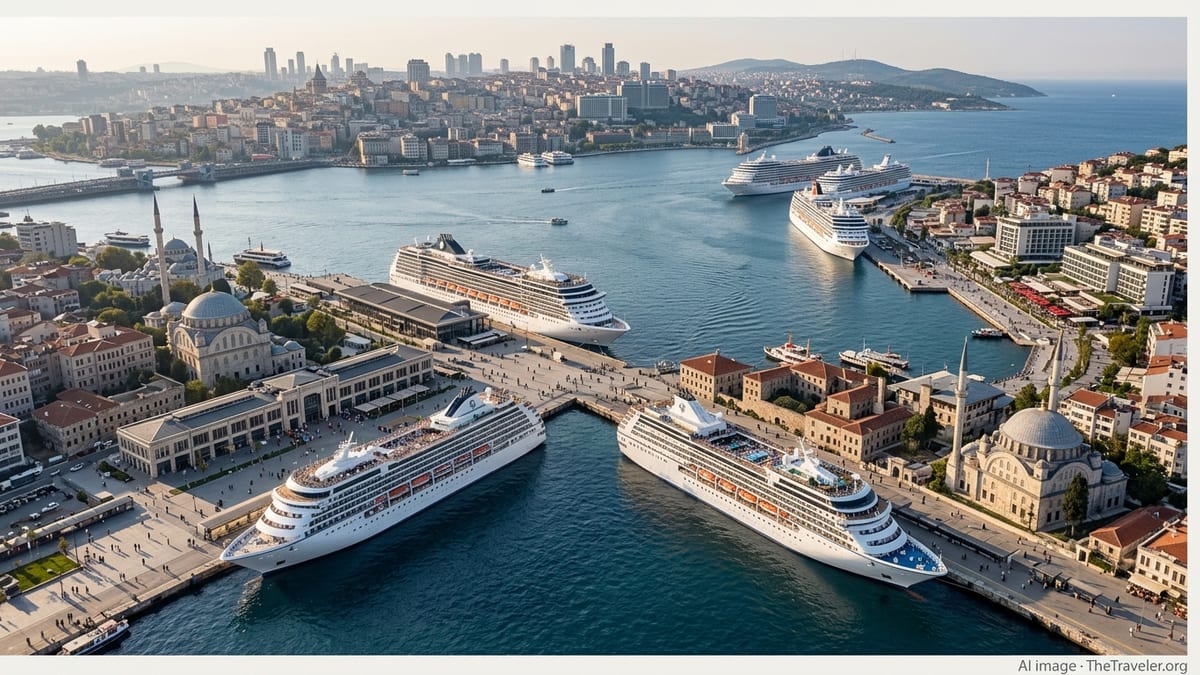
Chartered voyage rerouted after late port refusal
The sailing in question is a 10 day charter aboard Virgin Voyages’ Scarlet Lady, marketed by US based operator Atlantis Events as an “all gay” itinerary between Athens and Venice. Publicly available information indicates the cruise departed Piraeus on 5 July with scheduled calls in the Turkish resort town of Kuşadası on 7 July and in Istanbul later in the week.
Reports from multiple outlets state that Turkish port authorities informed the company shortly before departure that the ship would not be permitted to dock. Coverage in international and Turkish media describes the decision as a denial of port access on the grounds that the charter did not align with local “moral values” and the “structure” of Turkish society.
Travel industry reports indicate that, as a result, the ship’s route has been hastily reworked to replace the Turkish calls with alternative stops, including ports in Egypt and on the Greek island of Crete. The change comes after Atlantis had promoted visits to Kuşadası’s popular Aegean coastline and Istanbul’s historic center as key highlights of the voyage.
According to published coverage, Atlantis has regularly brought LGBTQ+ cruises to Turkiye over the past quarter century, docking in Istanbul and Kuşadası more than a dozen times. Commentators in cruise industry media note that this is the first widely reported instance in which an all LGBTQ+ charter has been blocked from Turkish ports on explicitly moral grounds.
Officials cite “moral values” amid conservative shift
Statements attributed in local media to port and regional authorities frame the decision in terms of protecting public morality and social norms. Reports describe references to “family values” and claims that the ship had been chartered by groups known for behavior said to be incompatible with Turkish society.
The language mirrors broader rhetoric that rights organizations and analysts have documented in Turkiye in recent years, as socially conservative themes have taken on a larger role in national politics. Legal observers point out that while homosexuality is not criminalized under Turkish law, public morality clauses and public order provisions are frequently used to restrict LGBTQ+ events and visibility.
Commentary in Turkish and international press links the cruise decision to increased scrutiny of nightlife and queer spaces in Istanbul, including the closure or pressure on several long established venues. The refusal of port access is being interpreted by many advocacy groups as part of a pattern in which authorities draw a distinction between tolerating private conduct and rejecting high profile, collective expressions of LGBTQ+ identity.
Government aligned commentators quoted in domestic coverage have welcomed the move as a defense of cultural values. At the same time, business voices and opposition figures cited in local media warn that such steps risk undermining Turkiye’s reputation as an open, cosmopolitan destination that bridges Europe and Asia.
Impact on travelers and the cruise industry
For passengers already en route, the decision has translated into rerouted sea days and lost time in one of the region’s marquee cities. Travel trade reports indicate that the charter operator is working with guests on revised excursion programs in newly added ports and on compensation policies, though the details vary according to booking terms and travel insurance.
Cruise sector analysts note that late denials of port access are relatively rare, but not unprecedented, often arising from weather events, security incidents or labor disputes. In this case, industry commentary highlights that the stated rationale is tied not to safety or logistics, but to the identity and perceived behavior of guests.
The incident is expected to prompt other niche and themed cruise organizers to reevaluate itineraries that include Turkiye, particularly for sailings marketed to LGBTQ+ travelers. Travel advisors interviewed by specialist outlets are already suggesting that groups consider contingency plans and check contractual fine print regarding “political or regulatory changes” that might affect port calls.
More broadly, tourism experts point out that Turkiye has invested heavily over the past decade in attracting higher spending international visitors, including from North America and Western Europe. The optics of turning away a ship carrying almost 2,000 predominantly foreign tourists may complicate that effort, even as the move plays well with segments of the domestic electorate.
Human rights context and shrinking space for Pride
The blocked cruise comes against a backdrop of growing concern among human rights organizations about the climate for LGBTQ+ people in Turkiye. Publicly available reports from rights monitors describe a steady erosion of protections for freedom of assembly and expression related to sexual orientation and gender identity since the mid 2010s.
Istanbul’s Pride march, once the largest in the region and a symbol of the city’s relative openness, has repeatedly been banned on public order grounds since 2015. Attempts to gather have often been met with heavy police presence, detentions and dispersal orders. Similar restrictions have been reported in other cities, including Izmir and Ankara, where local Pride events have faced blanket bans or last minute prohibitions.
At the same time, major cities continue to host a visible, if increasingly cautious, queer culture. Travel features frequently describe Istanbul as home to a network of bars, clubs and community organizations, though many operate under heightened security and refrain from public promotion. Recent closures and licensing disputes affecting long running venues have heightened anxieties among local residents and business owners.
In that context, observers say, an all LGBTQ+ cruise with highly public promotion and themed parties may have been especially vulnerable to political backlash. The case is being cited by advocacy groups as an example of how restrictions initially aimed at domestic events can spill over into decisions affecting international tourism and mobility.
What the decision means for LGBTQ+ travelers to Turkiye
For individual LGBTQ+ tourists considering trips to Turkiye, travel safety experts emphasize the importance of distinguishing between the experience of being part of a high profile organized event and that of visiting more discreetly. Guides for queer travelers note that many visitors continue to explore Istanbul, Cappadocia and the Aegean coast without incident, particularly when traveling in mixed groups and avoiding public displays of affection in conservative areas.
However, the cruise incident is likely to factor into destination choices for some prospective visitors, especially those seeking explicitly LGBTQ+ themed holidays. Travel advisories from several Western governments already flag restrictions on assembly and periodic police actions against Pride related events, and these may be updated to reflect the latest developments at sea.
Industry commentators expect cruise lines and tour operators to engage in more detailed risk assessments when planning itineraries that combine Turkiye with more openly LGBTQ+ welcoming destinations in the Mediterranean. Some may choose to retain Turkish ports while adjusting marketing language, while others could substitute alternative stops to avoid potential last minute disruptions.
For now, the Scarlet Lady’s diverted course serves as a highly visible illustration of the gap between Turkiye’s long standing appeal as a cultural crossroads and the tightening space for public LGBTQ+ expression within its borders. How cruise companies and travelers respond in the coming seasons may offer an early indication of whether that gap continues to widen or begins to narrow.