


More news on this day
Rail journeys on a key route into London have been severely disrupted after a fatal collision involving an East Midlands Railway service near Bedford, with operators urging passengers to delay or reroute journeys while emergency work and safety checks continue.
Get the latest news straight to your inbox!
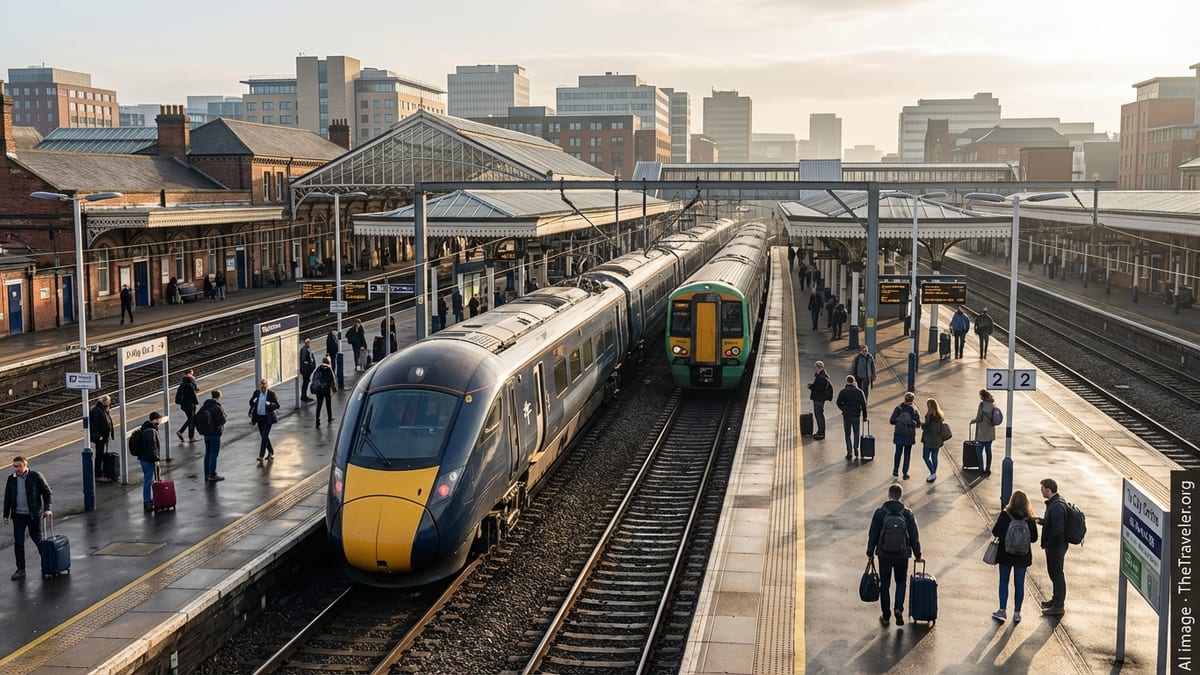
Fatal collision north of London triggers major disruption
Publicly available information indicates that two southbound passenger trains collided on the busy Midland Main Line near Bedford on 19 June 2026, resulting in at least one death and multiple injuries. The incident involved an East Midlands Railway intercity service and another passenger train operating towards London St Pancras International, on one of the principal rail corridors serving the East Midlands and northern Home Counties.
Reports from national and local outlets describe a significant emergency response, with paramedics, fire crews and specialist rescue teams deployed to the scene along the line between Bedford and Flitwick. Rail tracking data cited in published coverage suggests the collision occurred in the late afternoon peak, when services are typically busy with commuters and long-distance passengers heading into the capital.
Images and footage shared on social media and included in subsequent news reports show damaged rolling stock and passengers being assisted away from the site. Rail operators and infrastructure managers have confirmed that a full investigation is under way, while recovery and repair work is expected to continue into the weekend.
East Midlands Railway travel warning and ticket advice
East Midlands Railway has issued a strong travel warning for anyone intending to use its intercity services to and from London following the crash. According to the operator’s latest customer information, the line through the Bedford area is heavily restricted, with long delays, short-notice cancellations and diversions affecting both regional and long-distance trains.
Passengers holding advance or off-peak tickets for affected services are being advised, through publicly available customer notices, to travel only if essential and to check journey planners frequently throughout the day. Rail users are being encouraged to allow significantly more time than usual, with some journeys potentially involving replacement buses, diversions via alternative routes, or connections onto other operators.
Information published by journey-planning services suggests that ticket acceptance with other operators is being put in place on parallel routes where capacity allows, particularly on services linking the East Midlands with London via alternative main lines. However, capacity on these alternatives is likely to be limited at peak times, and operators are warning that trains may be much busier than normal.
Impact on Midland Main Line corridor and nearby communities
The collision has had an immediate impact on the Midland Main Line corridor, a key rail artery linking Sheffield, Derby, Nottingham, Leicester and smaller East Midlands towns with central London. With several tracks through the Bedford stretch blocked or operating at reduced speed while inspections continue, the normal high-frequency timetable has been significantly curtailed.
Commuters from Bedfordshire and neighbouring counties have reported on social channels and in media interviews that journeys which usually take less than an hour are turning into multi-hour trips involving multiple changes. Some rail users are opting to work from home or postpone non-essential travel until a clearer picture emerges of when full services can safely resume.
Local coverage from Bedfordshire notes knock-on effects on roads around Bedford, Flitwick and nearby villages as some passengers turn to cars, taxis and buses. Road congestion and pressure on local bus routes are expected to remain elevated while rail capacity is reduced, particularly during the evening peak and weekend leisure travel periods.
Early focus on signalling and train protection systems
While the precise chain of events remains subject to formal investigation, early reports referenced in rail specialist forums and news summaries suggest that one of the trains may have been stationary or slowing before being struck by a following service. Some commentary has pointed to the role of train protection and warning systems on this section of line, although investigators have yet to publish any formal findings.
The Midland Main Line is equipped with a combination of traditional colour-light signalling and automatic warning or train protection systems designed to reduce the risk of trains passing signals at danger. Industry observers note that modern high-speed trains are engineered with crumple zones, strong body shells and robust interior fittings to manage collision forces, which can help limit the severity of injuries in some circumstances. The extent of damage and the number of casualties in this crash are expected to be central to the technical inquiry.
According to reporting from rail industry commentators, the Rail Accident Investigation Branch is likely to examine factors such as signal aspects, train speeds, braking performance and communication between control centres and train crews. Investigators typically also analyse data from on-board recording equipment, similar to aircraft flight data recorders, to reconstruct the sequence leading up to the impact.
What travelers should do in the coming days
For passengers with imminent journeys planned on East Midlands Railway or other operators using the Bedford corridor, the strongest advice emerging from operator updates and journey-planning services is to verify the status of every leg of the trip shortly before departure. Same-day checks are particularly important because service patterns are changing frequently as infrastructure access improves or additional restrictions are imposed.
Travelers heading to or from London St Pancras may wish to consider alternative London terminals where feasible, such as using services into King’s Cross, Euston or Marylebone from nearby regions, although this will depend on ticket conditions and available capacity. Some non-essential leisure trips, especially those that can be rescheduled without significant cost, may be more comfortable if postponed until rail operations stabilize.
Passengers already holding tickets for cancelled or heavily delayed trains are advised, according to published customer guidance, that they may be eligible for refunds, rebooking or compensation via the usual delay and cancellation schemes. Specific arrangements and entitlements vary by ticket type and retailer, so travelers are encouraged to review terms carefully and keep records of disrupted journeys.
As recovery work continues near Bedford, rail users across the East Midlands and beyond are likely to feel the effects of this incident for several days. Ongoing updates from train operators, infrastructure managers and national journey planners will be the most reliable source of information on when a more normal level of service can be restored.