


More news on this day
A collision between two passenger trains on a main intercity route north of London has left one person dead, several others injured and rail services in and out of the capital severely disrupted, according to early reports from British media and rail operators.
Get the latest news straight to your inbox!
Crash On Busy Corridor North Of London
Published coverage indicates that the collision occurred on the afternoon of June 19 near Bedford, a key junction on the Midland Main Line that links London St Pancras with towns and cities in the East Midlands and northern England. Two southbound services operated by East Midlands Railway were involved, both heading toward London when they came into contact just outside the town.
Reports based on rail tracking data describe the trains as the 16:40 service from Corby to London St Pancras and the 15:50 service from Nottingham to the same London terminus. Images shared from the scene show carriages still upright but visibly damaged, with at least one train appearing to have ridden up against or into the rear of the other.
Regional ambulance and fire services deployed extensive resources, including air ambulances and specialist hazardous incident teams, according to publicly available information. Photos show emergency vehicles lined along a service road parallel to the tracks as passengers were moved away from the trains and assessed for injuries.
Information carried by major news agencies states that at least one person has died and a number of passengers and staff have sustained injuries of varying severity. Some witnesses describe people thrown forward inside carriages, with images showing blood stains, bandaged passengers and others seated on the ground awaiting medical attention.
Impact On Passengers And Rail Operations
The collision has caused substantial disruption on one of the principal rail gateways into London. East Midlands Railway has announced that all services to and from London St Pancras on its main routes have been suspended for the remainder of Friday, affecting trains between the capital and destinations including Nottingham, Sheffield, Derby and Corby.
Passengers already en route have reported lengthy delays, diversions and train terminations at intermediate stations as the line near Bedford remains closed for emergency and investigative work. Rail operators have advised travelers to postpone non-essential journeys, expect cancellations and crowding, and check for alternative routes, including services operated by other train companies into different London terminals.
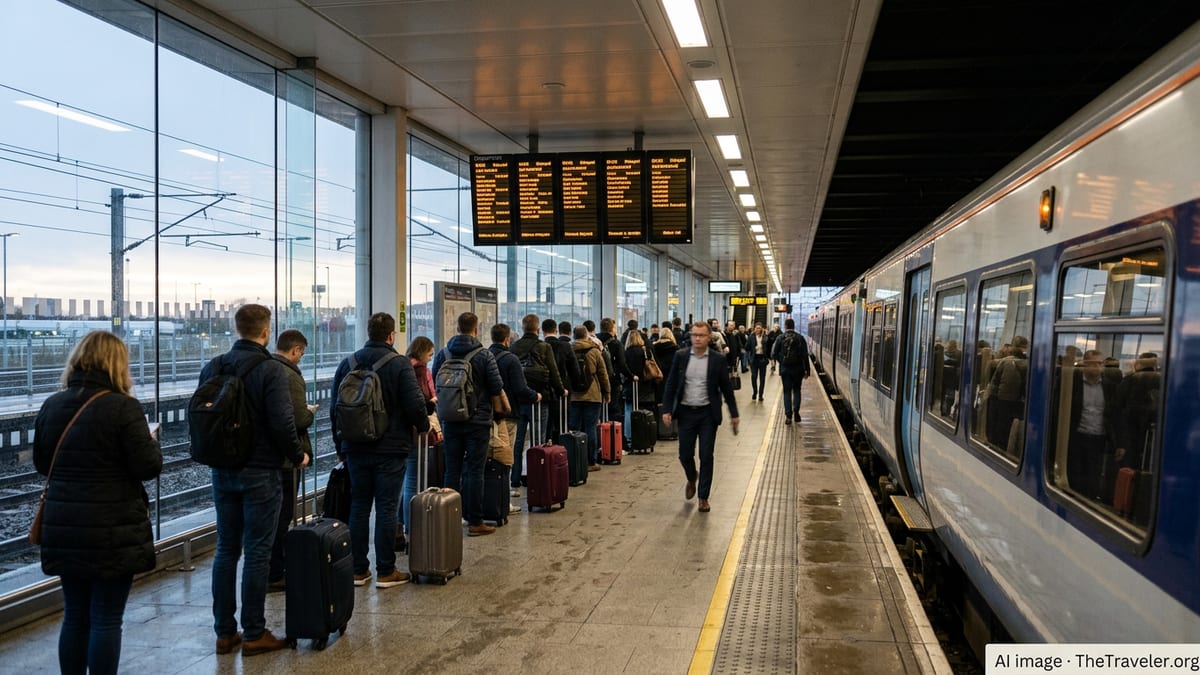
The timing of the incident, in the late afternoon on a weekday, means many affected passengers were commuters and leisure travelers heading into or out of London at one of the network’s busiest periods. Social media posts describe crowded platforms further north as trains were held short of the incident site and passengers sought replacement road transport.
According to information published by the rail industry, specialist recovery teams are likely to remain on site into the night to make the area safe, move damaged rolling stock and inspect track and signaling equipment. The duration of the closure will depend on the extent of infrastructure damage and the progress of the investigation.
Early Details Emerge On Circumstances
Initial data compiled from rail tracking services and media coverage suggest that both trains were traveling south toward London when they collided near Elstow, just south of Bedford. The precise sequence of events remains under examination, but publicly available descriptions point to a rear-end type impact rather than a high-speed head-on crash.
Passengers quoted in published reports describe a sudden, violent jolt with no prior warning, followed by smoke, dust and the sound of breaking glass. Several accounts mention travelers being thrown into seat backs or onto the floor, luggage falling from overhead racks and a rapid onset of confusion and panic inside the carriages.
Images from the site show emergency crews guiding passengers down trackside ladders or via doors opened at ground level, before assembling them in nearby fields for triage and onward transport. While some injuries appear to be minor cuts and bruises, media reports refer to broken bones and more serious trauma among those taken to hospital.
Formal determinations about cause will follow examinations by specialist investigators, but rail commentators have already highlighted that two modern intercity trains operating on a signaled main line should not normally occupy the same section of track in a way that allows physical contact. As a result, attention is likely to focus on signaling performance, train protection systems, braking behavior and any temporary operating arrangements that may have been in place.
Investigation And Safety Scrutiny
According to published coverage, the Rail Accident Investigation Branch has dispatched inspectors to the scene to begin evidence gathering. Their work typically includes analysis of on-board data recorders, signal logs, trackside equipment, braking systems and driver actions, alongside interviews with crew, control staff and witnesses.
In previous U.K. rail incidents, investigators have also examined factors such as wheel-rail adhesion, ongoing engineering work, temporary speed restrictions and any known technical faults on the trains involved. Findings from such inquiries often result in safety recommendations that can affect not only the operator at the center of an incident but also other companies using similar trains, routes or signaling systems.
Rail unions have issued public statements expressing concern about reports of serious injuries to both staff and passengers, while indicating that they are monitoring developments as more detail emerges. Safety campaigners and passenger groups are also expected to scrutinize how the line was being managed at the time of the collision and whether any previously identified risks were outstanding.
Given the prominence of the London to East Midlands corridor and its importance for both business and leisure travel, any systemic issues highlighted by the investigation are likely to attract wide attention across the industry. Operators, infrastructure managers and regulators can expect renewed debate about investment priorities, resilience measures and the pace of safety-related upgrades.
Travel Implications For Visitors To London
The crash comes at the height of the summer travel season, affecting many visitors using rail to reach central London from East Midlands airports and regional cities. For travelers bound for the capital, publicly available journey planners currently indicate significant disruption on services into St Pancras, with knock-on effects likely on connecting Underground, regional and international routes.
Tourists arriving via Luton Airport or East Midlands Airport who would normally rely on main line rail services may need to consider alternative options such as coaches, other rail corridors into London, or, where practical, domestic flights. Transport authorities typically update advice throughout the day, so checking for the latest operating information before setting out is essential.
Travel industry observers note that the incident highlights the vulnerability of single-corridor routes that carry both regional and long-distance traffic into major hubs. When a blockage occurs on such a line, options for rerouting are limited, creating wide ripple effects for both domestic and international passengers with onward connections, hotel bookings or time-sensitive itineraries.
For now, travelers planning to use trains north of London are advised, based on current public information, to allow extra time, be prepared for last-minute changes and monitor operator updates closely as emergency work and the safety investigation continue around Bedford.