


More news on this day
Flights from Montreal’s Trudeau airport to the United States are gradually resuming after a temporary halt in preclearance customs operations linked to strong construction-related odours in the U.S. departures area.
Get the latest news straight to your inbox!
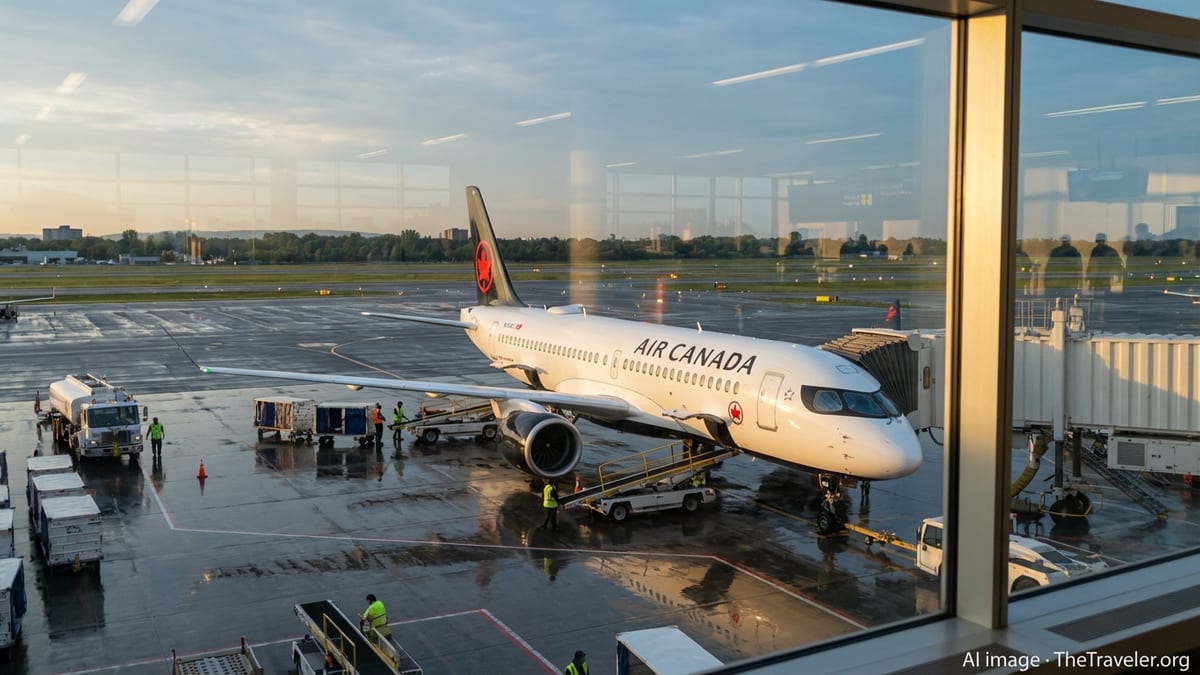
Customs pause disrupts U.S.-bound departures
Operations data and local reports indicate that a number of flights from Montreal–Trudeau International Airport to U.S. destinations were disrupted after U.S. border preclearance officers temporarily stopped processing passengers on Wednesday due to odours attributed to nearby construction materials.
The pause affected the dedicated U.S. departures zone at Montreal–Trudeau, where travellers normally clear American customs and immigration before boarding their flights. With processing halted, several departures were cancelled outright while others were significantly delayed as airlines assessed whether aircraft could operate without access to the preclearance facility.
Social media posts and traveller accounts described lines forming in the transborder concourse and last‑minute gate changes as airport staff redirected passengers and airlines rebooked those who could not depart as scheduled. The disruption appeared to be concentrated on flights departing in the middle of the day, when odours in the work area were reported to be strongest.
Airport operations outside the U.S. preclearance section continued, and flights to domestic and overseas destinations were largely unaffected, apart from some knock‑on effects as aircraft and crews were repositioned.
Gradual resumption of screening and flight operations
By late afternoon, publicly available information from the airport and airlines showed that U.S. Customs and Border Protection personnel had begun to resume processing, allowing transborder flights to restart on a rolling basis. Some carriers reinstated services that had been placed on hold, while others substituted aircraft or combined departures to move stranded passengers.
Advisories from the airport operator urged travellers bound for the United States to verify their flight status before leaving for Montreal–Trudeau and to allow extra time at the terminal in case of residual congestion. Check‑in counters and customer service desks remained busy as rebookings continued into the evening.
While the backlog began to ease once customs processing restarted, the day’s cancellations created a ripple effect across parts of the Canada–U.S. network. Passengers making onward connections through major hubs such as New York, Chicago or Boston were among those most affected, as missed links required additional re-accommodation.
Despite the disruption, operational tracking showed that runway activity at Montreal–Trudeau remained within normal ranges, underscoring that the issue was confined primarily to the U.S. preclearance facility rather than airfield or airspace constraints.
Construction work heightens sensitivity to odours
The incident occurred during an extended period of construction at Montreal–Trudeau, where the airport authority is carrying out a multi‑year modernization program that includes upgrades to departure areas and passenger processing zones. Publicly available project descriptions highlight that work is underway in several parts of the terminal, with efforts to keep operations running while improvements are completed.
Early indications suggest that odours associated with construction materials or related work in or near the preclearance area prompted concerns and led to the temporary halt in customs operations. There were no immediate reports of serious medical incidents linked to the smell, but the interruption illustrates how sensitive secure facilities are to environmental conditions that could affect staff or travellers.
Experts note that renovation projects in active terminals often require careful ventilation planning and phased work schedules to avoid fumes accumulating in enclosed spaces. In areas used by border agencies and security staff, any unexpected odour can trigger precautionary responses that place health and safety ahead of schedule reliability.
The current modernization drive at Montreal–Trudeau is intended to expand capacity and streamline passenger flows in the longer term, but the latest disruption shows the short‑term operational risks that can accompany significant construction activity in busy transport hubs.
What affected passengers can expect next
With customs operations now resuming, airlines serving the Canada–U.S. transborder market from Montreal are focusing on clearing the backlog of passengers whose trips were interrupted. Same‑day rebookings are being prioritized where seats are available, while some travellers have been shifted to services over the coming days or via alternate Canadian gateways.
Travel industry guidance consistently recommends that passengers impacted by irregular operations retain boarding passes and receipts for any additional expenses they incur, such as meals or accommodation, in case they are eligible for reimbursement under carrier policies or travel insurance. In this case, eligibility may vary depending on the airline, the length of delay and applicable regulations on both sides of the border.
Observers also point out that the disruption occurred during a traditionally busy summer period for transborder travel, adding pressure to airlines already operating tight schedules. However, the underlying cause, tied to odours in a localized work zone, is different from weather or system‑wide technical failures that can spread delays across multiple airports.
For upcoming travel, publicly available advisories suggest that passengers on U.S.-bound flights from Montreal–Trudeau should continue to arrive several hours ahead of departure, particularly while construction remains active around the terminal. Extra time can help absorb any renewed slowdowns at security or customs, even as operations return to normal.
Spotlight on U.S. preclearance in Canada
The episode has again drawn attention to the U.S. preclearance model used at Montreal–Trudeau and other large Canadian airports, where American officers conduct border inspections before travellers board flights to the United States. Once cleared, passengers arrive in U.S. airports as if on a domestic flight, which can simplify connections and reduce pressure on arrival facilities.
While the system typically enhances efficiency for both countries, the concentration of customs functions in a single secure area can also create a point of vulnerability. Any environmental, technical or staffing issue affecting that space can quickly translate into cancellations or delays for a wide swath of U.S.-bound services.
Industry analysts note that disruptions of this sort remain relatively rare, given the volume of daily transborder flights handled through preclearance in Montreal and across Canada. Nonetheless, the construction‑related odour incident adds to a series of recent challenges for airports managing renovation projects, complex security requirements and sustained travel demand at the same time.
For now, operational updates indicate that the episode at Montreal–Trudeau is winding down, with U.S.‑bound departures largely back on schedule. Travellers and aviation planners alike will be watching closely to see whether additional mitigation steps are introduced in the preclearance zone as construction continues in the months ahead.