


More news on this day
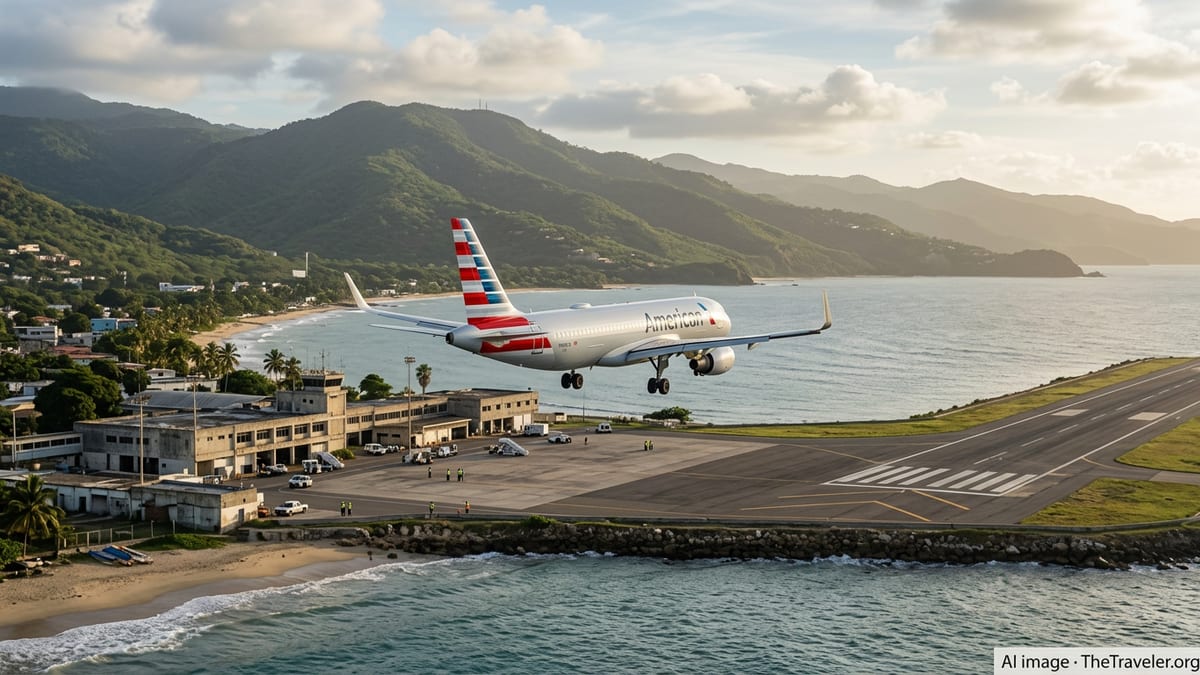
Direct commercial flights between the United States and Venezuela are returning for the first time since 2019, as American Airlines and other carriers restore a critical air bridge to Caracas and signal an early recovery phase for the country’s long-isolated travel market.
Get the latest news straight to your inbox!
From Flight Suspension to Reopened Skies
Commercial air links between the United States and Venezuela were effectively frozen in May 2019, when a U.S. government order suspended all direct passenger and cargo flights over security and stability concerns. For years, travelers relied on complex routings through Panama, the Dominican Republic, Mexico, or other hubs, adding cost and hours to journeys that once took only a few hours nonstop.
That landscape began to shift in 2026. In mid April, the U.S. Department of Transportation rescinded the 2019 suspension order, clearing the way for U.S. and Venezuelan carriers to apply for and resume direct services between the two countries once airport security assessments and operational requirements were in place.
Within weeks, U.S. airlines moved to reenter the Venezuelan market. Industry reports indicate that American Airlines became the first major U.S. carrier to receive approvals for scheduled nonstop service, positioning Miami as the primary gateway for the restoration of direct travel to Caracas.
The regulatory reversal did not eliminate underlying political and economic uncertainties, but it did mark a decisive policy shift. Publicly available information suggests that Washington now views tightly managed air connectivity as compatible with its broader strategy toward the Venezuelan government and economy.
American Airlines Reopens the Miami–Caracas Corridor
American Airlines has emerged as the flagship carrier of the renewed U.S.–Venezuela connection. According to the airline’s published schedules and news releases, the company launched daily nonstop flights between Miami International Airport and Caracas’ Simón Bolívar International Airport in late April 2026, using regional jets operated by its Envoy Air affiliate.
CBS Miami and other outlets reported that the inaugural departure from Miami to Caracas on April 30 was the first commercial nonstop flight between the countries in seven years, highlighting the route’s symbolic weight for the large Venezuelan community in South Florida. Aviation data and the airline’s booking tools now show Miami–Caracas offered as a regular route within American’s Latin American network.
The restored service effectively reestablishes Miami as the main U.S. gateway for Venezuela, a role it held prior to 2019. Tourism observers note that the corridor is especially important for visiting friends and relatives traffic, business travelers tied to the energy sector, and passengers connecting onward through American’s extensive U.S. and international network.
American Airlines’ move has also set a benchmark for other carriers considering returns to the country. Industry analysis points out that the Miami–Caracas route’s performance in the coming months will be closely watched as a barometer of demand and operational reliability in a still fragile environment.
United’s Houston–Caracas Link Extends the Recovery
The recovery in Venezuela’s international connectivity is not limited to South Florida. United Airlines has announced the restoration of nonstop daily service between Houston’s George Bush Intercontinental Airport and Caracas, with flights scheduled to begin in August 2026. According to a statement published through Houston Airports, the route will reconnect one of the United States’ busiest energy and Latin American hubs directly with the Venezuelan capital.
Before the 2019 suspension, Houston was a strategic market for travel related to the oil and gas industry, given the city’s role as a global energy center and Venezuela’s status as a major crude producer. The return of nonstop Houston–Caracas flights is expected by aviation analysts to serve both corporate travelers and Venezuelan nationals living across Texas and the U.S. Gulf Coast.
United’s reentry also signals a gradual normalization of route planning toward Venezuela among U.S. carriers. While overall capacity remains well below pre-2019 levels, published schedules from Houston and Miami suggest that airlines see enough demand and regulatory stability to justify deploying limited aircraft and crew resources back into the market.
Airport authorities in Houston and Miami frame the Venezuela routes as part of broader post pandemic growth strategies in the Americas, emphasizing diversification of destinations and the rebuilding of previously suspended international links.
Regional Airlines and Partnerships Fill Out the Map
Alongside the renewed presence of U.S. majors, regional and Venezuelan airlines are helping to stitch Venezuela back into the wider Americas network. Venezuelan carrier Laser Airlines, for example, has promoted nonstop flights between Caracas and Miami in partnership with U.S. operator Global X, with services advertised to begin in early May 2026. Local coverage describes the collaboration as part of a phased reopening of air connectivity between the two countries.
Laser has experience navigating shifting regulatory conditions. After U.S. authorities halted direct flights in 2019, the airline restructured its operations around hubs in the Dominican Republic and other Caribbean points, offering one stop connections to Miami through alliance partners. The new Miami–Caracas operation brings the carrier back into the nonstop segment, now within a more flexible regulatory framework.
Elsewhere in the region, Panamanian carrier Copa Airlines has been rebuilding its own Venezuela network from its Panama City hub, gradually restoring services to Caracas and Maracaibo as restrictions eased. Corporate filings show that the airline resumed flights to Venezuela in stages, illustrating how non U.S. airlines have often been the first movers in reengaging with the market.
Together, these regional links create redundancy and choice for travelers. Should demand fluctuate on U.S. operated routes or regulatory circumstances shift again, alternative itineraries via Panama, the Dominican Republic, or Mexico are likely to remain important parts of Venezuela’s connectivity picture.
Implications for Travelers, Tourism, and Risk
The return of direct flights is already reshaping travel patterns between Venezuela and the United States. For Venezuelan diaspora communities, the ability to fly nonstop from Miami or Houston to Caracas shortens trip times, reduces reliance on transit visas, and can lower overall travel costs. Published reporting from major U.S. outlets indicates strong demand on early flights, with many seats occupied by passengers visiting family for the first time in years.
For tourism and business, improved access is a prerequisite for any sustained recovery. Industry observers note that easier air links can support modest rebounds in inbound tourism to Venezuela’s coastal destinations and national parks, as well as limited growth in business travel tied to energy, logistics, and humanitarian operations. However, most travel advisories issued by foreign governments still flag persistent security, infrastructure, and political risks.
Travel specialists recommend that visitors monitor the latest guidance from their home governments and review airline policies on schedule changes before booking. Given the country’s recent history, analysts caution that route launches may be followed by adjustments in frequency or temporary suspensions if demand, security conditions, or regulatory rules change.
Even with those caveats, the resumption of key U.S.–Caracas corridors marks a notable turning point. After years of near isolation, Venezuela is moving into a new phase in which international air travel is once again possible, if still complex. For airlines, airports, and travelers, the coming months will test whether the early momentum can translate into a stable, long term recovery of the country’s aviation and tourism sectors.
Federal Register notice rescinding the 2019 U.S. flight suspension
American Airlines announcement on Venezuela service
Houston Airports coverage of United’s Houston–Caracas route
Laser Airlines and Global X Miami–Caracas partnership report