


More news on this day
The launch of a regular China–Europe Arctic container service linking Ningbo–Zhoushan in eastern China with the Port of Felixstowe in the United Kingdom is repositioning the Suffolk gateway at the heart of a strategic new maritime corridor between Asia and Europe.
Get the latest news straight to your inbox!
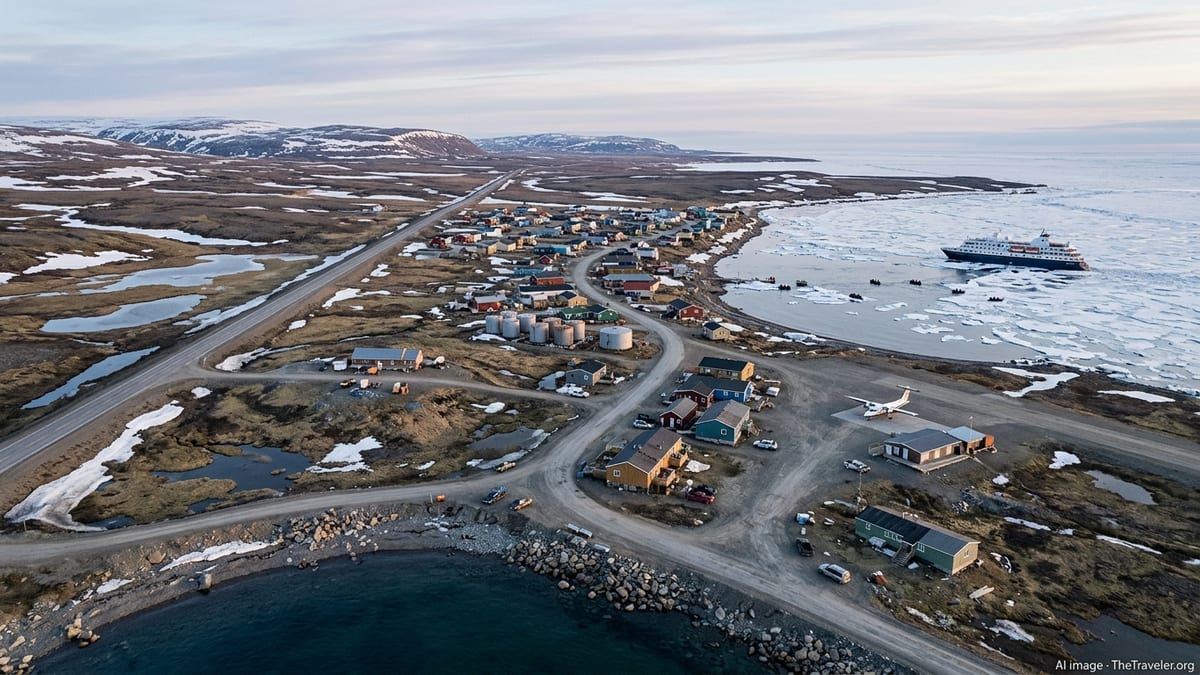
A Faster Arctic Corridor Between China and Europe
The opening of what Chinese operators describe as a China–Europe Arctic express route marks a significant shift in global shipping patterns, with Felixstowe designated as the principal UK landfall. Publicly available information on recent sailings indicates that container vessels have completed the journey from China to Felixstowe via Russia’s Northern Sea Route in around 18 to 20 days, compared with 35 to 45 days on traditional routes through the Suez Canal.
The Arctic link builds on earlier test voyages, including the Istanbul Bridge, a 4,890 TEU container ship that sailed from Ningbo–Zhoushan to Felixstowe via the Arctic in 2025. Shipping market reports describe that voyage as a proof of concept for a seasonal express service between China and northern Europe, demonstrating that the shorter high‑latitude path can be commercially viable for certain cargoes and time windows.
Analysts note that the Northern Sea Route reduces the sailing distance between East Asia and northern Europe by several thousand nautical miles. Shorter voyages can translate into lower fuel consumption and reduced transit risk at traditional chokepoints such as the Suez Canal, although these benefits are partially offset by higher ice‑class requirements, icebreaker support and operational constraints in polar waters.
Industry briefings suggest that Chinese carriers view the Arctic corridor as a complementary option rather than an outright replacement for established Asia–Europe services. The route is currently limited by seasonal ice conditions and regulatory frameworks along the Russian Arctic coast, but it offers a premium product for shippers seeking faster door‑to‑door times between Chinese manufacturing hubs and key consumer markets in the UK and continental Europe.
Felixstowe’s Strategic Position in Northern Europe Trade
Felixstowe is already recognised as the UK’s largest container port and a leading gateway for Asia–Europe trade, handling a substantial share of the country’s deep‑sea container volumes. Historical data on the port’s development show that an early move into containerisation in the late 1960s helped secure its position as a primary hub for long‑haul shipping into the British market.
With the emergence of the Arctic route, Felixstowe’s role as a northern European node is gaining additional prominence. Logistics industry commentary highlights the port as a key entry point for cargo destined for the UK heartland, Benelux, Germany, northern France and Scandinavia, supported by extensive feeder and intermodal connections. The new Arctic service effectively slots into this existing network, offering shippers a faster maritime leg that can then feed into established inland distribution channels.
Recent market reports on routing decisions between China and Europe describe Felixstowe among a small group of northern range ports, alongside Rotterdam, Antwerp‑Bruges and Hamburg, that can serve as primary gateways for time‑sensitive or high‑value freight. By anchoring the Arctic express at Felixstowe, Chinese operators gain access to an integrated logistics ecosystem that includes rail corridors into the English Midlands and beyond, as well as road links via the A14 and A12.
Observers also point to Felixstowe’s experience handling large Asia–Europe services via the Suez and Cape of Good Hope routes as an operational advantage. Schedules from major container lines show the port embedded in multiple Far East–Europe loops, indicating that terminal capacity, berthing windows and hinterland connectivity are already calibrated to long‑haul trade flows, which could support the integration of new Arctic arrivals.
Commercial Gains and Operational Challenges
Proponents of the China–Europe Arctic corridor emphasise the commercial benefits of reduced transit times. Shipping and logistics analyses suggest that cutting a voyage from around 40 days to around 20 days can significantly improve cash‑flow cycles for exporters and importers, lower inventory holding costs and provide more agile response times to shifting demand in European retail and manufacturing sectors.
Shorter voyages can also lessen exposure to schedule disruptions linked to congestion or security issues at traditional bottlenecks. Commentaries on recent re‑routing of Asia–Europe services via the Cape of Good Hope, following instability in other regions, underline the value of having alternative pathways. In this context, the Arctic route offers carriers an additional strategic option, particularly in peak seasons or during periods of elevated risk elsewhere.
However, the new corridor is not without constraints. Maritime safety and insurance assessments stress that Arctic navigation requires specialised planning, including ice‑class tonnage, icebreaker escorts where necessary and close coordination with Russian authorities managing the Northern Sea Route. Seasonal variability in sea ice, rapidly changing weather and limited search‑and‑rescue infrastructure add complexity and cost.
Environmental and regulatory considerations present further challenges. Climate research and policy discussions on Arctic shipping highlight concerns over black carbon emissions, potential spills in fragile ecosystems and the impact of increased traffic on Indigenous communities and wildlife. These factors may shape future operating windows, technical standards and potential surcharges, influencing how widely the China–Europe Arctic route is adopted beyond its current express positioning.
New Opportunities for UK Logistics and Regional Economies
The decision to make Felixstowe the primary UK terminus for the Arctic express service is expected to create ripple effects across the country’s logistics sector. Freight market commentary suggests that faster maritime transit from China could support just‑in‑time supply chains for sectors such as electronics, fashion, automotive components and e‑commerce fulfilment, with inland distribution hubs able to receive goods several weeks earlier than via conventional routings.
Increased volumes handled through Felixstowe have implications for regional employment and infrastructure investment in Suffolk and neighbouring counties. Port‑related activities already support thousands of jobs in terminal operations, haulage, warehousing and value‑added logistics services. An additional high‑profile route could underpin further private investment in storage capacity, customs brokerage, freight forwarding and technology platforms that optimise multimodal flows from quay to final destination.
The Arctic connection also reinforces the UK’s positioning in wider Eurasian trade strategies. Alongside established rail links between Europe and China and transshipment options via other northern European ports, a direct Arctic maritime express into Felixstowe broadens the portfolio of routes available to British and international shippers. This diversification aligns with efforts by many companies to spread risk across multiple corridors rather than relying on a single primary route.
As more sailings are scheduled and performance data accumulates over coming seasons, industry observers will be watching how uptake evolves, how often the service can operate reliably each year and whether additional Arctic‑linked loops to other UK or European ports emerge. For now, the focus on Felixstowe underscores the port’s role at the front line of a new chapter in Asia–Europe maritime connectivity.