


More news on this day
Travel demand through the Gulf’s biggest hubs is colliding with a new wave of official travel advisories, as the United Arab Emirates and Qatar remain under heightened warnings tied to regional conflict risks and periodic flight disruption across Middle East airspace.
Get the latest news straight to your inbox!
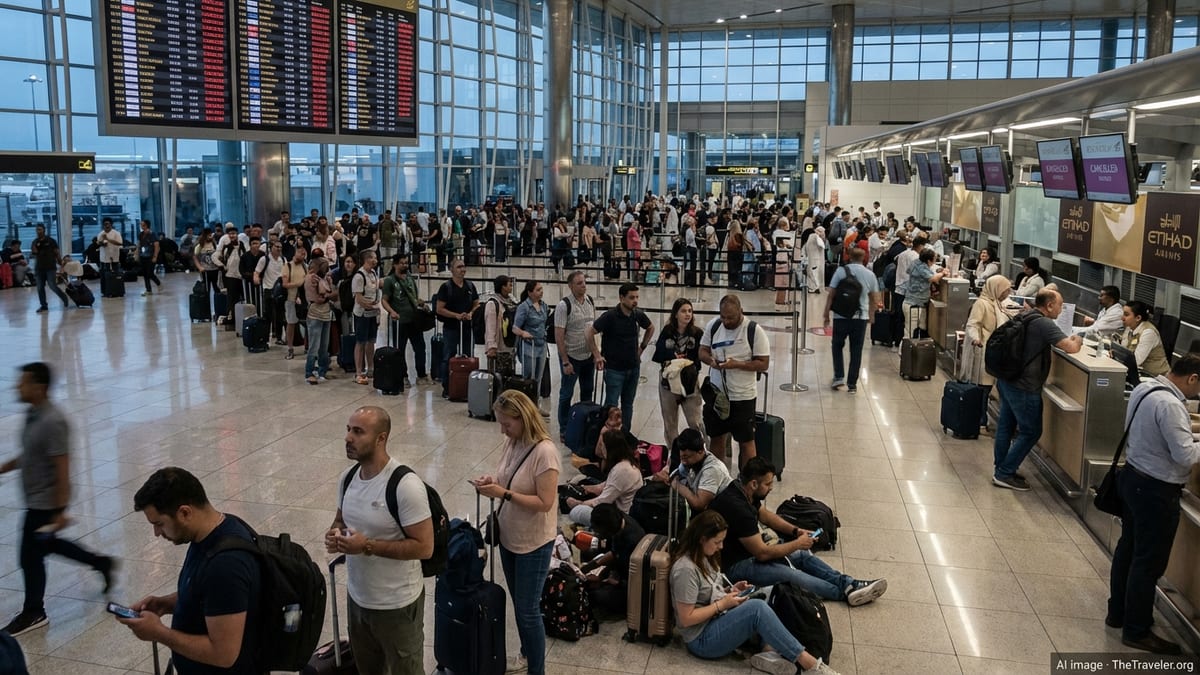
What the latest advisories say for Dubai, Abu Dhabi, and Doha
Publicly available U.S. travel guidance currently rates both the United Arab Emirates and Qatar at Level 3, urging travelers to reconsider travel due to terrorism and armed conflict risks, with specific references to the continuing threat of drone and missile attacks and the potential for significant disruptions to commercial flights following hostilities that began on February 28, 2026.
UK travel guidance for both destinations also highlights regional tensions and the possibility of sudden escalation. The UK’s updates point to strikes and retaliatory attacks reported since July 8, 2026 in locations across the region, warning that travelers should be prepared for flight cancellations, periodic airspace closures, and broader travel disruption.
Other national travel advisories echo that volatility. Canada’s travel guidance indicates non-essential travel should be avoided for Qatar due to the volatile regional security situation, while Australia’s advisories for both Qatar and the UAE advise reconsidering the need to travel overall, with repeated emphasis that airspace can open or close at short notice and that travelers should be prepared to follow local warning systems.
Aviation risk notices add complexity for transiting passengers
Beyond country-level travel advisories, aviation safety notices are playing a growing role in how airlines route flights to and from Gulf hubs. The U.S. Federal Aviation Administration maintains a public page for prohibitions, restrictions, and notices, including region-specific advisories for overwater airspace in and around the Persian Gulf and Gulf of Oman, and additional special notices covering broader Middle East airspace considerations.
European aviation risk guidance has also highlighted elevated risks to civil flights at all altitudes over affected waters in the region, with recommendations focused on limiting exposure over certain overwater areas except for arrivals and departures, and on maintaining up-to-date risk assessments and contingency planning for operations through the affected flight information regions.
For travelers, these notices can translate into longer routings, schedule padding, last-minute retimes, and irregular operations that ripple through connections. Even when airports are operating normally on the ground, airspace constraints and rerouting requirements can reduce capacity and raise the odds of missed connections when itineraries depend on tight transfer windows.
How airports and airlines are responding to disruption risk
Dubai’s airport operator has described 2026 as a period shaped by constrained airspace capacity and adjusted schedules across a critical corridor, while noting that UAE airspace capacity later returned and that operations could be scaled up in line with available regional routing. The operator’s public reporting also linked passenger volumes in early 2026 to the impact of airspace disruptions that intensified through March.
In Qatar, the national news agency has published coverage describing how Qatar Airways handled disruption during a period of total regional airspace closure earlier in 2026, including the scale of stranded passengers in Doha and at outstations during that episode. While that snapshot reflects a specific event window, it underscores how rapidly normal operations can be interrupted when airspace access changes.
Airlines are continuing to publish rolling operational updates and traveler guidance. Emirates has urged customers to check flight status and monitor notifications for delays, changes, or cancellations before heading to the airport, while Qatar Airways has posted travel alert information that includes rebooking flexibility terms tied to specific travel windows. These airline pages can change frequently, so travelers should recheck them close to departure rather than relying on screenshots or older notifications.
What travelers should do now if they have trips booked
For trips involving Dubai, Abu Dhabi, or Doha, the immediate practical step is to treat the itinerary as potentially dynamic. That means confirming flight status on the operating carrier’s site on the day before travel and again on the day of travel, and allowing extra time for transfers, especially when the itinerary relies on a single hub connection through the Gulf.
Travelers with connecting itineraries should also re-evaluate connection buffers. When airspace is constrained, arrival banks can bunch up, gates can change late, and minimum connection times can become harder to meet even if the first flight is only slightly delayed. Choosing a longer connection in Dubai or Doha can reduce the risk of being stranded if downstream flights are retimed or consolidated.
Finally, insurance and documentation deserve renewed attention. Many government advisories emphasize that conflict-related disruption can affect consular support, travel logistics, and insurance coverage. Before departure, travelers should read policy exclusions for war and armed conflict, confirm whether trip interruption coverage applies to route changes and cancellations, and keep copies of key documents accessible offline in case network access becomes unreliable during irregular operations.