


More news on this day
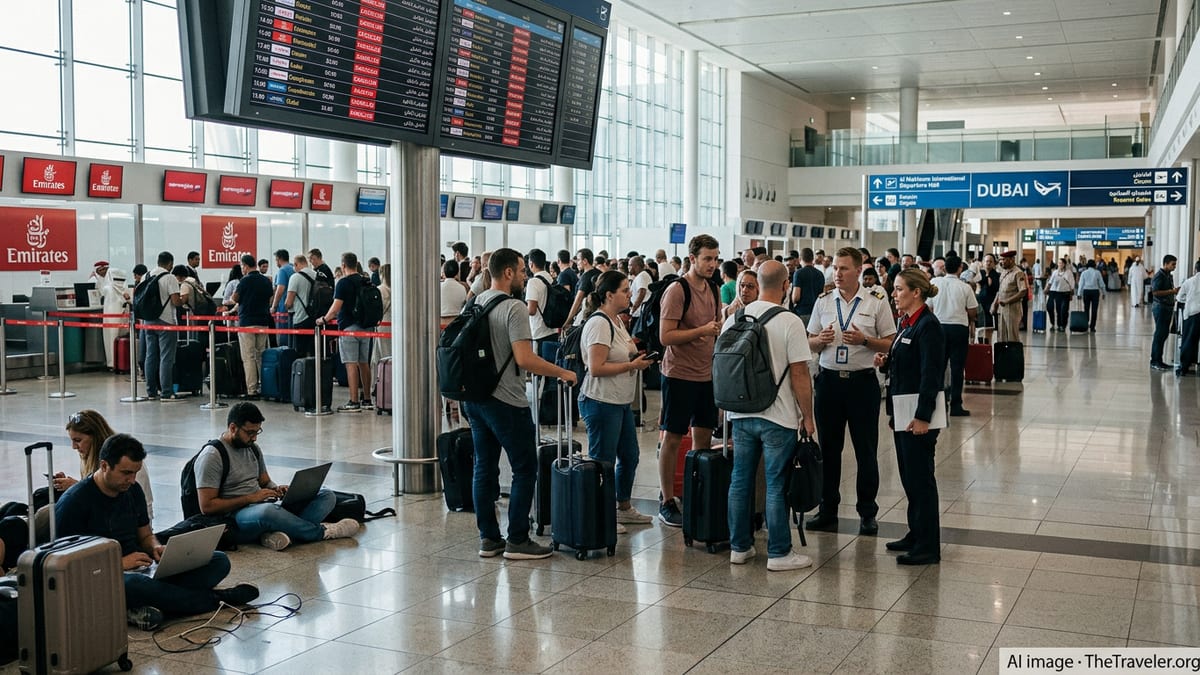
Major airports across the Gulf region logged 1,585 flight delays and 40 cancellations tied to a single spike in disruption in mid-September 2026, a reminder of how quickly congestion, operational constraints, and knock-on effects can spread through the world’s busiest connecting corridors.
Get the latest news straight to your inbox!
What the September 2026 disruption snapshot shows
Published coverage tracking Gulf hub performance pointed to September 19, 2026 as a particularly disruptive day, with delay totals far outnumbering cancellations across multiple airports. The imbalance matters for travelers because it often signals congestion, flow management, and late inbound aircraft rather than mass schedule reductions, meaning many flights still operate but with extended waiting times and missed connections.
Publicly available flight-status tools maintained by airports and airlines typically show disruption in real time, but they do not always preserve an easily searchable historical log for past days. That makes third-party summaries and reporting snapshots more common for reconstructing what happened after the fact, especially when the impact spans several countries and carriers.
Even when cancellations remain limited, a day dominated by delays can still affect far more passengers than a smaller number of outright cancellations. A single delayed long-haul arrival into a hub can ripple into multiple departures when the same aircraft continues onward, crews time out, or ground slots tighten during peak banks of connecting flights.
Why Gulf hubs amplify disruption beyond the region
The Gulf’s biggest airports function as global transfer points linking Asia, Europe, Africa, and North America. When disruption builds at hubs such as Dubai and Doha, connecting itineraries can unravel quickly: short connection windows become unworkable, baggage misconnect rates rise, and rebooking options narrow as later flights fill.
Published reporting has also highlighted how disruptions in the Gulf can appear far from the region, including at major downstream airports that receive large volumes of connecting traffic. The practical effect for travelers is that a delay originating in the Gulf can later show up as missed connections or late arrivals in cities that never experienced the original constraint.
Operational pressures can vary by airport and day, but recurrent themes in 2026 coverage include airspace and routing constraints, heavy peak-hour scheduling, and the difficulty of recovering quickly when multiple long-haul rotations are running behind at the same time.
Operational factors cited in 2026 coverage: airspace, peak-hour constraints, and works
Some disruptions in 2026 have been linked in published coverage to wider regional instability and airspace restrictions, which can force longer routings, compress arrival “banks,” or cause diversions that displace aircraft and crews. These scenarios tend to produce delay-heavy days because airlines attempt to operate most of the schedule while navigating constraints that reduce throughput.
Infrastructure and airside works can also contribute, particularly when combined with peak-hour demand. Qatar’s aeronautical information publications in 2026 included notices about traffic delays during peak hours at Hamad International Airport and warnings related to construction activity affecting operations in the Doha area, illustrating how routine operational notices can intersect with high demand.
Heat and seasonal weather patterns across the region can further strain schedules during the warm season by affecting aircraft performance and ground operations, adding to the risk that tightly timed rotations slip behind and remain behind for the rest of the day.
What passengers can do during a delay-heavy day
For same-day travel, the most actionable step is to verify flight status using official airport and airline tools before leaving for the terminal, then continue monitoring after check-in as gate times can change multiple times during recovery operations. Travelers with tight connections may benefit from proactively exploring earlier flights or longer connection buffers when rebooking options are available.
During long waits, documentation is practical. Keeping screenshots or written records of scheduled versus actual departure and arrival times, along with receipts for necessary expenses, can be useful later if the itinerary qualifies for care, reimbursement, or compensation under applicable rules or carrier policies.
Travelers should also treat “delay” and “cancellation” the same from a planning perspective once the delay becomes severe: missed hotel check-in windows, onward rail legs, and car rentals often need adjustment even if the flight ultimately operates.
Passenger-rights landscape: Saudi rules, Dubai’s directive, and cross-border itineraries
Passenger protections vary across the Gulf and depend on where the disruption occurs, the operating carrier, and the legal regime tied to the ticket. In Saudi Arabia, the General Authority of Civil Aviation (GACA) publishes Passenger Rights Protection Regulations that set out care obligations and compensation frameworks in defined circumstances, and public guidance for major airports describes steps for escalating complaints if an airline response is not provided within a specified timeframe.
In Dubai, publicly available information shows the Dubai Civil Aviation Authority introduced an Aviation Consumer Welfare Directive in 2026, aimed at formalizing expectations around passenger welfare and complaint handling. Separately, Dubai Airports’ published “conditions of use” materials describe minimum assistance expectations during disruption and notification timelines airlines are expected to follow when they cancel flights.
Many Gulf itineraries are cross-border and can trigger additional rules. For example, travelers whose journeys involve the European Union may fall under EU passenger-rights regulations for eligible segments, and airline notices often summarize how those rules apply to long delays and cancellations. In practice, the same disrupted trip can involve overlapping regimes, making it important to identify which segment was delayed, where it departed, and which carrier marketed and operated each leg.