


More news on this day
UAE airlines are reporting a new wave of delays and cancellations after a major volcanic eruption in Indonesia sent ash across busy flight corridors, disrupting operations at Jakarta and several other airports and forcing schedule changes on routes linking the Gulf with Southeast Asia.
Get the latest news straight to your inbox!
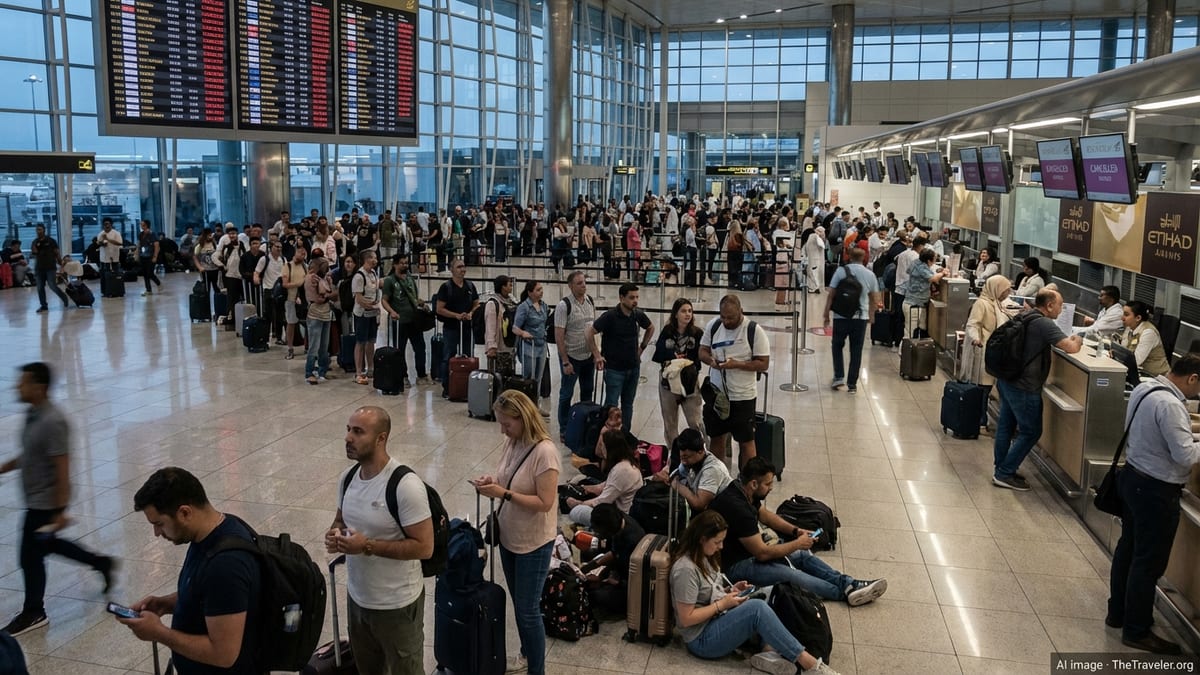
UAE carriers adjust schedules amid Indonesia disruption
Publicly available flight and travel updates show that Emirates, Etihad Airways, flydubai and Air Arabia have all adjusted services in recent days as regional security concerns and Indonesia’s airspace issues combine to unsettle September travel plans. Coverage in UAE-based outlets indicates that the four carriers have been managing rolling delays and selected cancellations since the start of the month, particularly on routes touching Kuwait, Bahrain and parts of the wider Middle East, as advisories on Gulf airspace prompt schedule reviews.
More recently, disruption linked directly to Indonesia has begun to filter into Gulf operations. Reports from regional aviation news sources describe schedule changes on links between the UAE and Jakarta after volcanic ash from Indonesia’s Anak Krakatau prompted the suspension of flights at Soekarno-Hatta International Airport, the country’s main gateway. With Jakarta acting as a key Southeast Asian hub, interruptions there are creating knock-on effects for aircraft and crew rotations that include services to Dubai and Abu Dhabi.
According to UAE travel coverage, Emirates has adjusted at least one Dubai–Jakarta rotation, while Etihad is operating Abu Dhabi–Jakarta services with delays as airlines navigate changing airport opening windows and air traffic restrictions. Low cost and regional players such as flydubai and Air Arabia are also monitoring the situation, with airline advisories urging passengers to check flight status before leaving for the airport and to ensure contact details are up to date for schedule-change notifications.
Emirates’ own travel-updates page, updated on September 6, encourages customers across its network to review live status on the carrier’s website or app and to watch for operational messages before heading to the airport. The guidance stresses that flight times remain subject to change at short notice while operational teams respond to external constraints ranging from airspace advisories to overseas airport closures.
Jakarta and multiple Indonesian airports closed by ash
Indonesia is at the center of the latest wave of flight disruption after renewed activity at the Anak Krakatau volcano in the Sunda Strait. National and international media report that an eruption that intensified late on Friday has thrown ash high into the atmosphere, prompting aviation authorities to suspend operations at Soekarno-Hatta International Airport and several other facilities across western Indonesia on safety grounds.
Reuters-based coverage and regional newspapers state that Jakarta’s main airport initially halted flights through Sunday morning local time, issuing rolling notices to airmen as conditions evolved. The ash cloud has affected not only the capital but a wide swath of airspace, leading to full or partial closures at as many as eight airports, including popular leisure gateways such as Bali’s I Gusti Ngurah Rai International Airport and key provincial hubs.
Figures published by The Straits Times and Indonesian media indicate that more than 2,000 flights have been canceled or significantly delayed over the past two days, with estimates ranging from about 1,500 to over 2,300 affected services depending on the cut-off time used. Passenger impact has been substantial: different reports place the number of disrupted travelers between roughly 170,000 and more than 260,000 across the affected airports.
Indonesia’s state news agency notes that the country’s aviation regulator is prioritizing flight safety and is coordinating with airport operators, air navigation providers and meteorological agencies as the situation develops. Operators have been instructed to avoid ash-contaminated airspace, and airlines are rerouting or holding flights until authorities confirm that specific corridors are safe to use.
Emirates, Etihad and regional partners feel knock-on effects
The disruption in Indonesia adds to an already complex operational backdrop for Gulf carriers. Recent reporting in UAE-based business and travel media outlines how earlier regional tensions and airspace advisories have led to altered routings and a series of delays for flights crossing parts of the Gulf, with some services between the UAE and neighboring states operating off-schedule or being consolidated.
Within this context, the sudden closure of Jakarta and other Indonesian airports has removed a critical node from many airlines’ network plans. Coverage from regional aviation news sites indicates that Emirates has canceled at least one Dubai–Jakarta flight and rerouted or delayed others as the carrier works within the reduced operating windows at Soekarno-Hatta. Etihad, for its part, is reported to have delayed both outbound and return services between Abu Dhabi and Jakarta from September 5 and 6, with extended ground times while ash conditions are assessed.
Although comprehensive tallies specific to flydubai and Air Arabia are not yet available, the two airlines serve multiple destinations across South and Southeast Asia and use regional hubs that are involved in diversions and holding patterns as Indonesian airspace shifts. Industry commentary suggests that aircraft and crew that would normally operate to or through Indonesia may instead be redeployed or left out of position, contributing to rolling delays even on routes that do not touch the country directly.
Analysts quoted in regional coverage note that the nature of volcanic ash disruptions often leads to cascading impacts over several days. Even after airports reopen, airlines must reposition aircraft, clear passenger backlogs and realign maintenance schedules, a process that can keep some flights off their usual timings until operations stabilize.
Passenger impact across the Gulf and Southeast Asia
Travelers across both the UAE and Indonesia are experiencing crowded terminals and extended waits as airports and airlines work through the disruption. Imagery and eyewitness accounts published in Indonesian and regional outlets show passengers gathered around departure boards at Jakarta’s Soekarno-Hatta Airport, where screens list numerous flights as canceled or delayed, and queues forming at airline service desks as people attempt to rebook.
Reports from Bali and several secondary Indonesian airports describe similar scenes, with stranded travelers looking for alternative routings via unaffected hubs in Southeast Asia. Some passengers bound for or originating in the Gulf are being routed through cities such as Singapore or Kuala Lumpur, subject to seat availability and the evolving pattern of ash in regional airspace.
In the UAE, localized media coverage from Dubai and Abu Dhabi notes that passengers on affected flights are receiving rebooking options and, where applicable, are being advised to consider delaying non-essential travel to Indonesia until flight schedules become clearer. With demand already high in early September, standby seats on alternative services can be limited, adding to uncertainty for those with time-sensitive onward connections.
Travel industry observers point out that while the disruption is significant, it remains concentrated on a specific geography and set of routes. Most UAE flights are operating normally, and the impact is heaviest for those whose journeys include Indonesia or who rely on tight connections via Southeast Asian hubs that are currently managing backlogs.
What travelers should watch over the coming days
Publicly available guidance from airlines and airports emphasizes the importance of checking live flight status before travel, especially for journeys involving Indonesia or nearby hubs that might be affected by rerouted traffic. Emirates, Etihad, flydubai and Air Arabia all publish real-time status tools on their websites and apps, alongside dedicated travel-updates pages that summarize operational changes.
Industry coverage suggests that travelers with itineraries over the next several days should build in additional buffer time for connections, particularly when flying between the Gulf and Southeast Asia. Volcanic ash events can evolve quickly as wind patterns shift, meaning airspace that appears clear one day can become restricted the next and vice versa.
Travel advisors quoted in regional reports recommend that passengers keep their contact details updated with airlines, enable app notifications and monitor local news from both departure and arrival points. Flexible or refundable tickets may provide additional options if conditions worsen or if ash dispersal continues to affect major airports such as Jakarta and Bali.
For now, aviation analysts expect that once ash levels decline and Indonesian authorities reopen airspace more fully, airlines will gradually restore normal timetables while operating additional services or using larger aircraft where possible to clear backlogs. Until then, UAE travelers heading to or through Indonesia are likely to face an unsettled operating environment marked by late-notice changes to schedules.
Gulf News: UAE flights status, Indonesia travel disrupted
The National: Flights delayed and cancelled at UAE airports
The Jakarta Post: Anak Krakatau eruption grounds flights