


More news on this day
Heightened tensions between the United States and Iran are again rippling through Gulf aviation, with Emirates and Etihad passengers experiencing fresh delays, cancellations and last-minute schedule changes on key routes linking the United Arab Emirates with North America and Europe.
Get the latest news straight to your inbox!
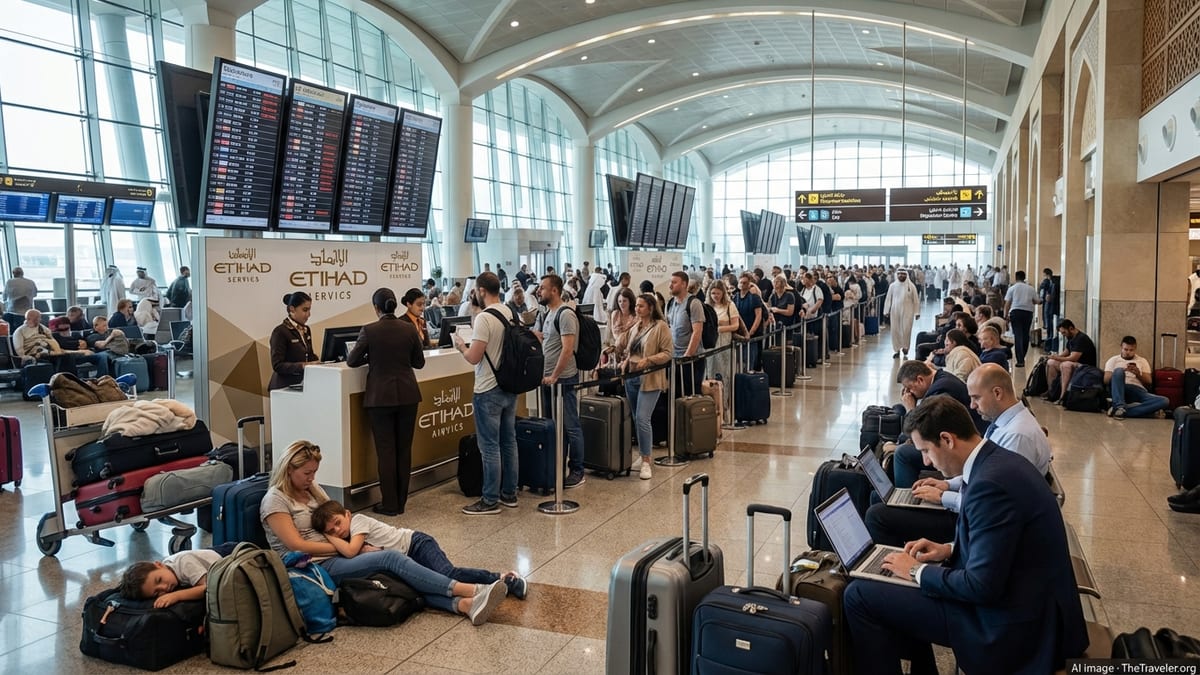
US–Iran flare-up revives pressure on Gulf air corridors
Renewed military exchanges between the US and Iran since late August have pushed regional security back to the forefront for airlines operating over and around the Strait of Hormuz. Reporting from international news agencies describes a pattern of US strikes on Iranian targets and retaliatory missile and drone launches affecting Gulf waters and nearby states, adding a layer of uncertainty for commercial traffic across one of the world’s busiest aviation chokepoints.
Specialist security briefings and situation reports indicate that the focus of recent military activity includes areas close to major air and maritime routes serving the UAE, Oman and Bahrain. Analysts tracking the conflict note that repeated incidents, rather than any single attack, are beginning to influence how airlines and insurers assess risk, compelling operators to continually reassess routings, flight times and contingency plans for diversion.
European and North American regulators have kept in place or extended conflict-zone advisories that urge carriers to avoid Iranian and parts of neighboring airspace. While these advisories are not blanket bans on flying to Gulf hubs, they have contributed to a patchwork of reroutings and service suspensions that complicate scheduling for airlines such as Emirates and Etihad, which rely heavily on long-haul connecting traffic.
Emirates adjusts schedules amid rolling delays and cancellations
Publicly available travel updates on Emirates’ website show the Dubai carrier continuing to operate its global network, but with repeated reminders that flights remain subject to change at short notice. The airline is directing passengers to check live flight-status tools and email notifications for the latest information, signalling an elevated risk of disruption as conditions shift in the Gulf region.
Regional coverage from UAE-based media on Wednesday reported delays and cancellations affecting services at Dubai International Airport, with some long-haul departures and arrivals running behind schedule. While not all disruptions are directly attributed to the US–Iran confrontation, aviation analysts quoted in local and international outlets point to the conflict as a central factor driving extended routings, busy air-traffic corridors and tighter operational margins.
On routes to the United States, publicly available guidance indicates that Emirates is asking customers departing from US gateways to arrive earlier at airports due to reinforced security screening. Combined with the possibility of longer flying times if aircraft are routed around sensitive airspace, passengers are being advised to allow extra time for connections in Dubai and to prepare for potential rebookings if schedules are further adjusted.
Etihad operations at Abu Dhabi feel knock-on effects
In Abu Dhabi, Etihad Airways is facing similar headwinds as the regional security outlook evolves. Reports from UAE news outlets on Wednesday highlighted delays and cancellations at Zayed International Airport, with Etihad among the carriers affected as air-traffic control manages shifting routings and slot constraints tied to the broader Gulf situation.
Etihad, like Emirates, operates a network that depends heavily on smooth long-haul connections between North America, Europe and Asia. Aviation commentary over the past week notes that each new round of military tension in the Gulf forces network planners to weigh safety-driven detours against fuel costs, crew-hours and aircraft availability. Even when flights continue to operate, small timetable changes can cascade into missed connections and extended layovers for passengers transiting Abu Dhabi.
Industry analysis of the first half of 2026 suggests that Gulf airlines have already absorbed months of pressure on yields and operating costs linked to the US–Iran war. With forecasts pointing to regional airlines moving from profit to loss this year, any additional wave of cancellations or prolonged delays at Abu Dhabi risks intensifying the financial squeeze just as carriers were trying to stabilise schedules after the busy summer travel period.
Regulators extend airspace warnings as global carriers pull back
Published briefings from European aviation and security consultancies this week confirm that updated conflict-zone bulletins remain in force for the Tehran flight information region and adjacent Gulf waters. The bulletins, which have been extended through the end of September, advise operators to avoid Iranian airspace and portions of the Bahrain, Kuwait, Qatar and UAE flight regions, reflecting continued concern about potential miscalculation near active military operations.
These warnings have already prompted a number of European and North American carriers to suspend flights to Dubai, Abu Dhabi and other Gulf destinations into October and beyond, according to open-source intelligence summaries. While UAE airlines continue to maintain their core schedules, the withdrawal of some foreign competitors has shifted market dynamics, with Emirates and Etihad carrying a greater share of remaining demand but also shouldering more of the operational risk in a volatile environment.
Aviation experts quoted in recent analysis argue that the fragmented pattern of advisories and suspensions complicates planning for travellers. Passengers connecting between Emirates or Etihad services and European or North American airlines may find fewer through-ticketing options or face itinerary changes if partner carriers extend their suspensions or reroute away from the region entirely.
What passengers on UAE–US routes should expect now
For travellers booked on Emirates or Etihad services between the UAE and the US in the coming days, publicly available information suggests preparing for a more fluid operating environment than usual. Airline updates emphasise that flight times and routings may change at short notice, particularly for services transiting airspace near the Strait of Hormuz or skirting conflict-advisory zones, which can add unplanned time in the air and on the ground.
Travel advisories published by UAE-based outlets recommend that passengers monitor airline apps, SMS alerts and official websites closely in the 24 hours before departure. They also suggest allowing additional buffer time for security screening and potential queues at Dubai and Abu Dhabi airports, especially for those connecting onward to North America where security protocols remain stringent.
Industry observers note that, while there is currently no broad shutdown of UAE airspace, the combination of military activity, regulatory warnings and airline-specific risk assessments has created a “new normal” of rolling adjustments. For Emirates and Etihad customers, this translates into a travel landscape where flights are still operating in substantial numbers, but where flexibility, up-to-date information and contingency planning are increasingly essential parts of any long-haul journey.
https://www.valorousgroup.co.uk/blog/daily-intelligence-briefing-1-september-2026/