


More news on this day
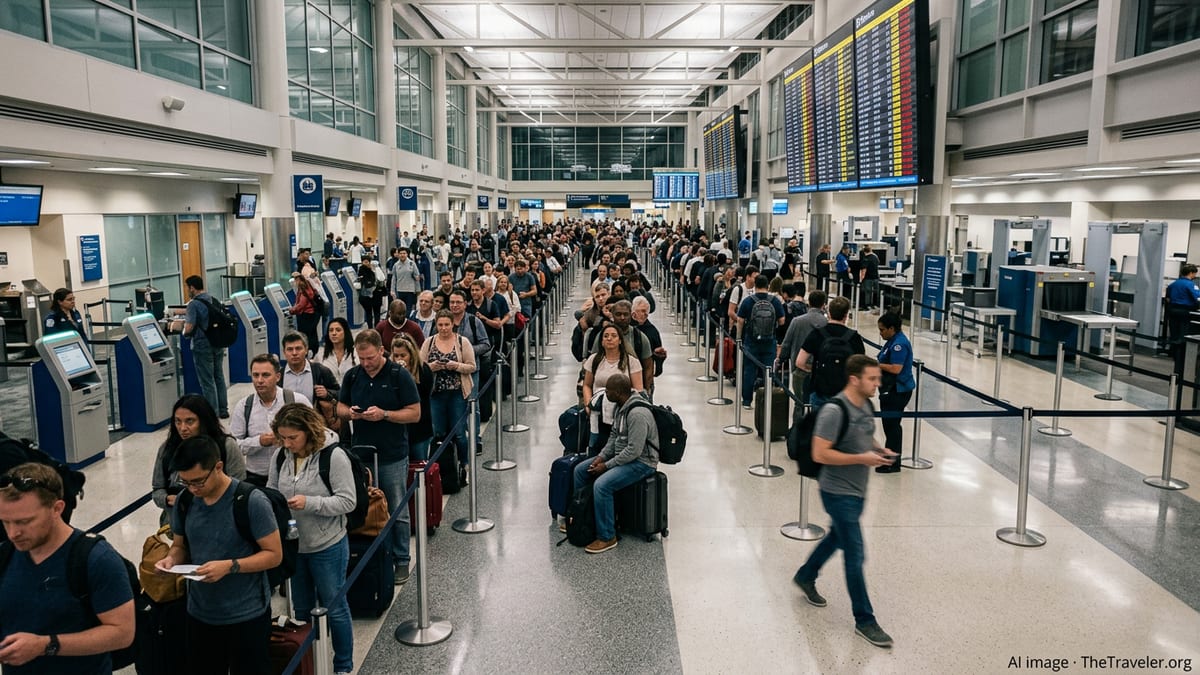
Thousands of US air travelers are facing rolling disruptions across major hubs as late-summer thunderstorms, staffing constraints and tightly packed schedules combine to delay or cancel flights and strand passengers in key connection cities.
Get the latest news straight to your inbox!
Storm Systems Trigger Chain-Reaction Delays
Recent storm systems across the Northeast and Mid-Atlantic have repeatedly slowed arrivals and departures at some of the country’s busiest airports, creating long lines and unexpected overnight stays for passengers. Reports indicate that thunderstorms sweeping over the New York City region in late August led to hundreds of delays and cancellations at LaGuardia, John F. Kennedy and Newark, with schedules still recovering as further waves of weather moved through the corridor.
Coverage of the August 27 and 28 disruptions describes aircraft holding on the ground and in the air as air traffic managers reduced arrival rates into constrained airports, forcing airlines to push back departure times or cancel flights outright. As those aircraft and crews fell out of position, downline routes across the country began to feel the impact, even at airports where the weather itself was relatively benign.
According to aviation tracking snapshots cited in public reports, delay counts reached into the thousands on several peak days, with cancellations in the low hundreds. Thunderstorms are a familiar summer hazard, but the timing and placement of recent systems over dense airspace have amplified the effect, particularly when storms form repeatedly over the same set of hubs.
In one widely covered episode, storms combined with equipment outages and air-traffic-controller absenteeism to trigger ground stops at multiple major airports in early August. Publicly available summaries indicate that the Federal Aviation Administration relied on a mix of ground stops and ground delay programs at a dozen large airports over a two-day span, illustrating how a localized weather threat can quickly become a multi-hub event when layered onto an already busy network.
Major Hubs Struggle With Volume and Capacity Limits
While storms have served as a visible trigger for many recent disruptions, underlying capacity pressures at major hubs are making recovery slower and more fragile. Chicago O’Hare, the country’s busiest airport by flight volume, has emerged as a particular pressure point. A Department of Transportation notice for the Summer 2026 season concludes that scheduled operations at O’Hare would exceed the airport’s capacity without additional limits, and notes that disruptions at the hub regularly ripple outward to other airports.
The same notice explains that when demand overshoots what O’Hare’s runways and airspace can handle, traffic managers must resort to tools such as ground delay programs. These measures meter departures into the hub, protecting safety and reducing gridlock, but they also extend the duration of disruption for passengers connecting through Chicago and for flights elsewhere that rely on aircraft cycling through the hub.
Other large hubs, including Dallas Fort Worth, Atlanta and Boston, have experienced their own spikes in delays and cancellations as storms intersect with high summer schedules and tight staffing. Industry data cited in recent coverage suggests that more flights are being packed into peak periods at some hubs compared with last year, leaving less margin for recovery when a bank of departures is interrupted.
Public FAA air traffic updates point to a steady cadence of delay programs and flow restrictions through August, affecting both coastal and inland hubs. Each individual advisory may cover a limited number of hours, but taken together they show an air transport system operating close to its limits during the busiest travel weeks of the year.
Passengers Face Missed Connections and Long Airport Stays
For travelers, the operational strain manifests most clearly in missed connections, long hours in terminal queues and nights spent in concourses or nearby hotels. When a hub such as Atlanta or New York is hit by repeated waves of storms, aircraft that were supposed to carry onward connections may never reach their gates, leaving customers to jockey for remaining seats on later flights.
Coverage from several recent disruptions describes passengers sleeping on terminal floors, standing in dense customer-service lines and waiting out multi-hour tarmac delays as weather or lightning kept ground crews from safely servicing aircraft. In some cases, travelers who reached a hub late in the evening found that onward flights had already departed or been canceled, with limited rebooking options until the next day.
Because airline networks are highly interconnected, a missed crew connection at a hub can strand an aircraft and its next wave of passengers somewhere else in the system. Analyses of past meltdowns, including technology-related disruptions in 2024, highlight how quickly this dynamic can escalate: once crews time out or end up in the wrong city overnight, the following day’s schedule often begins with widespread gaps that take several days to close.
Passenger-rights resources frequently referenced in current coverage note that travelers are generally entitled to refunds when a flight is canceled and the traveler chooses not to fly. However, compensation practices for delays and duty-of-care measures such as meal or hotel vouchers vary by airline and by cause of disruption, leaving many passengers uncertain about what they can claim after a chaotic connection day.
Airlines and Regulators Emphasize Mitigation, Not Elimination
Recent policy steps make clear that regulators and airlines are focused on mitigating, rather than eliminating, the risk of major disruptions at key hubs. The Department of Transportation and the FAA have moved to keep temporary scheduling limits in place at some capacity-constrained airports into the Summer 2026 season, citing ongoing staffing challenges and the need to preserve operational stability.
Publicly available rulemaking documents and notices emphasize that stable operations at large hubs are crucial for the safety and efficiency of the broader network. When those hubs become overscheduled or experience cascading delays, the resulting traffic-management actions can affect airports far beyond the immediate region, as crews and aircraft are held out of position.
Airlines, for their part, are adjusting schedules, refining crew planning and promoting mobile tools that allow customers to rebook themselves more quickly when things go wrong. Published guidance from travel advocacy groups notes that many carriers now offer same-day change options and in-app alternatives when a connection is likely to misconnect, although actual seat availability can be limited during large-scale disruptions.
Despite these efforts, analysts cited in recent travel-industry coverage stress that peak-season strain will continue as long as demand remains high, staffing pipelines remain tight and severe-weather patterns intersect with busy hub banks. They characterize the current environment as one where isolated bad days are likely to recur, particularly in late summer, even as overall performance shows gradual improvement compared with the most turbulent years earlier in the decade.
What Stranded Travelers Can Do Right Now
With delays and cancellations continuing to affect major hubs, passenger-rights organizations and travel experts are circulating updated advice aimed at helping travelers navigate the disruptions. Their publicly available guidance encourages passengers to monitor flight status in real time, ideally through airline apps, and to pay close attention to FAA delay maps and advisories before leaving for the airport.
Several analyses of the recent disruptions recommend building extra time into itineraries that require a connection through a weather-prone hub, particularly in late afternoon and evening hours when thunderstorms are most common. For critical trips, booking the first flight of the day or opting for a nonstop, even at a higher fare, is often described as a valuable form of disruption insurance.
Carry-on-only travel is also widely highlighted as a way to reduce risk. Without checked bags, stranded passengers can move more quickly to accept alternative routings, race to gates for earlier standby seats or even switch airports within a metropolitan area when rebooking options open up.
Finally, consumer advocates advise travelers to document their expenses and save records of delays and cancellations in case they are eligible for refunds or compensation under airline policies. While the immediate focus for many stranded passengers is simply finding a way home, the current wave of disruptions has renewed interest in clearer, more consistent rules governing how carriers respond when hub operations seize up.
Department of Transportation / FAA O’Hare scheduling notice