


More news on this day
Travellers flying out of the UAE on 21 July 2026 are being urged to check their flight status before leaving for the airport, as a mix of regional security concerns, capacity controls and airline-specific decisions continue to trigger targeted cancellations and schedule changes on routes operated by Etihad Airways, flydubai and Air France.
Get the latest news straight to your inbox!
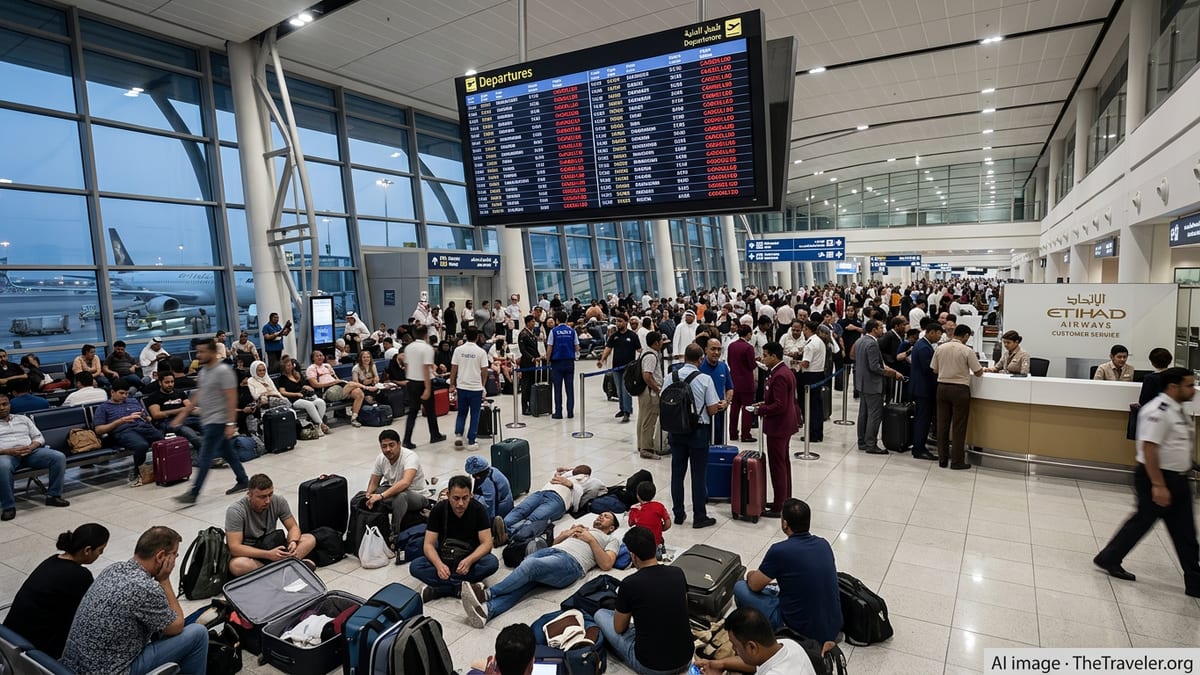
Air France extends suspension of Dubai services
Publicly available information from regional media and aviation trackers shows that Air France has extended the suspension of its flights between Dubai International Airport and Paris, with services now expected to remain halted until at least 27 July 2026. The pause, which initially covered earlier summer dates, has been repeatedly prolonged as the carrier reassesses the security and operational environment in Gulf airspace.
The suspension affects both outbound departures from Dubai and inbound flights from Paris, meaning that passengers holding Air France tickets for travel in the coming days are being moved onto alternative routings or later dates. Several recent online discussions among affected passengers indicate that notifications have arrived relatively close to departure in some cases, making same-day checks of itineraries particularly important.
Air France has framed the move as a precaution linked to airspace constraints and regional volatility rather than any specific concern about Dubai airport itself. However, for travellers in the UAE, the result is a near-term loss of direct connectivity on one of the main European flag carriers, at a time when demand for summer travel remains strong and replacement seats on other airlines can be limited.
People booked on Air France flights out of Dubai today are therefore being advised, in publicly available guidance, to verify whether their service is operating under a different flight number, rerouted via a third country, or cancelled outright, and to explore rebooking options as early as possible if changes appear in their reservation.
Etihad cancellations focus on Kuwait and short-haul Gulf routes
While Etihad Airways has largely rebuilt its long-haul network from Abu Dhabi after the widespread disruptions earlier in the year, the carrier is still operating with selective cancellations on certain regional services. According to recent scheduling updates highlighted by UAE-based outlets, flights EY653 and EY654 between Zayed International Airport and Kuwait International Airport remain cancelled through at least 24 July due to what the airline has described as operational reasons.
For passengers departing the UAE today, this means that travel between Abu Dhabi and Kuwait on Etihad continues to face disruption, with travellers often being re-accommodated on later dates or on other carriers where possible. Reports from recent weeks also describe occasional day-of-departure adjustments on other short-haul routes as the airline navigates airspace constraints, crew positioning and congestion at regional hubs.
Etihad’s handling of earlier large-scale suspensions in March, when Abu Dhabi departures were temporarily halted during the peak of regional airspace closures, has shaped current expectations. At that time, the airline introduced flexible rebooking policies for tickets issued before the crisis period, and passengers have since been encouraged in public advisories to monitor the carrier’s flight-status tools closely on the day of travel.
On 21 July, most Etihad long-haul flights from Abu Dhabi appear to be operating, but the experience of some recent travellers shared on public forums suggests that delays, missed connections and lengthy queues at transfer desks remain possible when upstream disruptions ripple through the network. Passengers connecting onward from Abu Dhabi are therefore being reminded to build in additional time and to be prepared for potential last-minute gate or schedule changes.
flydubai adjusts selected services amid wider regional constraints
Low-cost carrier flydubai continues to operate the majority of its schedule from Dubai International, but a series of targeted cancellations on specific routes has been reported over recent weeks. Coverage in UAE media has noted the airline’s decision to cancel individual flights to destinations such as Abha in Saudi Arabia and Kuwait on certain days, citing operational reasons and the need to respond to evolving regional conditions.
In addition, earlier in the year, Dubai Airports’ operational data showed a cluster of flydubai cancellations to Iranian cities during periods of heightened tension and airspace uncertainty. Although those large-scale suspensions have largely been lifted, the pattern underlines how quickly point-to-point services can be adjusted when flight paths or overflight permissions become constrained.
For travellers leaving the UAE today on flydubai, the main message emerging from the airline’s own public updates and recent advisories is to treat departure times as subject to change until close to boarding. The carrier has been urging customers to check the “Operational Updates” and live flight-status pages before heading to the airport, and to ensure contact details in bookings are current so that any SMS or email alerts are received promptly.
Some passengers have reported last-minute cancellations being communicated within hours of departure, while others have described smooth journeys without disruption. The variation reflects the route-specific nature of the current environment, where flights that depend on sensitive airspace are more exposed to sudden operational shifts than services using alternative routings.
Travel advisories and airspace guidance shaping today’s departures
Beyond individual airline decisions, broader travel advisories and regulatory guidance continue to influence how flights are planned and operated from the UAE. Updated advice from foreign-government travel sites, including those aimed at citizens transiting the region, notes that while UAE airports are functioning, operators are being urged to conduct heightened risk assessments for flights that traverse or skirt conflict-affected areas.
The European Union Aviation Safety Agency, for example, has recently reiterated that airlines should exercise particular caution when flying through or near Gulf and neighboring airspace, and should maintain robust contingency plans. Although this does not amount to a blanket ban on using UAE airspace, it encourages carriers to adapt routings, altitudes and schedules in response to changing threat levels, which can in turn lead to longer flight times or sudden timetable revisions.
Within the UAE, aeronautical information circulars issued by the national regulator outline procedures for managing airspace capacity during disruptions. One such circular published in late April describes how air traffic control can temporarily halt departures from certain regional airports bound for UAE destinations if congestion or operational constraints arise, in order to prevent airborne stacking and reduce the risk of large numbers of diversions.
For passengers, these technical measures are mostly invisible, but they help explain why flights that appear routine on an airline timetable may still be delayed, re-routed or, in some cases, cancelled on short notice. The underlying framework is designed to keep overall traffic flows safe and manageable during periods of stress, even if it results in inconvenience for individual journeys.
What passengers flying from the UAE today should do
As of 21 July 2026, the picture for travellers departing the UAE is one of broadly functioning hubs in Abu Dhabi and Dubai, combined with persistent, route-specific volatility. Etihad is operating the majority of its network but has extended cancellations on some Gulf flights, including services to Kuwait. flydubai is largely running its schedule but continues to cancel occasional flights to select regional destinations. Air France has no regular Dubai services operating during the current suspension window.
Public travel advice from governments and aviation bodies consistently recommends checking flight status directly with the operating airline before setting out for the airport. This has become particularly important in the current environment, where notifications may reflect overnight changes to airspace access, schedule reshuffles or aircraft-rotation issues that are not immediately obvious from older booking confirmations.
Passengers are also being encouraged in publicly available guidance to allow extra time at the airport, especially if they are connecting onward or flying to destinations that have recently been affected by airspace restrictions. Longer routings and tighter operational margins can translate into busier check in, security and transfer areas, even when a specific flight is running on time.
For anyone flying from the UAE today with Etihad, flydubai or Air France, the most practical steps remain straightforward: verify the latest departure status, review any email or app notifications for schedule changes, and be prepared for the possibility of rerouting or delays. While large-scale shutdowns like those seen earlier in the year are not in place at present, the summer travel period continues to be shaped by a fragile regional backdrop that can still disrupt individual journeys with little warning.