


More news on this day
Travellers flying in and out of the UAE today are being urged to monitor flight status closely, as Emirates, Etihad Airways, Air Arabia and flydubai report a mix of cancellations, delays and schedule adjustments on select regional and international routes.
Get the latest news straight to your inbox!
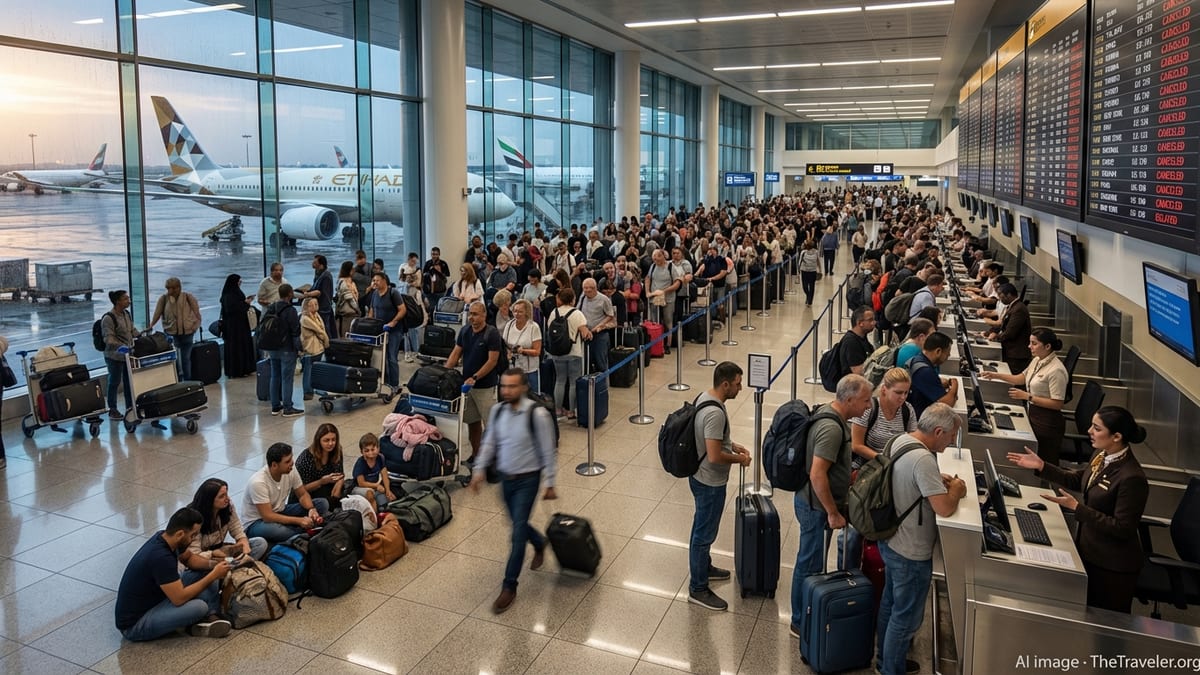
Regional tensions keep disruption risk elevated
Published coverage indicates that ongoing tensions and operational challenges around parts of the Middle East are continuing to affect some services operated by UAE carriers. While the country’s airports remain open and most flights are running to schedule, airlines are periodically adjusting operations on routes considered more sensitive or operationally constrained.
According to recent reports, carriers including Emirates, Etihad Airways, Air Arabia and flydubai have been cancelling or retiming select flights serving Kuwait, Bahrain, Israel and other regional destinations, often at short notice as conditions evolve. In many cases, the changes are limited to a small subset of daily services, but they can still create knock-on effects for connections and onward travel plans for passengers transiting through Dubai, Abu Dhabi or Sharjah.
Publicly available information also shows that airlines are continuing to monitor airspace, airport staffing and local security situations, with schedules being updated dynamically on official flight-status tools. As a result, two passengers on the same route on the same day can have very different experiences, with one flight operating normally and another cancelled, retimed or rerouted.
Emirates: selective cancellations and schedule changes
Emirates’ online advisories and flight-status pages show that the carrier is maintaining its global network while selectively cancelling or consolidating certain regional services when required. Earlier operational updates highlighted repeated cancellations of specific rotations between Dubai and Kuwait or Bahrain on given dates, reflecting short-term adjustments rather than a full suspension of those routes.
The airline’s disruption guidance notes that flights to and from Dubai have not fully normalised in all cases, and that services may be subject to late alterations. Passengers whose flights are cancelled are typically offered rebooking on the next available service or the option to seek a refund, in line with the carrier’s standard disruption policy.
Emirates’ flight-status portal for August 25, 2026, lists the bulk of its international network as operating as scheduled, including long-haul departures to Europe and North America. However, the same tools emphasise that customers should input their specific flight number or route on the day of travel to verify whether any timing change, equipment swap or cancellation has been applied.
Etihad, Air Arabia and targeted route suspensions
Recent regional coverage indicates that Etihad Airways has implemented targeted cancellations on some short-haul services, particularly where local operational factors or airport-level disruptions have arisen. One notable example reported in the past few days involves a Tel Aviv to Abu Dhabi service cancelled following unplanned industrial action at Ben Gurion International Airport, illustrating how quickly operational plans can change even when UAE airports themselves are functioning normally.
Sharjah-based Air Arabia has likewise adjusted parts of its schedule in response to the broader Middle East environment, including cancellations on certain links between the UAE and Kuwait or Bahrain on selected dates. These measures appear to be route-specific rather than system-wide, with the majority of the low-cost carrier’s network continuing to run as planned.
For both carriers, publicly available information stresses that passengers should rely on official channels such as airline websites and mobile apps for the most accurate status on the day of travel. Many of the recent changes have been announced within hours of departure, underlining the importance of checking for updates even after online check-in has been completed.
flydubai and ongoing operational advisories
Dubai-based flydubai continues to publish operational updates and seasonal travel advisories for passengers departing from Dubai International. A recent advisory issued for the summer peak travel period highlights that the airport is expected to be busier than usual, recommending that travellers arrive early, ensure their contact details are accurate in the “Manage booking” section, and watch for digital notifications about any changes.
In addition to general crowding, the airline’s dedicated disruptions and cancellations page explains how customers are notified if a flight is retimed or cancelled, typically through the contact information provided at booking. If schedule changes meet certain thresholds, passengers may be able to accept new timings, choose alternative flights, or request refunds via self-service tools, depending on fare conditions.
Independent flight-tracking sites show that most flydubai services, including high-frequency routes such as Dubai to Istanbul and Dubai to Tel Aviv, are currently scheduled to depart on time on August 25, 2026, though some flights in recent days have experienced arrival delays. This pattern reflects a network that is largely operational but still exposed to regional and airport-specific constraints.
What UAE-bound travellers should do today
Given the fluid situation, travel experts and public advisories agree on several practical steps for passengers flying with Emirates, Etihad, Air Arabia or flydubai today. First, travellers are advised to check their flight status repeatedly in the 24 hours before departure, and again just before leaving for the airport, using airline apps or official websites rather than relying solely on itinerary emails generated at the time of booking.
Second, passengers should allow additional time at the airport, particularly at Dubai International, Abu Dhabi Zayed International and Sharjah International, where peak summer demand can lead to longer queues at check-in, security and immigration. Arriving early reduces the risk that a minor schedule adjustment or busy checkpoint will cause a missed flight or connection.
Finally, travellers are encouraged to keep contact details up to date and to monitor SMS, email and app notifications throughout their trip. Recent disruptions have shown that even flights listed as “on time” earlier in the day can later be subject to changes as airlines respond to developing conditions, airspace decisions or airport operational issues in nearby countries.
For now, publicly available data suggests that the majority of UAE flights are operating close to published schedules, but with regional tensions and operational pressures persisting, disruption remains a live possibility. Passengers planning to travel today are therefore being urged to stay informed and flexible as they move through the country’s airports.
Gulf News: UAE flights today cancellations and delays
Emirates official flight status