


More news on this day
Air France’s pause on flights between Paris and Dubai remains in place as airlines across the Gulf adapt to a volatile security environment, leaving UAE‑bound travelers facing ongoing uncertainty over autumn schedules.
Get the latest news straight to your inbox!
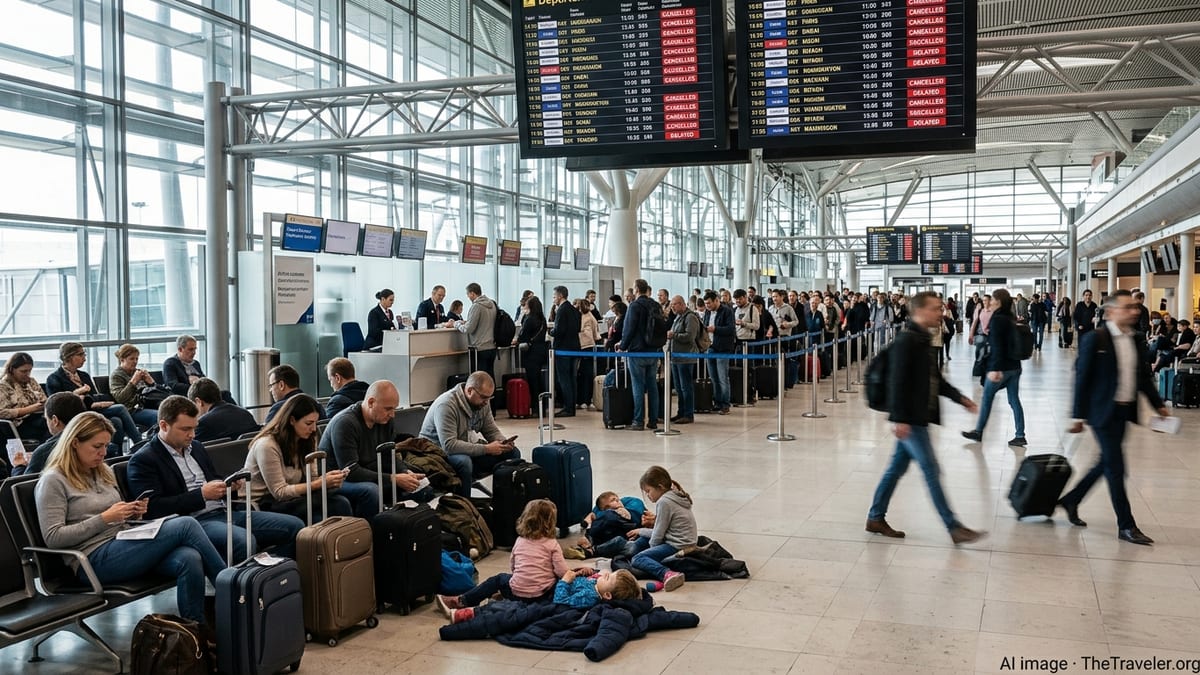
Air France’s Dubai suspension tied to evolving Middle East security risks
Publicly available information from European and Gulf media indicates that Air France has kept its Dubai service on hold following a series of security reviews triggered by renewed tensions involving Iran and wider regional actors. The carrier initially suspended flights on the Paris–Dubai route in July, alongside pauses on services to Riyadh and Beirut, citing airspace restrictions and a deteriorating risk environment.
Coverage from European outlets shows that Air France framed the suspension as a temporary safety measure while it monitored developments in the Near and Middle East and assessed which flight paths remained viable. The airline also highlighted the impact of conflict‑related constraints on multiple Gulf airspaces, which have complicated routings for flights transiting the region.
Subsequent reporting from aviation and consumer‑rights platforms indicates that the suspension of Air France flights to Dubai, Beirut and Riyadh was later extended as security conditions failed to stabilize. These sources note that the airline has continued to review its timetable but has not yet set a firm restart date for Dubai, advising passengers to track updates on its website or via booking channels.
Industry trackers point out that Air France is regulated under European Union aviation rules and therefore must factor in the European Union Aviation Safety Agency’s conflict‑zone bulletins, which continue to urge heightened caution across several Gulf airspaces, including those covering or adjacent to the UAE.
Dubai and Abu Dhabi airports remain open amid rolling delays
While some international airlines have kept Dubai services suspended, major UAE hubs themselves remain operational. Recent UAE‑based coverage describes Dubai International Airport and Abu Dhabi’s Zayed International Airport as open but experiencing recurring delays and cancellations linked to the broader regional situation and changing airspace availability.
Reports from local travel desks state that flights to and from the UAE this week have encountered disruption as tensions between the United States and Iran intensify. Airlines serving Dubai and Abu Dhabi have warned that departure and arrival times can change at short notice, particularly on services transiting the northern Gulf or routing near temporarily restricted corridors.
Operational data cited in regional business media show that UAE carriers such as Emirates, Etihad, flydubai and Air Arabia have largely maintained their core long‑haul networks, while trimming or cancelling certain frequencies to nearby destinations where airspace or airport conditions are more volatile. By contrast, several European, North American and Asian airlines have opted either to suspend Dubai routes entirely or to delay planned resumptions into later in the year.
Independent situational assessments of Middle East airports suggest that Dubai continues to function as one of the region’s most consistently open hubs, even as airlines adjust flight paths, schedules and fuel loads to navigate extended routings and congestion in remaining corridors.
Wider pattern of international suspensions across the Gulf
Air France’s continued pause on Dubai flights is part of a broader pattern in which non‑Gulf carriers have scaled back or frozen parts of their Middle East networks. Recent round‑ups from regional outlets list multiple European and North American airlines that have prolonged suspensions on services to Dubai and other key Gulf cities into September and beyond, citing security and operational considerations.
Reports indicate that airlines including Lufthansa Group brands, KLM and certain North American carriers have either pushed back restart dates or kept earlier suspensions in place for Dubai, Abu Dhabi and neighboring markets such as Kuwait and Bahrain. Some had previously targeted early autumn for the resumption of services but have revised plans as airspace warnings have been extended.
These decisions mirror guidance from international aviation regulators that continue to flag elevated risk in sections of Gulf and adjacent airspace, particularly for routes that would usually cross areas of current or recent military activity. For many foreign airlines, suspending flights altogether has been presented as the most straightforward way to avoid last‑minute diversions, extended detours and complex insurance implications.
At the same time, industry observers note that the region’s biggest hub carriers, including Emirates and Qatar Airways, retain more flexibility to shift routings while preserving much of their schedules, benefiting from local infrastructure and closer coordination with air navigation service providers.
What the suspension means for UAE‑bound travelers
For passengers who would normally rely on Air France to fly between Paris and Dubai, the ongoing suspension has translated into rebookings, refunds and detours via other hubs. Consumer‑rights guidance compiled in response to the Dubai pause emphasizes that travelers holding tickets on cancelled Air France flights are generally entitled to re‑routing or reimbursement under European air‑passenger rules, alongside standard care provisions when disruption occurs close to departure.
Regional travel advisories recommend that UAE‑bound passengers who were planning to connect through European carriers now consider alternative itineraries on airlines that continue to operate into Dubai and Abu Dhabi. This has often meant shifting to services provided by Gulf carriers or by other international airlines that have maintained their UAE operations while adapting routings.
Airports and airlines across the UAE have urged travelers to verify the status of individual flights on official digital channels before leaving for the airport, reflecting the possibility of same‑day schedule changes as security assessments evolve. Aviation analysts stress that this is especially important for journeys involving onward connections, where missed links can cascade into longer disruptions.
Travel planners also advise allowing additional buffer time for connections and being prepared for potential re‑screening or gate changes on affected routes, as air traffic controllers work to balance safety requirements with the high demand that typically characterizes Dubai and Abu Dhabi at this time of year.
Outlook: cautious monitoring as autumn travel season begins
Looking ahead to the coming weeks, aviation reporting suggests that airlines are preparing for a stop‑start period rather than a swift normalization of Gulf operations. Some carriers have set provisional dates to resume Dubai flights in late September or October, while others, including Air France, have preferred to leave their Dubai services paused without a fixed restart on public schedules.
Industry commentary highlights that any significant improvement in the security climate or relaxation of conflict‑zone advisories could prompt a faster restoration of capacity, especially given pent‑up demand on Europe–Gulf and North America–Gulf corridors. However, airlines appear wary of announcing premature resumptions that might need to be reversed if tensions flare again.
For UAE airports, the immediate priority remains keeping core operations stable while accommodating passengers affected by third‑country airline suspensions. As the situation evolves, observers expect a continued divergence between Gulf hub carriers, which have the scale to absorb shocks, and foreign airlines that may choose to keep certain UAE routes on hold for longer.
Given the fluidity of the situation, publicly available guidance continues to emphasize that travelers should check airline websites or apps on the day of travel and sign up for flight‑status alerts, particularly on routes touching any of the more sensitive parts of Gulf and Levant airspace.
Euronews: Air France suspends routes to Riyadh, Dubai and Beirut
Khaleej Times: Dubai flights suspension updates