


More news on this day
The United Arab Emirates has lifted a weeks-long ban on travel to Lebanon for its citizens, reopening a key route between the Gulf and the Eastern Mediterranean while keeping in place strict restrictions and advisories on travel to Iran amid ongoing regional tensions.
Get the latest news straight to your inbox!
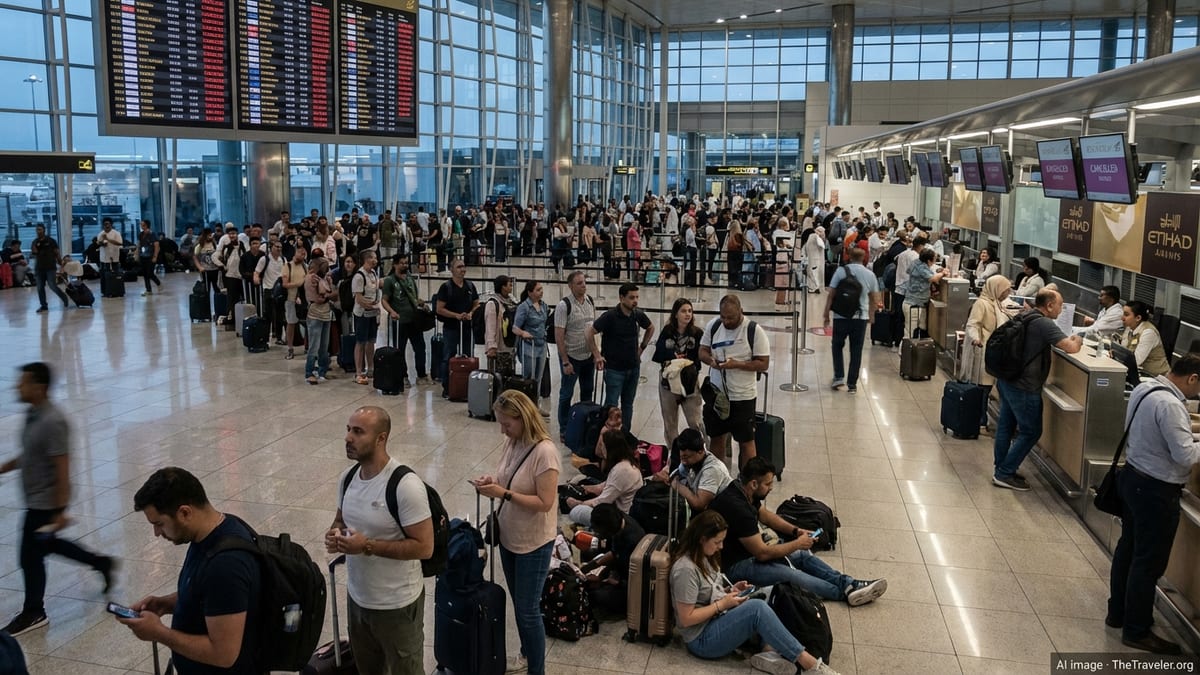
Ban on Lebanon Travel Ends After Weeks of Regional Turmoil
Publicly available information shows that the United Arab Emirates has reinstated permission for Emirati nationals to travel to Lebanon, effective Monday, June 29, 2026. The move reverses a ban introduced at the end of April, when regional conflict linked to the war in Lebanon and hostilities involving Iran triggered a sharp tightening of travel policies across several Middle Eastern destinations.
Reports indicate that the earlier decision barred UAE citizens from visiting Lebanon, Iran and Iraq, and urged those already in these countries to return home as soon as possible. The measures were framed in the context of “regional developments,” a reference widely understood to include cross-border strikes, missile attacks and a volatile security landscape stretching from the eastern Mediterranean to the Gulf.
The latest guidance permits leisure and business trips by Emiratis to Lebanon once again, ending a short but disruptive suspension that affected family visits, tourism and corporate travel between the two countries. Airlines and travel agents in both the UAE and Lebanon are now preparing for a gradual resumption of traffic on routes that had already been weakened by conflict and economic strain.
Lebanon’s tourism and service sectors, which rely heavily on visitors and remittances from Gulf states, are expected to view the reopening as a modest but symbolically important step. Analysts following the region suggest that renewed Emirati travel could provide a limited boost to arrivals during the summer period, even as broader security and economic challenges continue to weigh on demand.
Iran Travel Still Constrained by Security Concerns
While the shift on Lebanon marks a notable easing, publicly available coverage indicates that the UAE is keeping its restrictions on travel to Iran intact. Advisories in recent weeks have warned citizens to avoid non-essential trips to Iran, citing the fragile state of a ceasefire involving Tehran and continued risks from missile and drone incidents affecting Gulf airspace and commercial shipping lanes.
Travel industry briefings show that carriers based in the UAE had already scaled back or rerouted services touching Iranian destinations at the height of the crisis. Some flights were suspended outright, while others were adjusted to avoid sensitive air corridors. These operational changes, combined with the government guidance, have sharply reduced passenger traffic between the two countries.
Regional observers note that the UAE has taken a particularly cautious line on Iran since the escalation of hostilities earlier this year, when attacks and intercepts involving Iranian projectiles raised concerns about spillover into Gulf territory. Although diplomatic channels remain open, the underlying security picture has not improved sufficiently to justify relaxing restrictions for ordinary travelers.
As a result, Emirati citizens planning trips to Iran continue to face a more complex risk environment than those heading to Lebanon. Industry consultants say insurance coverage, flight availability and corporate travel policies all remain tighter on routes involving Iran, and they do not expect a quick normalization while the political and military situation stays fluid.
From Blanket Bans to Targeted Advisories
The contrast between the reopening of travel to Lebanon and the continued caution on Iran underscores a broader shift in how Gulf states are managing mobility during protracted crises. Rather than maintaining long-term blanket bans, governments are increasingly toggling restrictions on and off, or differentiating between destinations, as conditions on the ground change.
According to regional press accounts, the UAE’s latest steps follow a pattern that first emerged in earlier rounds of tension, when bans on Lebanon were lifted once security conditions were judged to have stabilized, only to be revisited when new conflicts flared. A similar approach has been used for destinations such as Iraq and Syria, where advisories are regularly updated to reflect localized risks.
Travel risk specialists say this more granular method allows authorities to respond quickly to specific threats while avoiding the open-ended isolation of key economic and cultural partners. In practical terms, it means that travelers and airlines must monitor advisories more closely and be prepared for rapid changes in policy that can affect trips at short notice.
The Lebanon decision illustrates this dynamic. The ban, imposed at the end of April within a wider package of restrictions tied to regional hostilities, has now been removed for that single country even though the broader conflict environment has not fully resolved. By contrast, the assessment of Iran remains more severe, keeping curbs in place despite partial de-escalation on some fronts.
What the Policy Shift Means for Travelers and the Industry
For Emirati travelers, the immediate impact of the new guidance is greater flexibility to visit Lebanon for tourism, business or family reasons. Local media reports highlight the continued importance of registering trips with the UAE’s traveler tracking platforms, a requirement designed to keep consular authorities informed and to streamline assistance if conditions deteriorate again.
Airlines based in the UAE are expected to restore capacity on Lebanon routes gradually, balancing the improved regulatory environment with caution about demand levels and operational risk. Travel agencies in Dubai and Abu Dhabi are already promoting short breaks and summer packages to Beirut and other Lebanese destinations, although many are emphasizing flexible booking conditions and clear cancellation terms.
For Lebanon’s hospitality sector, which has been battered by years of economic crisis and conflict-related disruption, renewed access to the Emirati market could provide a limited but welcome uptick in visitors. Hotel operators and tour providers are likely to focus on Gulf travelers who are familiar with the country and may be more willing to return despite lingering concerns about stability.
In contrast, outbound tourism from the UAE to Iran is expected to remain depressed. Corporate travel managers and risk consultants continue to advise heightened caution for any essential trips to Iranian cities, reflecting ongoing security alerts and uncertainties around future military or political developments. This divergence in outlook between Lebanon and Iran encapsulates how the same regional crisis can produce sharply different travel realities within a relatively small geographic area.
Broader Geopolitical Signal to the Region
Beyond the immediate travel implications, analysts see the UAE’s decision as sending a calibrated diplomatic signal. By reopening Lebanon while keeping Iran restrictions intact, Abu Dhabi is marking support for Lebanon’s gradual re-engagement with the Gulf, even as it maintains distance from Tehran amid unresolved disputes and security fears.
Commentary in regional outlets suggests that the timing aligns with broader efforts by Arab states to balance de-escalation with deterrence, particularly after months of war involving Israel, Lebanon and Iran-aligned groups. Reopening safe corridors for tourism and business where possible is seen as part of a strategy to stabilize economies and reduce public fatigue with conflict, without ignoring ongoing threats.
For travelers and industry stakeholders, the key takeaway is that policy remains highly responsive to developments on the ground. The latest update on Lebanon may be a positive sign for regional connectivity, but the continued restrictions on Iran underline how quickly conditions can diverge between neighboring states. Close attention to official advisories and airline announcements is likely to remain essential for anyone planning trips across the Middle East in the coming months.