


More news on this day
Air links between the UAE and key Saudi cities remain sharply reduced at the end of November 2026, as carriers in the Gulf and India extend or maintain suspensions to Riyadh and Dammam in response to recent attacks on Saudi airports and a volatile security environment.
Get the latest news straight to your inbox!
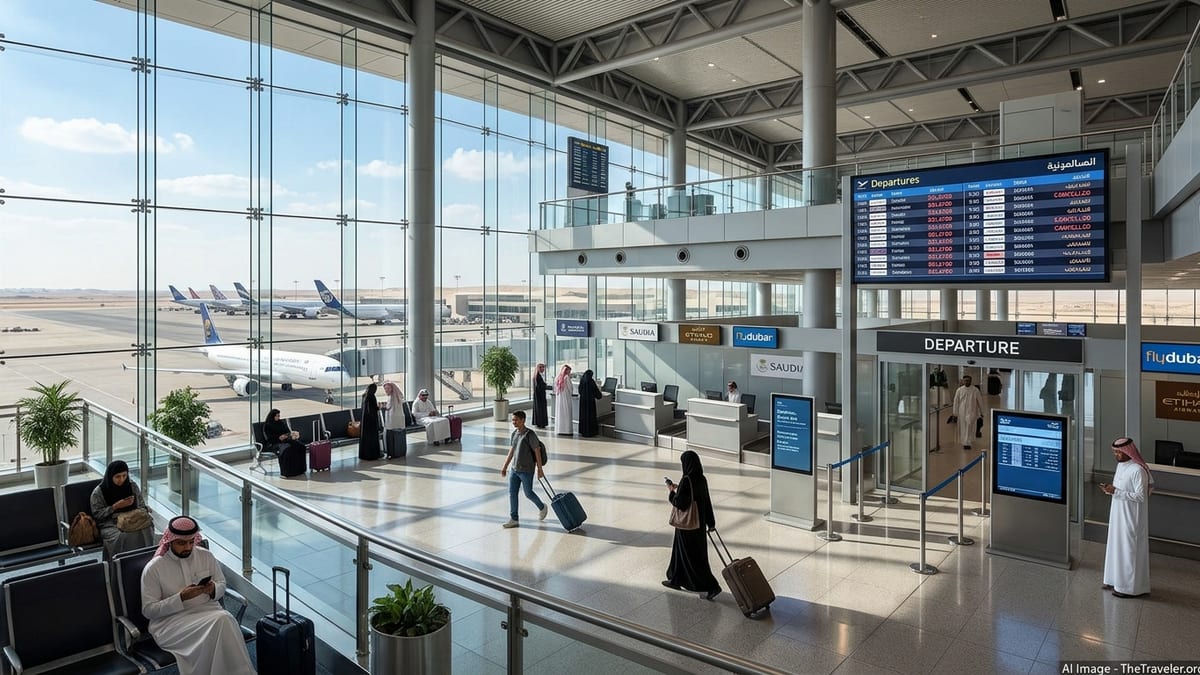
Airport attacks and regional tensions behind the disruption
The current pattern of curtailed flights into central and eastern Saudi Arabia follows a series of strikes this autumn on civilian airports, including King Khalid International Airport in Riyadh. Saudi and international reporting indicate that Houthi forces targeted Riyadh’s main gateway multiple times between 6 and 12 October 2026, killing passengers and staff and badly damaging parts of the terminal complex. The airport was fully closed for a period around 10 October and only partially reopened later in the month, with airlines permitted to rebuild schedules gradually subject to security and infrastructure checks.
Other Saudi airports have also come under fire during the same period, notably Abha in the southwest, where attacks on 6 and 7 October prompted temporary suspensions and restrictions on some routes. Together, these incidents have prompted the General Authority of Civil Aviation to issue a series of notices limiting movements at affected airports and tightening security procedures, measures that foreign airlines are factoring into their own route decisions.
These aviation-specific risks are unfolding against wider regional friction involving Iran, Gulf states and the United States. Security advisories and commercial tracking services have reported several maritime incidents near the Strait of Hormuz in recent weeks, including explosions near oil and product tankers and short-lived boardings of merchant vessels. While shipping continues to move and ports in the UAE and wider region remain open, insurers and ship operators have raised risk levels for some transits, feeding into a broader sense of caution around critical Gulf infrastructure.
How UAE-based airlines are adjusting Saudi schedules
Etihad Airways has taken one of the more conservative stances on direct links from the UAE capital to Saudi Arabia’s political and industrial heartlands. According to its latest public advisories and regional reporting, the airline has cancelled all passenger services between Abu Dhabi and Riyadh and between Abu Dhabi and Dammam through 30 November 2026. The carrier has emphasised that flights from Abu Dhabi to other Saudi cities, including Jeddah, continue to operate, providing alternative one-stop access to Riyadh and the Eastern Province for passengers willing to connect onward on domestic services.
Dubai-based flydubai, a major low-cost operator into secondary Saudi markets, is also maintaining a cut-back schedule. After several short extensions earlier in the month, the airline’s most recent guidance indicates that flights between Dubai and Riyadh and between Dubai and Abha are now cancelled until at least 10 December and 30 December 2026 respectively. Services to Dammam have restarted but on a reduced timetable, and the airline is warning customers that all Saudi routes remain subject to further adjustments at short notice as operating conditions evolve.
Other UAE carriers have made targeted changes rather than blanket suspensions. Emirates has continued to serve major Saudi gateways, though with selected frequencies trimmed at times following the October attacks, while Air Arabia has cancelled or reduced some flights from Sharjah to cities such as Abha and Riyadh on specific dates. For travellers in Dubai and the Northern Emirates, the practical effect is fewer nonstop options into Riyadh and Abha in particular, while capacity into Jeddah and Madinah has held up better.
Indian airlines’ cautious stance on Saudi routes
Indian carriers with dense Gulf networks have adopted a broadly conservative approach to Saudi services through the end of November. IndiGo, the country’s largest airline by passenger numbers, has announced that all flights to and from Jeddah, Madinah, Riyadh and Dammam are cancelled until at least 30 November 2026 inclusive. The airline has cited the prevailing security situation in Saudi Arabia as the reason for the blanket suspension, and has directed passengers to its digital channels for refund and rebooking options.
Flag carrier Air India and its low-cost affiliate Air India Express have issued similar advisories for some of their Saudi routes. Both airlines have stated that flights linking India with Riyadh and Dammam will remain suspended through 30 November, with certain services to Jeddah adjusted or temporarily halted depending on airport capacity and regulatory clearances. Notices published in mid November confirm that passengers with tickets issued on or before 10 November and travel dates during the suspension window can request complimentary date changes, subject to availability, or opt for refunds without penalty.
Newer entrant Akasa Air, which only recently pushed into Gulf markets, has signalled that its Saudi pause may last longest. Company statements and regulatory disclosures in India indicate that all Akasa flights to and from Riyadh and Jeddah are currently suspended at least until 30 November 2026, with no revised restart date yet confirmed. Industry briefings referenced by local media suggest that internal planning scenarios extend the Riyadh suspension into January 2027, but the airline has not publicly committed to a specific resumption timetable, describing its current position as a precaution that will be reviewed as conditions develop.
Knock-on effects for regional connectivity and travel costs
The most visible effect for passengers in the UAE is a thinner selection of nonstop flights into Saudi Arabia’s central and eastern regions at the tail end of the year, particularly around peak travel periods linked to business schedules and religious visits. With fewer direct options into Riyadh, Dammam and Abha, some travellers are turning to itineraries that route through less affected Saudi gateways such as Jeddah or Madinah, or through alternative Gulf hubs in Doha, Manama and Kuwait City.
Security perceptions are also influencing how quickly international airlines restore capacity even where airports have technically reopened. King Khalid International Airport in Riyadh began to receive more flights again in late October after emergency repairs and inspections, and local carriers such as Saudia and the startup Riyadh Air have been rebuilding domestic and regional schedules. However, several foreign airlines have extended their own suspensions to Riyadh beyond the reopening date, choosing to wait for a longer run of stable operations before re-entering the market in full.
Beyond aviation, the combination of airport attacks, maritime incidents and ongoing sanctions on Iran has contributed to a more risk-sensitive environment for energy markets. The Strait of Hormuz remains central to global oil and gas flows, so any perceived vulnerability there tends to be reflected in insurance premia and shipping costs. For travellers, the impact is indirect but real: higher fuel and logistics costs can filter into airfares and cruise prices over time, even if headline ticket prices into the Gulf have not yet fully absorbed the latest volatility.
What UAE-based travellers should check now
For residents and visitors in the UAE planning trips to Saudi Arabia in late November and December, the immediate priority is to confirm whether their chosen route is currently operating. Passengers booked on Etihad services between Abu Dhabi and Riyadh or Dammam with travel dates up to and including 30 November should expect their flights to be cancelled and contact the airline or their travel agent for rebooking or refunds. Those with flydubai tickets to Riyadh or Abha in early to mid December should monitor updates closely, as the latest suspension dates already reach into that period and could move again.
Travellers from India who were planning to fly non-stop on IndiGo, Air India, Air India Express or Akasa Air to Saudi cities this month should assume that most direct options will not resume before the end of November, and possibly later in the case of certain routes. Some may find workable alternatives via Gulf carriers and hubs that still have capacity into Jeddah, Madinah or Dammam, but this usually involves longer journey times, higher fares and additional visa or transit considerations, so itineraries should be checked carefully before committing to new bookings.
Looking ahead, the key milestones to watch are formal updates from Saudi aviation authorities on airport security postures, fresh schedule filings by airlines for December and January, and any significant new incidents affecting airports or shipping routes in and around the Gulf. As long as Riyadh and other central and eastern airports remain subject to heightened security measures and international carriers continue to assess the risks cautiously, travellers from the UAE should plan with extra flexibility, check flight status shortly before departure, and be prepared for further short-notice changes on cross-Gulf routes.