


More news on this day
Travellers heading to or transiting through the United Arab Emirates and wider Gulf region are being urged to review plans after the United States, United Kingdom, Canada and Australia renewed security warnings for the Middle East at the same time as major carriers Etihad Airways and Qatar Airways updated flight operations and passenger policies.
Get the latest news straight to your inbox!
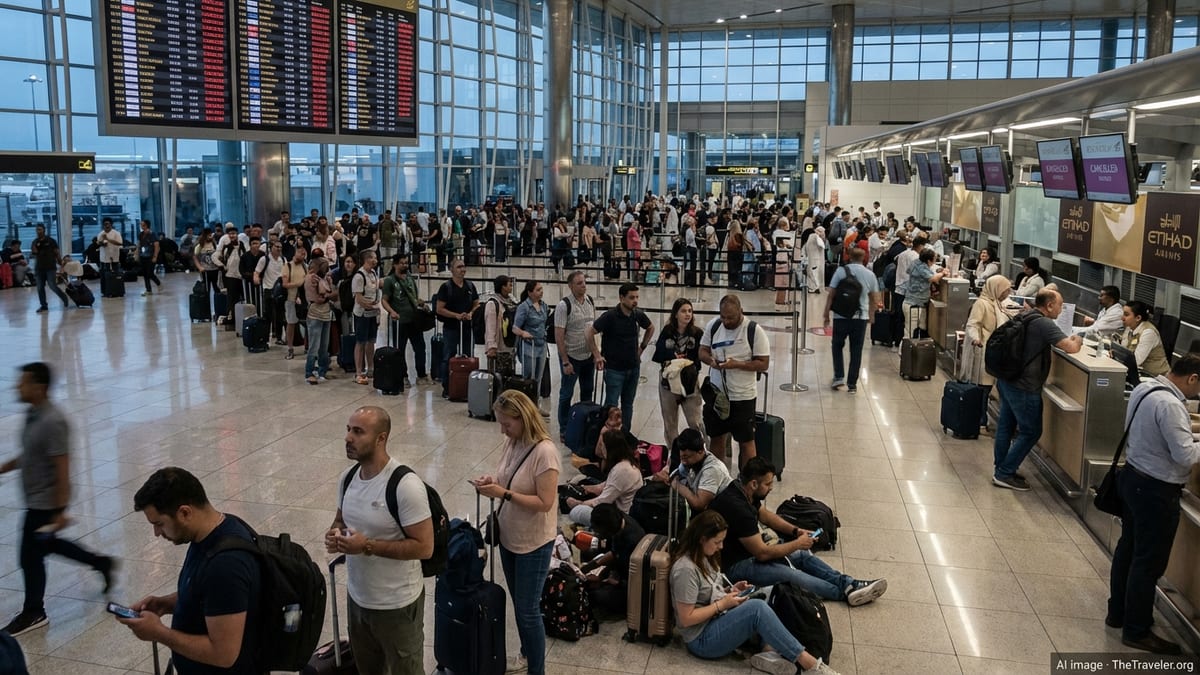
Western governments raise the tone of Middle East advisories
Publicly available travel advisories show that the United States, United Kingdom, Canada and Australia have all strengthened language around trips to the United Arab Emirates and neighbouring states in recent days, citing the risk of armed conflict, terrorism and sudden airspace disruption across the Middle East.
The latest United States guidance for the UAE remains at a “reconsider travel” level, highlighting ongoing regional tensions, the possibility of drone and missile activity and the potential for flight cancellations or diversions affecting major hubs such as Abu Dhabi and Dubai. A separate worldwide caution notice urges Americans in the broader Middle East to be prepared for rapidly changing aviation conditions.
Updated UK travel advice for both the UAE and Qatar refers to recent missile and drone incidents linked to the conflict involving Iran and Western interests, noting that British nationals in the region should be ready for airport disruption, short notice airspace closures and changes to flight schedules. The wording underlines that situations may escalate quickly and that routes deemed safe one day may be restricted the next.
Canada’s government now advises avoiding non essential travel to the UAE, pointing to a volatile security environment and warning that military activity could affect commercial aviation. Australia’s Smartraveller platform continues to urge travellers to reconsider the need to visit the UAE and much of the Middle East, warning that conflict related developments may trigger widespread movement restrictions and last minute operational changes for airlines.
Etihad Airways adjusts network and warns of possible disruptions
Etihad Airways, based in Abu Dhabi, continues to operate a significant portion of its global network, but publicly available information and passenger reports indicate that the airline is adjusting routings and schedules in response to regional risk assessments and airspace guidance from international aviation bodies.
Open source tracking data and traveller accounts suggest that Etihad flights are avoiding certain high risk corridors, with some services routed further west over Saudi Arabia and other states instead of crossing the central Gulf. These changes can increase flight times and, when combined with temporary airspace measures, have contributed to delays and missed connections for some passengers in recent weeks.
Etihad has previously shown a willingness to cancel or consolidate flights at short notice when airspace conditions deteriorate, prioritising safety and regulatory compliance. Travel forums and airline communications describe scenarios in which passengers were rebooked on later Etihad services or provided hotel accommodation in Abu Dhabi when connections were disrupted by sudden operational constraints.
While the carrier has not issued a blanket suspension of services to and from the UAE, the current environment means schedules remain subject to change. Travellers connecting through Abu Dhabi are being advised by travel agents and consular notices to maintain flexible plans, monitor booking notifications closely and consider allowing longer layovers to reduce the risk of missed onward flights.
Qatar Airways updates flexibility and route operations
Qatar Airways, another key Gulf hub carrier, has also updated its travel alerts and passenger options in light of the conflict related uncertainty. The airline’s latest public advisories outline temporary suspensions on selected regional routes, including services to Bahrain and Erbil until late July, alongside broader measures giving travellers more flexibility to alter plans.
Current Qatar Airways guidance indicates that customers booked on affected itineraries are being offered complimentary date changes to later in 2026, subject to seat availability and fare conditions. This policy is designed to help passengers who wish to postpone trips involving transits through Doha while regional risks remain elevated.
Despite targeted suspensions, the majority of Qatar Airways’ long haul network continues to operate, with aircraft in some cases flying on revised routings that skirt restricted airspace. Travel industry commentary notes that while operations at Hamad International Airport have largely stabilised following earlier airspace closures, the situation remains fluid and subject to government level aviation directives.
Passengers are being urged to check the status of their flights frequently in the 24 to 48 hours before departure and to keep contact details updated in their bookings so that any last minute time changes or aircraft substitutions are communicated promptly.
What the renewed alerts mean for leisure and transit travellers
The combination of stricter government advisories and evolving airline schedules is creating a more complex planning environment for holidaymakers and business travellers who rely on Gulf hubs as gateways between Europe, North America, Asia and Australia.
For some nationalities, higher advisory levels may affect the validity of travel insurance if individuals choose to visit or transit countries rated “reconsider travel” or “avoid non essential travel.” Insurance industry guidance commonly urges policyholders to check specific policy wording, as decisions to travel against government advice can limit cover for conflict related disruption.
Transit passengers who do not intend to leave the airport remain subject to the same airspace risks as those staying in the UAE or Qatar, meaning they may still face delays, reroutes or overnight stays if a route is temporarily closed. Agents and consular resources therefore recommend having access to funds and flexible onward arrangements in case of unexpected layovers.
Travellers with fixed commitments, such as cruises, tours or time sensitive meetings, may wish to consider alternative routings via non Middle Eastern hubs to reduce exposure to sudden regional shutdowns, particularly over the peak northern summer holiday period when seats on alternative carriers can be scarce if disruption spreads.
Practical steps for those flying via the UAE and Gulf hubs
With aviation conditions around the Gulf changing quickly, publicly available travel guidance converges on a few practical steps for anyone who decides to proceed with plans involving Etihad, Qatar Airways or other regional carriers.
First, travellers are encouraged to register with their national foreign ministry travel advisory service, enabling governments to send security updates or crisis information should the situation worsen. This is especially relevant for citizens of the US, UK, Canada and Australia, whose governments have issued some of the strongest recent wording on Middle East travel.
Second, passengers should build additional time into itineraries where possible and avoid tight self made connections on separate tickets that could be forfeited if an inbound Gulf flight is delayed. Booking through a single airline or alliance can simplify rebooking if schedules are disrupted.
Finally, travellers are advised to monitor local media and airline travel alerts up to and including the day of departure, and to prepare contingency plans that do not rely solely on consular evacuation or emergency flights. In the current environment, flexibility and the ability to adapt quickly to changing airspace conditions are becoming as important for Middle East bound itineraries as price and convenience.