


More news on this day
European regulators have extended a high-risk aviation advisory covering the airspace of the United Arab Emirates, Bahrain, Qatar and Kuwait until August 31, a move that is set to affect key long-haul corridors at the height of the summer travel season.
Get the latest news straight to your inbox!
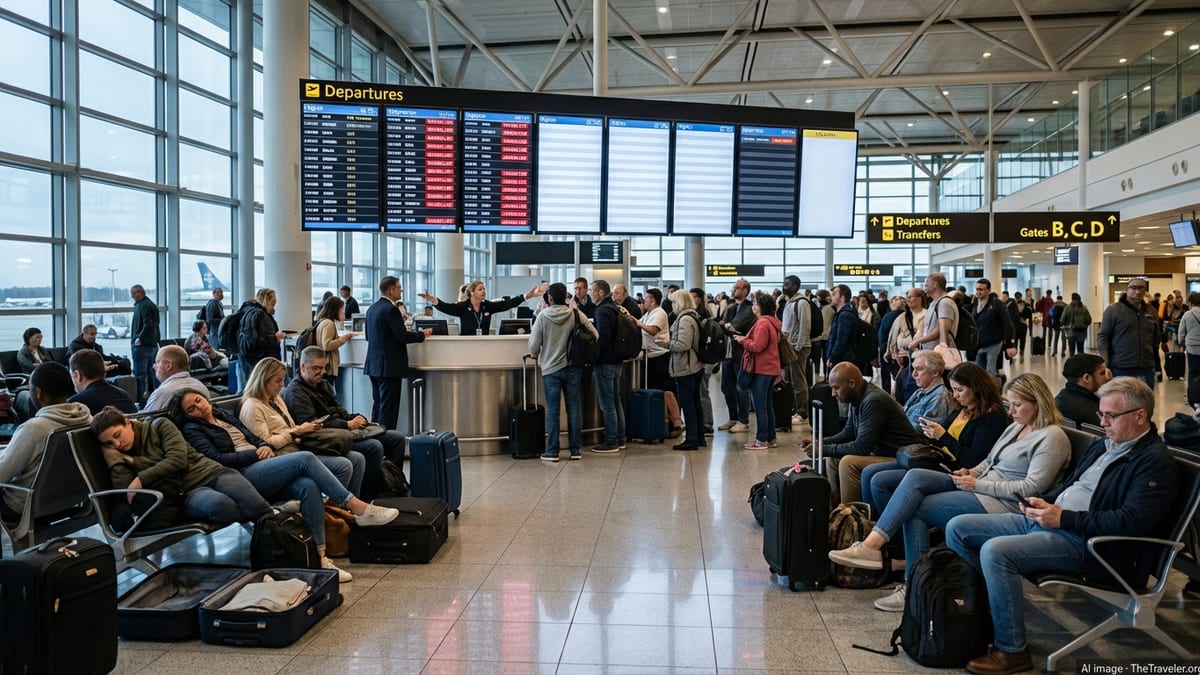
Extended warning reflects ongoing regional security tensions
According to publicly available information from the European Union Aviation Safety Agency, the latest update maintains a strong warning for airlines operating in or near the airspace of the United Arab Emirates, Bahrain, Qatar and Kuwait, as well as parts of the Gulf of Oman. The advisory, valid until August 31, follows a series of earlier, shorter extensions issued over recent months as tensions in the wider region have persisted.
The current guidance phrases the risk to civil aviation as high, primarily due to the potential use of missiles, drones, combat aircraft and air defence systems in and around these airspaces. Analysts note that many of these systems operate at altitudes used by commercial traffic and can be activated with little prior notice, complicating the task of air traffic planners and airline operations teams.
Previous versions of the European advisory had also grouped the Gulf states with other conflict-affected countries such as Iran, Iraq and Lebanon. More recent bulletins have differentiated between outright avoidance for some airspaces and heightened caution for others, but reports indicate that the four Gulf states remain under a reinforced warning that has now been pushed through the end of August.
Specialist aviation risk platforms summarize the practical message for operators as a recommendation not to operate within the flight information regions of Bahrain, Kuwait, Qatar and the United Arab Emirates at any altitude, and to treat the western part of the Muscat-controlled sector over the Gulf of Oman with particular care.
Rerouting adds time and cost to Europe–Asia traffic
The extended warning comes at a time when airlines are already flying longer routings to bypass multiple hotspots between Europe and Asia. With Iranian, Iraqi and some Levantine airspace subject to their own advisories or restrictions, the Gulf corridor that links Europe with South Asia, Southeast Asia and Australasia has become more complex to navigate.
Travel industry observers report that some European and Asian carriers have been shifting flights away from direct paths over the Gulf, instead taking more southerly tracks over the Arabian Sea or reconfiguring schedules to connect via hubs perceived as lower risk. These detours may add flight time and fuel burn, with knock-on effects for punctuality and aircraft utilization across busy summer rosters.
For passengers, the impact is beginning to appear in the form of longer flight times, altered departure slots and, in some cases, temporary suspension of specific routes that rely heavily on now-affected airspace segments. Some Gulf-based airlines continue to operate extensive networks, but often with tactical route adjustments that keep aircraft clear of the most sensitive zones while still preserving connectivity.
European leisure travelers heading to popular Indian Ocean and Southeast Asian destinations are among those most exposed to possible disruption, as many itineraries rely on hub transfers through the Gulf. Industry analysts suggest that contingency buffers built into schedules, as well as flexible rebooking policies, will be crucial if security conditions shift further during the validity period of the advisory.
Gulf hubs balance local reopenings with international caution
The advisory’s extension highlights a divergence between domestic reopening steps in some Gulf states and the more conservative risk posture adopted by foreign regulators and insurers. In recent months, several regional governments have progressively reopened airports and resumed limited services after temporary closures linked to drone and missile incidents, while still acknowledging an elevated underlying threat environment.
Airlines based in the UAE, Qatar, Bahrain and Kuwait have been gradually rebuilding networks to Europe, Asia and Africa, in some cases increasing frequencies to meet strong summer demand. At the same time, flight-tracking data and industry commentary show that carriers are carefully managing routings, sometimes skirting the edges of advisory areas or reducing time spent over contested waters.
Insurers and corporate travel managers often reference European and international bulletins when setting their own policies. As a result, even where local authorities signal that conditions are suitable for resuming operations, multinational companies may continue to apply tighter internal restrictions for staff travel through certain hubs or flight paths, especially for nonessential trips.
Observers point out that this layered approach creates a patchwork of practices: some airlines and markets treat the advisory as a strict avoidance mandate, whereas others interpret it as a call for heightened vigilance and sophisticated risk assessment on a flight-by-flight basis.
Impact on cargo corridors and global supply chains
The extended European warning does not only affect passenger services. The Gulf region is a critical junction for global air freight, linking manufacturing centers in Asia with consumer markets in Europe, North America and Africa. Any sustained constraints on key airspace segments can reverberate through time-sensitive cargo flows.
Logistics advisories circulated to freight customers in recent months describe a combination of suspended services, limited bellyhold capacity on passenger flights and rerouted freighters that must carry additional fuel for longer journeys. Even when airports remain open, operators may prefer to route high-value or sensitive consignments around the highest-risk zones, which can add cost and reduce available capacity on preferred lanes.
Time-critical sectors such as electronics, automotive parts, pharmaceuticals and fashion are particularly exposed, given their reliance on just-in-time deliveries and seasonal launches. Freight forwarders have responded by proposing alternative routings via secondary hubs or by shifting some volumes to sea-air combinations, though these solutions can extend transit times and complicate inventory planning.
Analysts caution that if the warning persists beyond August, or if additional countries are added to the high-risk list, shippers may need to build greater slack into supply chains heading into the autumn and winter peak seasons.
What travelers should watch between now and August 31
With the advisory now set to run through the end of August, travel planners say the next several weeks will be critical for monitoring how airlines interpret and implement the guidance. Schedules published for the peak summer period may be adjusted at short notice if security assessments change or if regulators update their recommendations again.
Publicly available travel alerts from major airlines already urge passengers transiting the region to check flight status regularly and to ensure contact details are up to date so that any rerouting or rebooking can be communicated quickly. Some carriers have also introduced limited flexibility for itineraries that rely on affected airspace, particularly on long-haul connections between Europe and Asia.
Travel experts advise that passengers with bookings involving stops in the UAE, Qatar, Bahrain or Kuwait consider allowing longer connection windows, avoid tight same-day onward commitments such as cruises or rail segments, and keep an eye on travel insurance terms related to security-driven route changes. While most policies do not cover generalized fear of travel, many do address significant delays or rerouting arising from airspace closures or official risk advisories.
For now, the extension of Europe’s warning through August 31 signals that international regulators expect the regional security backdrop to remain volatile deep into the summer. How airlines, insurers and travelers adapt over the coming weeks will shape the experience of flying between Europe and the wider Middle East and Asia as the busy season reaches its peak.