


More news on this day
Travellers flying in and out of the UAE this weekend are being urged to monitor their bookings closely, as published data shows a mix of on-time operations alongside targeted delays and cancellations across Emirates, Etihad, flydubai and Air Arabia amid ongoing regional and airspace disruptions.
Get the latest news straight to your inbox!
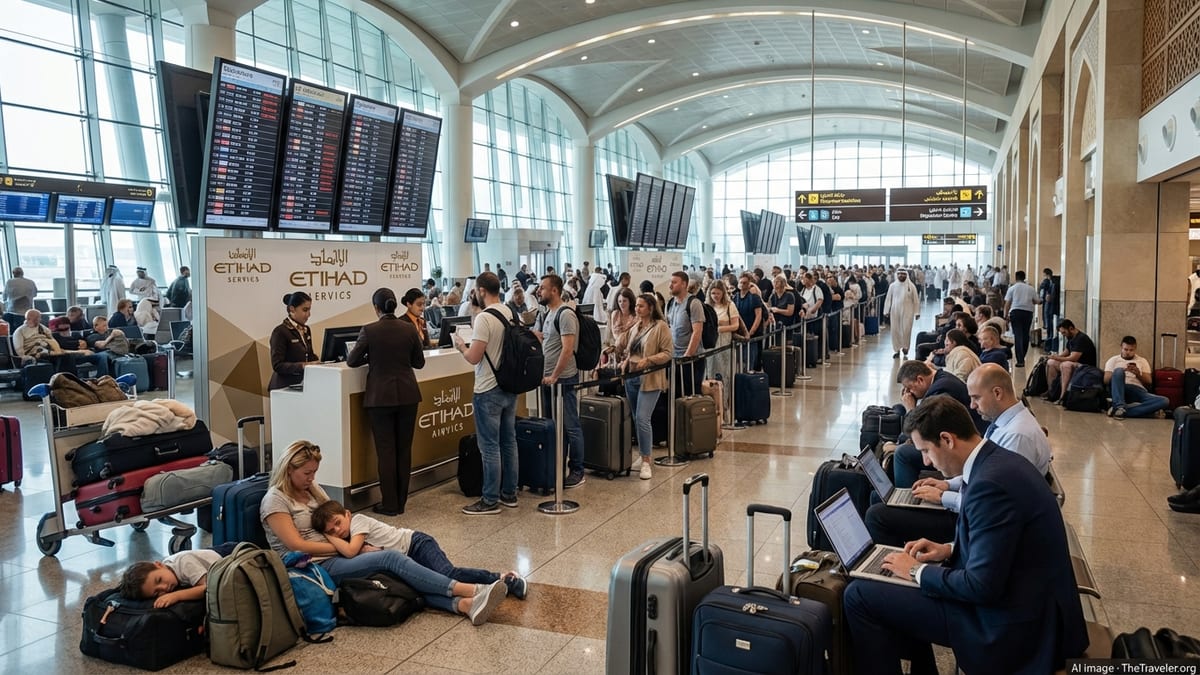
Mixed operating picture at Dubai and Abu Dhabi hubs
Publicly available flight tracking and media coverage indicate that Dubai International Airport and Abu Dhabi’s Zayed International Airport are again handling a busy weekend with largely stable schedules, but with pockets of disruption affecting certain routes and time bands rather than a blanket shutdown of services.
Coverage from UAE-based outlets on September 12, 2026, describes a “mixed” operations picture, with some flights delayed or cancelled while others depart on time. The reports attribute the uneven pattern to airlines fine-tuning schedules in response to regional security concerns and shifting airspace restrictions, combined with knock-on effects from congestion at overseas hubs.
Schedule filings and aviation analytics for the current summer season suggest that major UAE carriers are still operating the bulk of their planned networks, with Etihad alone running more than 90 per cent of its originally filed frequencies for June to October 2026. However, capacity has been trimmed on selected routes and timings, particularly from mid-September as peak summer demand eases, leaving some passengers facing re-timings and consolidations.
For travellers, the immediate effect is that departures can look normal on one route and heavily disrupted on another, even from the same terminal. The key advice from airlines and airports remains to check flight status repeatedly in the 24 hours before departure and again before leaving for the airport, rather than relying on the original booking confirmation.
Emirates: targeted delays and rolling schedule adjustments
Emirates, the largest carrier at Dubai International, continues to operate an extensive global network, but online delay trackers and specialist aviation forums show recurring late departures on some long-haul services, particularly overnight flights to Australia and select European destinations. Recent posts tracking flights such as EK416 from Dubai to Sydney and EK430 to Brisbane highlight repeated departures running 30 to 90 minutes behind schedule, creating a pattern of minor but regular disruption rather than wholesale cancellations.
These delays are often linked to aircraft rotation issues and congestion at busy destination airports, which can push back departure times in Dubai and compress connection windows for onward passengers. While most affected flights still operate, the later departures may cause some travellers to miss tightly timed connections onto regional or partner services, especially during peak transfer banks.
Emirates continues to advise passengers via its website and booking management tools to keep contact details up to date and to enable notifications so that any re-timing or equipment change is communicated quickly. For those connecting onward from Dubai, building in slightly longer transfer times where possible, or selecting earlier departure options, can help reduce the risk of missed onward flights when operating conditions are tight.
Travellers holding separate tickets on different airlines are particularly exposed, as they may not have the same protections for missed connections that apply to a single through-ticket. In these cases, checking both carriers’ disruption policies in advance and allowing generous buffers between flights is especially important over the coming weekends.
Etihad: strong overall schedule but overseas knock-on disruptions
Etihad Airways has maintained a comparatively robust operating plan through the northern summer 2026 season, with schedule data showing more than 95 per cent of planned flights operating between mid-June and late October. Nonetheless, the Abu Dhabi-based carrier has also been affected by overseas disruptions, most recently in the United Kingdom, where a technical fault in UK air traffic control earlier this week forced cancellations and long delays on some London–Abu Dhabi services.
According to published coverage, at least one Etihad flight from London Heathrow to Abu Dhabi was cancelled and others substantially delayed after the UK systems glitch cascaded across Europe’s busiest air corridors. The airline has warned that the situation remains dynamic, with further changes possible as air traffic control authorities work through the backlog of affected flights and crews reach duty time limits.
In parallel, Etihad’s own schedule adjustments for late summer have seen frequency reductions on several European and Asia-Pacific routes compared with the peak August period. While these reductions are part of normal seasonal planning, they leave less slack in the system to absorb unplanned events such as airspace closures or weather-related delays, meaning that individual cancellations or consolidations can be more disruptive for travellers trying to rebook on the same day.
Passengers flying Etihad this weekend are advised to pay particular attention to flights touching congested hubs such as London, as well as long-haul sectors with limited daily frequencies. Monitoring the Etihad website or app for gate changes, re-timings and reaccommodation options can make a material difference to rebooking choices if a service is disrupted at short notice.
flydubai: reduced schedule and advisories for busy periods
At Dubai International’s Terminal 2 and Terminal 3, flydubai continues to operate an extensive short- and medium-haul network, though its own operational updates page indicates a reduced schedule across parts of the network and warns that flight durations and transit times in Dubai may be longer than usual. The carrier has also highlighted temporary airport changes on certain routes, such as shifting Naples services to Salerno in Italy during planned maintenance, which can affect connections and ground transport plans for travellers.
Recent advisories from flydubai emphasise that customers should check flight status before leaving for the airport and use online check-in and the mobile app to receive real-time notifications. The airline notes that some flights are operating with revised timings or routings due to regional airspace constraints, which may not always be obvious from the original booking confirmation alone.
For disrupted flights, flydubai’s disruption and cancellation policies outline options to rebook within a defined window, typically up to 30 days from the original travel date without penalty on fare difference in many cases, or to request a travel voucher that can be used for future bookings. These options are accessible online through the “Manage booking” function, reducing the need to queue at the airport during busy periods when call centres and desks can become congested.
Travellers connecting between flydubai and other airlines, including codeshare and interline partners, should verify how missed connections are handled when all segments are on a single booking versus separate tickets. Policies differ depending on the type of ticket, and understanding the conditions in advance can help passengers make faster decisions if their initial flight experiences a significant delay.
Air Arabia: isolated cancellations alongside mostly on-time operations
Low-cost carrier Air Arabia, which operates from Sharjah, Ras Al Khaimah and Abu Dhabi, is also seeing a nuanced picture across its network. Flight tracking and compensation platforms show that some Air Arabia flights in September 2026, including services between Jeddah and Ras Al Khaimah and between Mashhad and Sharjah, were cancelled in the days leading up to this weekend, indicating that individual routes remain vulnerable to operational or demand-related cuts.
At the same time, other Air Arabia flights into the UAE are operating close to schedule. For example, data for flight G9 772 from Alexandria to Sharjah on September 12 shows an arrival only a few minutes behind the planned time, illustrating that the airline’s overall on-time performance remains broadly intact on many routes despite pockets of disruption.
Guides published for 2026 highlight that Air Arabia has not issued a detailed public route-by-route status list for recent days, and that standard cancellation fees still apply in many cases where flights operate as planned but passengers choose not to travel. However, the carrier provides online forms and contact channels for customers affected by genuine cancellations or major delays to pursue rebooking, vouchers or refunds in line with its conditions of carriage.
Passengers booked on Air Arabia this weekend are encouraged to confirm both their flight status and any applicable fare rules before making changes. Travellers originating in the European Union or flying from other jurisdictions with strong passenger rights frameworks may also wish to review local regulations, as compensation eligibility can depend on both the point of departure and the reasons cited for disruption.
What UAE-bound travellers should do right now
With the UAE’s main carriers largely operating but facing selective delays and cancellations, particularly on long-haul and high-traffic routes, the primary risk for travellers this weekend is inconvenience and missed connections rather than being completely unable to travel. Nonetheless, regional tensions and external events, such as air traffic control outages in other countries, mean that conditions can change rapidly.
Travellers are advised to rely on official airline websites, mobile apps and airport flight information boards as their main sources of truth for departure and arrival times, rather than third-party booking confirmations or screenshots. Adding contact details to bookings, enabling push notifications and checking in online as early as permitted can all help ensure that any changes are communicated quickly and that seats are secured on alternative flights if required.
Those with tight onward connections, important events at their destination or travel on multiple separate tickets may wish to proactively adjust their plans, for example by moving to earlier departures where available or allowing longer transfer windows. While such changes can sometimes incur additional costs, they may provide greater resilience in a weekend when airlines are still adjusting to operational constraints beyond their direct control.
For travellers yet to book, flexibility remains an asset. Selecting fares that allow reasonable changes, avoiding last departures of the day on vulnerable routes, and monitoring advisories from both airlines and foreign governments about regional security or airspace issues can reduce stress in the days ahead. With schedules still broadly intact but fragile in places, informed and proactive planning is the best way to navigate UAE air travel this weekend.
Gulf News: UAE weekend flights status
flydubai disruptions and cancellations policy