

More news on this day
Travel advisories for the Gulf are beginning to ease as the United Kingdom and Australia lower warning levels for key states in the region, but major European airlines remain cautious, keeping many long-haul routes away from Iranian and nearby airspace despite a relative lull in tensions.
Get the latest news straight to your inbox!
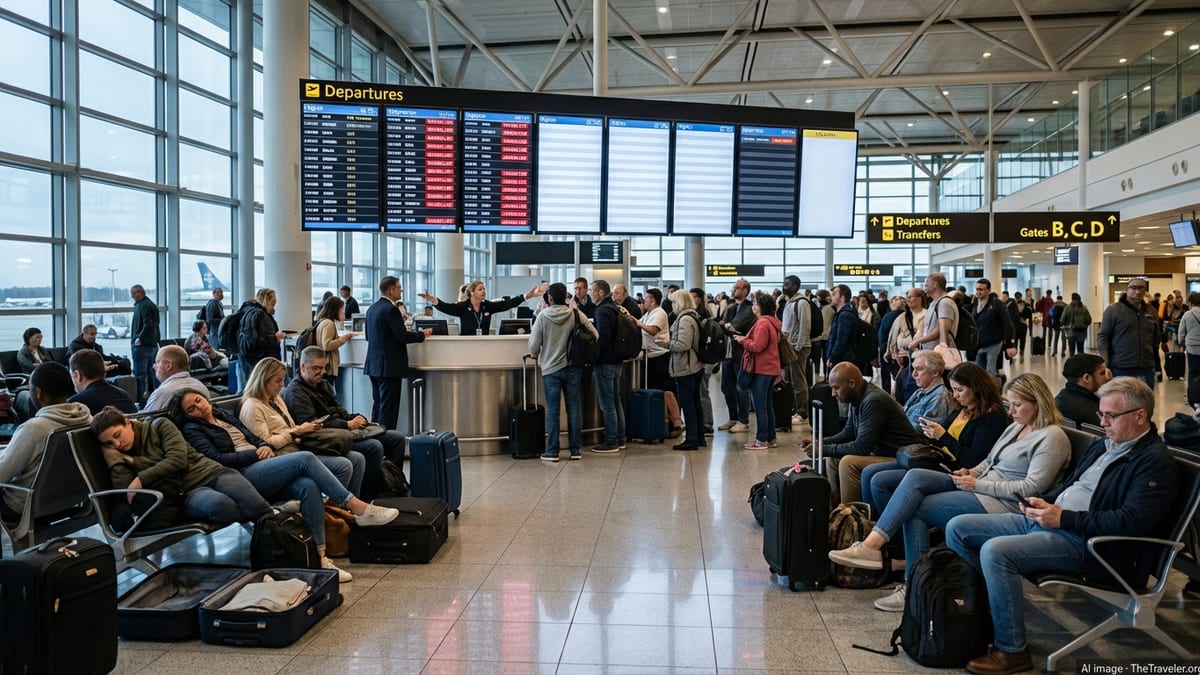
Travel Advice Softens for Key Gulf Destinations
Recent updates to government advisories in London and Canberra indicate a gradual shift toward reopening the Gulf to leisure and business travel. Publicly available information shows that the United Kingdom has scaled back its most severe warnings for several Gulf Cooperation Council states, focusing instead on specific security and airspace risks rather than broad avoidance of the region.
In Australia, an official media release in mid-2026 outlined a downgrade in risk levels for Bahrain, Kuwait, Qatar and the United Arab Emirates from the strictest “do not travel” category to more moderate guidance. The advice still highlights the potential for rapid security changes but acknowledges that day-to-day conditions in many Gulf hubs have stabilised compared with the peak of regional tensions in 2024.
These changes are being closely watched by airlines, tour operators and corporate travel managers who rely on official ratings to calibrate their own duty-of-care decisions. For travellers, the softer language removes a significant psychological barrier, even as insurers and risk consultants continue to flag the Gulf as an area where itineraries should be checked regularly against official updates.
Despite the easing, both governments continue to differentiate sharply between Gulf states and higher-risk conflict zones such as Iran and parts of the Levant, where advice remains at or close to the highest levels. This tiered approach underlines that the wider Middle East is not being treated as a single risk category, and that some Gulf countries are seen as relatively insulated from direct hostilities.
European Safety Advisories Keep Iran Corridor Under Scrutiny
While national travel advisories are trending toward a partial reopening of the Gulf, aviation-specific warnings in Europe remain stringent, especially over Iran and adjacent conflict-affected airspace. Updated conflict-zone information bulletins from the European Union Aviation Safety Agency continue to flag the Tehran flight information region as high risk, recommending that European Union carriers avoid it at all altitudes.
These technical advisories draw on detailed assessments of missile activity, drone operations and air-defense engagements across the Middle East corridor linking the eastern Mediterranean to the Strait of Hormuz. Since the exchange of missile and drone strikes between Iran and Israel in April 2024, publicly available documentation shows that risk models have assumed the possibility of short-notice escalations affecting civilian overflights.
EASA’s current guidance extends beyond Iran itself, covering a patchwork of neighbouring flight information regions where long-range weapons or miscalculation could pose hazards to civil aircraft. While the language stops short of a blanket ban on all Gulf overflights, it effectively constrains the options of European network carriers and requires constant monitoring of notices to air missions and real-time intelligence.
This technical backdrop helps explain why there is a divergence between general travel advice to citizens and the operational decisions being taken by airlines. A route seen as acceptable for a government-issued tourism advisory may still fall short of an airline’s internal safety thresholds once airspace and altitude considerations are factored in.
Airlines Rebuild Gulf Networks, but Routings Stay Conservative
Gulf-based airlines have been among the quickest to restore schedules and promote their hubs as reliable connectors between Europe, Asia and Africa. Public schedules indicate that carriers based in the United Arab Emirates, Qatar and Saudi Arabia have largely re-established pre-crisis patterns, using southern or coastal corridors to avoid the highest-risk segments of Iranian and Iraqi airspace when necessary.
However, many European airlines have opted for more conservative routings that add significant distance and time to traditional great-circle paths. Industry reporting after the 2024 flare-up documented a rapid shift of Europe–Asia flights away from Iranian skies, with aircraft instead looping north via the Caucasus and Central Asia or tracking well south over the Arabian Sea.
Although some of those detours have been partially shortened as immediate hostilities receded, a full return to pre-2024 routings has not occurred for most major European network carriers. Flight-tracking data still shows a marked preference for corridors that keep wide buffers from Iran and other high-risk zones, even when that means higher fuel burn and longer block times.
For passengers, the most visible effects are slightly longer journeys and, at times, increased fares reflecting higher operating costs. Less visible is the intensive risk assessment work inside airlines, where security teams, operational control centres and insurers continue to model the impact of worst-case scenarios before approving any approach toward contested airspace.
Implications for Travellers, Insurers and Tourism Markets
The combination of softened general travel warnings and persistent aviation caution is creating a complex landscape for travellers and tourism-dependent economies. For destinations such as Dubai, Doha and Abu Dhabi, the relaxation of UK and Australian advisories removes a significant reputational drag and could encourage the return of organised tours, conferences and cruise calls that had been paused.
Insurers, however, are proceeding more slowly. Policy documents and broker commentary suggest that many underwriters still treat parts of the wider Gulf as elevated-risk regions, sometimes attaching additional conditions or premiums for travel to certain airports or for itineraries that transit nearby conflict zones. This can influence corporate travel approvals even when government advisories have eased.
Tourism boards and hospitality groups across the Gulf are responding by emphasising on-the-ground stability, robust security arrangements and the resilience of airport infrastructure. At the same time, they are conscious that perceptions are shaped as much by flight maps and airline routings as by hotel marketing campaigns. So long as European carriers continue to route around key airspace, some travellers may assume that the broader region remains volatile.
The divergence may also produce uneven recovery across source markets. Travellers from countries where advisories have eased could return faster than those from parts of Europe where both public guidance and airline practice remain more conservative. This staggered rebound will be closely watched by industry analysts tracking capacity, load factors and forward bookings into the northern winter season.
Outlook: Gradual Normalisation With a Volatile Backdrop
Analysts of aviation and travel risk broadly characterise the current phase as one of cautious normalisation rather than a full-scale return to pre-crisis patterns. The easing of UK and Australian Gulf warnings signals that governments see a lower probability of immediate, indiscriminate spillover into major regional hubs, even as they keep strong language in place for active conflict zones.
For European airlines, the decisive threshold remains the balance between commercial incentives and low-probability, high-impact security events. As long as official European safety advisories continue to highlight elevated risks over Iran and surrounding areas, network planners are likely to preserve conservative routings, particularly on flagship routes where reputation and brand trust are paramount.
Travellers planning to use Gulf hubs in the coming months will encounter a more familiar experience than at the height of the 2024 crisis, but they are still advised by risk specialists to build in additional time for connections and to monitor airline communications for any late-stage rerouting. Industry observers note that any renewed spike in regional tensions could quickly revive stricter government warnings and trigger fresh waves of airspace closures.
In the absence of such a shock, the most probable scenario is a slow but steady increase in confidence, with Gulf hubs regaining their place as key connectors between continents while European carriers cautiously test shorter paths. The gap between what travel advisories permit and what airlines actually fly is likely to narrow, but only as long as the region’s fragile de-escalation continues to hold.