


More news on this day
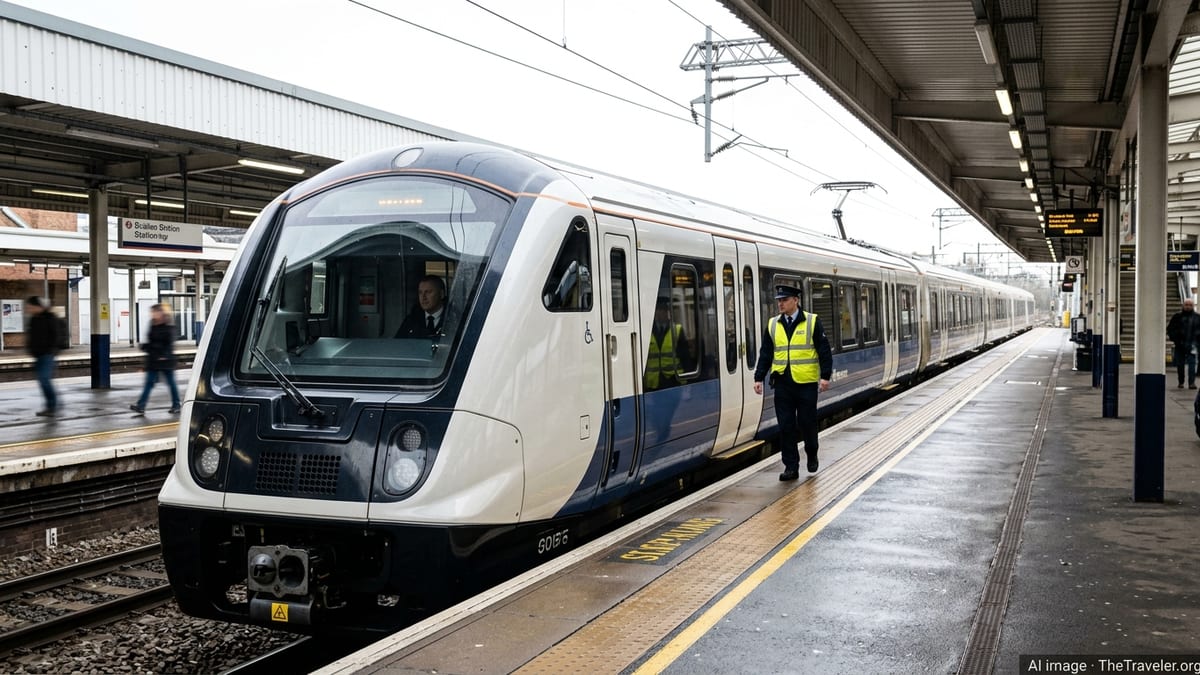
The UK government is rolling out a new national ticket-acceptance scheme designed to stop rail passengers being left stranded when a service is cancelled, allowing eligible customers to switch to another train operator and continue their journey without paying for a second ticket.
Get the latest news straight to your inbox!
What the new scheme does, and when it starts
According to published government coverage, the change takes effect on Sunday 20 September 2026 and is aimed at making “cross-operator” travel during cancellations automatic rather than ad hoc. The core promise is simple: if your booked train is cancelled, you can use another participating operator’s service to complete your trip without additional cost.
The scheme applies to passengers holding a valid ticket for the cancelled service. Coverage indicates customers can board a participating operator’s train that departs within two hours before or two hours after the original cancelled departure time, using a direct route or a “reasonable alternative” route. The process is intended to be straightforward: passengers show their existing ticket to staff, with no requirement to download or obtain a new ticket.
While rail passengers in Britain have sometimes benefited from emergency “ticket acceptance” during major disruption, the new approach is positioned as a default rule for cancellations across a defined group of operators, reducing the uncertainty that has often left people waiting at stations for agreements to be put in place.
The 17 operators included, and who is not yet covered
Publicly available details show the scheme will cover 17 operators from the start date. The list includes c2c, Gatwick Express, Greater Anglia, Great Northern, London North Eastern Railway (LNER), London Northwestern Railway, Northern, Southeastern, Southern, Thameslink, South Western Railway, TransPennine Express, and West Midlands Railway.
It also expands to include several major intercity brands that were not previously part of the automatic arrangement: Avanti West Coast, Chiltern Railways, CrossCountry, and Great Western Railway. The inclusion of these operators matters for long-distance travel because they connect major city pairs and often share corridors with other train companies, where the ability to hop onto the next viable service can save significant time.
East Midlands Railway is not included at launch and is expected to join later, based on published coverage. For passengers, that means itineraries that rely on East Midlands Railway services may still fall back on the older, more variable approach during cancellations, depending on the circumstances and any separate local ticket-acceptance arrangements.
How it fits with existing passenger rights and refunds
The new scheme does not replace Delay Repay compensation or refund rights; it sits alongside them. National Rail’s Conditions of Travel set out a passenger’s rights when trains are cancelled or disrupted, including options around refunds for journeys not taken and the expectation that operators help customers complete their travel where feasible.
In practice, passengers have often faced a dilemma when a train is cancelled: wait for the next service their ticket is valid on, or buy a new ticket on a different operator to keep moving and then try to recover costs later. The new scheme is designed to remove that “pay twice” scenario for participating operators by making switching operators an immediate option within a clear time window.
For travelers holding Advance tickets, which are typically tied to specific trains and operators, the change is especially relevant. Instead of navigating a patchwork of rules, passengers affected by a cancellation should have a clearer, nationally consistent pathway to take a different company’s train when that is the quickest way to reach their destination.
What passengers should do during a cancellation
The first step remains confirming that the original service is officially cancelled and checking the fastest alternative route. Coverage indicates the scheme is built around taking a train within the two-hour window either side of the cancelled service, so passengers may need to act quickly if a suitable alternative is about to depart.
When boarding the alternative service, the scheme relies on presenting the original ticket as proof of purchase. That can be a paper ticket, a smartcard, or a digital ticket, depending on how it was purchased. Passengers should keep any seat reservation details they have, but it is worth noting that a reservation on the cancelled train does not automatically translate into a reserved seat on another operator’s service.
Capacity constraints can still be a real-world factor, particularly at peak times or on long-distance routes. The scheme is about ticket validity, not guaranteeing a seat. Travelers may need to take the next available service that is practical and safe to board, and follow any instructions provided by on-train staff during disruption.
Why this is happening now, and what comes next
Government materials frame the policy as part of a broader push toward a simpler, more integrated railway, including the longer-term move toward Great British Railways. Automatic cross-operator acceptance already applied across publicly owned operators, and the new announcement extends it to several key privately run intercity operators, creating a wider national safety net for cancelled services.
The policy also arrives amid ongoing changes to ticketing and passenger information, including work on a new Great British Railways retail platform and continued expansion of digital ticketing. While those reforms are separate from the cancellation scheme, they share a common goal: reducing the friction passengers face when the network does not run to plan.
For now, the practical takeaway is that from 20 September 2026, many rail travelers should find it easier to salvage a journey after a cancellation, particularly on the busy cross-country and intercity routes where alternative operators can provide the quickest path to the same destination.