


More news on this day
The United Arab Emirates is working to get off foreign travel warning lists that tightened during recent regional conflict, as several governments now recalibrate their advice and airlines steadily rebuild schedules through Dubai and Abu Dhabi.
Get the latest news straight to your inbox!
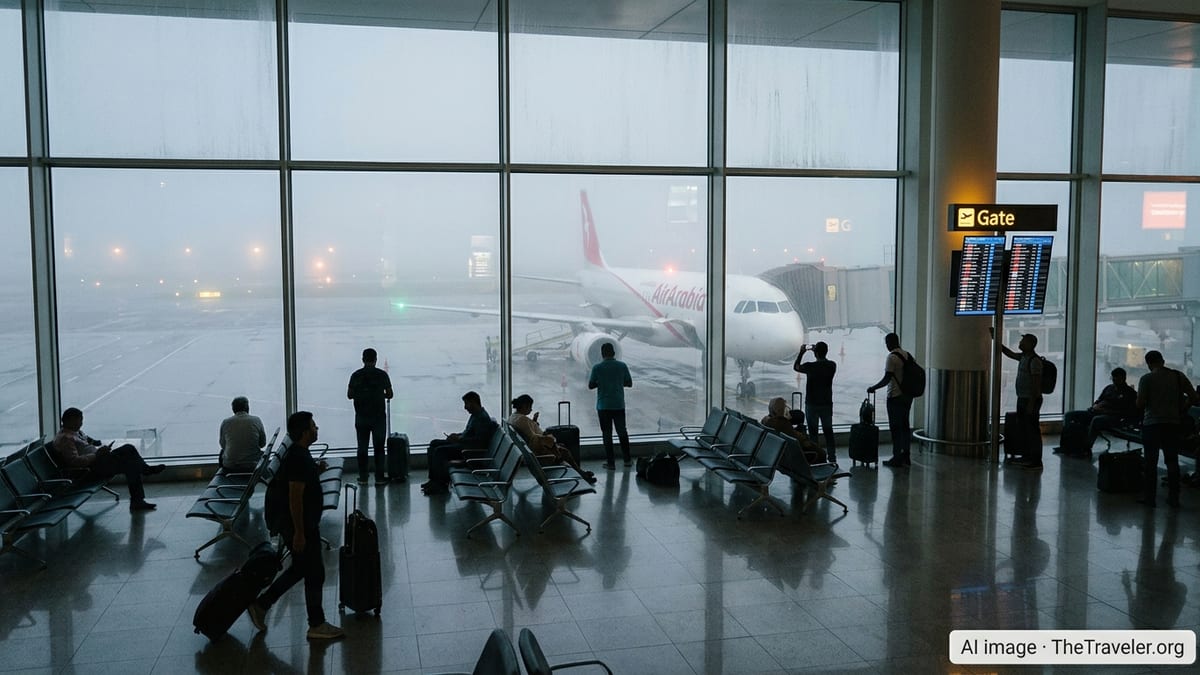
How the UAE ended up on warning lists
Published travel-advice pages in 2026 show how quickly guidance shifted during periods of heightened risk in the Gulf, particularly when airspace closures and missile or drone threats created uncertainty for both visitors and transit passengers. Some national advisories moved beyond routine cautions and urged travelers to reconsider or defer non-essential trips, even as major UAE airports remained operational for much of the period.
Australia’s Smartraveller currently lists the UAE at “Reconsider your need to travel” (Level 3), with its UAE page dated as still current on 15 September 2026 and noting that airspace can open or close at short notice, potentially affecting flights at Abu Dhabi and Dubai International Airports.
Germany’s Foreign Office guidance also frames the broader region as volatile and emphasizes that developments can change rapidly, reflecting the post-crisis environment that can keep destinations on elevated advice levels even when day-to-day tourism operations continue.
Where major advisories stand now
In the United States, publicly available State Department information for the UAE has been showing a relatively lower advisory posture compared with several other destinations in the region. The State Department’s UAE travel advisory page indicates it was updated in late August 2026 and includes standard safety reminders, alongside administrative updates related to U.S. government personnel and families.
In the United Kingdom, the government’s UAE foreign travel advice page shows a “Latest update” dated 12 September 2026, reflecting ongoing maintenance of guidance for British travelers. While the UK does not use the same numbered scale as some countries, its updates are closely watched by travelers and insurers as a signal of shifting risk assessments.
Australia also publicly documented a significant step-down earlier this year. A 17 June 2026 ministerial release states that Australia lowered travel advice for the UAE and several nearby countries from “Do Not Travel” (Level 4) to “Reconsider your need to travel” (Level 3), tying the change to improved conditions following a U.S.-Iran agreement referenced in that statement.
Policy, policing, and “safety architecture” being highlighted
As the UAE argues for normalizing travel advice, it is also pointing to internal measures intended to demonstrate stability and preparedness. Dubai’s government media office announced in March 2026 that a new Dubai public safety law (Law No. 2 of 2026) was issued to set a legislative framework covering safety standards for individuals and property, including venues and events central to tourism and leisure.
Abu Dhabi has separately promoted tourism-facing security and identity initiatives. In 2025, the Abu Dhabi government media office announced an emirate-wide face recognition system rollout in hotels, describing it as a government-led deployment intended to enhance guest verification processes and reduce check-in time, with an emphasis on cybersecurity and privacy standards.
Security awareness campaigns have also continued through 2026. Abu Dhabi’s media office reported that police and civil defense launched the seventh “Safe Summer” campaign running until 30 August 2026, while Dubai’s Security Industry Regulatory Agency has publicized “Thank You UAE” outreach as part of broader safety messaging that builds on earlier campaigns.
Air connectivity matters, and airlines are watching the signal
For the UAE, travel-warning language affects more than leisure decision-making. It can influence airline demand, group travel plans, conference attendance, and how insurers price policies for customers transiting the region. That is particularly important for Dubai International Airport and Abu Dhabi’s hub strategy, where a meaningful share of passengers are connecting between continents.
Published airline travel-update pages continue to reflect how quickly operational conditions can change, even when airports remain open. Emirates’ own travel-updates page has periodically summarized evolving requirements and operational notices, including reminders for passengers to monitor flight status and any disruption-related communications.
Separately, published coverage in 2026 has underscored how major regional events can ripple into tourism calendars. An AP report earlier this year described postponed or affected events and the pace at which flight schedules were restored, highlighting the reputational value for the UAE in getting advisory language to match on-the-ground normalcy as quickly as conditions allow.
What travelers should do while advisories remain uneven
Because travel advice is now uneven across countries, travelers are increasingly required to check guidance from their own government as well as any transit-country rules and airline policies before departure. The most consequential differences typically show up in insurance eligibility, employer travel policies, and whether certain itineraries are approved for business or student travel.
For U.S. travelers, the State Department’s UAE destination information emphasizes awareness of local laws and special circumstances as part of trip planning. For Australians, the current Smartraveller UAE advisory highlights the possibility of short-notice airspace changes, which can matter even for passengers who only plan to connect through the UAE rather than enter.
For UK and EU travelers, the practical takeaway is similar: review the latest country guidance close to departure, confirm flight routings and disruption policies, and keep documentation and emergency contacts accessible. Until advisory levels converge, the UAE’s effort to be removed from remaining warning lists will likely be judged as much by regional stability indicators as by domestic safety and security measures it can control.