


More news on this day
Flight delays and cancellations disrupted travel across parts of the UK on Monday after National Air Traffic Services (NATS) reported a technical problem at its Prestwick control centre, marking the second air traffic control incident to affect passengers this month.
Get the latest news straight to your inbox!
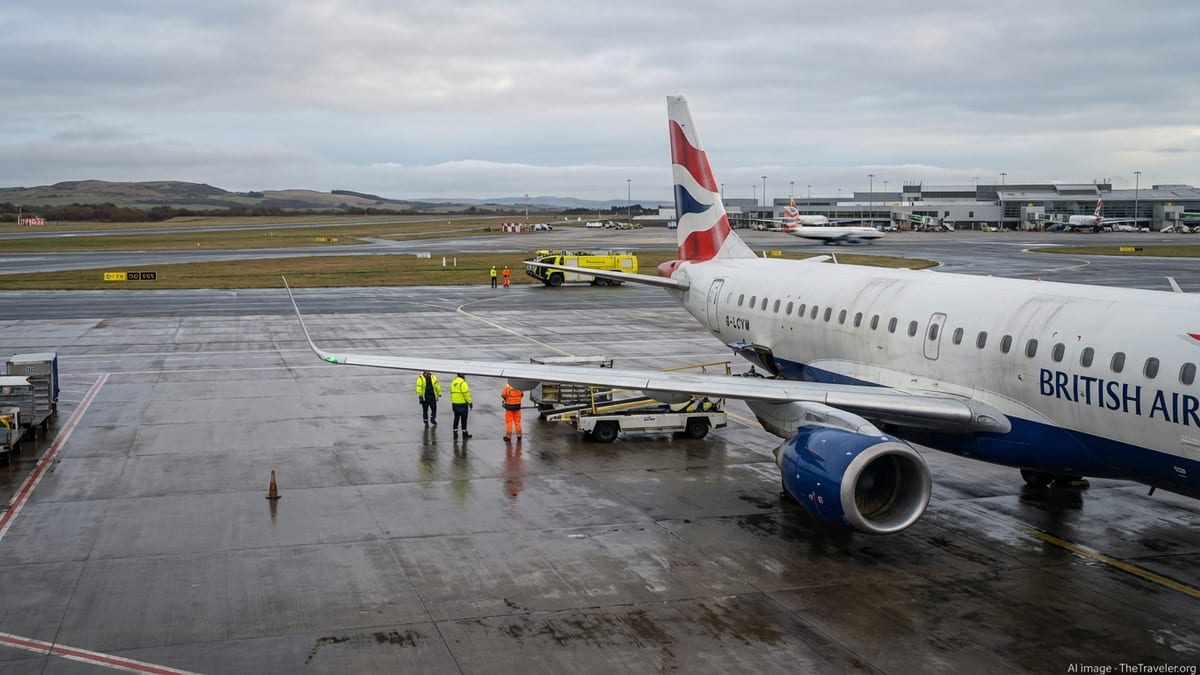
Second incident in September triggers fresh disruption
Published coverage indicates the latest disruption began early Monday, September 21, when NATS detected a connectivity issue affecting part of its systems network at Prestwick in Scotland. The provider introduced traffic flow restrictions to manage demand while engineers worked on the fault, with knock-on impacts felt most strongly on routes into and out of Scotland, Northern Ireland, and the north of England.
NATS’ public updates described the incident as separate from the earlier September disruption, which had already strained airline schedules and passenger plans. Even after a technical fix is implemented, aviation operations often face lingering effects as aircraft and crews end up out of position, airport gates and stands become congested, and airlines attempt to rebuild rotations.
By later in the day, reports indicated the Prestwick connectivity problem had been addressed, but disruptions were still expected to continue through at least the end of Monday as the network returned to normal operating rhythms and backlogs cleared.
Airports and routes most affected across the north
Data cited in multiple reports pointed to the largest impacts concentrating at Manchester, Edinburgh, Belfast International, and George Best Belfast City, with Prestwick’s role in regional air traffic management also drawing attention. While the disruption was most visible at airports, the underlying constraint was airborne capacity and sequencing into busy terminal areas, which can ripple across airline timetables.
NATS’ own travel-facing messaging during the incident emphasized that airports south of Manchester were broadly less affected, while flights heading north and departures from Scottish airports were more likely to face delays. That dynamic matters for passengers connecting through the UK: a flight departing from an airport outside the most affected region can still be delayed if its aircraft, crew, or airspace slot is tied to the constrained area.
Some airports and airline channels urged travelers to monitor live flight status closely, because departure boards and app notifications can change quickly when air traffic restrictions are introduced and then gradually lifted. Reassigning departure slots and re-sequencing inbound aircraft can make an itinerary appear on time and then shift significantly within a short window.
Cancellations add up as schedules struggle to recover
Aviation analytics figures reported Monday suggested cancellations reached into the hundreds as the day progressed, alongside widespread delays. The cancellations were not evenly distributed: airports with dense short-haul schedules and high aircraft utilization can see earlier delays convert into later cancellations if an aircraft’s day becomes impossible to complete within crew duty limits.
For airlines, the operational choice often comes down to protecting later flights or long-haul services by canceling some short-haul legs. That can be particularly noticeable on domestic and near-Europe routes, where the same aircraft may be scheduled to operate multiple sectors in a single day and where slot and crew constraints compound after a morning disruption.
Travelers caught in the middle often face a different experience depending on their ticket type and airline policies: some can be rebooked onto later departures the same day, while others may be moved to the next available seats, which can be limited during busy travel periods when flights are already running near capacity.
How this compares with the earlier NATS disruption this month
The latest Prestwick incident comes after an earlier air traffic control problem on September 8 that led to widespread disruption across the UK. NATS has publicly described that earlier event as tied to a software defect and has released preliminary information about the sequence of events and the scope of the impact, framing it as a distinct issue from Monday’s connectivity problem.
The two incidents occurring within the same month has intensified scrutiny of system resilience and operational contingency planning, according to published coverage of airline and industry reaction. For passengers, the practical takeaway is that even unrelated technical failures can produce similar outcomes at the airport: ground delays, missed connections, cancellations, and a slow recovery as aircraft rotations are rebuilt.
Air traffic control disruptions also tend to have a wider footprint than a single airport IT outage. When en-route capacity is reduced, restrictions can apply across a region to prevent overload, affecting airlines’ ability to depart on time even when check-in and airport security are operating normally.
What passengers should do next: rights, rebooking, and documentation
Publicly available guidance from the UK Civil Aviation Authority (CAA) published on September 21 addressed passenger compensation questions following the NATS disruption. In general, when delays and cancellations stem from air traffic control restrictions, airlines still have obligations to provide care and assistance during long waits, even if compensation eligibility depends on the cause and the specific circumstances of the disruption.
Passengers dealing with disruption on September 21 can reduce friction by saving documentation as events unfold: screenshots of delay notifications, boarding passes, rebooking messages, and receipts for eligible expenses. That paper trail can help with airline claims processes, travel insurance submissions, and credit card travel protection requests where applicable.
Travelers with time-sensitive itineraries should also check whether their airline is offering flexible rebooking or fee-free changes during the disruption window. Even when a technical issue is resolved, the most constrained part of the day is often the recovery period, when airlines try to reposition aircraft and crews and when the next available seats may be spread across multiple later flights.