


More news on this day
The United Kingdom has tightened its travel advice for Saudi Arabia, with updated guidance now advising against all but essential travel nationwide following a series of missile and drone attacks targeting major airports across the country.
Get the latest news straight to your inbox!
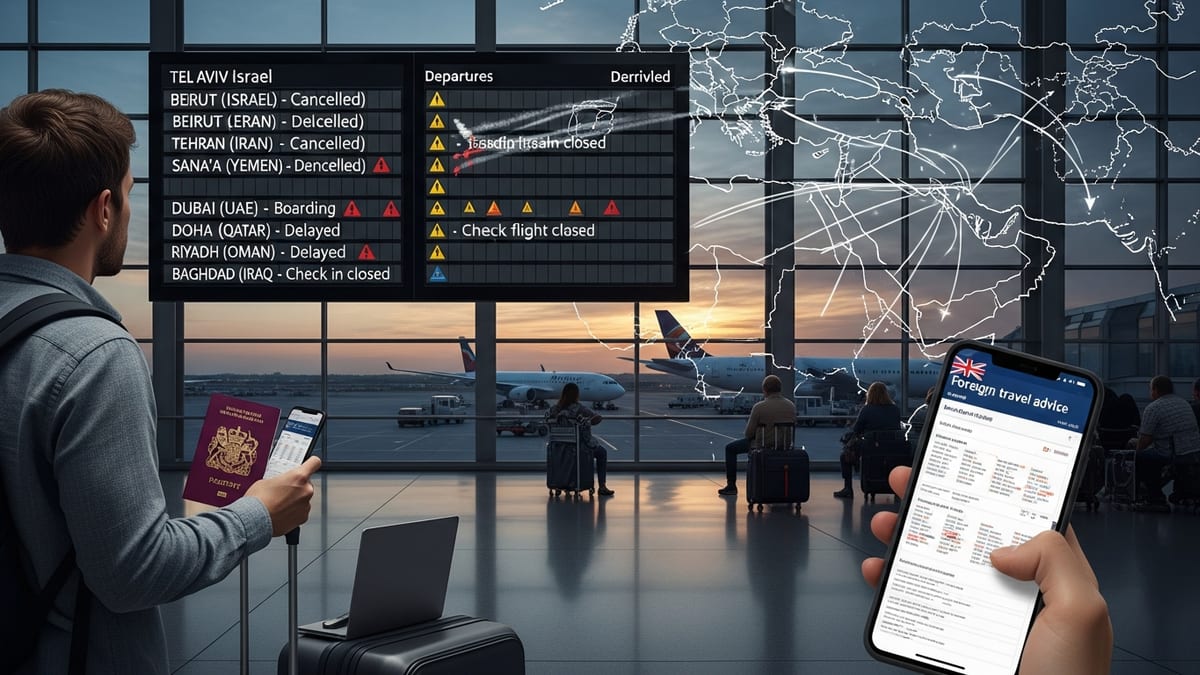
New guidance follows October airport strikes
The latest update to the UK government’s foreign travel advice for Saudi Arabia, current as of 13 October 2026, reflects sharply deteriorating security conditions linked to the regional conflict. Publicly available information from the Foreign, Commonwealth and Development Office (FCDO) notes a heightened threat to airports, military facilities, ports and energy infrastructure across Saudi Arabia after a wave of strikes since mid-July 2026.
Particular concern has focused on King Khalid International Airport in Riyadh, where an attack on 6 and 7 October involved both missiles and drones and resulted in civilian casualties. Open-source reporting indicates at least one person was killed and several others injured in the incident, which also caused damage to airport facilities and led to significant disruption to flights.
In light of these attacks, the FCDO’s warning highlights a sustained risk of further strikes on aviation and other strategic sites. While Saudi authorities have increased air defences and security measures, the pattern of incidents since the summer has prompted the UK to reassess the level of risk facing visiting nationals, including those transiting through the country for business, tourism or religious travel.
Travel industry updates and specialist advisory services tracking government notices report that, in addition to earlier restrictions around the Yemen border, the FCDO guidance has moved to a nationwide stance of advising against all but essential travel, with specific emphasis on airports as potential targets.
Scope of the warning and areas of highest concern
According to published UK government advice, the most acute security concerns remain in southern regions near the border with Yemen. The FCDO continues to advise against all travel within 10 kilometres of the Yemen frontier, reflecting ongoing cross-border threats and instability in that area. For a wider band beyond the immediate border, the guidance has long urged against all but essential travel because of the risk of missile and drone fire.
However, recent changes have extended caution well beyond these southern provinces. Updates over 2026 show successive additions of locations where the UK advises against all but essential travel, including Aseer, Najran, Jizan and large parts of Riyadh province, alongside major cities such as Jeddah, Dammam and Taif. The latest advice also singles out airports across the country as locations of particular risk.
Current guidance states that all airports in Saudi Arabia are covered by advice against all but essential travel, with only Medina’s Prince Mohammed bin Abdulaziz International Airport initially treated as an exception before subsequent warnings broadened the nationwide posture. Travel-risk briefings summarising the UK position now describe the entire country as subject to essential travel only for British nationals, reflecting a precautionary approach while attacks on aviation infrastructure continue.
The FCDO also highlights wider regional tensions involving Iran and armed groups aligned with it, which have signalled an intent to target sites associated with Western and regional interests. Publicly available updates describe the overall situation as unpredictable, with the possibility of further escalation that could quickly affect transport hubs and key cities across Saudi Arabia.
Implications for flights, insurance and existing bookings
The shift to advising against all but essential travel has practical consequences for UK travellers considering trips to Saudi Arabia. Insurers that follow FCDO guidance commonly treat policies as invalid if a customer travels to a destination against such advice, unless the journey is demonstrably essential and explicitly covered. Travel-industry commentary in recent days notes that some insurers are already reviewing coverage for itineraries involving Saudi airports.
Airline schedules into Riyadh, Jeddah, Dammam and other cities remain subject to change at short notice as operators respond to security assessments and local restrictions. While many flights continue to operate, disruptions have already been reported after the early October strikes, including temporary suspensions, diversions and enhanced security screening. Travellers are being urged by carriers and agents to check the status of their flights repeatedly in the days and hours before departure.
Specialist corporate travel providers are advising businesses to reassess the necessity of staff trips to Saudi Arabia, particularly where alternatives such as remote meetings or relocation of events are possible. For those with urgent reasons to travel, companies are being encouraged to conduct formal risk assessments, put in place robust contingency plans and ensure that emergency evacuation support is clearly defined in contracts with security and assistance providers.
Package holidaymakers and pilgrims who booked through UK-based tour operators may have additional protections. Under standard consumer regulations, if government advice changes significantly before departure, operators may offer rebooking, refunds or alternative destinations, although the exact options depend on the terms and timing of each booking. Travellers are being advised in public guidance and industry commentary to contact their tour company or airline before making independent changes.
Impact on religious travel and upcoming pilgrimages
The warning comes at a sensitive moment for religious travel, as many Muslims in the UK plan future journeys for Umrah and look ahead to the 2027 Hajj season. Saudi Arabia remains one of the most important international destinations for faith-based tourism, and British travellers traditionally form a significant share of visitors to Mecca and Medina during peak periods.
FCDO pilgrimage guidance, which sits alongside the main travel advisory, continues to set out detailed advice on visas, health requirements and local regulations for pilgrims. However, the new security warning overlays this information with a broader risk assessment for the country as a whole. Travel-planning resources tracking government notices report rising concern among prospective pilgrims about insurance validity and the possibility of last-minute flight disruptions into Jeddah and other gateway airports serving the holy cities.
Some community travel organisers in the UK are monitoring developments closely before confirming group departures for late 2026 and early 2027. Publicly accessible discussions on travel forums indicate that a number of prospective visitors are considering routing itineraries through Medina, or delaying plans until there is greater clarity on the security situation and the stability of air links into western Saudi Arabia.
Published information from Saudi authorities shows that the kingdom continues to facilitate religious visits, with visa systems and on-the-ground services operating. Nevertheless, the UK advisory underlines that individual travellers must consider their own risk tolerance in light of the possibility of further attacks affecting airports or transport routes used by pilgrims.
Guidance for travellers currently in Saudi Arabia
The UK government’s travel advice service stresses that British nationals already in Saudi Arabia should remain alert to developments and review their personal security arrangements. Public information refers travellers to general counterterrorism guidance on staying safe abroad, including being aware of surroundings, avoiding crowded areas where possible and knowing how to respond in the event of an attack.
For those needing to leave Saudi Arabia, the advice suggests considering overland routes to neighbouring countries as an alternative to domestic airports if air travel is disrupted. Any such journey requires careful planning, including checking the entry and exit requirements for bordering states and reviewing the specific travel advisories that apply there. Land crossings close to conflict-affected border regions may be subject to closure with little notice.
Travellers are encouraged by publicly available UK consular guidance to ensure that contact details are up to date with their travel company and to monitor both local media and official announcements for rapid changes in restrictions, curfews or airport operations. Individuals in remote areas or near high-risk zones, such as the Yemen border, are advised to consider whether it is feasible to relocate to safer locations while the heightened threat level continues.
Those who decide to remain in Saudi Arabia despite the advisory are being urged in open-source guidance to maintain a low profile, follow security instructions issued locally and keep travel documents, funds and essential items readily accessible in case a swift departure becomes necessary at short notice.